Autonomous Vehicles Drive the HVAC Industry into the Future
Industry members discuss how self-driving cars could impact HVAC
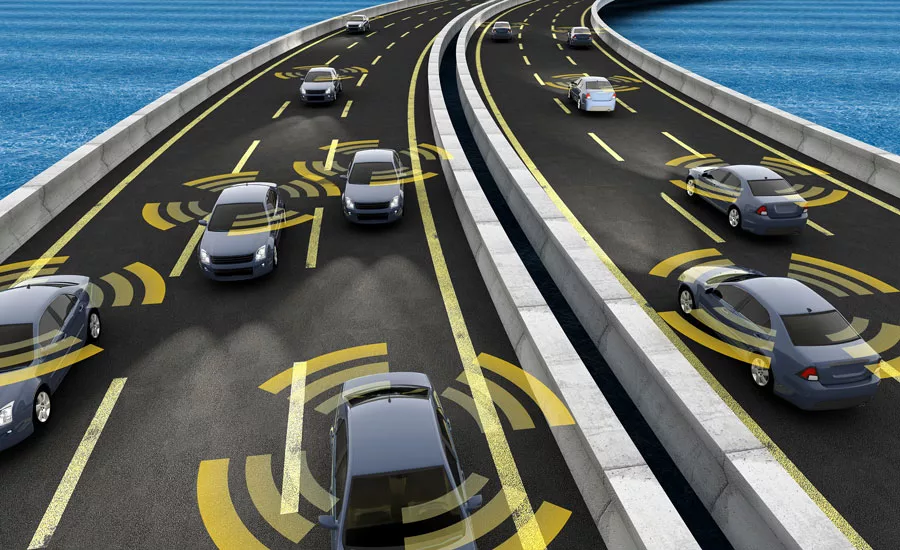
READY, SET, GO: “... the autonomous vehicle thing is absolutely going to happen, and it’s going to change everything,” said Dave Kyle, president, Trademasters Service Corp., Lorton, Virginia. “It’s time to start thinking and planning so that when we get there, we have viable business models that match that marketplace.”
What if cars drove themselves? How would this impact your contracting business?
Based on many accounts and reports, self-driving cars, also known as autonomous vehicles, are on the cusp of breaking into the mainstream.
Automotive giants, like Ford Motor Co., General Motors, and Tesla Inc., are racing to see which can get their self-driving cars on the road first. Even Uber has invested in the technology. Additionally, 22 states have passed legislation related to autonomous vehicles, according to the National Conference of State Legislatures.
Navigant Research also reported introductions of highly automated light duty vehicles (LDVs) are expected to begin in 2020 with steady growth anticipated to begin in 2025. Despite the infancy of the technology, there are some in the contracting sector who are already gearing up for the potential impact autonomous vehicles could have on the HVAC industry.
BE PREPARED
While autonomous vehicles are not directly tied into the HVACR industry, they sort of are, noted Dave Kyle, president, Trademasters Service Corp., Lorton, Virginia.
“This is one time our industry can look ahead four or five years, and be ready for it,” Kyle said. “We’ve oftentimes let things creep up on us, whether it was technology, industry changes, or shifting markets, but the autonomous vehicle thing is absolutely going to happen, and it’s going to change everything. It’s time to start thinking and planning so that when we get there, we have viable business models that match that marketplace.
“All the major manufacturers say they expect to have significant market saturation of autonomous vehicles between 2019 and 2021, and, by 2025, they expect to have mass use of them,” he continued. “That’s only seven or eight years away. So, this is really coming. I look at my mother; she’s becoming concerned about driving at night and on weekends. Well, with these vehicle options, older Americans may choose to stay in their homes a lot longer, so that will make a lot of difference in our communities and retirement centers. Then, you start thinking, will people need garages if they have an autonomous vehicle, and it goes and parks somewhere else? So, you might take that valuable square footage in houses, and turn it into usable living space. There’s a lot of business opportunity there.”
Looking for quick answers on air conditioning, heating and refrigeration topics? Try Ask ACHR NEWS, our new smart AI search tool. Ask ACHR NEWS
Kyle also noted the state of Virginia approved a three-year agreement allowing autonomous vehicles to run through the 95 and 495 Express Lanes, and they can do so while regular toll-paying drivers and carpoolers are also in the lanes.
“You have subcategories, like deliveries, pickups of material, taking kids to soccer practice, and things like that,” Kyle said. “Then, you have big picture business items. Start imagining how much time that frees up for a service company. Trademasters is a large service company, so we have vehicles zipping around all of the metro area. That’s a lot of windshield time. [Having autonomous vehicles means] we can turn a portion of that time into having a well-rested individual when they arrive at the job site. They could also be turning windshield time into screen time, meaning employees could take safety training or complete modules of an equipment manufacturer’s training program rather than drive.
“Employees are certainly in your employ when they are in between job sites, so you need to pay them,” he continued. “Why not pay them and train them at the same time? If you were to gain two to 10 hours a week of training and professional time for your employees, what a huge difference that would make for our industry.”
In addition to new business opportunities, autonomous vehicles could also present contractors with less risk and liability on the road, Kyle explained.
“The insurance market is going to have this huge shift because of autonomous vehicles,” he said. “A huge part of our cost is insurance, especially vehicle insurance. If we’re not fully in control, do we have less liability and, therefore, less cost for insurance? So, there is a huge benefit besides having a well-rested, well-educated technician.
“Additionally, for planning purposes, the vehicles will be substantially more efficient,” Kyle continued. “The best route will always be chosen, there will be less acceleration and hard braking — things like that. It will reduce the major insurance liability exposures that automotive presents small business owners. Most small businesses carry a large umbrella policy to cover a worst-case vehicle event. We would still carry one of those, but it would just cost less.”
Kyle said the only possible disadvantage he could foresee would be the possible loss of jobs.
“Theoretically, some logistics people could be affected,” he said. “Delivery and pickup people, suppliers, and customers could be affected. There could be a dynamic shift in markets.”
Above all, Kyle said the biggest disadvantage would be for contractors not to plan for this inevitable future.
“Change is hard for everybody,” he said. “It’s hard to think something this significant is going to happen, but don’t be in denial. Embrace the opportunity. It’s hard because how do you prepare for something that is not quite defined yet but is being defined almost on a daily basis?
“It’s a huge opportunity to run a more effective business and bring a new lifestyle to your technicians,” Kyle continued. “Having new opportunities allows you to grow your business and have room for your employees to grow with it. Most people want to have opportunities in the companies they’re in, so if you have a forward-thinking, growing business model, it tends to attract the right kind of talent. If you’re a progressive, interesting, cutting-edge, and fun place to work, you’re more attractive than the place across the street that may be still using paper invoices. The only negative in this is not planning ahead and setting some potential structures in place.”
MANAGING PRIORITIES
Matt Mauzy, president, Mauzy Heating, Air & Solar, San Diego, referred to autonomous vehicles as futuristic.
“It’s really futuristic, I guess, to imagine a point where a technician gets into a vehicle, and he’s got a monitor in front of him,” he said. “As he’s being driven somewhere, he’s going through a training course. It could make a huge impact on getting technicians trained up and keeping them trained.
“There would definitely be a benefit there,” Mauzy continued. “However, anytime a living space is expanded or converted, there is an opportunity for us to benefit. So, while there is opportunity, I think it is far-reaching and definitely in the distant future. It would make an impact on our industry, just not a significant one in my opinion.”
Mauzy said he doesn’t feel contractors should be preparing for an autonomous vehicle future at this time.
“At this point, I feel it’s so far off — focusing on something that is a minimum of 10 years or more away wouldn’t be a smart business move,” he said. “As quickly as things change right now, we really have to be focused on what is going on tomorrow or next week with technology. As a contractor, the huge threat to the heating and air conditioning industry right now is Amazon and Google with their home services offerings. That’s where I’m focused right now.”
Mark Bray, director of supply chain, ACR Supply Co., Durham, North Carolina, and chair of Heating, Air-conditioning & Refrigeration Distributors International’s (HARDI’s) Distribution/Logistics Committee agreed, saying he doesn’t believe autonomous vehicles will have an immediate impact on the HVACR industry.
“It’s very likely that these vehicles could play a role in the future, but I predict that it will be quite some time before it becomes mainstream,” Bray said. “In my experience, I’ve observed that this industry is very quick to adopt new technologies involving the products we buy and sell while we tend to lag behind the curve with the latest supply chain technologies. For this reason, I believe it will be a long time before we see autonomous vehicles having a major impact.”
Bray said the technology could benefit the HVACR distribution industry, once adopted.
“Once autonomous vehicles become more mainstream, the distributors who implement the technology will certainly have some advantages over those who don’t,” he said. “They should be able to provide delivery options for their customers that haven’t been possible in the past. Transportation is not a core competency for most distributors, so autonomous vehicles will allow them to focus on what they do best — sell HVACR products.
“However, in many instances, customer deliveries aren’t always simple and straightforward for distributors,” he continued. “Deliveries can often be in places that autonomous vehicles would have trouble getting into. For example, new construction job sites frequently change and aren’t always locatable on GPS systems or maps.
“The autonomous vehicle might be able to get deliveries close to the drop-off point at a new construction site, but a computer will have trouble understanding specific delivery details that only people could know to make a delivery happen,” Bray added. “Ultimately, there would be many situations where people would still need to be involved in the delivery making process.”
Cost could potentially be another barrier, Bray noted.
“In most cases, new technologies are very expensive to implement when they are first introduced into the market,” he explained. “The cost of owning and operating autonomous vehicles might outweigh the benefits of moving away from traditional delivery methods, which would keep many people away from the technology until it makes better sense from a financial perspective.
“At this point, I think leaders in the HVACR industry should continue to keep a close watch on how autonomous vehicle technology evolves and becomes more mainstream,” Bray continued. “I believe the most important preparation we can do right now is simply try to educate ourselves more and begin thinking about how it will affect our future.”
Publication date: 12/4/2017
Want more HVAC industry news and information? Join The NEWS on Facebook, Twitter, and LinkedIn today!
Looking for a reprint of this article?
From high-res PDFs to custom plaques, order your copy today!