Trump Administration Issues a Regulatory Freeze
Moratorium impacts pending walk-in coolers, portable a/c, commercial boiler standards, and more
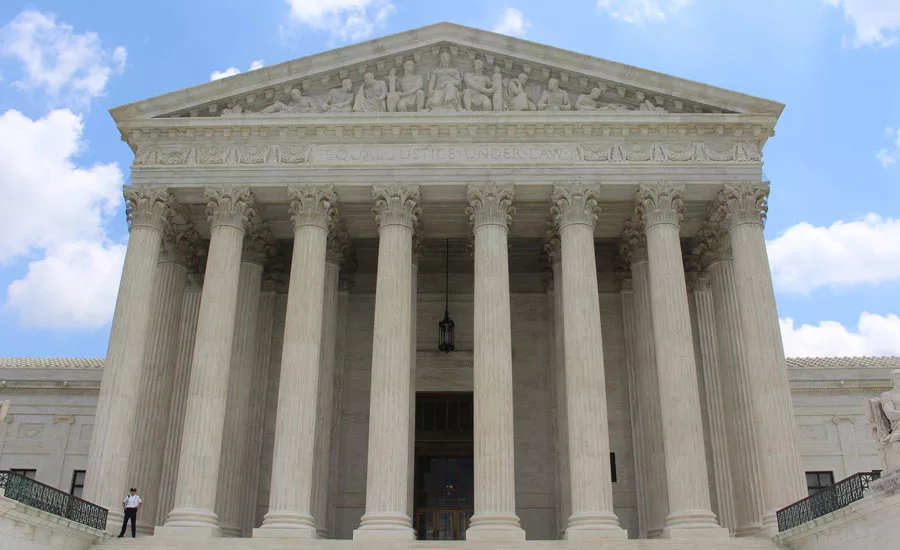
Regulatory Freeze: White House chief of staff, Reince Priebus, issued a memorandum declaring a government-wide freeze on new or pending regulations on Jan. 20.
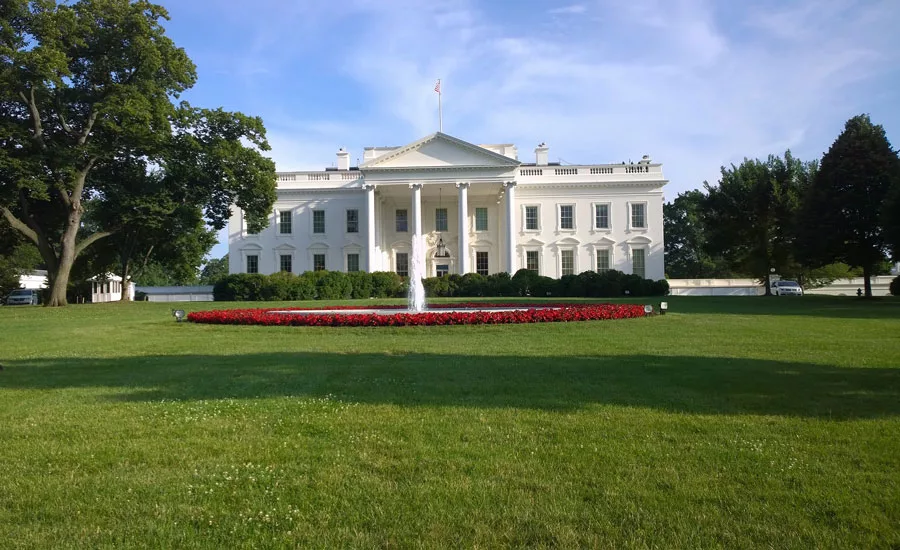
New Approach: “The Trump administration has signaled a new approach on regulatory matters, which focuses on smart, achievable goals that benefit the American people without having a negative impact upon businesses that make, distribute, and install the products. We hope to serve as a resource for the administration as they examine pending regulations and develop new standards and regulations moving forward,” said Jon Melchi, vice president of government affairs and business development, Heating, Air-conditioning, and Refrigeration Distributors International (HARDI).
Traditionally, outgoing presidential administrations have been known to submit a flood of regulations prior to the end of their presidential terms.
As was the case for President Barack Obama’s administration, which, on Dec. 28, 2016, submitted its final batch of five efficiency rules concerning walk-in coolers, portable air conditioners, commercial boilers, uninterruptable power supplies, and pool pumps.
Throughout his two terms in office, Obama was not shy when it came to submitting regulations, as he submitted 557 regulations during his eight years, which was many more than George W. Bush, who introduced 358 regulations during his two terms.
Each of these regulations endured a 45-day review period, which completed Feb. 11, before they could be published in the Federal Register.
However, these regulations have been put in limbo as President Donald Trump issued a freeze on four of the five regulations on Jan. 20.
White House chief of staff, Reince Priebus, issued a memorandum declaring a government-wide freeze on new or pending regulations. The HVAC industry has generally reacted positively to this news, feeling that this freeze gives HVAC organizations more time to explain to the administration why these regulations should not be published.
MOVING FORWARD
Priebus’s memorandum was quickly published on Trump’s first day in office, where he stated, in sum:
• Send no regulations to the Federal Register after noon on Jan. 20 until a department or agency head appointed or designated by the president reviews and approves the regulation;
Looking for quick answers on air conditioning, heating and refrigeration topics? Try Ask ACHR NEWS, our new smart AI search tool. Ask ACHR NEWS
• For regulations that have been sent to the Federal Register, but not yet published, immediately withdraw them (subject to the exceptions described in the memo and consistent with Federal Register procedures); and
• For regulations that have been published in the Federal Register but have not taken effect, temporarily postpone their effective date for 60 days for the purpose of reviewing questions of fact, law, and policy (and possible further review).
“This memorandum was praised by HVAC organizations who disliked the pending five regulations the former President submitted shortly before leaving office,” stated representatives with Air-Conditioning, Heating, and Refrigeration Institute (AHRI) in a written statement. “The Air-Conditioning, Heating, and Refrigeration Institute applauds the action taken by White House chief of staff, Reince Priebus, directing agencies to refrain from submitting regulations for publication in the Federal Register until they have been reviewed by incoming administration staff; withdrawing those that have been submitted to the Federal Register but not yet published; and, when possible, extending existing comment periods for rules under development.”
Many in the industry believe this hold grants time for stakeholders to further discuss the regulations and installation problems that resulted from past efficiency rules.
ACCA reps are thrilled with the regulatory freeze and believe this is a great window to enact change.
“President Trump’s regulatory freeze is pretty darn exciting. In fact, it’s an understatement to say we are thrilled to see this as an initial step of our new president, especially as it relates to issues that are critical to ACCA members, like overtime, furnace efficiency changes, and the other regulations that pertain to the HVAC industry. This freeze allows ACCA the opportunity to further help the new administration, as well as Governor Perry and his team, to better understand how critical it is that future HVAC efficiency regulations must address the installation problems that are rampant in the industry. Such regulations ended up being extremely costly to consumers and failed to present the potential to ever pay for themselves,” said Barton James, senior vice president for government relations, ACCA.
“The Trump administration has signaled a new approach on regulatory matters, which focuses on smart, achievable goals that benefit the American people without having a negative impact upon businesses that make, distribute, and install the products,” said Jon Melchi, vice president of government affairs and business development, Heating, Air-conditioning, and Refrigeration Distributors International (HARDI). “We hope to serve as a resource for the administration as it examines pending regulations and develops new standards and regulations moving forward.
“All of these regulations are likely to have a significant impact, so the extent the Trump administration wants to review them and assess the potential impacts of implementing them and the processes that led to their development — this seems to be a prudent approach,” continued Melchi.
But not everyone is happy about these regulations, and some organizations are pushing to see them through.
“These four new standards assure consumers of these products a basic level of energy-efficient performance, so we hope that Secretary Perry will swiftly approve them for publication,” said Andrew deLaski, director of the Appliance Standards Awareness Project.
WALK-IN COOLERS
In 2014, the U.S. Department of Energy (DOE) issued a final rule for new standards for walk-in coolers, but AHRI, combined with the efforts of others, filed a lawsuit which led to a settlement agreement.
Furthermore, in 2015, a working group teamed up with the DOE and successfully negotiated new standards for the six remanded classes of walk-in equipment.
“This regulation is the result of a consensus agreement reached through the Appliance Standards and Rulemaking Federal Advisory Committee (ASRAC) process,” said Francis Dietz, vice president, public affairs, AHRI. “AHRI participated in the process and agrees with the provisions of the new rule.”
The 2016 proposed new standards, which mirror the working group’s 2015 approval, is estimated to save 90 billion kilowatt-hours (kWh) of electricity over 30 years of sales, according to the DOE. This number is comparable to the annual electricity use of 7 million U.S. homes.
In addition, the DOE estimates this final rule would save businesses up to $3 billion. They also estimate that combined with the 2014 standards, businesses will save a massive $9 billion.
“During the most recent meeting the DOE hosted, it seemed as if those at the table are comfortable with where this regulation is heading,” James said. “For contractors, changing regulations equals rising costs to consumers, which is always among our main concerns. We must make sure contractors are staying informed. Changing regulations are tied to installed efficiency, which safeguards this industry.”
According to the DOE, these new standards have been determined to result in the significant conservation of energy and achieve the maximum improvement in energy efficiency that is technologically feasible and economically justified.
The new standard, should it be approved by the Trump administration and Congress, would take effect three years after its publication in the Federal Register.
“Walk-in freezers were litigated one time previously, and it is completely possible that dissatisfied stakeholders may appeal to the Trump administration and Congress for relief,” Melchi said.
PORTABLE AIR CONDITIONERS
The portable air conditioner regulation is a first-time energy-efficiency standard issued by the DOE during the Obama administration. This regulation is said to reduce energy use more than relative to the least-efficient products available while saving a lot of money for consumers. Previously, portable air conditioners did not have to meet any energy requirements; however, the DOE is seeking to change that with the hope of increasing energy efficiency.
The DOE estimates that typical portable air conditioners sold today use about 900 kilowatt-hours (kWh) per year, which is roughly twice what a typical window air conditioner uses. While portable air conditioners will likely continue to provide subpar cooling performances, the new standards will cut energy waste. The standards can be met using more-efficient compressors and improved heat exchangers, remarked the DOE.
James agrees that this regulation could be beneficial, as there has been talk about regulating portable air conditioners before.
“Portable air conditioners have largely flown under the regulatory energy-efficiency radar,” he said. “Such regulations would place a much needed spotlight on portable air conditioners and their energy efficiency.”
The DOE claims this regulation will be in the favor of consumers and estimates the new standards will nationally save about $1 billion to $3 billion. Also, consumers would gain more energy and better performance from their portable air conditioners.
In addition, the DOE added a clause in the regulation that manufacturers must now use standardized rating methods to define the cooling capacity and efficiency of such portable units. This will allow customers to see a justly rated cooling capacity and efficiency of the unit they’re aiming to purchase.
COMMERCIAL BOILERS
Congress was required three years ago to examine the minimum efficiency performance of commercial boilers. The DOE initiated that rulemaking on time in 2015, though further action was delayed until the update was published in early 2016.
Currently, commercial boiler standards require a minimum efficiency of 77-84 percent. The proposed commercial boiler standard would raise that minimum to 81-88 percent.
While the DOE estimates that people will save 0.3 quadrillion Btu of energy and save $0.5 to $2 billion nationwide, not everyone is pleased with the proposed regulation.
“While our member companies are still reviewing this rule, we are likely to have significant issues with it,” Dietz said. “Given the 45-day review period between its official publication in the Federal Register, it is subject to review by the Trump administration. We will be working with the new leadership at the DOE to try to ensure a rule that is fair to manufacturers and consumers and that meets the twin tests of economic justification and technological feasibility.”
If the new standards for portable air conditioners are approved, it will take effect five years after its publication in the Federal Register.
According to the DOE, “In this notice of proposed rulemaking (NOPR), the DOE proposes to incorporate by reference certain sections of the American National Standards Institute (ANSI)/AHRI Standard 1500, ‘2015 Standard for Performance Rating of Commercial Space Heating Boilers,’ and, in addition, incorporate amendments that clarify the coverage for field-constructed commercial packaged boilers and the applicability of the DOE’s test procedure and standards for this category of commercial packaged boilers.”
Publication date: 2/13/2017
Want more HVAC industry news and information? Join The NEWS on Facebook, Twitter, and LinkedIn today!
Looking for a reprint of this article?
From high-res PDFs to custom plaques, order your copy today!