Industry Advocates for Energy Bill
Energy Policy Modernization Act includes fixes for furnace rule, regional standards enforcement
HVACR industry leaders are keeping a watchful eye on a large-scale bipartisan energy bill that could, among many other things, give the industry more time to develop a negotiated furnace efficiency standard and help alleviate the issue of stranded inventory caused by the “installed-by” regional standards enforcement scheme. The Energy Policy Modernization Act of 2015, which includes provisions to promote renewable energy, improve the energy efficiency of buildings, and cut some planet-warming greenhouse gas pollution, passed the U.S. Senate on April 20 and the U.S. House of Representatives on May 25 and is expected to begin conferencing soon.
“We think this legislation provides more options,” said Jon Melchi, vice president of government affairs and business development for Heating, Air-conditioning & Refrigeration Distributors International (HARDI). “The furnace amendment provides for a more open process that will provide a better outcome than what’s been proposed by the DOE [U.S. Department of Energy], and the change of installed-by date to manufactured-by date simplifies a complicated process.”
CALLING FOR COOPERATION
While certain provisions within the House and/or Senate versions of the bill have received support from industry and environmental organizations, many differences exist between the House and Senate versions of the bill that must be reconciled during conferencing. Stakeholders, including HARDI; Air-Conditioning, Heating, and Refrigeration Institute (AHRI); ACCA; ASHRAE; National Electrical Manufacturers Association (NEMA); and the Alliance to Save Energy, are calling for House and Senate leaders to work together to bridge the gaps while recognizing the significance of the legislation.
“The passage of the Energy Policy Modernization Act demonstrates the power of persistent bipartisan leadership by many leaders throughout the Senate,” said David Underwood, president, ASHRAE. “This accomplishment is shared by hundreds of stakeholders who have connected with members of Congress, helping them understand the complexities and likely impacts of legislation on the building and many other industries. ASHRAE congratulates the Senate on this accomplishment and stands ready to assist as leaders in both chambers work to produce a final bill that the president can sign, and which truly advances the arts and sciences of HVACR to serve humanity and promote a sustainable world.”
Kevin Cosgriff, president and CEO, NEMA, also lauded the legislation, which would increase the adoption of energy-efficient technologies in homes, schools, commercial buildings, and federal facilities and catalyze much-needed improvements to the U.S. electric infrastructure, including transmission, distribution, and energy storage systems, according to a NEMA press release.
“Passage of this legislation shows that improving the energy efficiency of our nation’s homes, schools, and other buildings, as well as moving toward a more flexible, resilient, and secure electric grid, are citizen issues that should — and, in this case, did — rise above partisan paralysis,” Cosgriff said. “We thank Senate Energy and Natural Resources Committee Chairman and U.S. Sen. Lisa Murkowski, R-Alaska, and ranking member and U.S. Sen. Maria Cantwell, D-Washington, for their continued leadership as advocates for energy efficiency, grid modernization, and the electrical manufacturing industry.”
“The impactful energy-efficiency provisions are the product of more than four years of hard work and bipartisan leadership by U.S. Sen. Jeanne Shaheen, D-New Hampshire; U.S. Sen. Rob Portman, R-Ohio; and Murkowski, alliance honorary board member and Energy and Natural Resources Committee chair, all of whom refused to give up the fight for American businesses and consumers to benefit from lower energy bills, a cleaner environment, and a more energy-secure nation,” said Kateri Callahan, president, Alliance to Save Energy. “It’s been a long time coming, but Sens. Shaheen, Portman, and Murkowski have won an important victory for all Americans.”
Looking for quick answers on air conditioning, heating and refrigeration topics? Try Ask ACHR NEWS, our new smart AI search tool. Ask ACHR NEWS
REGIONAL STANDARDS
Members of the HVACR industry, specifically industry organizations, have been monitoring a handful of provisions that appear in one or both versions of the legislation. One such provision in the House bill would alter the 18-month sell-through period outlined in the regional standards enforcement rule that currently cuts off installation of 13-SEER products in the South and Southwest on July 1. Under the provision in the House version of the Energy Policy Modernization Act, installers in the South and Southwest would be allowed to continue to install equipment so long as it was manufactured before July 1, potentially alleviating the issue of stranded 13-SEER inventory in the South and Southwest regions where 14 SEER is now the law of the land.
“By changing it to date of manufacture, it’ll be easier to explain to customers, and, therefore, compliance will be at an even higher level,” Melchi said. “We had some pretty good discussions during the recent HARDI Congressional Fly-In with both parties about the challenges that the terms ‘date of installation’ vs. ‘date of manufacture’ impose.”
AHRI also supports the language in the House bill because it provides more certainty than the current installed-by enforcement plan, said Cade Clark, vice president of government affairs for AHRI.
“The sell-through period helps our members, from the manufacturer’s perspective, figure out when they can basically turn off their manufacturing process,” he said. “If you knew you could produce equipment up until a certain date, it would provide more security for the manufacturing process so you could better plan your supply chain and also your distribution chain. When you have a manufactured-by date that’s soft, it’s harder to plan around. Having a hard date provides more certainty and ability to plan.”
ACCA also supports the manufactured-by provision in the House bill, said Bart James, ACCA’s senior vice president of government relations.
“They use a new term for date of installation instead of date of manufacture — that was one of the changes we’re interested in,” he said. “We’re all on the same page in terms of what we’re looking for, and we’re frustrated.”
James added that ACCA is focusing on encouraging the DOE to promote quality installation instead of only focusing on the equipment itself. “The groundwork hasn’t been laid for this other than across the industries, and we’re all in agreement that the DOE and Congress have too long focused on the box, the equipment. The manufacturers have done a great job with that. But the DOE is missing, and we the taxpayers are missing, a big opportunity to reduce energy costs for consumers.”
FURNACE FIX
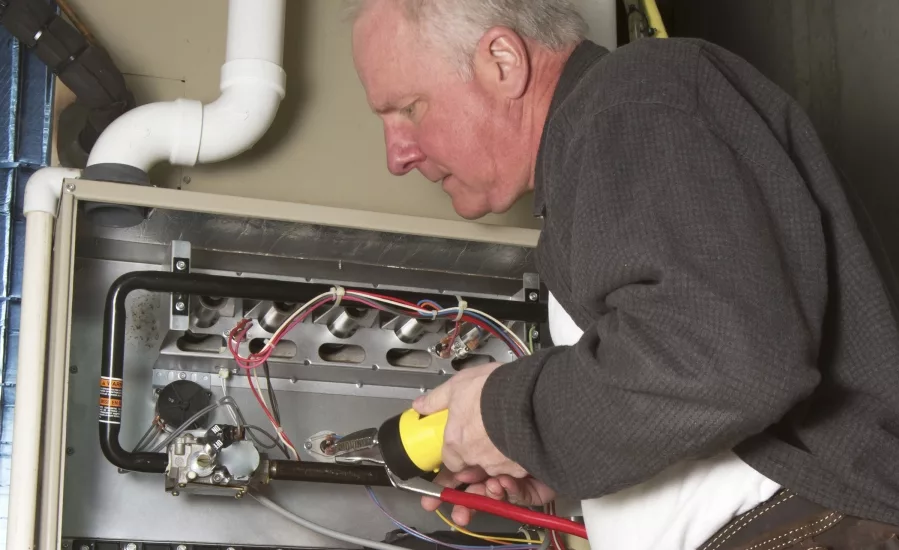
Both versions of the energy bill include amendments that offer solutions to the DOE’s controversial 92 percent AFUE proposed rule for nonweatherized natural gas furnaces, though the industry seems to prefer the language in the Senate version of the bill.
“The House version, HR 8, gives the DOE the authority to accept a consensus agreement between stakeholders, or at least a stakeholder consensus recommendation, and it would prevent the DOE from issuing a final rule before July 1 of this year but no later than July 21,” said Guido Zucconi, assistant vice president of congressional affairs, AHRI. “We’re sort of indifferent to the House language, but because it’s almost July and we’re at an impasse as to where we think the Btu limits should be for condensing and noncondensing furnaces, we’ve agreed to wait to see what the DOE comes out with in the supplemental notice of proposed rulemaking [SNOPR].”
AHRI prefers the Senate language, though they are in wait-and-see mode, Guido said. “The Senate language is more serious and much more appealing to where the industry and gas utilities are. It would pause the current furnace rulemaking, convene a group of stakeholders, and reanalyze the data the DOE uses to justify 92 percent AFUE. It’d look at technical challenges, economic justification, and payback periods, and it’d justify that 92 percent does not make sense in the South and that the rule is flawed.
“At that point, the recommendation from the group, if they were to agree that the data are flawed, would be to vacate the rule and restart the negotiated rulemaking,” Zucconi continued. “It’d force everybody back to the table to hammer out an agreement.”
Melchi said HARDI also supports the language in the Senate bill and is in favor of a negotiated rulemaking.
“Having been through some negotiated rulemakings, it’s not something that any participants particularly enjoy, but, given the alternative that the likelihood the standard as proposed will likely end up in litigation for a third time, we think this is probably the best alternative to that process,” he said. “The fear we have is that the DOE might go final with the rule before a compromised energy bill is completed. We don’t believe the original proposal from the DOE is adequate and feel it’s important that we find an alternative that everyone can live with — including consumers, who are the ones mostly impacted by this. Nobody seems to be speaking up for the large number — one-third of Americans — who are going to lose out.”
Along the same lines of regulatory accountability, AHRI is also monitoring a provision in the House bill that would make technical corrections to the Energy Policy and Conservation Act (EPCA).
“One of those main points is clarifying that a test procedure should come out before the actual NOPR [notice of proposed rulemaking], so that is laid out in the technical corrections,” Clark said. “There are a couple other provisions that involve making sure the stakeholder process is more open, the data are shared, and that they look at the cumulative burden of regulations.”
“That’s a big one for us, making sure the test procedure is out first,” Zucconi agreed. “Frankly, it goes against the DOE’s own rules [not completing the test procedure first].”
UPHILL BATTLE
Despite the bill having bipartisan support in both the House and Senate, an abbreviated legislative calendar may prove problematic during conferencing.
“Hopefully, they’ll start sometime in July, but we’re looking at a very narrow window,” Melchi said. “Congress won’t be in session in August, and we’re looking at political conventions in July, which will prevent them from meeting. We have a very narrow window.”
The particularly volatile political climate across the country may also affect the bill’s chances of passing. Still, industry leaders are holding out hope it will eventually become law.
“From a macro perspective, it’s exciting to see Congress take up an energy bill,” Clark said. “We hope the two sides can actually come together and conference these bills.”
“If they don’t get anything done on this energy bill, there’s really nothing else that this president is going to get to sign,” Melchi said. “There may be a few tax extenders at the end of the year, but as far as putting his thumbprint on something, this is it.”
Publication date: 6/27/2016
Want more HVAC industry news and information? Join The NEWS on Facebook, Twitter, and LinkedIn today!
Looking for a reprint of this article?
From high-res PDFs to custom plaques, order your copy today!