Energy Bill a ‘Mixed Bag’ for HVAC
Organizations express support, concern over parts of the comprehensive energy legislation
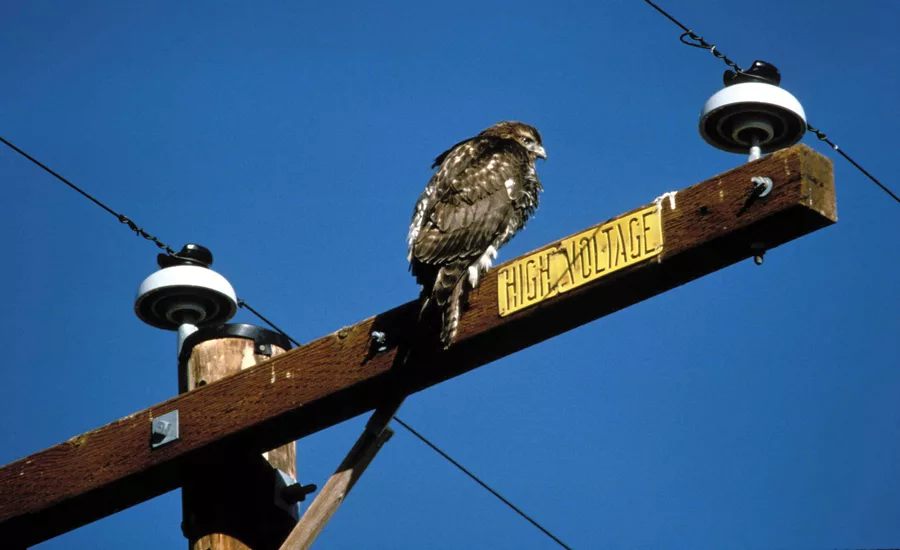
CONTENTIOUS BILL: Many industry stakeholders describe HR 8, the North American Energy Security and Infrastructure Act of 2015, as a “mixed bag” containing numerous provisions that are both helpful and harmful to the HVACR industry. PHOTO COURTESY OF THE U.S. FISH AND WILDLIFE SERVICE
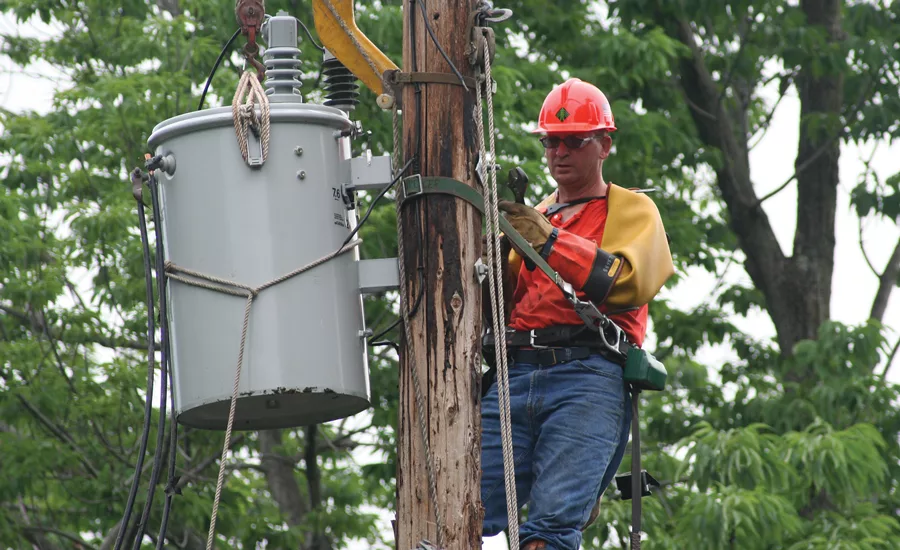
SOME SUPPORT: The National Electrical Manufacturers Association (NEMA) supports language in HR 8 that directs the U.S. Department of Energy (DOE) to develop a plan to establish a Strategic Transformer Reserve to store large power transformers in strategically located facilities. AHRI also supports a fix to the 92 percent AFUE furnace rule that gives stakeholders an opportunity to propose negotiated standards for nonweatherized residential gas furnaces, and several industry organizations support a provision requiring product standards be based on a final revised test procedure. PHOTO COURTESY OF DAVE PAPE
On Dec. 3, 2015, the U.S. House of Representatives passed a comprehensive 275-page energy bill that aims to modernize the country’s energy infrastructure, bolster the energy and manufacturing workforce, increase America’s energy security and diplomacy, and promote energy efficiency and government accountability. The bill — HR 8: North American Energy Security and Infrastructure Act of 2015 — was received in the U.S. Senate on Dec. 7 and referred to the Senate Committee on Energy and Natural Resources.
“It started off as an attempt to be bipartisan and, for the most part, was consensus-based,” said Charlie McCrudden, senior vice president of government relations for ACCA.
But, as the bill lumbered through committee and eventually to the House floor, it became bogged down with amendments that were controversial or political in nature.
“Now, there are provisions in there that some stakeholders don’t like,” McCrudden said. “They held their fire and didn’t oppose the bill earlier because the controversial parts weren’t there, but now they are.”
While HR 8 does contain some appealing provisions for HVACR industry stakeholders, including a fix for the contentious 92 percent AFUE proposed furnace rule, many stakeholders are more concerned about language in the bill that threatens to reduce the U.S. Department of Energy’s (DOE’s) role in helping to create and promote model building energy codes across the U.S.
IMPROVING THE RULEMAKING PROCESS
Guido Zucconi, assistant vice president of congressional affairs, Air-Conditioning, Heating, and Refrigeration Institute (AHRI), calls the bill a mixed bag with a little something for everyone. While it’s not comprehensive reform, he added, “It’s an outlet for a lot of corrections and fixes people have been clamoring for.”
Perhaps most important to the HVACR industry is a provision that gives industry stakeholders the opportunity to develop a consensus furnace standard as an alternative to the DOE’s proposed 92 percent AFUE national standard for nonweatherized residential natural gas furnaces.
Looking for quick answers on air conditioning, heating and refrigeration topics? Try Ask ACHR NEWS, our new smart AI search tool. Ask ACHR NEWS
“The furnace piece is hopefully going to buy us a little more time or give us more avenues if we need to do a legislative fix,” Zucconi said.
Another provision in the legislation aims to improve the overall rulemaking process by requiring energy conservation standards to be based on “the final test procedures which shall be used to determine compliance.” In the past, the DOE has released test procedures for a product at the same time — or even after — it released the final rule for that product. That has been a burden on many manufacturers, especially as the pace of regulatory action has increased in recent years.
“These technical corrections move us in the right direction, which is an important step,” said Cade Clark, vice president of government affairs for AHRI. “Requiring that product standards be based on a final revised test procedure — that’s very important to the industry, and the DOE should be doing these things, anyway. So, it’s a step in the right direction. We feel there is a larger need for a more comprehensive reform of the regulatory process, but we are excited to see that these technical corrections are included.”
McCrudden also said the industry sorely needs these technical corrections. “We’ve had several instances where either they’re setting a new test procedure at the same time as the standard or setting a test procedure later. It just reaffirms that the DOE has to complete a test procedure for a product before they can write a new standard for that product.”
There is also language in the bill that restores the “manufactured by” enforcement scheme for regional standards instead of the “installed by” scheme, which would help alleviate the concerns about stranded inventory after the changeover date when regional standards are imposed, McCrudden said. “With an installed-by scheme, manufacturers have a difficult time forecasting because they don’t know when to stop producing a product so there’s no stranded inventory. This may cause inventory shortages of legal equipment before the changeover date, which just doesn’t make sense.”
Joseph Eaves, director of government relations for the National Electrical Manufacturers Association (NEMA), said NEMA and its members can empathize with the HVACR industry’s regulatory burden and are supportive of the technical changes in the legislation.
“NEMA’s products, especially in the lighting industry and electric motor industry, were some of the earlier products that were being regulated, whereas AHAM [Association of Home Appliance Manufacturers] and AHRI are feeling the brunt of a lot of things all at once now because of the DOE’s pressure to get things done during this administration,” Eaves said. “We’ve been on the receiving end of some of those things before, so we understand.”
INCREASING GRID RELIABILITY
NEMA has been monitoring the bill since it was introduced in September 2015. The legislation, Eaves said, is generally a step in the right direction for NEMA’s members.
“For us, every time the bill would change, we’d look at it anew and try to figure out if there was enough for us to support, and, at the end of the day, it really is a mixed bag,” Eaves said. “There are some things NEMA definitely supports and language that would establish a strategic transformer reserve program, which could help respond to damage to the grid in a rapid manner. Transformers can take 12-24 months to be built, and one of those going down would be a big concern. The reason is because they’re large and built for a very specific application or customer it’s going to. So, we support that, and it’s been in the bill throughout the process and in the final version that passed the House.”
Another provision in the bill addresses energy storage, which NEMA also supports.
“There is some language on research and development for advanced grid technology, including energy storage language, to help look at the benefits of energy storage to help in emergencies and some other things,” Eaves said. “We saw it as there were definitely some good things in there.”
THE BUILDING ENERGY CODE DILEMMA
For many HVACR industry stakeholders, the sticking point keeping them from supporting the bill is the language governing the DOE’s role in creating and promoting model building energy codes. Essentially, if the bill passes the Senate and is signed into law without changes to the section in question, the DOE would be stripped of its ability to “promote or discourage the adoption of a particular building energy code, code provision, or energy savings target to a state or Indian tribe.”
That is a major problem and a big step backward for energy efficiency in the built environment, said ASHRAE president-elect Tim Wentz. ASHRAE and the International Code Council (ICC) rely on the DOE to not only provide input during the code-development process, but also to promote adoption and implementation of the latest model building energy codes nationwide.
“It’s the opposite of what the DOE’s done in the past, and it’s not what the U.S. needs if we’re going to have a coherent, consistent energy policy for this country,” Wentz said. “What we see here in this piece of legislation is that the DOE is not going to be advocating or promoting the adoption of a code like ASHRAE 90.1-2013. It prohibits any of these energy codes from being binding on a state or local government, and that, I think, is an issue, as well. It takes us away from the vision that the government has for our national energy policy.”
On top of that, Wentz said, ASHRAE also takes issue with the bill’s requirement that the DOE use a simple payback method when analyzing energy codes. “It prohibits the DOE from providing any technical or financial advice for any code, provision in the code, energy target, or amendment that has a payback greater than 10 years. I think that’s just wrong, and so does [the engineering] society. Simple payback is a short-term tool used generally for smaller projects and smaller amounts, but, in HR 8, it’s applied to a long-term problem with a great expense to it. It’s simply the wrong tool, and you’re going to end up with a short-term solution to a long-term problem.”
While the House was voting on a bill that limits the DOE’s role in promoting energy efficiency across the country, the U.S., along with nearly 200 other countries, was signing on to the Paris Climate Agreement to produce clean power and more efficient buildings in order to halt global warming, said Wentz. It’s an example of the left hand being unaware of what the right hand is doing, he said.
“If you’re going to make a commitment to produce more efficient buildings, you need all 50 states to buy in, and the pathway to buying in is through organizations, like ASHRAE, that write these high-end, high-performance, high-quality standards and ensure they are applied uniformly across the country with help from the DOE.”
ICC also opposes the legislation because of the language pertaining to the model building energy codes, said Chris Ochoa, vice president of government relations in charge of federal activities for ICC. “Our concern has been that the language has consistently had limitations to federal agencies — specifically the DOE — and their participation in our code-development process. Anyone has the ability to come and participate, and sometimes they say things we don’t like or agree with, but everybody has the ability to speak up, including federal agencies and local governments.”
“Because the process is consensus-based, we see that provision in the bill restricting the DOE’s participation and setting a bad precedent,” said Sara Yerkes, senior vice president of government relations for ICC. “What impact will it have on the other agencies? I’ll say that, for clarification purposes, the DOE has no more influence than anybody else in the process. They’re just one stakeholder, one voice — they can submit a proposal and come to a hearing and be engaged like anybody else. There’s no special agreement or relationship with the DOE. We don’t see the need for that provision in the bill.”
Alliance to Save Energy president Kateri Callahan also spoke out against HR 8, saying any benefits of the bill would be completely eclipsed by the costs of the bill’s negative impact on building energy codes.
“The building energy code’s provisions in HR 8 would prevent the continuance of locally driven processes now in place for the development and adoption of building energy codes,” she added. “The net cost of these energy-efficiency provisions in HR 8 would be a staggering $20 billion. These costs will burden consumers and businesses, and each dollar represents energy waste that could be avoided.”
AN UNCERTAIN FUTURE
Despite the bill’s shortcomings, it’s still an important piece of legislation that has the potential to address energy infrastructure, security, efficiency, and many other things, McCrudden said.
“We haven’t had a comprehensive energy bill since 2007, and you only get one bite at this apple with each Congress. With big energy bills, like the Shaheen-Portman bill or Portman-Shaheen bill, it often grows and grows and then falters, so they’ll pick some low-hanging fruit, wrap it up, and pass it as a lite version of the bill. That’s why we go through this exercise — even if the big bill doesn’t go through, there are opportunities to pick out little provisions.”
“This bill, as it stands now, has a tough path forward, if it has a path forward,” Eaves said. “We’re hoping the Senate is able to move early — in January or February — which will then set off the process of trying to conference the two bills to see if that’s even possible.”
While some industry stakeholders are hoping the bill will move through the Senate, others are hoping it will either wither on the vine or be vetoed by President Barack Obama.
“There is a Senate version — the Portman-Shaheen legislation — that is much more forward-thinking, which ASHRAE supports,” Wentz said. “But, if the House bills move forward in the Senate, Obama has threatened to veto this legislation, citing the harm it would cause to the DOE’s ability to provide technical assistance and support in building energy code development and implementation as some of the first reasons for his objections.”
“With the veto message coming out of the White House, it is unlikely the President will sign the bill,” Ochoa said.
Even if HR 8 doesn’t make it to the president’s desk, or if it does and is vetoed, the ball is still in motion to produce comprehensive energy legislation, and neither the House nor Senate will want to lose that momentum.
“I think the House and Senate are a little too polarized to get closer to something that will be signed by the president, but it’s been so many years in the making — and there has been so much frustration — that everyone will keep working toward something,” Zucconi said.
Publication date: 1/11/2016
Want more HVAC industry news and information? Join The NEWS on Facebook, Twitter, and LinkedIn today!
Looking for a reprint of this article?
From high-res PDFs to custom plaques, order your copy today!