ACHR News
search
Ask ACHR NEWS AI
cart
facebook twitter instagram linkedin youtube
  • Sign In
  • Subscribe
  • Sign Out
  • My Account
ACHR News
  • NEWS
    • Breaking News
    • New HVAC Products
    • Featured Products
    • Manufacturer Reports
    • HVAC Data
    • Legislation
    • ACHR NEWS Centennial
  • RESIDENTIAL
    • Air Conditioners
    • Furnaces
    • Residential Heat Pumps
    • Ductless
    • Residential IAQ
    • Testing, Monitoring, Tools
    • Components & Accessories
  • COMMERCIAL
    • Air Handlers
    • Rooftop Units
    • Chillers and Cooling Towers
    • Commercial Heat Pumps
    • Boilers and Hydronics
    • VRF/Ductless
    • Commercial IAQ
  • REFRIGERATION
    • Refrigerants
    • Refrigerant Regulations
    • Leak Management
  • CONTRACTOR PRO
    • Geothermal
    • Homeowner Study
    • VRF and VRV Ductless
    • Unitary Trends
  • EDUCATION
    • Training and Education
    • Business Management
    • Service and Maintenance
    • Continuing Education
    • Market Research >
      • HVAC Brand Awareness Report
      • VRV, VRF, VRVZ Report
      • Unitary Trends Report
      • Water Heat Professionals Report
    • Webinars
    • Sponsor Insights
    • eProducts Info
    • White Papers
  • EVENTS
    • HVAC Contractor Forum
    • Industry Events and Webinars
  • MEDIA
    • Videos
    • AHR Expo 2025 Videos
    • Podcasts >
      • ACHR News Podcast
      • HARDI Podcasts
      • AHR Expo Podcasts
      • ACCA Podcasts
    • Interactive Spotlights
    • Quizzes
    • eBooks
    • HVAC Talkback
  • HVAC GROUP
    • ACHR NEWS >
      • Current Issue
      • Digital Edition
      • Subscribe
    • Distribution Trends
    • SNIPS NEWS >
      • Join SNIPS NEWS
    • Engineered Systems News >
      • Join ES News
    • HVACR Directory
    • Contests
    • Newsletters
    • Contact
    • Advertise
    • My Account
RefrigerationRefrigerants

Developing Next-gen Refrigerants

It’s Time to Get Involved in the Ongoing Development of New Refrigerants

October 20, 2014

The HVACR industry is always exploring new options that may lead to more efficient, cost-effective, and environmentally friendly refrigerants to keep facilities — and the people and technology in them — comfortably cool.

Recent headlines have highlighted and escalated the ongoing efforts to curb greenhouse gas emissions from automotive exhaust, mobile air conditioning, commercial refrigeration refrigerant leaks, and other contributors to greenhouse gas emissions.

Industry, manufacturers, and governments are seeking alternative refrigerants that have lower global warming potential (GWP) than the widely accepted hydrofluorocarbon (HFC) refrigerants of today. Since 1987, the Montreal Protocol and other multinational treaties have focused efforts on pragmatic changes to address real concerns for the environment with social and economic needs in both developed and developing countries.

It’s clear that someday, equipment using HFCs will need alternative fluids. The refrigerant industry is undergoing an intense research and development phase to identify the next best alternatives and has come up with a few promising options. However, today, when we look at what has the potential for commercial viability, there are many challenges for some of these fluids to emerge as the HVACR industry’s next-generation refrigerants of choice. Let’s look at some of the challenges each faces to help understand how this transition will take place.

Availability

Owners, service companies, manufacturers, and retail outlets have significant concerns over availability. In one case, most of today’s supply is now sold to the foam-blowing industry for the production of building insulation. While new plants are being built to produce the refrigerant, it will be at least 2017 before this liquid is expected to be widely available for new equipment, and potentially longer until it is readily available in local retail outlets for service technicians.

Cost

With the current low production volume, these alternative refrigerants can cost three to five times more than today’s HFCs. And, even as production ramps up, the chemical nature of these new refrigerants will likely continue to make them more expensive than today’s HFCs well into the future.

Energy Efficiency

Some equipment manufacturers are looking only at how these refrigerants will work with one component of a system they produce. More importantly, the industry needs to know how they will work with an overall system as used by customers on a daily basis. Certain new low-GWP refrigerants have the effect of lowering the efficiency of HVACR equipment in specific applications.

Looking for quick answers on air conditioning, heating and refrigeration topics? Try Ask ACHR NEWS, our new smart AI search tool. Ask ACHR NEWS →

Safety

Some of these alternative refrigerants fall into new flammability classes. Codes and standards, such as ASHRAE 15 and ISO 5149, are being revised to acknowledge the new class of flammability; however, it will take time for the new revision to be incorporated in building codes and then for the revised building codes to be adopted by local jurisdictions.

Many of the new alternatives present challenges to manufacturers, owners, operators, and service personnel with special handling and transportation requirements for flammable refrigerants.

Technicians must be trained to service what amounts to a new technology. Also, current HVACR equipment will have to be modified to use these refrigerants. Industry customers will pay those costs, however steep they are.

It may take as long as five to 10 years to work through these issues. And these are issues that need to be addressed by industry experts. This is not something customers should be asked to handle.

Understandably, everyone wants to quickly get improved, low-GWP refrigerants on the market. But that cannot be done in a way that damages the environment and current chiller equipment, causes safety issues, or is virtually unaffordable.

Industry customers like the idea of using low-GWP refrigerants based on their desire to lower carbon emissions from their businesses. But, it’s important to remember the vast majority of greenhouse gases released into the atmosphere result from the burning of fossil fuels. As much as 98 percent of the total GWP impact of HVACR equipment comes from the indirect emissions from electricity use and the production and disposal of the units and related equipment.

A prime HVACR industry goal should be making the systems that cool our buildings as efficiently as possible. Since the 1980s, we have made improvements outside of refrigerants that have increased average chiller efficiency by at least 40 percent. These improvements are the result of improved aerodynamic designs, new heat exchangers, optimized controls, and new bearing technology. Variable-speed drives (VSDs) are another energy-efficiency innovation, and their use has been growing throughout the last 35 years.

Some of the alternative refrigerants have been shown to lower equipment efficiency. The Air-Conditioning, Heating, and Refrigeration Institute’s (AHRI) Low-GWP Alternative Refrigerants Evaluation Program (Low-GWP AREP) has tested many low-GWP fluids. In some ways, they outperformed other available refrigerants, while in other ways, they didn’t measure favorably. If a low-GWP liquid isn’t at least as efficient as what it replaces, then the industry would be moving backwards, and causing more damage to the environment than good.

Choosing a refrigerant shouldn’t be made on any one factor, especially a lower GWP. There is no single refrigerant solution for every need. Each application needs to be evaluated on factors including use, location, size, local regulations, and the type of equipment being employed. Maintaining HVACR equipment is equally important, since refrigerant only has an impact on carbon emissions if it leaks or is mistakenly released into the atmosphere. Simply put, it’s important to select the right refrigerant for the right building and the right equipment.

Customers count on our industry to provide them with information on refrigerant safety, reliability, performance, efficiency, and costs in order to make informed decisions.

The truth is, the best overall refrigerants are already widely available on the market today. This means that right now, there are excellent choices that benefit customers with high efficiency and low carbon emissions at a practical cost. As an industry, we must remain involved in the ongoing development of new refrigerants while always looking to protect the best interests of our customers and the environment.

Bill McQuade is director of technology, energy efficiency, and the environment for Milwaukee-based Johnson Controls Inc. For more information, visit www.johnsoncontrols.com.

Publication date: 10/20/2014

Want more HVAC industry news and information? Join The NEWS on Facebook, Twitter, and LinkedIn today!

KEYWORDS: alternative refrigerants CO2 refrigeration HFC refrigerants

Share This Story

Looking for a reprint of this article?
From high-res PDFs to custom plaques, order your copy today!


Recommended Content

JOIN TODAY
To unlock your recommendations.

Already have an account? Sign In

  • HVAC-enrollment

    The Trades Are Back: HVACR Programs See Nearly 30% Enrollment Spike

    A new wave of future technicians is entering the pipeline.  
    News
    By: Matt Jachman
  • 2025 Top 40 Under 40

    2025 Top 40 Under 40 HVACR Professionals List

    The 11th annual Top 40 Under 40 list highlights those...
    HVAC Light Commercial Market
    By: Hannah Belloli-Oster
  • LG Ductless Mini-Split Systems

    The 9 Types of Heat Pumps

    As the U.S. moves toward electrification, heat pumps are...
    News
    By: Joanna R. Turpin
Subscription Center
  • Create an Account
  • Start a Subscription
  • Manage My Account
  • Sign Up for Newsletters
  • Visit Customer Service
  • Update Preferences

More Videos

Sponsored Content

Sponsored Content is a special paid section where industry companies provide high quality, objective, non-commercial content around topics of interest to The News audience. All Sponsored Content is supplied by the advertising company and any opinions expressed in this article are those of the author and not necessarily reflect the views of The News or its parent company, BNP Media. Interested in participating in our Sponsored Content section? Contact your local rep!

close
  • Piggy Bank
    Sponsored byWatercress Financial

    Energy Prices, Inflation, and HVAC: What Today’s Homeowners Care About

  • Refrigerated Food
    Sponsored bySolstice Advanced Materials

    R-455A Refrigeration: A Cold Storage Solution for the Future

  • Airex Rooftop Units
    Sponsored byAirex Manufacturing Inc

    Consolidating Roof Penetrations: A Growing Trend in Multifamily HVAC Design

Popular Stories

HVAC-Price-Increase-graphic

HVAC Price Increase List: June 2026

Trump-Section-232.jpg

Trump Reduces Section 232 Tariffs on HVAC Equipment to 15%

R410A-Refrigerant-Cylinder.jpg

Refrigerant Recovery is a Revenue Opportunity

Heat-pump-cutaway.jpg

PFAS Rules and A2L Building Codes Continue to Evolve

Kroger.jpg

Kroger to Spend $100 Million to Reduce Refrigerant Leaks

View The ACHR NEWS
Centennial Anniversary Timeline

The ACHR News Timeline Chart
Submit a Letter
Submit a letter to our editors.

Events

November 6, 2025

Next-Gen Data Center Cooling: HVAC Innovation and Real-World Solutions

On Demand As AI workloads and high-density computing push traditional cooling methods to their limits, the data center industry is accelerating the adoption of next-generation HVAC technologies.

June 9, 2026

Before You Go All In on AI: Set Up Your Business to Actually Win

In this webinar, we'll walk you through exactly what to get in place before you add AI to your business. You'll leave with a clear picture of where you stand today and a practical action plan to set yourself up for real results.

View All Submit An Event

Poll

Summer Staff

Are you fully staffed for the summer season?
View Results Poll Archive

Products

BNI Mechanical/Electrical Square Foot Costbook, 2026 Edition

BNI Mechanical/Electrical Square Foot Costbook, 2026 Edition

See More Products
A2L Refrigerants - Free Webinar - May 21, 2026

Related Articles

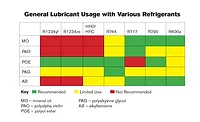
  • Lubricant Chart

    Lubrication Tips for Next-gen Refrigerants

    See More
  • Fatigue resistant nitinol tubes

    Elastocaloric Technology Could Be Next-Gen Cooling System

    See More

Related Products

See More Products
  • low grade.png

    Low GWP Refrigerant Safety: Flammable & Mildly Flammable Refrigerants Manual

  • quick guide.png

    Quick Guide to Refrig Cycle, Refrigerants, Components

  • The ACHR News - June 16, 2025

    ACHR NEWS June 16, 2025, Issue

See More Products

Events

View AllSubmit An Event
  • November 6, 2025

    Next-Gen Data Center Cooling: HVAC Innovation and Real-World Solutions

    On Demand As AI workloads and high-density computing push traditional cooling methods to their limits, the data center industry is accelerating the adoption of next-generation HVAC technologies.
View AllSubmit An Event

Related Directories

  • Copper Development Assn.-CDA

    Copper Development Association Inc. (CDA) is a U.S.-based, not-for-profit association of the global copper industry, committed to promoting the proper use of copper materials in sustainable, efficient applications.
×

Sign Up. Stay Informed.

The #1 trusted source for the HVACR industry since 1926

SUBSCRIBE
  • RESOURCES
    • Advertise
    • Contact Us
    • Advisory Board
    • Classifieds
    • Submit a Letter
    • Directories
    • Store
  • ACCOUNT CENTER
    • Create an Account
    • Start a Subscription
    • Manage My Account
    • Sign Up for Newsletters
    • Visit Customer Service
    • Update Preferences
  • SERVICES
    • Marketing Services
    • Reprints
    • Market Research
    • List Rental
    • Survey/Respondent Access
  • STAY CONNECTED
    • LinkedIn
    • Facebook
    • Instagram
    • YouTube
    • X (Twitter)
  • PRIVACY
    • PRIVACY POLICY
    • TERMS & CONDITIONS
    • DO NOT SELL MY PERSONAL INFORMATION
    • PRIVACY REQUEST
    • ACCESSIBILITY

Copyright ©2026. All Rights Reserved BNP Media, Inc. and BNP Media II, LLC.

Design, CMS, Hosting & Web Development :: ePublishing