ACHR News
search
Ask ACHR NEWS AI
cart
facebook twitter instagram linkedin youtube
  • Sign In
  • Subscribe
  • Sign Out
  • My Account
ACHR News
  • NEWS
    • Breaking News
    • New HVAC Products
    • Featured Products
    • Manufacturer Reports
    • HVAC Data
    • Legislation
    • ACHR NEWS Centennial
  • RESIDENTIAL
    • Air Conditioners
    • Furnaces
    • Residential Heat Pumps
    • Ductless
    • Residential IAQ
    • Testing, Monitoring, Tools
    • Components & Accessories
  • COMMERCIAL
    • Air Handlers
    • Rooftop Units
    • Chillers and Cooling Towers
    • Commercial Heat Pumps
    • Boilers and Hydronics
    • VRF/Ductless
    • Commercial IAQ
  • REFRIGERATION
    • Refrigerants
    • Refrigerant Regulations
    • Leak Management
  • CONTRACTOR PRO
    • Geothermal
    • Homeowner Study
    • VRF and VRV Ductless
    • Unitary Trends
  • EDUCATION
    • Training and Education
    • Business Management
    • Service and Maintenance
    • Continuing Education
    • Market Research >
      • HVAC Brand Awareness Report
      • VRV, VRF, VRVZ Report
      • Unitary Trends Report
      • Water Heat Professionals Report
    • Webinars
    • Sponsor Insights
    • eProducts Info
    • White Papers
  • EVENTS
    • HVAC Contractor Forum
    • Industry Events and Webinars
  • MEDIA
    • Videos
    • AHR Expo 2025 Videos
    • Podcasts >
      • ACHR News Podcast
      • HARDI Podcasts
      • AHR Expo Podcasts
      • ACCA Podcasts
    • Interactive Spotlights
    • Quizzes
    • eBooks
    • HVAC Talkback
  • HVAC GROUP
    • ACHR NEWS >
      • Current Issue
      • Digital Edition
      • Subscribe
    • Distribution Trends
    • SNIPS NEWS >
      • Join SNIPS NEWS
    • Engineered Systems News >
      • Join ES News
    • HVACR Directory
    • Contests
    • Newsletters
    • Contact
    • Advertise
    • My Account

Home Health + Comfort: Contractors Should Know About Standard 62.2
By Joanna R. Turpin
March 22, 2010
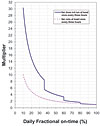
Per Standard 62.2, the required modification to the ventilation air requirement.

Just over six years ago, the American Society of Heating, Refrigerating and Air-Conditioning Engineers (ASHRAE) published Standard 62.2, Ventilation and Acceptable Indoor Air Quality in Low-Rise Residential Buildings. The standard defines the roles of and minimum requirements for mechanical and natural ventilation systems and the building envelope in order to provide acceptable IAQ in low-rise residential buildings.

The standard applies to spaces that are intended for human occupancy within new and existing single-family houses and multifamily structures of three stories or fewer, including manufactured and modular houses. According to ASHRAE, the standard helps ensure air inside homes is clean and safe by limiting sources of pollutants and requiring enough mechanical ventilation (45 to 75 cfm for an average-size house) to provide dilution for unavoidable contaminants.

While initially considered somewhat controversial, Standard 62.2 is now widely accepted and used by numerous green building programs and state and local entities around the country. Indeed, the Centers for Disease Control (CDC) and the U.S. Dept. of Housing and Urban Development (HUD) recently recommended Standard 62.2 as an effective way to reduce indoor air pollution through ventilation.

The widespread acceptance of Standard 62.2 throughout the industry means that all HVAC contractors need to become familiar with its guidelines. That is especially the case for those looking to tap into the lucrative green market, as most building programs touting energy efficiency require mechanical ventilation based on the standard.

GAINING MOMENTUM

Some industry experts have noted that Standard 62.2 is the most important standard that contractors know the least about, and to some degree, Steven Emmerich, chairman, ASHRAE SSPC 62.2, agrees with that statement. “That was certainly true up until recently, but I think that is changing now. The standard is being more widely applied, and some people have to deal with it whether they want to or not. Other people want to learn about it, so they’re taking advantage of the materials and classes we offer to find out how to apply it. We probably have a ways to go in getting everyone familiar with 62.2, but we are getting the word out.”

Even if contractors do not work with any green building programs, they should take the steps necessary to learn about Standard 62.2 in order to provide the best possible service for their customers, said Emmerich. “It is incumbent upon contractors to provide their customers with the mechanical systems needed for the best available protection for their comfort and health. Standard 62.2 is the best standard we have - the only national standard we have - on how to do that.”
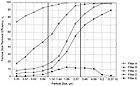
Per Standard 62.2, typical composite curves of various MERV levels.

In order to make Standard 62.2 as easy to use as possible, ASHRAE published a user’s manual that explains how to comply with all the requirements of the standard. It also provides examples illustrating specific methods of complying with sections of the standard and includes background material explaining why many of the requirements of the standard exist.

Emmerich noted that even though the current user’s manual is based on the 2004 version of the standard - the current version of the standard came out in 2007 - all the important information is included. “The user’s manual was designed to be easy to use by contractors. We wanted to make it a very useful tool. If contractors would like to see something different, we would definitely like to hear about that,” he said. A new user’s manual, which will be created based on the 2010 version of the standard, is currently in the works.
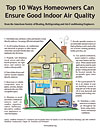
When Standard 62.2 was first published, ASHRAE came up with a list of ways homeowners could ensure they had proper IAQ in their houses.

ONGOING CHANGES

Since its original publication in December 2003, many changes have been made to the standard but none of them alter its basic principles, said Emmerich. The standard still requires whole-building ventilation, local exhaust (e.g., fans in kitchens and bathrooms), limited source control, and quiet, effective air-moving equipment.

“For the most part, we are just trying to clarify some of the information. As more people have applied the standard and more bodies have adopted it, questions have been raised in terms of making things clearer, so we’re trying to make it easier for people to apply the standard. For example, the original standard did not make it clear as to which systems required airflow measurements in order to verify the standard was met. We added an addendum to clarify that because we want to make sure the whole-house system actually provides the airflow required by its design.”

The overall amount of ventilation that is required by the standard has not changed since it was first published; however, a table has been added that clarifies the ventilation rates based on whether an intermittent or continuous system is being utilized. There have also been a few changes made in terms of limiting duct leakage when ducts are located in garages.

One of the more significant changes made recently involves how the standard should be applied to existing buildings. “When we first wrote the standard, we were thinking more in terms of new construction,” said Emmerich.

“Obviously, some things that are easy for a contractor to do in a new building are a lot harder to do in a renovation. For example, it might be difficult to run ducts to a certain place, or a house might have an existing fan that meets the airflow required but is not one of the quiet fans needed to meet 62.2. Does it make sense to replace that fan with a quiet one just for that reason? Maybe not. So we created a new appendix to make it easier to use 62.2 in existing structures.”

ASHRAE SSPC 62.2 is currently considering a laundry list of minor changes that have been proposed for the 2010 version of the standard. Also being considered for future inclusion are several significant changes, including a requirement for CO alarms. This requirement was considered for the original version of the standard but was removed before final publication, due to concerns by some that this standard is not the place for such a requirement. The committee already approved a proposed change adding CO alarms to the standard, and the proposal went through the public review process. The committee is considering the comments received prior to deciding on a final action.

Another addendum that has been proposed will consider treating ventilation systems differently based on details of the system design. “Right now it doesn’t matter if you have an exhaust system or a supply system, a single point or a multipoint, we treat them all the same, and they all have to provide the same airflow,” said Emmerich.

“We have proposed an addendum that would give ventilation credits for different types of systems because they physically act differently. Exhaust systems and supply systems are not equal, so we are trying to come up with a system of credits that is fair based on physics, yet keep it simple so that people can apply it.”

That last point is the biggest concern because if the standard becomes too complex, there will be resistance in the marketplace from code bodies, builders, and contractors. ASHRAE SSPC 62.2 strives to keep it simple, as Emmerich said, in order to make the standard more appealing and easier to use for everyone involved in the industry.

To view ASHRAE Standard 62.2, visit www.ashrae.org.

Publication date: 03/22/2010

Share This Story

Looking for a reprint of this article?
From high-res PDFs to custom plaques, order your copy today!


Tn joanna 2017
Joanna Turpin is a Senior Editor at The ACHR NEWS. She can be contacted at 248-786-1707 or joannaturpin@achrnews.com. Joanna has been with BNP Media since 1991, first heading up the company’s technical book division before moving over to The ACHR NEWS, where she frequently writes about refrigerants and commercial refrigeration. She obtained her bachelor’s degree in English from the University of Washington and worked on her master’s degree in technical communication at Eastern Michigan University.

Recommended Content

JOIN TODAY
To unlock your recommendations.

Already have an account? Sign In

  • HVAC-enrollment

    The Trades Are Back: HVACR Programs See Nearly 30% Enrollment Spike

    A new wave of future technicians is entering the pipeline.  
    News
    By: Matt Jachman
  • 2025 Top 40 Under 40

    2025 Top 40 Under 40 HVACR Professionals List

    The 11th annual Top 40 Under 40 list highlights those...
    HVAC Contracting
    By: Hannah Belloli-Oster
  • LG Ductless Mini-Split Systems

    The 9 Types of Heat Pumps

    As the U.S. moves toward electrification, heat pumps are...
    Heat Pumps
    By: Joanna R. Turpin
Subscription Center
  • Create an Account
  • Start a Subscription
  • Manage My Account
  • Sign Up for Newsletters
  • Visit Customer Service
  • Update Preferences

More Videos

Sponsored Content

Sponsored Content is a special paid section where industry companies provide high quality, objective, non-commercial content around topics of interest to The News audience. All Sponsored Content is supplied by the advertising company and any opinions expressed in this article are those of the author and not necessarily reflect the views of The News or its parent company, BNP Media. Interested in participating in our Sponsored Content section? Contact your local rep!

close
  • Piggy Bank
    Sponsored byWatercress Financial

    Energy Prices, Inflation, and HVAC: What Today’s Homeowners Care About

  • Refrigerated Food
    Sponsored bySolstice Advanced Materials

    R-455A Refrigeration: A Cold Storage Solution for the Future

  • Airex Rooftop Units
    Sponsored byAirex Manufacturing Inc

    Consolidating Roof Penetrations: A Growing Trend in Multifamily HVAC Design

Popular Stories

Lennox equipment

Platinum Equity to Sell Heat Controller to Lennox

HVAC-tech-van.jpg

Report: Only 65% of HVAC Technician Time is Billable Hours

HVAC Minute retail refrigeration system

EPA Final Rule’s Impact on R-410A Deadlines

Lovato-refrigerant-rooftop_AC_Units_.jpg

When Refrigerants Change, So Do the Contactors

Dealer_Couple2_Kitchen_Estimate.jpg

Predicting the Next Service Call

View The ACHR NEWS
Centennial Anniversary Timeline

The ACHR News Timeline Chart
Submit a Letter
Submit a letter to our editors.

Events

November 6, 2025

Next-Gen Data Center Cooling: HVAC Innovation and Real-World Solutions

On Demand As AI workloads and high-density computing push traditional cooling methods to their limits, the data center industry is accelerating the adoption of next-generation HVAC technologies.

July 28, 2026

How Top Home Services Companies Turn Every Conversation Into Predictable Revenue

In this webinar, we'll outline how top contractors are turning every conversation into predictable revenue by coaching every comfort advisor visit, not just the ones a manager rides along on.

View All Submit An Event

Poll

Summer Staff

Are you fully staffed for the summer season?
View Results Poll Archive

Products

BNI Mechanical/Electrical Square Foot Costbook, 2026 Edition

BNI Mechanical/Electrical Square Foot Costbook, 2026 Edition

See More Products
Designing Systems Using A2L Refrigerant - Free Webinar - 7/22/2026

Related Articles

  • What HVAC Contractors Should Know About Variable Refrigerant Flow Technology

    See More
  • LG Air Conditioning unit in a kitchen.

    Five Things HVAC Contractors Should Know About Cold-Climate VRF

    See More
  • What HVAC contractors should know about the changes taking place in BIM

    See More

Related Products

See More Products
  • The ACHR News - June 30, 2025

    ACHR NEWS June 30, 2025, Issue

See More Products

Related Directories

  • Bosch Home Comfort

    Bosch Home Comfort is reinventing energy efficiency by offering smarter products that work together, including heat pumps, tankless, point-of-use and electric water heaters and more.
  • Bosch Home Comfort (Manufacturer)

    Bosch Home Comfort is a leading source of high-quality heating, cooling and hot water systems. We are committed to reinventing energy efficiency by offering smart products that work together.
  • American Standard Heating & Air Conditioning

    Residential and light commercial equipment including packaged and split systems; air conditioners, heat pumps, furnaces, controls, air filtration systems, ductless systems, VRF Systems.
×

Sign Up. Stay Informed.

The #1 trusted source for the HVACR industry since 1926

SUBSCRIBE
  • RESOURCES
    • Advertise
    • Contact Us
    • Advisory Board
    • Classifieds
    • Submit a Letter
    • Directories
    • Store
  • ACCOUNT CENTER
    • Create an Account
    • Start a Subscription
    • Manage My Account
    • Sign Up for Newsletters
    • Visit Customer Service
    • Update Preferences
  • SERVICES
    • Marketing Services
    • Reprints
    • Market Research
    • List Rental
    • Survey/Respondent Access
  • STAY CONNECTED
    • LinkedIn
    • Facebook
    • Instagram
    • YouTube
    • X (Twitter)
  • PRIVACY
    • PRIVACY POLICY
    • TERMS & CONDITIONS
    • DO NOT SELL MY PERSONAL INFORMATION
    • PRIVACY REQUEST
    • ACCESSIBILITY

Copyright ©2026. All Rights Reserved BNP Media, Inc. and BNP Media II, LLC.

Design, CMS, Hosting & Web Development :: ePublishing