Preventing Mold Growth in Hospitals

Mark Nunnelly will be the first to tell you that there are no guarantees to yield a zero mold growth in a health care facility. To prove his point, all the president of Nunnelly & Associates, based in Birmingham, Ala., has to do is turn to American Society of Heating, Refrigerating and Air-Conditioning Engineers’ (ASHRAE’s) HVAC Design Manual for Hospitals and Clinics, which states, “health care facilities are environments of controlled hazards.”
In other words, the hazards - molds, bacteria, viruses, etc. - are there. The challenges, maintains Nunnelly, is controlling these hazards to a level, as he put it, “deemed safe for the facility’s occupants, patients, and caregivers.”
“Oftentimes, the root causes of mold-related problems in health care facilities can be traced back to shortcomings with the initial facility design,” said Nunnelly, who specializes in humidity control consulting. “These shortcomings often pertain to the building structure itself - the building envelope, the building materials used, etc. Other design shortcomings, however, are often related to the HVAC system and its ability, or lack thereof, to control the patient care environment to conditions that are not conducive to mold growth.”
Even if all of the bases were covered properly during the design phase, and the facility was built in accordance with the design standards and documents, mold can often still be found in a building because of the way in which the building and its HVAC system are being operated and maintained, he said.
DESIGN ISSUES
In Nunnelly’s estimation, many design issues can lead to a lack of moisture control within a hospital that can potentially lead to mold problems. These issues could be building envelope- and construction-related, such as poor or improper insulation leading to wall surface condensation. The problems might be improper roof drainage, leaky window and door systems, improper installation of vapor retarders, or any number of envelope-related issues, he said. It might very well be related to having too much water and/or humidity entering the building during the construction phase.Zeroing in strictly on the HVAC system’s design and operation, Nunnelly believes there are a number of issues that must be resolved before the proper HVAC system can be designed, whether it be intended for the surgical suite, the patient rooms, or the administration offices.
“Initially, the proper ambient design conditions must be selected,” he said. “Too often, only the peak cooling design conditions are considered for sizing the capacity requirements of the system. These ambient conditions are listed in the ASHRAE Handbook - Fundamentals as the dry bulb temperatures with mean coincident wet bulb temperatures, representing conditions on hot, mostly sunny days. These conditions are used in sizing cooling equipment, such as chillers or air conditioning equipment for cooling control.
“In some climates, this might be satisfactory. However, in geographic areas known for higher humidity levels, considering only this cooling condition might not be sufficient.”
According to Nunnelly, extreme dew point temperature conditions may occur on days with moderate dry bulb temperatures, resulting in high relative humidities and peak absolute moisture loads from the weather. He said these values from tables found in the Fundamentals handbook are useful for humidity control applications, such as desiccant cooling and dehumidification, cooling-based dehumidification, and fresh air ventilation systems.
“These values can also be used as a checkpoint when analyzing the behavior of cooling systems at part-load conditions, particularly when such systems are used for humidity control as a byproduct of temperature control,” he said, noting that the psychrometric chart for Memphis, Tenn. (see Figure 1), highlights what a significant impact the selected ambient extremes can make. As seen in Figure 1, if the space were to be maintained at a condition of 75°F dry bulb (db) and 50 percent relative humidity (rh), the ventilation air being introduced during the extreme dew point condition would require much more dehumidification capacity than the ventilation air at the extreme cooling condition, he explained. This means almost 52 percent more dehumidification capacity is required just to deliver the ventilation air at a space “neutral” humidity level.
“Not considering the more difficult peak dew point conditions of the ambient air is one of the major reasons that HVAC systems in the hospitals cannot adequately control the humidity during much of the year,” said Nunnelly.
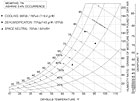
Figure 1: Psychrometric chart for Memphis, Tenn.
DEALING WITH COOLER CONDITIONS
Nunnelly maintains that another reason humidity and condensate problems are being seen in hospitals, particularly within surgical suites, is that the rooms are being kept at cooler conditions than for that which the engineer designed the HVAC system. Most of the time only the general requirements from the American Institute of Architects (AIA) guidelines are considered for the surgical environment’s temperature and humidity range, for example 68°db and 50 percent rh.“However, nothing in these guidelines shall be construed as precluding the use of temperatures lower than those noted when the patients’ comfort and medical conditions make lower temperatures desirable. Some surgeons may require room temperatures that are outside of the indicated range,” he said.
“All operating room design conditions shall be developed in consultation with surgeons, anesthesiologists, and nursing staff. The designer must ask the end users of the facilities what the anticipated space conditions will be.” If the HVAC system had only been designed to maintain the space at the higher room temperatures, Nunnelly said then once the room’s temperature is actually lowered (e.g., 60° to 62°db), then the HVAC system’s capacity would very likely not be able to reach the necessary lower absolute moisture levels for the space.
“If this occurs, the moisture in the air will begin to condense on the cooler surfaces of the ceiling supply air diffusers, the suspended fixtures, and even on the surgical equipment and tables,” he said.
“Condensate raining from the ceiling, after being in contact with the dirt, dust, and mold spores is certain to cause concerns regarding the sterility of the surgical environment.”
He noted that this same phenomenon can happen in other parts of the hospital, including kitchen and dining, labs, and even patient rooms. However, the surgical environment is generally the more common area of concern, he said.
“This is the primary reason the desiccant-based dehumidification systems are becoming much more of a standard in the surgical suites,” he added.
SOME EXAMPLES
Nunnelly’s bottom line is this: Proper selection, sizing, and application of the HVAC systems are essential to ensuring the humidity is controlled to a level to where there is minimal chance the moisture in the air will condense and provide the mold spores with the moisture it needs to flourish. Mechanical HVAC systems - including chilled-water systems and/or direct expansion systems - must be selected with the cooling coils capable of supplying air at dew points low enough to actually compensate for the moisture gain within the spaces (i.e., latent gain), he noted.Nunnelly used the following as an example. If the operating space is to be maintained with a condition of 60° db and 50 percent rh, then a chilled-water coil only capable of delivering air off the cooling coils at 50° to 52° (saturated) will not satisfy the need. He said the supply air would have to be delivered at an absolute humidity level of less than 41.3° dew point.
“This would require either a low-temperature chiller or a desiccant-based dehumidification/cooling system,” said the consultant.
For a facility only trying to maintain the space at 75° db and 50 percent rh (i.e., 55° dew point), Nunnelly said the coils must still be capable of delivering air with a dew point less than 55° in order to absorb the space latent gain.
“If the moisture is not controlled sufficiently by the HVAC system, this could spell disaster with regard to trying to keep significant mold growth out of the facility,” he said.
Once the air-handling equipment has been properly sized and selected, care must be taken to ensure that the supply air ducts, the chilled water lines (supply and return), and the refrigerant lines are well insulated, he said. With the cooler air inside the ducts or water inside the chilled-water piping, Nunnelly warned that condensation can easily form on the outside of the ducts and/or pipes.
“The dew point temperature of the air surrounding the cooler ducts and pipes could easily be higher than the surface temperature of the ducts and pipes,” he said. “Condensation will occur when this happens.”
If the ducts and piping happen to be in the ceiling space, the condensate can drip onto a surface that is loaded with mold - ceiling tiles, dry wall boards, insulation, plywood, etc. - “and all of the necessary elements are there for mold growth,” he said.

HUMIDITY CONTROL MATTERS
In his estimation, once the HVAC system has been selected and properly sized, serious consideration must then be given to the controllability of the systems. It is his belief that most HVAC systems are installed with the primary function of either cooling or heating, with the humidity control simply as a secondary function of the system.“This is evidenced by the fact that most HVAC systems are installed only with a thermostat installed to operate the system,” said Nunnelly. “Including humidity control devices in the controls package for the HVAC system is almost nonexistent. How can you control the humidity if it is not even being measured?”
Also, far too often, the supply and return air ducts aren’t sealed or insulated properly during construction, he said. On the return side of the equipment, leaky ducts will draw in far more moisture than the cooling coils were designed to remove. The result, he said, is a higher than designed and desired humidity level in the space.
“In an effort to save installation dollars, the return duct is often deleted from the plans and the interstitial space between the suspended ceiling and the roof assembly, or the floor assembly above, is used as a return plenum,” he said.
“Little thought is given to the fact that this interstitial space is now under a substantial negative pressure and this could cause moisture-laden ambient air to be drawn into the space from an outside wall through cracks and holes if this space is not sealed adequately. This infiltration air is completely unconditioned at this point.”
Nunnelly is quick to point out there is more to consider, but all should start with the basics first.
“The HVAC system, the heart and lungs of the facility, must be selected and sized properly for its very important task,” he summarized. “And that task is to control the environment to promote the healthiest conditions possible for the patients and the health care providers.”
For more information, contact Nunnelly at nunnelly@bellsouth.net.
Sidebar: Mold Dangers
According to the Environmental Protection Agency (EPA), many mold types are very opportunistic and will often infect those people with weakened immune systems (i.e., immuno-compromised individuals). Aspergillus fumigatus, for example, has been known to infect the lungs of immuno-compromised individuals. These individuals inhale the mold spores, which start growing in their lungs.Trichoderma has also been known to infect immuno-compromised children. Other health effects can range from simple headaches, sinus, or breathing problems to more severe problems like skin rashes, bleeding of the lungs, cancer, and even death.
There is evidence that a direct association exists between exposure to mold and adverse health effects. Mayo Clinic investigators have recently found that inhaled fungus and mold trapped in the nasal mucus are a major cause of sinusitis. There is also other suggestive evidence that there is an association between exposure to mold and other adverse health effects.
Sidebar: Pay Attention
In addition to design issues, consultant Mark Nunnelly said maintaining a clean environment, including a clean HVAC system, will pay great dividends toward minimizing the potential for mold growth in hospitals.“Food for mold spores is generally in abundance within the facility, but there is no reason to spoon-feed the mold spores,” said the president of Nunnelly & Associates. “Keep the air handlers’ filters clean, and keep the dust and dirt out of the space as much as possible.”
If remodeling projects are underway within the hospital, even if it involves simply running new cables above a ceiling system, Nunnelly encouraged the practice of sealing off the construction areas to make certain the airborne debris is unable to get into the areas that should be clean.
“As a preventive measure, consider engaging the services of an industrial hygienist to assist,” he suggested.
In an effort to conserve energy, Nunnelly said oftentimes the chiller is allowed to operate with a slightly elevated leaving water temperature (e.g., elevating from 44° to 46°, possibly). While this will indeed save on the energy bill, and it might be sufficient for keeping the space temperature under control, “it could fail miserably at controlling the moisture within the space, especially within the operating rooms,” he said.
He added, “If the humidity within the space should exceed the desired maximum acceptable level - for instance, 55 percent to 60 percent rh - then there should be a humidity sensor and transmitter within the space that could override the temperature controls and then lower the chilled-water temperature in order to keep the humidity under control.”
In the overall pictures, he said building pressurization is another critical factor to monitor in a hospital, as it can greatly affect the controllability of the environment. If the building pressure is allowed to become negative due to supply filters being loaded, supply fans running too slow, or return fans running too fast, humid and dirty air can be drawn into the building through cracks and openings, he explained.
“This air is completely unconditioned and can provide several of the necessary ingredients to promote mold growth,” he said, meaning moisture, more spores, and nutrients. “Dynamic pressure differential monitoring must take place in order to ensure the building is under the necessary positive pressure.”
He advised also to regularly have a testing, adjusting, and balancing (TAB) evaluation performed on the facility’s HVAC systems. At the same time, examine those drain pans.
“It is far too common to see water standing in drain pans due to either clogged condensate lines, pans that are not sloped, or drain line connections placed too high above the drain pan’s floor,” he said. “If there is water standing in the pans, then this water can become a breeding ground for hazardous bacteria and molds. Much of this standing water will also be evaporated back into the supply airstream, saturating the supply duct, making it a prime breeding ground for undesirable hazards.”
Even though some of these issues might be obvious, Nunnelly said these are some of the more common issues found in the design and operation of the health care facilities.
“Excessive mold growth has been found in too many instances within the facilities that should be the healthiest of them all,” he said. “Greater attention must be paid, in the design and in the operational phases, to the HVAC system’s capability to actively control the humidity within health care facilities.”
Publication date: 11/03/2008
Looking for a reprint of this article?
From high-res PDFs to custom plaques, order your copy today!