The partnership, which expands the availability of Mysa products in the U.S. wholesale market, will complement Copeland’s Sensi portfolio of smart thermostats.
Marking its first time at the NAFEM Show as a stand-alone company, Copeland will present advanced technologies designed to help the food-service industry transition to low-GWP refrigerants, improve operational efficiency, and safeguard perishable food through an efficient cold chain.
Chief technology officer Patrick Forsythe said Copeland has released more than 100 products and solutions since it was spun off from Emerson as a completely separate company.
While ownership of smart devices — including smart thermostats, TVs, and appliances — are significantly higher than when the study was first commissioned in 2022, homeowners were also more likely to be concerned about data privacy in 2024, the survey showed.
“Our partnership with Copeland will help us meet the rigorous standards of the DOE’s Commercial Building Heat Pump Technology Challenge,” said Brent Stockton, director of engineering at Aaon.
Two U.S. Department of Energy grants awarded to Copeland in 2024 further fuel the company’s ability to advance the research and manufacturing of cold-climate heat-pump technologies.
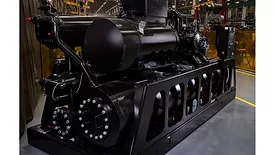
The Markham District Energy facility differs from standard applications because instead of relying on conventional energy sources, it captures waste heat from sewage, which enters at about 5°C and is converted into 95°C usable heat.
Private equity funds managed by Blackstone Private Equity will purchase Emerson’s 40% common equity ownership in the joint venture, while Copeland will repurchase the seller’s note.
CEO Ross Shuster called Copeland “the newest 100-year-old company in the HVAC industry.” After 37 years as part of Emerson, Copeland became a stand-alone company last year after Emerson reached a deal with an investment firm.