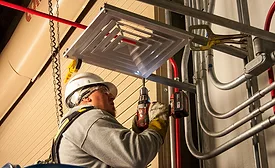
There’s no doubt that Internet of Things (IoT)-enabled technology has impacted the HVACR industry. Now, the technology is evolving even further, allowing HVACR manufacturers to include built-in diagnostics and troubleshooting in the equipment itself.
Following a contentious two-year struggle, the HVACR industry is enthusiastically applauding Congress’ decision to reinstate the federal residential and commercial geothermal heat pump tax credits.
I see techs in the field get the most frustrated when they have a low-voltage short they can’t seem to locate. The challenge techs face with low voltage diagnosis is a combination of poor process and some root misunderstanding about what they are looking for.
For the year ending December 2017, sales of HVACR equipment showed solid mid-single-digit growth. That is according to Air-Conditioning, Heating, and Refrigeration Institute (AHRI).
The majority of commercial and industrial contractors are confident about sales growth, profits, and staffing levels heading into 2018, according to the latest Associated Builders and Contractors Inc. (ABC) Construction Confidence Index (CCI).
Every year, the AHR Expo brings forth educational sessions that help contractors and manufacturers better understand how the HVACR industry functions and how it is constantly changing and evolving.
According to the most recent report from Heating, Air-conditioning and Refrigeration Distributors International (HARDI), average sales for HARDI distributor members declined by 2.8 percent in December 2017, and the average annualized growth for the 12 months through December 2017 was 5.3 percent.
Social media and search engine optimization (SEO) are major players in the marketing game for any industry. According to Internet Live Stats, the number of daily searches on Google is 3.5 billion, equating to 1.2 trillion searches per
year worldwide.