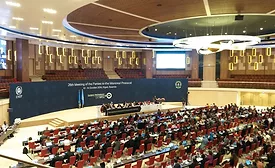
Stephen Yurek, president and CEO of the Air-Conditioning, Heating, & Refrigeration Institute (AHRI), recently discussed the Kigali Agreement and some of the effects it may have on the HVACR industry with The NEWS.
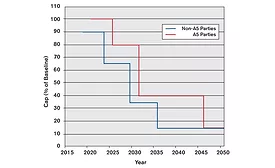
The Kigali amendment is subject to ratification in the U.S. and will formally take effect when 20 member parties to the Montreal Protocol ratify or accept the amendment, which could take up to two years.
Well, as we’re all aware, 2016 is a presidential election year and the United States’ “noble experiment in democracy” continues. Obviously, I’m going to tread lightly in these turbulent political waters, but I thought it might be interesting to take a look behind the scenes and examine the parties’ respective platforms.
Hedegaard brings extensive experience to the company
May 30, 2016
Connie Hedegaard, a former European Union (EU) commissioner for climate action and Danish minister, has been elected as a member of the Danfoss board of directors.
EDITOR’S NOTE: This is part two of a two-part series. The first part, "Tips for Surviving Refrigerant Transitions, Part 1," appeared in the Feb. 1, 2016, issue of The NEWS.
Issues include climate change, energy productivity, connectivity and a growing skills gap
February 29, 2016
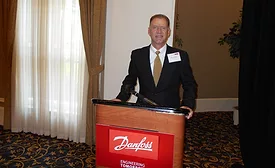
Danfoss hosted its 21st annual press briefing Jan. 26 during the 2016 AHR Expo in Orlando, Florida. Titled “Engineering Tomorrow,” this year’s briefing explored four major challenges facing the HVACR industry — climate change, energy productivity, connectivity, and a growing skills gap.
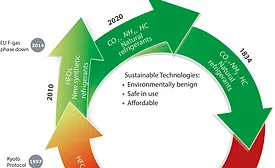
The cyclical pattern of change in refrigerants is linked directly to our growing understanding of the unintended consequences of refrigerant interactions with our atmosphere, coupled with advancements in technology and shifts in societal values toward sustainability. One only needs to look at the evolution of refrigerants to see these trends at play.
The refrigeration industry certainly takes its share of heat from the scientific research community, and it can be easy to feel as if we’re being ganged up on. But the good news is that we’ve got some scientists and researchers working on our side, too.