ACHR News
search
Ask ACHR NEWS AI
cart
facebook twitter instagram linkedin youtube
  • Sign In
  • Subscribe
  • Sign Out
  • My Account
ACHR News
  • NEWS
    • Breaking News
    • New HVAC Products
    • Featured Products
    • Manufacturer Reports
    • HVAC Data
    • Legislation
    • ACHR NEWS Centennial
  • RESIDENTIAL
    • Air Conditioners
    • Furnaces
    • Residential Heat Pumps
    • Ductless
    • Residential IAQ
    • Testing, Monitoring, Tools
    • Components & Accessories
  • COMMERCIAL
    • Air Handlers
    • Rooftop Units
    • Chillers and Cooling Towers
    • Commercial Heat Pumps
    • Boilers and Hydronics
    • VRF/Ductless
    • Commercial IAQ
  • REFRIGERATION
    • Refrigerants
    • Refrigerant Regulations
    • Leak Management
  • CONTRACTOR PRO
    • Geothermal
    • Homeowner Study
    • VRF and VRV Ductless
    • Unitary Trends
  • EDUCATION
    • Training and Education
    • Business Management
    • Service and Maintenance
    • Continuing Education
    • Market Research >
      • HVAC Brand Awareness Report
      • VRV, VRF, VRVZ Report
      • Unitary Trends Report
      • Water Heat Professionals Report
    • Webinars
    • Sponsor Insights
    • eProducts Info
    • White Papers
  • EVENTS
    • HVAC Contractor Forum
    • Industry Events and Webinars
  • MEDIA
    • Videos
    • AHR Expo 2025 Videos
    • Podcasts >
      • ACHR News Podcast
      • HARDI Podcasts
      • AHR Expo Podcasts
      • ACCA Podcasts
    • Interactive Spotlights
    • Quizzes
    • eBooks
    • HVAC Talkback
  • HVAC GROUP
    • ACHR NEWS >
      • Current Issue
      • Digital Edition
      • Subscribe
    • Distribution Trends
    • SNIPS NEWS >
      • Join SNIPS NEWS
    • Engineered Systems News >
      • Join ES News
    • HVACR Directory
    • Contests
    • Newsletters
    • Contact
    • Advertise
    • My Account
RefrigerationStandards and LegislationRefrigerants

Surviving Refrigerant Transitions, Part 2

The drive to lower-GWP alternatives will define our landscape for years to come
By Stephen Spletzer
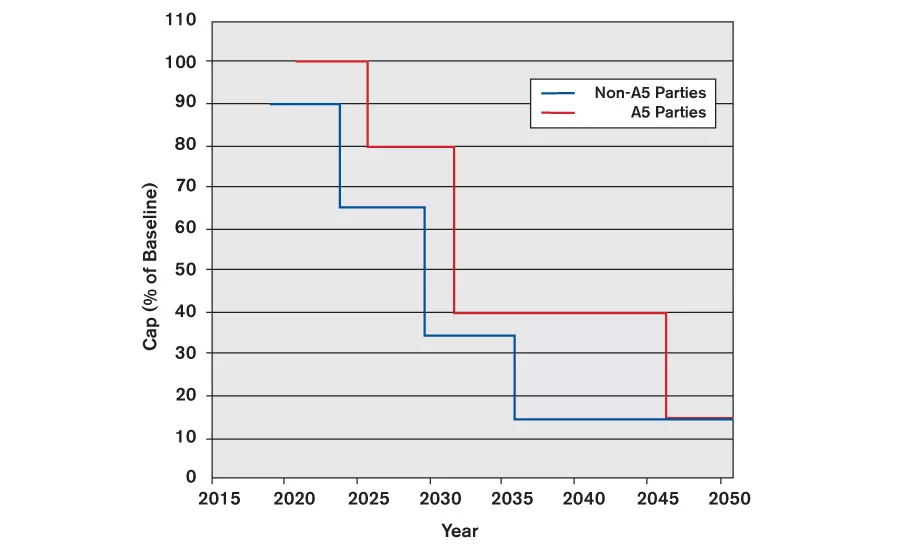
The proposed North American hydrofluorocarbon (HFC) phasedown submission.
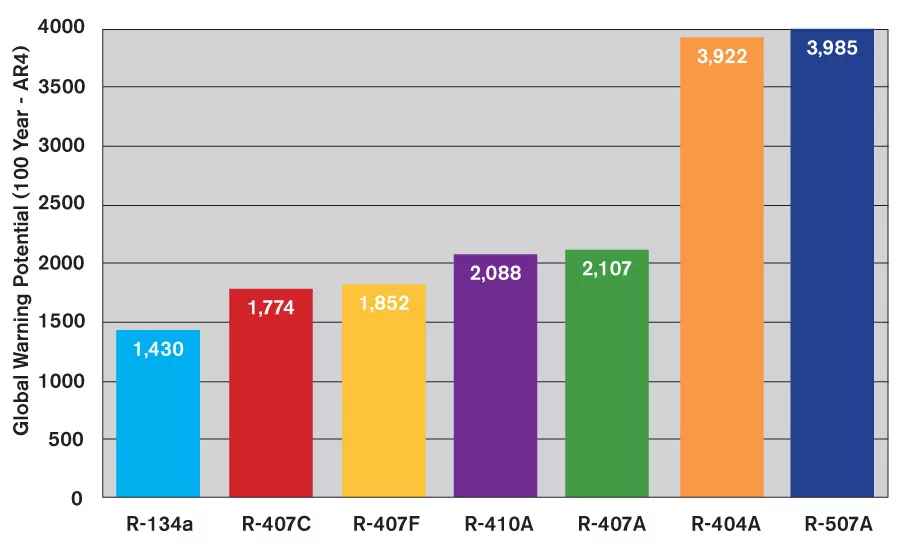
FIGURE 1: The proposed North American hydrofluorocarbon (HFC) phasedown submission.

Global warming potentials (GWPs) of HFC refrigerants (based on Intergovernmental Panel on Climate Change Fourth Assessment Report).
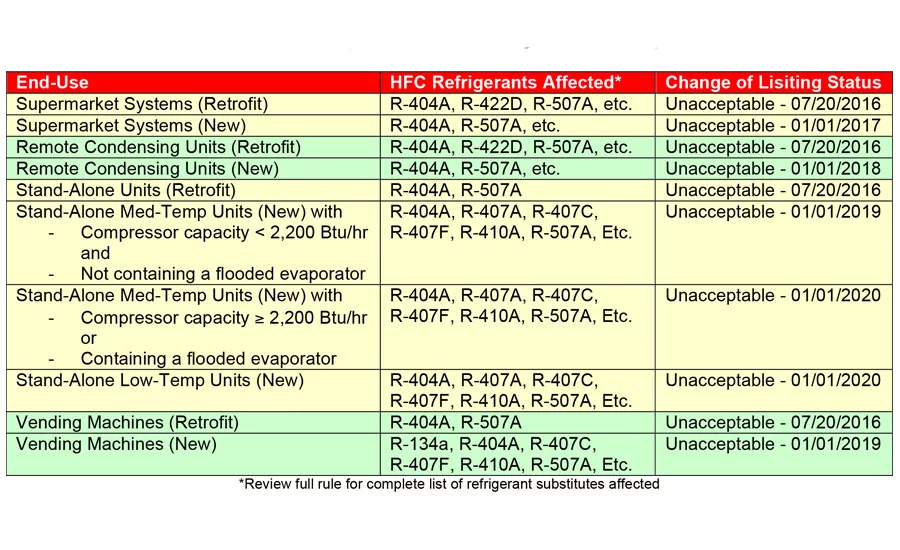
FIGURE 2: Global warming potentials (GWPs) of HFC refrigerants (based on Intergovernmental Panel on Climate Change Fourth Assessment Report).

The impact of the U.S. Environmental Protection Agency’s (EPA’s) Rule 20 on stationary HVACR applications.
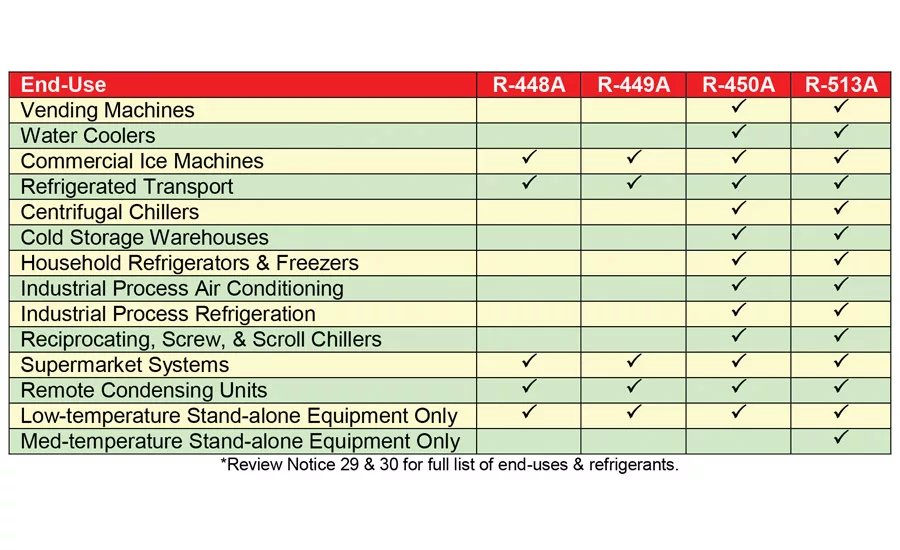
TABLE 1: The impact of the U.S. Environmental Protection Agency’s (EPA’s) Rule 20 on stationary HVACR applications.

New U.S. EPA Significant New Alternatives Policy (SNAP)-accepted refrigerants for new and retrofit end uses.

TABLE 2: New U.S. EPA Significant New Alternatives Policy (SNAP)-accepted refrigerants for new and retrofit end uses.

The proposed North American hydrofluorocarbon (HFC) phasedown submission.
Global warming potentials (GWPs) of HFC refrigerants (based on Intergovernmental Panel on Climate Change Fourth Assessment Report).
The impact of the U.S. Environmental Protection Agency’s (EPA’s) Rule 20 on stationary HVACR applications.
New U.S. EPA Significant New Alternatives Policy (SNAP)-accepted refrigerants for new and retrofit end uses.
March 7, 2016

EDITOR’S NOTE: This is part two of a two-part series. Part one appeared in the Feb. 1, 2016, issue of The NEWS.

If there’s one word that can produce chills in the refrigeration industry, it’s “regulation.” Our industry is well-regulated already, particularly when it comes to areas such as energy efficiency and refrigerants, and further regulations are all but certain. Let’s take a look at how recently approved and pending regulatory actions related to refrigerants are affecting us here in the U.S.

A GLOBAL PERSPECTIVE

It seems as if hydrofluorocarbons (HFCs) had barely arrived on the scene before they were under siege for their relatively high global warming potentials (GWPs). Efforts to combat climate change through chemical regulation have largely focused on this property. While some would like to see all synthetic refrigerants banned regardless of their GWPs, others prefer to focus on what they believe to be more practical and achievable solutions. Still, others bemoan what they perceive as yet another round of chemical obsolescence along with the associated costs and the prospect of even more refrigerants to contend with.

For the last several years, proposals have been put forth to amend the Montreal Protocol to include a phasedown — not a phaseout — of HFCs on a GWP-weighted basis. The North American 2015 HFC Submission (see Figure 1 on Page 28) is composed of a series of stepdowns that would start in 2019 for developed (non-A5) countries with an ultimate target of reducing the GWP weighting of these products to 15 percent of the cap for all involved, including A5 parties (developing countries). While these proposals have not yet achieved global consensus, support has been steadily growing and it is becoming more likely that this amendment, or something close to it, will become a reality in the near future. Should this come to pass, further regulation at the national level will undoubtedly follow.

Those future regulations will surely focus on the GWP of HFC refrigerants. Therefore, it’s useful to establish a baseline of comparison for future discussions. Figure 2 shows the GWPs of some of the more commonly used HFC refrigerants in air conditioning and refrigeration applications. In order to significantly reduce the GWP footprint of HFCs, our industry will certainly need to transition away from refrigerants such as R-404A and R-507A wherever possible. However, even the relatively lower GWPs of products such as R-134a and R-407C are already considered too high for certain end uses.

CLOSER TO HOME

The U.S. Environmental Protection Agency (EPA) has been very active on the refrigerants front. Several recent regulatory actions are worth noting, as they will significantly impact the future of the refrigerants market. Rapidly approaching implementation dates will shape the market, as well.

The EPA’s “Final Rule – Protection of Stratospheric Ozone: Change of Listing Status for Certain Substitutes Under the Significant New Alternatives Policy (SNAP) Program” was finalized in the summer of 2015. This action will change the status of many higher-GWP HFC refrigerants (such as R-404A and R-507A) to unacceptable in a variety of new equipment and retrofit applications over the next several years. Much of the rationale for these changes is the fact that environmentally safer (i.e., lower-GWP) refrigerant alternatives have been developed and are available for use. Stationary HVACR system types affected by this rule include supermarket systems, remote condensing units, stand-alone retail food refrigeration equipment, and vending machines. Table 1 lists an abridged summary of the stationary end-use applications impacted as well as some of the better-known HFC refrigerant substitutes affected and the effective dates.

Looking for quick answers on air conditioning, heating and refrigeration topics? Try Ask ACHR NEWS, our new smart AI search tool. Ask ACHR NEWS →

The implications of this ruling are extensive. First, to be clear, higher-GWP HFC refrigerants are not being banned outright. Existing installations can still use their original refrigerants for servicing over their useful life. Refrigerant retrofitting and new system installations, on the other hand, are another matter entirely.

In the U.S., we’re deep in the midst of an R-22 phaseout with the allocation of R-22 being further reduced each year. Many R-22 systems, such as those in supermarkets, will undergo a refrigerant retrofit in the coming years. However, a number of the currently approved higher-GWP HFC alternatives will no longer be acceptable retrofit options in the near future. Fortunately, there are several other widely used HFC refrigerant alternatives (for example, R-407A or R-407F) available that have lower GWPs.

Similarly, R-404A and R-507A will be unacceptable for new supermarket installations in 2017. As the supermarket industry has been steadily migrating away from these refrigerants to products such as R-407A and R-407F over the last several years, this is unlikely to become a disruptive issue for this market segment. Additionally, even lower-GWP alternatives — for example, HFC/hydrofluoroolefin [HFO] blends — are making their way into the marketplace.

For smaller systems, such as new stand-alone units or vending machines, the change in status may prove more challenging. Not only will higher-GWP refrigerants, such as R-404A and R-507A, be unacceptable mid-range GWP products, such as R-134a, R-407A, R-407F, and R-410A, are also being delisted for some of these applications. This will require OEMs to investigate lower-GWP alternatives, such as hydrocarbons (HCs), CO2, HFOs, and HFC/HFO blends. Some of these options may require significant equipment redesign.

At first glance, some might view the large list of refrigerants being delisted with great trepidation. However, end-uses targeted by these applications generally have viable alternatives in place. Two recent EPA Notices of Acceptability (Notices 29 and 30) have allowed for the use of new lower-GWP refrigerants in a variety of air conditioning and refrigeration applications. These products are primarily HFC/HFO blends that are positioned as replacements for R-134a, R-404A, and R-507A and have significantly lower GWPs — a third as much as the HFC refrigerants they are replacing, in some cases. Table 2 provides a brief summary of some of the new refrigerant/end-use combinations that have been approved by these actions.

Finally, the EPA recently issued a notice of proposed rulemaking that would update the refrigerant management requirements of Section 608 of the Clean Air Act. This proposal would extend requirements for ozone-depleting refrigerants to HFCs, lower leak-rate thresholds on industrial process and commercial refrigeration systems, and require regular leak inspections or continuous monitoring devices for refrigeration and air conditioning systems containing 50 or more pounds of refrigerant. It would also require technicians to keep records of refrigerant recovery during system disposal for systems containing 5-50 pounds of refrigerant.

When looking at the sum total of these actions, it’s clear our industry is being driven toward lower-GWP refrigerant alternatives, and that is going to be the regulatory trend for years to come. These regulations will present us with many challenges and opportunities as our industry works to help promote a more sustainable future.

Publication date: 3/7/2016

Want more HVAC industry news and information? Join The NEWS on Facebook, Twitter, and LinkedIn today!

KEYWORDS: alternative refrigerants Climate Change and HVACR Ozone Depletion Refrigerant Phasedown

Share This Story

Looking for a reprint of this article?
From high-res PDFs to custom plaques, order your copy today!


Headshot danfoss stephenspletzer

Stephen Spletzer is a senior technical support engineer at Danfoss. He can be reached at svs@danfoss.com or 410-933-6063.
 

Recommended Content

JOIN TODAY
To unlock your recommendations.

Already have an account? Sign In

  • HVAC-enrollment

    The Trades Are Back: HVACR Programs See Nearly 30% Enrollment Spike

    A new wave of future technicians is entering the pipeline.  
    News
    By: Matt Jachman
  • 2025 Top 40 Under 40

    2025 Top 40 Under 40 HVACR Professionals List

    The 11th annual Top 40 Under 40 list highlights those...
    HVAC Contracting
    By: Hannah Belloli-Oster
  • LG Ductless Mini-Split Systems

    The 9 Types of Heat Pumps

    As the U.S. moves toward electrification, heat pumps are...
    Ground Source Heat Pumps
    By: Joanna R. Turpin
Subscription Center
  • Create an Account
  • Start a Subscription
  • Manage My Account
  • Sign Up for Newsletters
  • Visit Customer Service
  • Update Preferences

More Videos

Sponsored Content

Sponsored Content is a special paid section where industry companies provide high quality, objective, non-commercial content around topics of interest to The News audience. All Sponsored Content is supplied by the advertising company and any opinions expressed in this article are those of the author and not necessarily reflect the views of The News or its parent company, BNP Media. Interested in participating in our Sponsored Content section? Contact your local rep!

close
  • Piggy Bank
    Sponsored byWatercress Financial

    Energy Prices, Inflation, and HVAC: What Today’s Homeowners Care About

  • Refrigerated Food
    Sponsored bySolstice Advanced Materials

    R-455A Refrigeration: A Cold Storage Solution for the Future

  • Airex Rooftop Units
    Sponsored byAirex Manufacturing Inc

    Consolidating Roof Penetrations: A Growing Trend in Multifamily HVAC Design

Popular Stories

Outdoor-condensing-units.jpg

EPA Removes R-410A Installation Deadline

Trump-Section-232.jpg

Trump Reduces Section 232 Tariffs on HVAC Equipment to 15%

HVAC-Price-Increase-graphic

HVAC Price Increase List: June 2026

cooling-habits.jpg

50 Percent of Americans Have Skipped HVAC Maintenance

ACHR NEWS Editor Chris Gray Presenting HVAC Minute 5-18-2026

HVAC Manufacturers Fight Pricing Lawsuits

View The ACHR NEWS
Centennial Anniversary Timeline

The ACHR News Timeline Chart
Submit a Letter
Submit a letter to our editors.

Events

November 6, 2025

Next-Gen Data Center Cooling: HVAC Innovation and Real-World Solutions

On Demand As AI workloads and high-density computing push traditional cooling methods to their limits, the data center industry is accelerating the adoption of next-generation HVAC technologies.

June 9, 2026

Before You Go All In on AI: Set Up Your Business to Actually Win

In this webinar, we'll walk you through exactly what to get in place before you add AI to your business. You'll leave with a clear picture of where you stand today and a practical action plan to set yourself up for real results.

View All Submit An Event

Poll

EPA Decision

Are you happy the EPA decided contractors can continue to install R-410A equipment?
View Results Poll Archive

Products

BNI Mechanical/Electrical Square Foot Costbook, 2026 Edition

BNI Mechanical/Electrical Square Foot Costbook, 2026 Edition

See More Products
A2L Refrigerants - Free Webinar - May 21, 2026

Related Articles

  • The historical cycle of refrigerants.

    Tips for Surviving Refrigerant Transitions, Part 1

    See More
  • Btu Buddy 91: Underground Refrigerant Leak - Part 2

    See More
  • CO2 System

    Mythbusting CO₂ Refrigeration Systems, Part 2

    See More

Related Products

See More Products
  • solidworkscourse1.gif

    SolidWorks for the Sheet Metal Guy - Course 1: Part Creation

See More Products

Related Directories

  • Quick Cool Refrigeration Spare Parts

    Buy high-quality HVAC Spare Parts in Abu Dhabi! Find a wide range of Mitsubishi A/C Parts, HVAC Spare parts, including compressors, Refrigerant Gas, Copper Coils, A/C spare parts supplier, air condition parts, Mitsubishi A/C parts, A/C spare parts in Abu Dhabi at affordable prices.
  • Parts Town

    Parts Town is your #1 source for genuine OEM HVAC replacement parts with a large inventory ready to ship same day, innovative technology, and unmatched customer experience.
  • Lau Parts

    The premier manufacturer of replacement propellers, wheels, blowers, blower parts, and service tools.
×

Sign Up. Stay Informed.

The #1 trusted source for the HVACR industry since 1926

SUBSCRIBE
  • RESOURCES
    • Advertise
    • Contact Us
    • Advisory Board
    • Classifieds
    • Submit a Letter
    • Directories
    • Store
  • ACCOUNT CENTER
    • Create an Account
    • Start a Subscription
    • Manage My Account
    • Sign Up for Newsletters
    • Visit Customer Service
    • Update Preferences
  • SERVICES
    • Marketing Services
    • Reprints
    • Market Research
    • List Rental
    • Survey/Respondent Access
  • STAY CONNECTED
    • LinkedIn
    • Facebook
    • Instagram
    • YouTube
    • X (Twitter)
  • PRIVACY
    • PRIVACY POLICY
    • TERMS & CONDITIONS
    • DO NOT SELL MY PERSONAL INFORMATION
    • PRIVACY REQUEST
    • ACCESSIBILITY

Copyright ©2026. All Rights Reserved BNP Media, Inc. and BNP Media II, LLC.

Design, CMS, Hosting & Web Development :: ePublishing