ACHR News
search
Ask ACHR NEWS AI
cart
facebook twitter instagram linkedin youtube
  • Sign In
  • Subscribe
  • Sign Out
  • My Account
ACHR News
  • NEWS
    • Breaking News
    • New HVAC Products
    • Featured Products
    • Manufacturer Reports
    • HVAC Data
    • Legislation
    • ACHR NEWS Centennial
  • RESIDENTIAL
    • Air Conditioners
    • Furnaces
    • Residential Heat Pumps
    • Ductless
    • Residential IAQ
    • Testing, Monitoring, Tools
    • Components & Accessories
  • COMMERCIAL
    • Air Handlers
    • Rooftop Units
    • Chillers and Cooling Towers
    • Commercial Heat Pumps
    • Boilers and Hydronics
    • VRF/Ductless
    • Commercial IAQ
  • REFRIGERATION
    • Refrigerants
    • Refrigerant Regulations
    • Leak Management
  • CONTRACTOR PRO
    • Geothermal
    • Homeowner Study
    • VRF and VRV Ductless
    • Unitary Trends
  • EDUCATION
    • Training and Education
    • Business Management
    • Service and Maintenance
    • Continuing Education
    • Market Research >
      • HVAC Brand Awareness Report
      • VRV, VRF, VRVZ Report
      • Unitary Trends Report
      • Water Heat Professionals Report
    • Webinars
    • Sponsor Insights
    • eProducts Info
    • White Papers
  • EVENTS
    • HVAC Contractor Forum
    • Industry Events and Webinars
  • MEDIA
    • Videos
    • AHR Expo 2025 Videos
    • Podcasts >
      • ACHR News Podcast
      • HARDI Podcasts
      • AHR Expo Podcasts
      • ACCA Podcasts
    • Interactive Spotlights
    • Quizzes
    • eBooks
    • HVAC Talkback
  • HVAC GROUP
    • ACHR NEWS >
      • Current Issue
      • Digital Edition
      • Subscribe
    • Distribution Trends
    • SNIPS NEWS >
      • Join SNIPS NEWS
    • Engineered Systems News >
      • Join ES News
    • HVACR Directory
    • Contests
    • Newsletters
    • Contact
    • Advertise
    • My Account

Warnings Put Focus On Building Security

August 5, 2004
Concern for the safety of building HVAC systems is growing in the wake of the past week's terror alerts for sites of American and international financial institutions.

The warnings came as U.S. Homeland Security officials revealed that Al Qaeda has detailed information about buildings and surroundings of such firms in New York, Newark, N.J., and Washington, D.C. The terror threat alert was raised to orange (high) in those areas.

New York Police Commissioner Raymond Kelly said police were advising owners or managers of other large businesses to safeguard their HVAC systems. The night of Aug. 1 he went with police counterterrorism and intelligence units to brief security directors of 13 major financial firms, asking many to heighten security on ventilation systems as well as on deliveries and visitors. "There was no time frame with the intelligence," Kelly said in a press conference.

Homeland Security Secretary Tom Ridge later noted that al Qaeda's information had been gathered over the past four or more years. The possible terrorist targets Ridge identified included the New York Stock Exchange and Citigroup sites in New York, including the Citicorp Center; the Prudential Financial Building in Newark; World Bank buildings in Washington, and International Monetary Fund sites in both New York and Washington. Officials also mentioned other institutions in New York, New Jersey and Washington, D.C., and the Bank of America building in San Francisco.

Raising Awareness

HVAC system security is the subject of continuing study by American Society of Heating, Refrigerating, and Air-Conditioning Engineers (ASHRAE). One report, "Risk Management Guidance for Health, Safety, and Environmental Security under Extraordinary Incidents," was updated last year.

"The most significant new concern that has arisen as a result of these recent alerts is the likelihood that some of these individuals may have infiltrated or become employed in these buildings and have access and knowledge of what's in the building that an outsider would not," said Larry Spielvogel, chairman of ASHRAE's Presidential Ad Hoc Committee on Homeland Security.

Spielvogel is a consulting engineer from Philadelphia; his practice is primarily consulting on existing buildings. He reports generally mounting interest in system safety, "but more importantly we have increased traffic within the committee wondering what, if anything, we should do in light of this new information."

Spielvogel said a committee conference call was scheduled for August 9 to discuss it.

"We are planning a seminar and a forum at the ASHRAE meeting in Orlando in February 2005 to address not only changes that should be made in the report, but also what experience have we had with the recommendations we've made so far," said Spielvogel.

Looking for quick answers on air conditioning, heating and refrigeration topics? Try Ask ACHR NEWS, our new smart AI search tool. Ask ACHR NEWS →

Have people done anything about the report? "Yes and no," he answered. It depends primarily on the extent of risk they perceive. "Related to HVAC, we're trying to raise the awareness of designers and owners to the kinds of issues they need to consider."

A spokesperson for the Building Owners and Managers Association - New York stated that members have been steadily improving the security and monitoring of their HVAC systems since the attacks of Sept. 11, 2001, and that after the Aug. 1 warnings, HVAC as well as other vulnerabilities have been rechecked and readdressed.

Reports Available

Leo A. Meyer of Hayward, Calif., a veteran of 60-plus years in sheet metal and HVAC work and teaching, authored a recent book titled Assessing a Building's Vulnerability and Taking Preventive Measures.

He said owners should lock up and limit access to building plans and HVAC systems. He also emphasized that air intakes need to be safeguarded and, where possible, moved to higher and/or less accessible locations.

Preventing access to outdoor air intakes is also recommended by the National Institute for Occupational Safety and Health (NIOSH) in its publication, "Guidance for Protecting Building Environments from Airborne Chemical, Biological, or Radiological Attacks."

Providing separate air exhaust systems for mail rooms and other high-risk locations and enabling building operators to quickly manipulate HVAC systems to respond to different types of attack are actions advocated by Lawrence Berkeley National Laboratory (LBNL) in its "Advice for Safeguarding Buildings against Chemical or Biological Attack."

Sidebar: Resources Detail More Ways To Protect Building HVAC

To learn more about protecting building HVAC systems from chemical, biological or radiological weapons, check out these resources:

  • The National Institute for Occupational Safety and Health (NIOSH) publication (No. 2002-139) on "Guidance for Protecting Building Environments from Airborne Chemical, Biological, or Radiological Attacks," covers topics including specific recommendations, physical security, ventilation, filtration, maintenance, and training.

    In addition to emphasizing preventing access to outdoor air intakes, it suggests relocating outdoor air intake vents to higher and less reachable locations or extending those intakes. A portable document format (PDF) version can be downloaded by visiting www.cdc.gov/niosh/bldvent/2002-139.html.

  • Additional recommendations from the Lawrence Berkeley National Laboratory (LBNL) include upgrading HVAC filters and sealing gaps to prevent air bypass. LBNL also advises that building owners set up internal and external safe zones to use during a toxic release

    The entire 43-page report is available at http://securebuildings.lbl.gov/images/BldgAdvice.pdf.

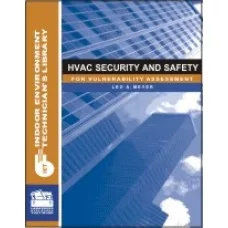
  • Leo Meyer's 90-page book titled HVAC Security and Safety discusses forming a safety and security team, identifying high-risk HVAC areas, evaluating possible retrofit moves, and emergency planning. Information is available online at www.lamabooks.com.

  • Glen Kitteringham, a certified protection professional manager and senior manager of security and life safety for Brookfield Properties in Calgary, Alberta, wrote an article titled "Curbing Chemical Warfare - Safeguarding Your Facilities Against Biochemical Agents" in the May, 2002 issue of Canadian Security.

    In the article, Kitteringham notes strategies may depend on the type of biochemical discharge as well as whether building sections are fed by separate or the same HVAC equipment. Biochemical sensors placed in intake areas may lessen the risk, according to Kitteringham.

    - Jim Norland

    Norland is a freelance writer from Langley, S.C. He can be reached at jimnorland@aol.com.

    Publication date: 08/09/2004

  • Share This Story

    Looking for a reprint of this article?
    From high-res PDFs to custom plaques, order your copy today!


    Recommended Content

    JOIN TODAY
    To unlock your recommendations.

    Already have an account? Sign In

    • HVAC-enrollment

      The Trades Are Back: HVACR Programs See Nearly 30% Enrollment Spike

      A new wave of future technicians is entering the pipeline.  
      Training and Education
      By: Matt Jachman
    • 2025 Top 40 Under 40

      2025 Top 40 Under 40 HVACR Professionals List

      The 11th annual Top 40 Under 40 list highlights those...
      News
      By: Hannah Belloli-Oster
    • LG Ductless Mini-Split Systems

      The 9 Types of Heat Pumps

      As the U.S. moves toward electrification, heat pumps are...
      Heat Pumps
      By: Joanna R. Turpin
    Subscription Center
    • Create an Account
    • Start a Subscription
    • Manage My Account
    • Sign Up for Newsletters
    • Visit Customer Service
    • Update Preferences

    More Videos

    Sponsored Content

    Sponsored Content is a special paid section where industry companies provide high quality, objective, non-commercial content around topics of interest to The News audience. All Sponsored Content is supplied by the advertising company and any opinions expressed in this article are those of the author and not necessarily reflect the views of The News or its parent company, BNP Media. Interested in participating in our Sponsored Content section? Contact your local rep!

    close
    • Piggy Bank
      Sponsored byWatercress Financial

      Energy Prices, Inflation, and HVAC: What Today’s Homeowners Care About

    • Refrigerated Food
      Sponsored bySolstice Advanced Materials

      R-455A Refrigeration: A Cold Storage Solution for the Future

    • Airex Rooftop Units
      Sponsored byAirex Manufacturing Inc

      Consolidating Roof Penetrations: A Growing Trend in Multifamily HVAC Design

    Popular Stories

    Outdoor-condensing-units.jpg

    EPA Removes R-410A Installation Deadline

    Trump-Section-232.jpg

    Trump Reduces Section 232 Tariffs on HVAC Equipment to 15%

    cooling-habits.jpg

    50 Percent of Americans Have Skipped HVAC Maintenance

    ACHR NEWS Editor Chris Gray Presenting HVAC Minute 5-18-2026

    HVAC Manufacturers Fight Pricing Lawsuits

    tim-brooks.jpeg

    2026’s Best Distributor Partners With Customers

    View The ACHR NEWS
    Centennial Anniversary Timeline

    The ACHR News Timeline Chart
    Submit a Letter
    Submit a letter to our editors.

    Events

    November 6, 2025

    Next-Gen Data Center Cooling: HVAC Innovation and Real-World Solutions

    On Demand As AI workloads and high-density computing push traditional cooling methods to their limits, the data center industry is accelerating the adoption of next-generation HVAC technologies.

    June 9, 2026

    Before You Go All In on AI: Set Up Your Business to Actually Win

    In this webinar, we'll walk you through exactly what to get in place before you add AI to your business. You'll leave with a clear picture of where you stand today and a practical action plan to set yourself up for real results.

    View All Submit An Event

    Poll

    EPA Decision

    Are you happy the EPA decided contractors can continue to install R-410A equipment?
    View Results Poll Archive

    Products

    BNI Mechanical/Electrical Square Foot Costbook, 2026 Edition

    BNI Mechanical/Electrical Square Foot Costbook, 2026 Edition

    See More Products
    A2L Refrigerants - Free Webinar - May 21, 2026

    Related Articles

    • Experts Present Data On Building Security

      See More
    • June 23, 2006: ASHRAE Offers Broadcast on Enhanced Building Security

      See More
    • METALCON

      METALCON Presentations Focus on 'Building Performance'

      See More

    Related Products

    See More Products
    • 0-88069-032-1-228x228.jpg

      HVAC Security & Safety for Vulnerability Assessment

    See More Products

    Related Directories

    • Veridify Security

      Veridify Security provides cybersecurity for BACnet building controls, building automation / BMS, smart buildings, IoT devices, and other networked OT equipment.
    • Prime Focus Group

      Prime Focus Group has grown to become one of the most trusted names in manufacturing Heating, Ventilation and Air Conditioning (HVAC) accessories.
    • Veridify Security (Software/Video)

      Veridify Security provides cybersecurity for BACnet building controls, building automation / BMS, smart buildings, IoT devices, and other networked OT equipment.
    ×

    Sign Up. Stay Informed.

    The #1 trusted source for the HVACR industry since 1926

    SUBSCRIBE
    • RESOURCES
      • Advertise
      • Contact Us
      • Advisory Board
      • Classifieds
      • Submit a Letter
      • Directories
      • Store
    • ACCOUNT CENTER
      • Create an Account
      • Start a Subscription
      • Manage My Account
      • Sign Up for Newsletters
      • Visit Customer Service
      • Update Preferences
    • SERVICES
      • Marketing Services
      • Reprints
      • Market Research
      • List Rental
      • Survey/Respondent Access
    • STAY CONNECTED
      • LinkedIn
      • Facebook
      • Instagram
      • YouTube
      • X (Twitter)
    • PRIVACY
      • PRIVACY POLICY
      • TERMS & CONDITIONS
      • DO NOT SELL MY PERSONAL INFORMATION
      • PRIVACY REQUEST
      • ACCESSIBILITY

    Copyright ©2026. All Rights Reserved BNP Media, Inc. and BNP Media II, LLC.

    Design, CMS, Hosting & Web Development :: ePublishing