ACHR News
search
Ask ACHR NEWS AI
cart
facebook twitter instagram linkedin youtube
  • Sign In
  • Subscribe
  • Sign Out
  • My Account
ACHR News
  • NEWS
    • Breaking News
    • New HVAC Products
    • Featured Products
    • Manufacturer Reports
    • HVAC Data
    • Legislation
    • ACHR NEWS Centennial
  • RESIDENTIAL
    • Air Conditioners
    • Furnaces
    • Residential Heat Pumps
    • Ductless
    • Residential IAQ
    • Testing, Monitoring, Tools
    • Components & Accessories
  • COMMERCIAL
    • Air Handlers
    • Rooftop Units
    • Chillers and Cooling Towers
    • Commercial Heat Pumps
    • Boilers and Hydronics
    • VRF/Ductless
    • Commercial IAQ
  • REFRIGERATION
    • Refrigerants
    • Refrigerant Regulations
    • Leak Management
  • CONTRACTOR PRO
    • Geothermal
    • Homeowner Study
    • VRF and VRV Ductless
    • Unitary Trends
  • EDUCATION
    • Training and Education
    • Business Management
    • Service and Maintenance
    • Continuing Education
    • Market Research >
      • HVAC Brand Awareness Report
      • VRV, VRF, VRVZ Report
      • Unitary Trends Report
      • Water Heat Professionals Report
    • Webinars
    • Sponsor Insights
    • eProducts Info
    • White Papers
  • EVENTS
    • HVAC Contractor Forum
    • Industry Events and Webinars
  • MEDIA
    • Videos
    • AHR Expo 2025 Videos
    • Podcasts >
      • ACHR News Podcast
      • HARDI Podcasts
      • AHR Expo Podcasts
      • ACCA Podcasts
    • Interactive Spotlights
    • Quizzes
    • eBooks
    • HVAC Talkback
  • HVAC GROUP
    • ACHR NEWS >
      • Current Issue
      • Digital Edition
      • Subscribe
    • Distribution Trends
    • SNIPS NEWS >
      • Join SNIPS NEWS
    • Engineered Systems News >
      • Join ES News
    • HVACR Directory
    • Contests
    • Newsletters
    • Contact
    • Advertise
    • My Account

Mini-Splits Are Moving Into The Mainstream
By Joanna R. Turpin
January 9, 2002
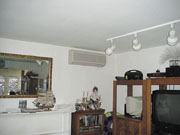
Ductless mini-split systems have been around North America for almost 20 years. Mainly considered a niche item, they worked great in old houses or historic buildings that needed cooling but had no space for ductwork. Or, they were used when spot cooling was required, or perhaps when one room needed a little more cooling than the rest of a structure.

But in the last two or three years, mini-splits have enjoyed wider popularity, due in part to the fact that a whole generation has now lived with them and found them to work well. Word of mouth has spread, inducing more people to check out the benefits of mini-splits. Some owners of new houses are even requesting multiple mini-split systems as opposed to one central a/c system.

Contractors, too, have been looking at mini-splits with renewed interest, learning about their benefits as well as understanding how they function. In addition, the profitability on a mini-split system can be very good.
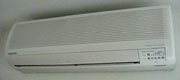
These mini-splits are inverter-driven systems. The inverter decreases power consumption a further 20%. Inverter-type systems use only the necessary capacity needed to maintain their setpoint.

BENEFITS ARE MANY

Another mini-split advantage is its energy efficiency. “People are understanding that true indoor comfort costs include operation and longevity expense in addition to the initial cost,” says Stu Taylor, technical support manager, Samsung, Whittier, CA. “People understand that those considerations are more important than a low up-front price.”

One of the reasons a mini-split can save energy is that it can be used to cool one zone of a building. In a house, for example, residents often gather in one place for the majority of the time.

However, Taylor adds that homeowners should not use a mini-split system the same as, say, a window air conditioner. “Truthfully, mini-splits are sometimes better to be left on when it’s really hot and humid out. You can put these on a function called the auto mode, which is very cost effective, and it will allow you to keep the room at a temperature in either cooling or in the dry mode, or in whatever mode it needs to maintain the temperature.”

Another benefit includes having the air handler section in the living space (as opposed to a central system, which usually relies on a thermostat placed in a hallway or some other place that gives an average temperature of the entire house). With a mini-split, the temperature sensor is in the living space, and there will only be a plus or minus 2 degrees F difference in each zone.

In addition, the evaporator coil, which is also in the living space, dries the air better, as it has a 35 degree temperature (30 degrees delta T,) rather than the standard 45 degrees (20 degrees delta T) on a central system evaporator. The dewpoint is achieved quickly, so the discharged air is drier and cooler. With less humidity in the air, occupants have a tendency to turn up their system setpoints by 2 to 4 degrees, resulting in even more energy savings.

Having a mini-split in an occupied space often brings up concerns about the level of noise. This isn’t an issue, because the evaporator coil features a cross-fan impeller designed with staggered vanes of different lengths. This modifies the sound generated by the air crossing the vanes. Some new designs have wall-mount units operating at under 30 dB at high speed.

Looking for quick answers on air conditioning, heating and refrigeration topics? Try Ask ACHR NEWS, our new smart AI search tool. Ask ACHR NEWS →

As for the concern about condensing units being placed close to a structure, owners need not worry. “A lot of people are not aware of how unbelievably quiet the outdoor units are and how they can really be put close to areas that they’re in, how little they impact the area that they’re in,” notes Taylor.

Because owners are concerned about noise, contractors have a tendency to overextend the amount of line set between the indoor and outdoor units; that hurts the mini-split’s performance. Keep the indoor and outdoor units as close to each other as possible, says Taylor, because more energy will be saved that way. The system will run more efficiently.

NOT SIZED THE SAME

As can be expected, mini-split systems are not sized the same way (using cfm as the measurement) as a central a/c system. Of course, the first item that needs to be performed by the contractor is a proper heat load calculation. Where some contractors make a mistake in determining the size of a mini-split is by counting the cfm. Mini-splits average about 250 cfm per ton, rather than the 400 cfm per ton of standard central systems.

As a result, a common problem is oversizing. Interestingly enough, mini-split systems usually work better when they’re slightly undersized. “If our systems are slightly undersized they’ll do a much better job, not only because they’ll run longer but because they’re dealing with latent heat; the evaporator temperature is so low, they’ll do a great job of moisture extraction,” says Taylor.

Another issue is the location. A mini-split’s fan blows constantly, allowing the entire area to circulate, mixing the air and eliminating temperature stratification. For this reason, the system should be put in a place that’s going to provide a constant good sweep of the air, while not blowing air directly onto occupants or directly into a wall.
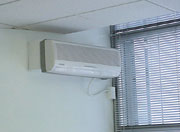
The evaporator coil features a cross-fan impeller designed with staggered vanes of different lengths, so the unit is quiet indoors. Outdoor units can be placed close to a structure because they are extremely quiet.
“You want to have at least 15 to 20 feet in front of the unit, so the air returning is indicative of the temperature in the entire room,” adds Taylor.

He notes that he receives many calls where end users, concerned about energy savings, wish to turn off the fan. “We tell them that the fan is an integral part of the system, allowing greater temperature accuracy and comfort. Compared to standard systems using 1/3- to 1/2-hp fan motors, mini-splits typically use 30-watt motors or less,” says Taylor.

Most manufacturers, like Samsung, are happy to work with contractors on proper sizing and installation. The benefit to learning this information is greater profitability.

Still another benefit is that the first cost of a mini-split is now becoming comparable to more traditional air conditioning equipment, said Taylor. Also consider that the rest of the world, which historically has much higher energy costs than the United States, has used this technology for the last 30 years. Maybe it’s worth taking the time to check out mini-splits a little more closely.

Sidebar: Ratings Don’t Tell The Whole Story

Contractors and building owners are often stuck on an equipment’s SEER. Unfortunately, that rating doesn’t work well for mini-split systems. For the last 20 years, the Department of Energy has mandated that mini-splits be classified as a unitary product, even though they have a colder evaporator and no duct loss.

“We’ve made everything at 10 SEER and 6.8 HSPF, so we already meet the current guidelines,” says Stu Taylor. “A lot of our systems do better than that, everywhere from just a little bit to a whole SEER rating more.”

The problem is that the SEER has always been the best rating for central systems, and it’s just not possible to measure a central system against a mini-split; it’s not a fair comparison, asserts Taylor.

“Until they come up with partial load factors or other ways of measurement, we’re staying at the minimum. How can you take the same-SEER unitary unit and put mini-splits against it? If everything were the same and you were just using it in one room, how can that be considered an accurate comparison?”

— Joanna Turpin

Publication date: 01/14/2002

Share This Story

Looking for a reprint of this article?
From high-res PDFs to custom plaques, order your copy today!


Tn joanna 2017
Joanna Turpin is a Senior Editor at The ACHR NEWS. She can be contacted at 248-786-1707 or joannaturpin@achrnews.com. Joanna has been with BNP Media since 1991, first heading up the company’s technical book division before moving over to The ACHR NEWS, where she frequently writes about refrigerants and commercial refrigeration. She obtained her bachelor’s degree in English from the University of Washington and worked on her master’s degree in technical communication at Eastern Michigan University.

Recommended Content

JOIN TODAY
To unlock your recommendations.

Already have an account? Sign In

  • HVAC-enrollment

    The Trades Are Back: HVACR Programs See Nearly 30% Enrollment Spike

    A new wave of future technicians is entering the pipeline.  
    Training and Education
    By: Matt Jachman
  • 2025 Top 40 Under 40

    2025 Top 40 Under 40 HVACR Professionals List

    The 11th annual Top 40 Under 40 list highlights those...
    HVAC Commercial Market
    By: Hannah Belloli-Oster
  • LG Ductless Mini-Split Systems

    The 9 Types of Heat Pumps

    As the U.S. moves toward electrification, heat pumps are...
    HVAC Commercial Market
    By: Joanna R. Turpin
Subscription Center
  • Create an Account
  • Start a Subscription
  • Manage My Account
  • Sign Up for Newsletters
  • Visit Customer Service
  • Update Preferences

More Videos

Sponsored Content

Sponsored Content is a special paid section where industry companies provide high quality, objective, non-commercial content around topics of interest to The News audience. All Sponsored Content is supplied by the advertising company and any opinions expressed in this article are those of the author and not necessarily reflect the views of The News or its parent company, BNP Media. Interested in participating in our Sponsored Content section? Contact your local rep!

close
  • Piggy Bank
    Sponsored byWatercress Financial

    Energy Prices, Inflation, and HVAC: What Today’s Homeowners Care About

  • Refrigerated Food
    Sponsored bySolstice Advanced Materials

    R-455A Refrigeration: A Cold Storage Solution for the Future

  • Airex Rooftop Units
    Sponsored byAirex Manufacturing Inc

    Consolidating Roof Penetrations: A Growing Trend in Multifamily HVAC Design

Popular Stories

Outdoor-condensing-units.jpg

EPA Removes R-410A Installation Deadline

Trump-Section-232.jpg

Trump Reduces Section 232 Tariffs on HVAC Equipment to 15%

HVAC-Price-Increase-graphic

HVAC Price Increase List: June 2026

cooling-habits.jpg

50 Percent of Americans Have Skipped HVAC Maintenance

ACHR NEWS Editor Chris Gray Presenting HVAC Minute 5-18-2026

HVAC Manufacturers Fight Pricing Lawsuits

View The ACHR NEWS
Centennial Anniversary Timeline

The ACHR News Timeline Chart
Submit a Letter
Submit a letter to our editors.

Events

November 6, 2025

Next-Gen Data Center Cooling: HVAC Innovation and Real-World Solutions

On Demand As AI workloads and high-density computing push traditional cooling methods to their limits, the data center industry is accelerating the adoption of next-generation HVAC technologies.

June 9, 2026

Before You Go All In on AI: Set Up Your Business to Actually Win

In this webinar, we'll walk you through exactly what to get in place before you add AI to your business. You'll leave with a clear picture of where you stand today and a practical action plan to set yourself up for real results.

View All Submit An Event

Poll

EPA Decision

Are you happy the EPA decided contractors can continue to install R-410A equipment?
View Results Poll Archive

Products

BNI Mechanical/Electrical Square Foot Costbook, 2026 Edition

BNI Mechanical/Electrical Square Foot Costbook, 2026 Edition

See More Products
A2L Refrigerants - Free Webinar - May 21, 2026

Related Articles

  • 1930s Bring A/C Into the Mainstream

    See More
  • Mini-Splits Poised To Enter The Mainstream

    See More
  • refrigerant charge test

    VRF Moving Into High-End Homes

    See More

Related Products

See More Products
  • Converting Phone Calls Into More Sales - DVD

See More Products

Events

View AllSubmit An Event
  • September 9, 2025

    How Maintenance Plays into the HVAC Decarbonization Trend

    On Demand This webinar will explore maintenance strategies for advanced HVAC systems, including VAVs and demand-controlled ventilation.
View AllSubmit An Event

Related Directories

  • The Graphite Lab (Manufacturer)

    Our AI-powered platform helps HVAC-R businesses speed invoicing, manage online reviews, coach phone reps and much more. Fits seamlessly into your existing software, without disruption.
×

Sign Up. Stay Informed.

The #1 trusted source for the HVACR industry since 1926

SUBSCRIBE
  • RESOURCES
    • Advertise
    • Contact Us
    • Advisory Board
    • Classifieds
    • Submit a Letter
    • Directories
    • Store
  • ACCOUNT CENTER
    • Create an Account
    • Start a Subscription
    • Manage My Account
    • Sign Up for Newsletters
    • Visit Customer Service
    • Update Preferences
  • SERVICES
    • Marketing Services
    • Reprints
    • Market Research
    • List Rental
    • Survey/Respondent Access
  • STAY CONNECTED
    • LinkedIn
    • Facebook
    • Instagram
    • YouTube
    • X (Twitter)
  • PRIVACY
    • PRIVACY POLICY
    • TERMS & CONDITIONS
    • DO NOT SELL MY PERSONAL INFORMATION
    • PRIVACY REQUEST
    • ACCESSIBILITY

Copyright ©2026. All Rights Reserved BNP Media, Inc. and BNP Media II, LLC.

Design, CMS, Hosting & Web Development :: ePublishing