1973: Arab Oil Embargo Popularizes Programmable Thermostats
The 1973 Arab Oil Embargo transformed the thermostat from a simple comfort control into an energy-management device
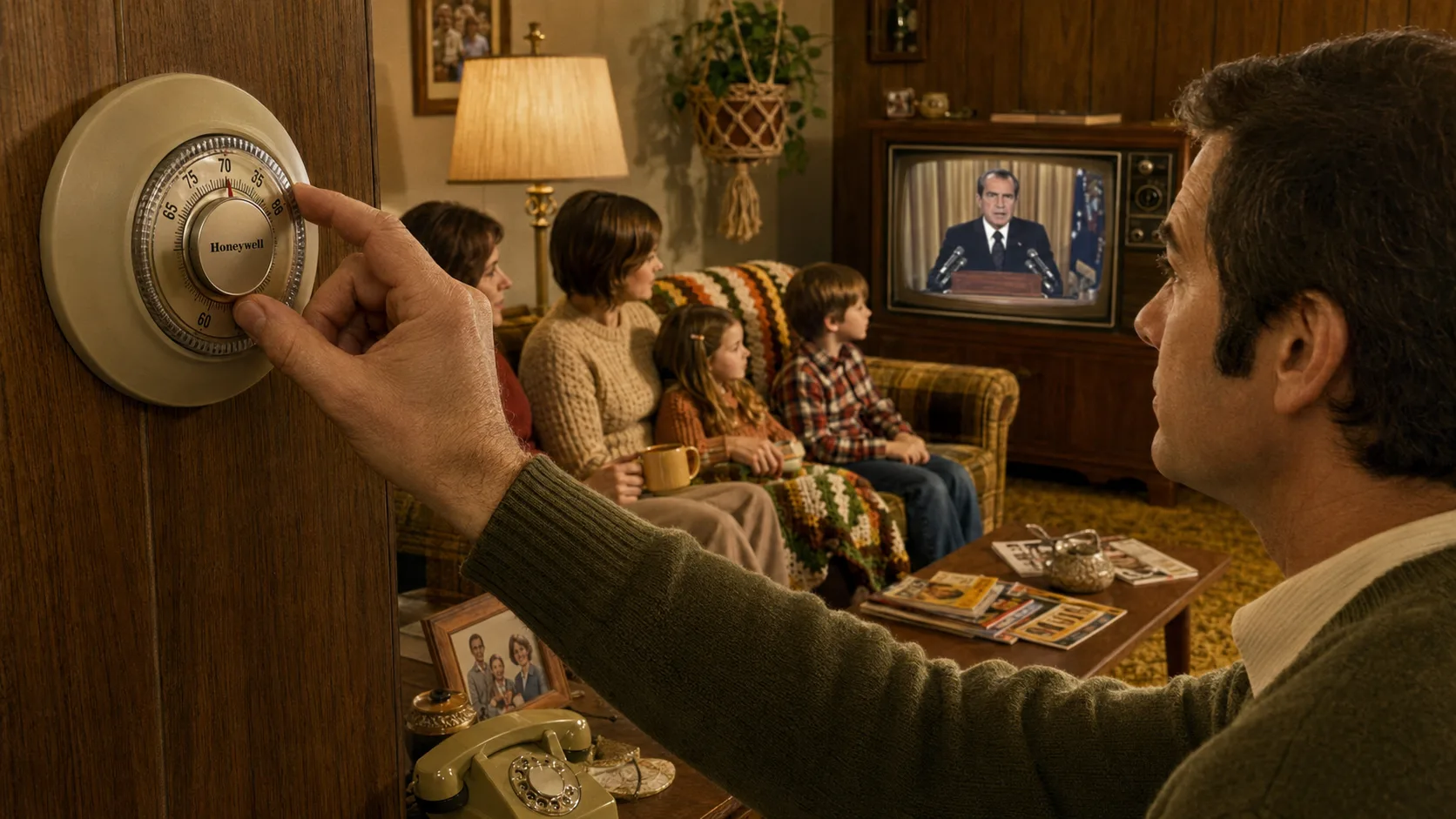
On November 7, 1973, President Nixon asked Americans to set their home thermostats no higher than 68°F.
Before the Arab Oil Embargo of 1973, electricity and heating oil were relatively cheap. Millions of U.S. homes — particularly in the Northeast — still relied on heating oil shipped in by trucks.
When the oil shock quadrupled petroleum prices, utility bills skyrocketed. Homeowners panicked. Citizens, businesses, and the government all found themselves searching for immediate ways to cut back on energy consumption.
President Richard Nixon had a solution. Addressing the nation on November 7, 1973, he asked Americans to lower their home thermostats by at least 6°, with the goal of achieving a national average indoor daytime temperature of 68°. Meanwhile, workplaces, including offices and factories, were asked for a 10° reduction, either by lowering the thermostat or curtailing working hours.
“Incidentally, my doctor tells me that in a temperature of 66 to 68°, you are really more healthy than when it is 75 to 78, if that is any comfort,” Nixon said.
Just a few years later, President Jimmy Carter knocked the temp down even more, recommending winter thermostat settings no higher than 65°. American fashion turned to flannel and sweaters.
At the time, setting the thermostat was something you did manually. But relying on people to remember to adjust the thermostat every night, or before leaving work, proved impractical. To solve this, manufacturers began modifying thermostats with built-in mechanical clocks. This way, consumers could schedule temperature drops overnight or when they were gone — effectively shifting the thermostat from a set-and-forget dial into an energy-saving tool.
Looking for quick answers on air conditioning, heating and refrigeration topics? Try Ask ACHR NEWS, our new smart AI search tool. Ask ACHR NEWS
Looking for a reprint of this article?
From high-res PDFs to custom plaques, order your copy today!


