Guest Column
Why Oversized HVAC Systems Undermine Electrification Goals
Heat pumps and other electrified systems perform best when capacity matches the building's actual needs
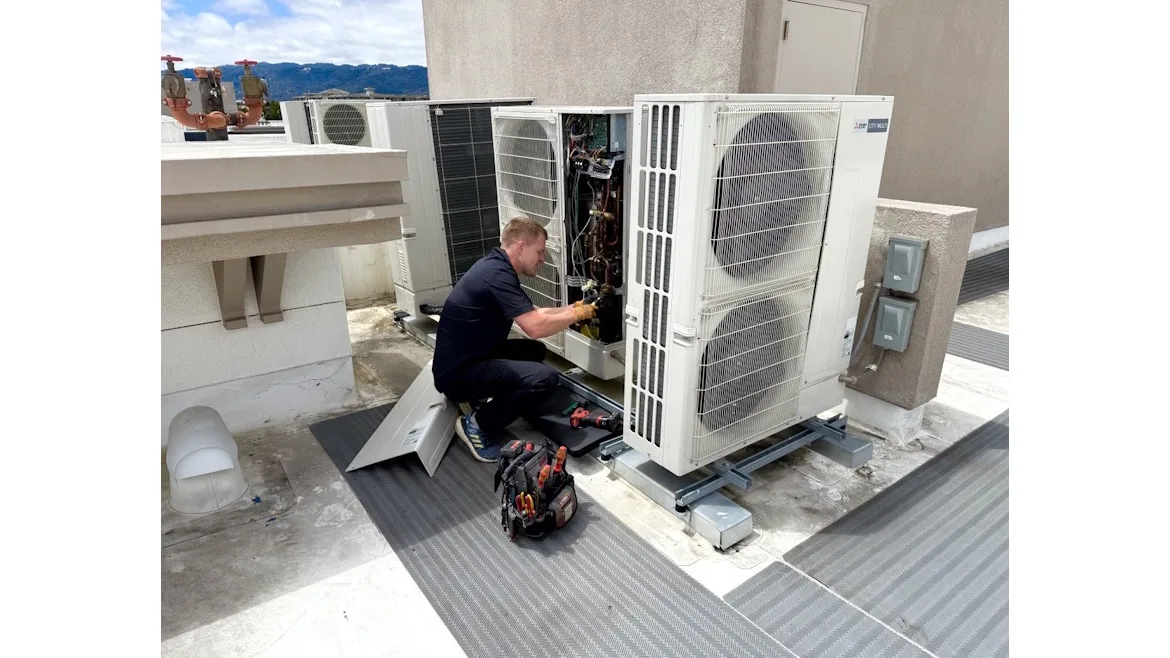
LOADING UP: Contractors and engineers are finding that accurate load calculations can have a major impact on efficiency, comfort, and project economics.
As residential electrification continues to expand across the United States, heat pump retrofits are becoming more common in both new construction and existing homes. Equipment technology has evolved significantly in recent years, particularly with the growth of variable-capacity systems. At the same time, system sizing remains a foundational factor in achieving expected performance.
While oversizing has long been discussed within the industry, its effects may be more noticeable in electrification-focused projects where runtime behavior, part-load operation, and electrical demand play a larger role in overall system performance.
Why Oversizing Occurs in Retrofit Projects
In residential retrofit applications, equipment selection is often influenced by several practical considerations:
- Replacement of existing systems that may have been oversized
- Use of rule-of-thumb sizing methods
- Limited access to detailed building data
- Conservative equipment selection to reduce perceived risk.
These approaches are understandable in fast-paced project environments. However, accurate load matching can help improve performance consistency throughout the year.
Runtime Behavior and Seasonal Performance
Modern heat pumps are designed to operate efficiently over extended periods, particularly during part-load conditions that occur throughout much of the heating and cooling season.
When system capacity significantly exceeds building load, equipment may reach setpoint quickly and cycle off. Shorter runtime intervals can affect:
- Indoor temperature stability
- Moisture removal during cooling operation
- Overall seasonal efficiency.
Longer, steady runtime often supports more stable indoor conditions and improved energy performance. While exact impacts vary by application, load alignment is an important factor in achieving expected operating characteristics.
Looking for quick answers on air conditioning, heating and refrigeration topics? Try Ask ACHR NEWS, our new smart AI search tool. Ask ACHR NEWS
Variable Capacity Systems and Modulation Range
Variable-capacity (inverter-driven) systems are designed to adjust output to match changing conditions. These systems can operate across a range of capacities rather than at a single fixed output.
However, even variable-capacity equipment has minimum operating thresholds. If building load remains below the system’s minimum output for extended periods, cycling may still occur.
For this reason, reviewing both design load and expected part load performance can support more consistent operation throughout shoulder seasons and moderate weather conditions.
Electrical Considerations in Electrification Projects
In electrification-focused installations, equipment sizing also interacts with electrical system design. Larger-capacity systems may require:
- Higher circuit ampacity
- Larger breakers
- Increased peak demand during certain operating conditions.
Electrical system configurations vary by home and region. Aligning equipment capacity with building load can help support electrical feasibility and overall system efficiency.
Practical Steps to Support Proper Sizing
Contractors working in retrofit environments may consider the following practices to support performance-based design:
1. Perform Detailed Load Calculations
Using Manual J or equivalent load modeling tools can help ensure equipment selection reflects actual building conditions.
2. Evaluate Duct System Performance
Duct leakage, restrictions, and airflow limitations can influence both comfort and efficiency outcomes.
3. Review Equipment Operating Range
Understanding both minimum and maximum system output provides insight into how the system will perform during varying seasonal conditions.
4. Commission and Verify Performance
Confirming airflow, refrigerant charge, and electrical measurements during startup supports alignment between design expectations and field performance.
5. Communicate System Operation Characteristics
Educating homeowners about runtime patterns and modulation behavior can help set appropriate expectations for system operation.
Supporting Long-Term Performance
Equipment efficiency ratings such as SEER2 and HSPF offer standardized performance benchmarks. Real-world efficiency, however, depends on a combination of factors, including sizing accuracy, installation quality, and commissioning practices.
Careful load matching supports:
- Stable indoor comfort
- Balanced electrical demand
- Consistent seasonal operation.
As electrification continues to evolve, attention to system sizing remains an important component of performance-focused HVAC design.
By integrating accurate calculations, thoughtful equipment selection, and thorough commissioning, contractors can help ensure that modern heat pump systems operate in alignment with their intended performance characteristics.
Looking for a reprint of this article?
From high-res PDFs to custom plaques, order your copy today!