Guest Column
The Thermostat Evolution: From Basic Control to Intelligent Comfort
How the “communicating” thermostat is the next level in home comfort technology
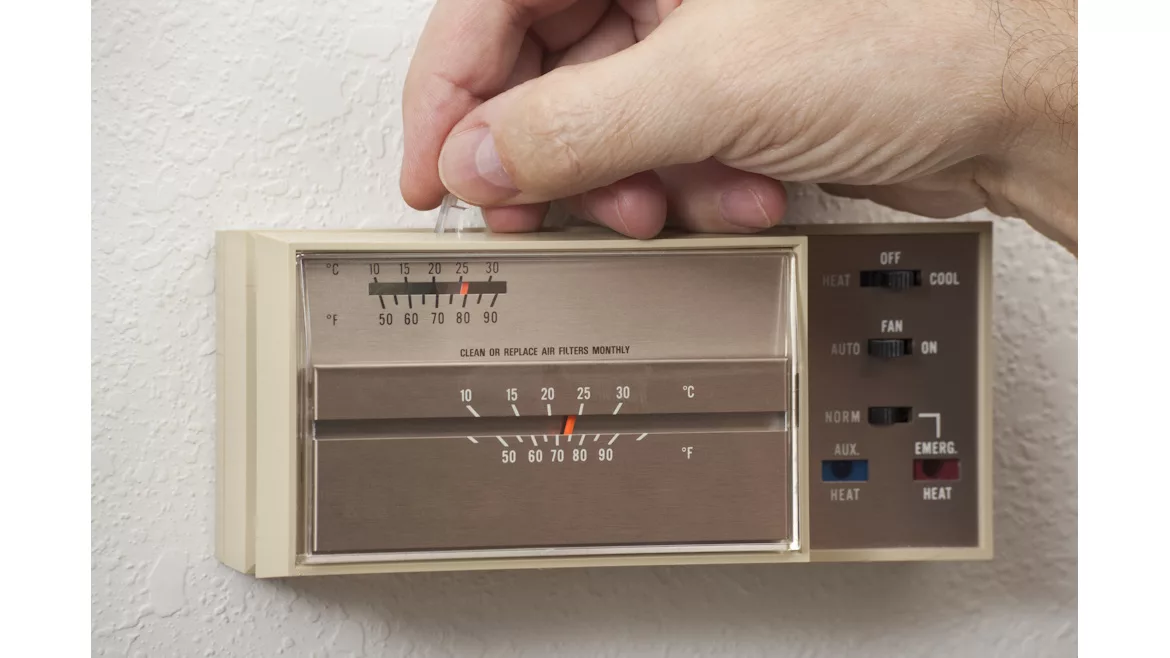
EVOLUTION: Thermostats have steadily evolved, enabling improved comfort and energy savings.
Thermostats have steadily evolved from simple mercury dials to sophisticated, data-driven comfort hubs. Early programmable models helped homeowners save energy by scheduling setpoints, and later, WiFi thermostats introduced mobile control and basic usage insights.
Even within the “conventional” category, options vary widely from battery-powered models to smart thermostats that connect to WiFi yet still communicate with residential split systems using only traditional 24V on/off signals.
The next major step in that evolution has been the communicating thermostat, which exchanges real-time data with the split system. Instead of sending basic on/off calls, communicating thermostats serve as one integrated platform, enabling coordinated modulation of capacity, airflow, and comfort strategies.
Precision, Efficiency, and Smart Comfort for Homeowners
Communicating thermostats provide a level of system integration, real-time data exchange, and control precision that traditional 24V thermostats simply cannot achieve. By continuously sharing operating parameters such as indoor temperature, humidity, airflow rates, duct static pressure, and compressor speed, these thermostats enable variable-capacity systems to execute fine-tuned capacity modulation.
This allows the equipment to adjust blower RPM, compressor Hz, and airflow profiles with higher resolution, reducing cycling losses, improving partload efficiency, and maintaining steadier indoor conditions. Therefore, homeowners experience tighter temperature control and quieter operation due to fewer abrupt speed transitions, improved humidity stability, and more transparent diagnostic feedback.
When integrated with communicating zoning systems, the benefits expand significantly. Instead of relying on simple open/close damper logic, a communicating zoning controller synchronizes zone calls, sensor data, damper positions, and equipment capacity within a unified control loop. In this architecture, the system can be configured with one primary master communicating controller and multiple communicating secondary zone thermostats, each installed in different zones.
These secondary thermostats continuously send localized temperature, humidity, and demand signals to the master controller, enabling the system to modulate equipment capacity and airflow with zone-level precision. This hierarchical data exchange allows the system to prevent static pressure spikes, resolve conflicting demands across zones, and modulate dampers proportionally to deliver the exact airflow required in each space.
Looking for quick answers on air conditioning, heating and refrigeration topics? Try Ask ACHR NEWS, our new smart AI search tool. Ask ACHR NEWS
As a result, areas such as bonus rooms, basements, and rooms over garages maintain more stable conditions, and the system avoids the energy penalties associated with large temperature swings and aggressive recovery cycles. By conditioning each zone based on real usage patterns and real-time sensor feedback, both overall comfort uniformity and system operating efficiency increase. In short, homeowners can save on energy use, reduce utility bills, and improve comfort.
Communicating thermostats also play a critical role in grid-interactive performance. As utilities expand demand response incentive programs, variable speed split systems must meet increasingly specific control behaviors defined in AHRI 1380. Unlike traditional demand response, which simply allows a thermostat to receive a signal from the utility company, AHRI 1380 now requires equipment to not only respond but also report back that it has adjusted usage, creating a closed-loop system.
By enabling precise, automated load shedding and shifting, communicating controls help utilities stabilize the grid and reduce peak demand without impacting occupants. Variable capacity systems paired with communicating thermostats can finely modulate compressor output and airflow to achieve controlled load reductions while still maintaining comfort. This supports not only homeowners directly, but it also reduces load on the electric grid, supporting U.S. infrastructure as a whole.
For Contractors, A Faster Start-Up and Time-Saving Diagnostics
Communicating thermostats streamline installations by automatically identifying connected equipment and applying proper configuration settings. This reduces startup time, eliminates manual dipswitch adjustments, and ensures the system is commissioned correctly.
They also expose in-depth system data such as compressor capacity, airflow profiles, and sensor readings, allowing contractors to fine‑tune performance for comfort, efficiency, and reliability. By standardizing configuration and startup processes, communicating thermostats help reduce installation variability and callbacks, giving contractors greater confidence that equipment is operating as designed from day one.
As adoption of variable-capacity equipment increases across the industry, integrated communicating controls are becoming essential to achieving the comfort, efficiency, and grid-interactive performance these systems can deliver. In the field, communicating thermostats such as the Smart Home Control 510 (SHC510) from Bosch Home Comfort allows contractors to view real-time system data. While some thermostat platforms charge for similar capabilities, the SHC510 provides access to these insights at no additional cost.
Because of the access to system data and fault conditions in advance, contractors can arrive on-site with the correct parts already in hand, reducing multiple trips, minimizing system downtime, and improving overall service efficiency. These operational benefits ultimately flow to homeowners in the form of faster repairs and lower service costs — while also strengthening customer trust.
A Smart Pairing for High-Efficiency Systems
When paired with high-efficiency variable speed equipment, communicating thermostats help deliver the full performance these systems are engineered for. They unify equipment, zoning components, sensors, and grid-response requirements into a coordinated control architecture that maximizes comfort, efficiency, and operational intelligence.
Homeowners benefit from improved comfort and energy savings, while contractors gain a smoother installation experience supported by real-time system insights. As connected HVAC technologies continue to evolve, communicating thermostats are positioned to play an increasingly important role in enabling smarter, more responsive system performance.
Looking for a reprint of this article?
From high-res PDFs to custom plaques, order your copy today!