Guest Column
The HVAC Technician’s Introduction to Air Cleaning Technology
As indoor air quality concerns grow, technicians are being asked to explain a widening range of air-cleaning products and technologies
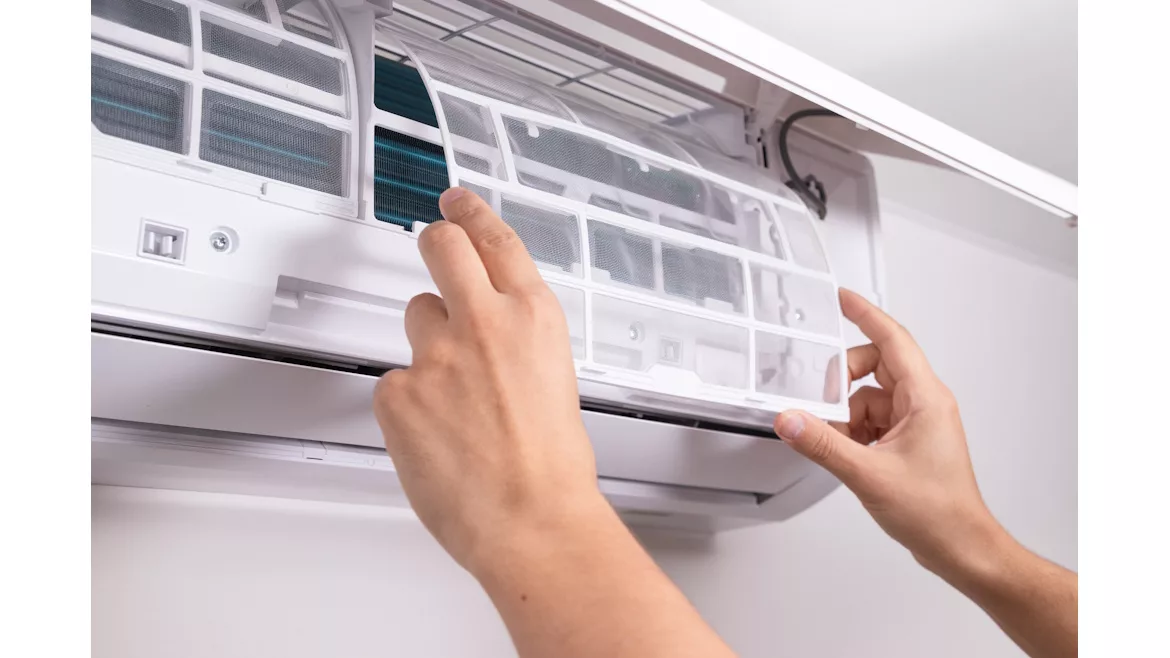
AIRING OUT DIFFERENCES: HVAC technicians can improve indoor air quality in several ways, including using the furnace and high-efficiency filtration to capture airborne contaminants.
A common question service technicians respond to when entering a customer’s home is how to use the furnace to improve indoor air quality. The EPA recommends homeowners choose furnace filters with MERV (Minimum Efficiency Reporting Value) ratings of 13 or higher, which are capable of trapping extremely small particles, such as viruses, bacteria, smoke, odor, mold, dust mites, and pet dander.
However, 1-inch filters under this rating tend to have a very high pressure drop, meaning they tend to restrict airflow through the furnace. Higher MERV-rated filters usually have more pleats per inch, creating a significant restriction to air flow. Low airflow can cause problems for heating and cooling and may decrease the lifespan of the furnace and air conditioner.
The problem with lower MERV-rated filters, such as MERV 8, is that these filters are more likely to allow microscopic particulate matter to pass through and stay in the home’s air.
Homeowners often turn to their HVAC technician for recommendations on how to use the furnace to clean the air, beyond the typical 1-inch furnace filter. This article will dive into the two main types of air cleaners, which are duct-mounted and tied into the furnace’s fan operation: “passive” air purifiers and “active” air purifiers.
Passive Air Purification
Mechanical Air Cleaners
Passive air cleaning products rely on air to be pushed or pulled across the cleaner to operate. Typical passive air purifiers are mechanical air cleaners that use a deeper, accordion-style filter to remove particles from the air by capturing them onto fibrous materials. Due to their design, they can trap more particulate matter with fewer pleats per inch. Aprilaire’s Space-Gard, Honeywell’s Media Air Cleaner, and Carrier’s EZ Flex Cabinet are some examples of mechanical air cleaners. These types of filters are capable of lasting longer than 1-inch filters, usually only needing to be changed once or twice a year.
These products are distinct from what are known as HEPA (High-Efficiency Particulate Air) filters. HEPA filters meet very specific standards set by the U.S. Department of Energy and are incredibly dense. They are commonly found in portable air purifiers and vacuum cleaners.
Because mechanical air cleaners are an upgrade—that is, designed to replace the 1-inch filter slot—some homes may require sheet metal work to reposition the return-side ductwork. A certain amount of floor space or space on the return ductwork is needed to install these filter cabinets. The cabinets can be installed in the vertical or horizontal orientation.
Looking for quick answers on air conditioning, heating and refrigeration topics? Try Ask ACHR NEWS, our new smart AI search tool. Ask ACHR NEWS
Ultraviolet Light
Air cleaners that use ultraviolet light typically rely on either a low-pressure mercury vapor lamp or a specialized LED to emit UV-C light. This germicidal wavelength damages the DNA and RNA of pathogens, preventing them from reproducing and spreading. UV-C light is commonly used to disinfect air and surfaces in residential, commercial, and health care settings.
UV lights are not necessarily blue, and even if they are glowing, it is not a guarantee they are still working, as UVC light is invisible to the human eye. Manufacturers typically recommend replacing the bulb about every two years. When replacing the bulb, it is important to keep the power off as UVC exposure is dangerous to human skin and eyes.
Active Air Purification
Air purifiers work together with the furnace filter to more easily capture microscopic particles. They are typically installed on the supply ductwork of the furnace, though they can be installed on the return side. Some types of air purifiers are installed directly onto the blower housing.
While there are many different methods for air purification, most of them are variations on ionization, the process of charging a neutral molecule either positively or negatively by adding or removing an electron. When particles of opposite charges come close to each other, they stick together. This is called agglomeration, and it turns very small particles into a larger particle, allowing the furnace filter to more easily capture it.
A common observation or complaint homeowners may have after installing an air purifier with ion generation technology is that there is noticeably more dust in their home. This is a normal part of the process and an indication that the system is working to remove particulate matter from the air.
While manufacturers are continuing to make technology produce less of it, ozone, a lung irritant and pollutant under EPA and OSHA standards, is a byproduct of the ionization process. Manufacturers who advertise their products as “ozone-free” must pass specific ozone emission standards under normal operating conditions.
Electrostatic Ionization
Electrostatic ionizers send electricity through thin wires, which charge particles in the air, causing them to agglomerate and be caught by the furnace filter. Some products have oppositely charged collector plates to catch the dust particles. Air cleaners that rely on this type of technology are generally known as electronic air cleaners (EAC’s).
Older examples of EAC’s are Honeywell’s F50F and F300E. A more modern example would be Trane’s CleanEffects. In their manuals, manufacturers disclose that these products produce trace amounts of ozone. The CleanEffects and other modern electrostatic ionizers work without the unsettling snapping and zapping noises that indicated normal operation with the older EAC’s.
Typical maintenance on EAC’s involves cleaning the cells and prefilters. Some EAC’s, like the AprilAire 5000, combine this technology with a replaceable filter inside the cabinet for more efficient dust collection and easier maintenance.
Needlepoint Bipolar Ionization
Rather than pulling air across a set of wires, needlepoint ionizers use carbon fiber brushes, often mounted on the discharge side of the fan, to distribute ionized particles into the air. Some products that use needlepoint have self-cleaning components that remove the dust that sometimes collects on the brushes. This means these products can be maintenance-free and contain no replaceable components. A couple of manufacturers who have popularized this style of ionization are Nu-Calgon’s iWave and Global Plasma Solutions (GPS).
Photocatalytic Oxidation
Photocatalysis is any process where light interacts with a catalyst to accelerate a chemical reaction. In the case of air purifiers, a UV light shines through a metal or ceramic shell coated in titanium dioxide. The process creates “hydroxyl radicals” and “superoxide ions,” compounds that both disinfect the air and cause particles to agglomerate.
Examples of air purifiers that use this technology are the Reme Halo by RGF, Aerus Air Scrubber, and the CASPR Medik. As with UV light technology, these manufacturers also recommend changing the bulbs to ensure constant operation.
Looking for a reprint of this article?
From high-res PDFs to custom plaques, order your copy today!