When All-Electric Homes Came With a Guarantee
A push to electrify 5,000 homes came with discounted rates, trade-in allowances, and a satisfaction guarantee
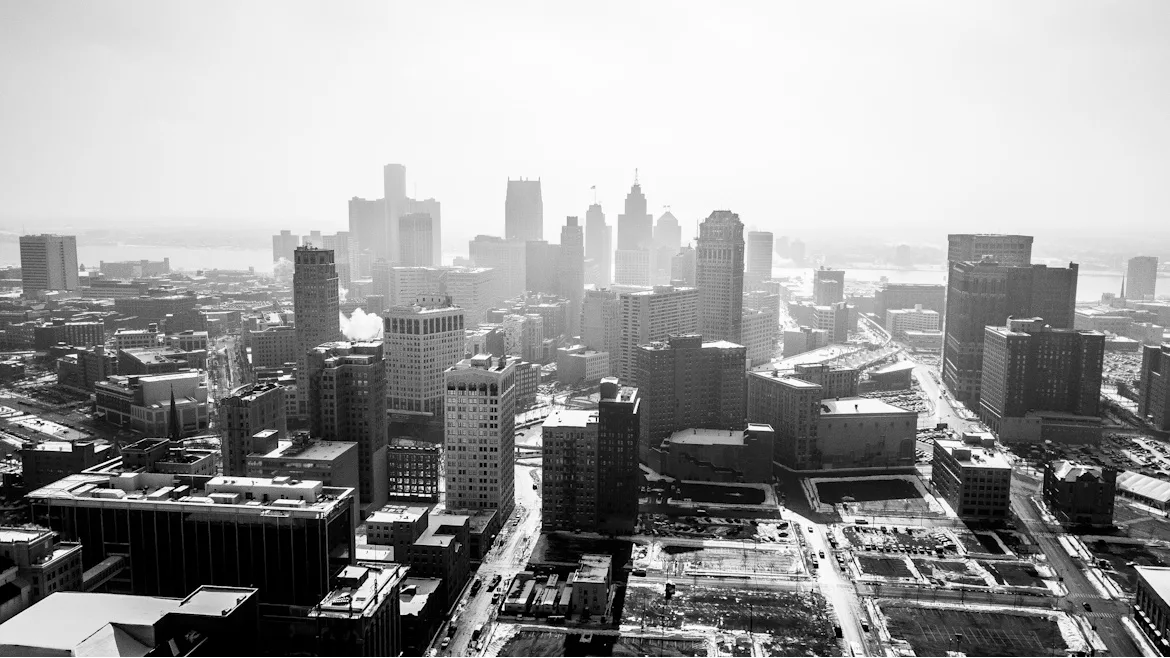
OLD PLAYBOOK: Long before today’s electrification push, Detroit Edison was using guarantees, rebates, and aggressive advertising to move customers toward electric heat.
What if the conversion to an all-electric home came with a highly-discounted utility rate, as well as a guarantee that if the homeowner wasn’t satisfied, they could have all equipment removed no cost to them and the installation fee refunded?
That was actually a reality in Boyne Falls, Mich., in 1967, when utility company Detroit Edison launched a promotional program aimed at selling 5,000 all-electric homes.
According to an article appearing in the August 1967 edition of the ACHR NEWS, Detroit Edison said that if a customer was not satisfied with the operating cost of their electric heating system, Edison, in cooperation with the suppliers and installing contractors, would remove the equipment and refund the installation cost to the customer.
Alfred Sangster, of the National Warm Air Heating and Air Conditioning Association, told ACHR NEWS such an “eventuality has never occurred, and the possibility is remote.” But, in the event of a refund, Edison would pay half the cost, the heating equipment manufacturer would pay 5%, the insulation manufacturer 5%, the distributor 10%, the electric heating installing contractor 15%, and the insulation contractor 15%.
Edison launched its program through an aggressive marketing campaign in 135 newspapers, equivalent to 210 full-page ads. They also hit TV, radio, billboards, electric signs, direct mailers, and “an electric heat display van equipped with every form of home heating equipment from infrared lamps to a heat pump.”
For qualified electric heating contractors, Edison provided $4 per kWh advertising allowance, which could be used for almost any promotional medium they wished.
The program also pitched a $150 trade-in allowance for old furnaces, which is roughly $1,496 in 2026 dollars. Registered electric heat salesmen could also get $75 ($748 today) per complete conversion for the first 40 sold, and $125 ($1,246) per conversion over 40 within a calendar year.
Looking for quick answers on air conditioning, heating and refrigeration topics? Try Ask ACHR NEWS, our new smart AI search tool. Ask ACHR NEWS
In addition, Edison promised two-cents per square foot of conditioned space for central electric a/c sold in conjunction with an electric heat conversion.
At the time, Edison offered electric rates at 1.35 cents (about 13.5 cents today) per kWh for residential customers with all-electric homes. Commercial customers could get that same rate if they used both electric heat and cooling, which included heat-by-light systems.
“This means the connected lighting load must be 5 watts per square foot, the connected lighting load in watts must equal at least 60% of the design heating requirements, and any supplemental heat must be supplied by electric service installed on a permanent basis,” Sangster told ACHR News.
For schools, Edison’s rate was a minimum charge of $175 ($1,745 today) a month for 10,000 kWh with all other electricity billed at 1.35 cents per kWh.
“We have more than 200 all-electric commercial buildings on our lines, including 37 schools, seven churches, 18 banks, and 25 hospitals, motels, and convalescent homes,” Sangster said.
Looking for a reprint of this article?
From high-res PDFs to custom plaques, order your copy today!