Guest Column
The Hidden Cost of Skipping Commissioning
Pushing back on commissioning cuts protects your work — and your customer
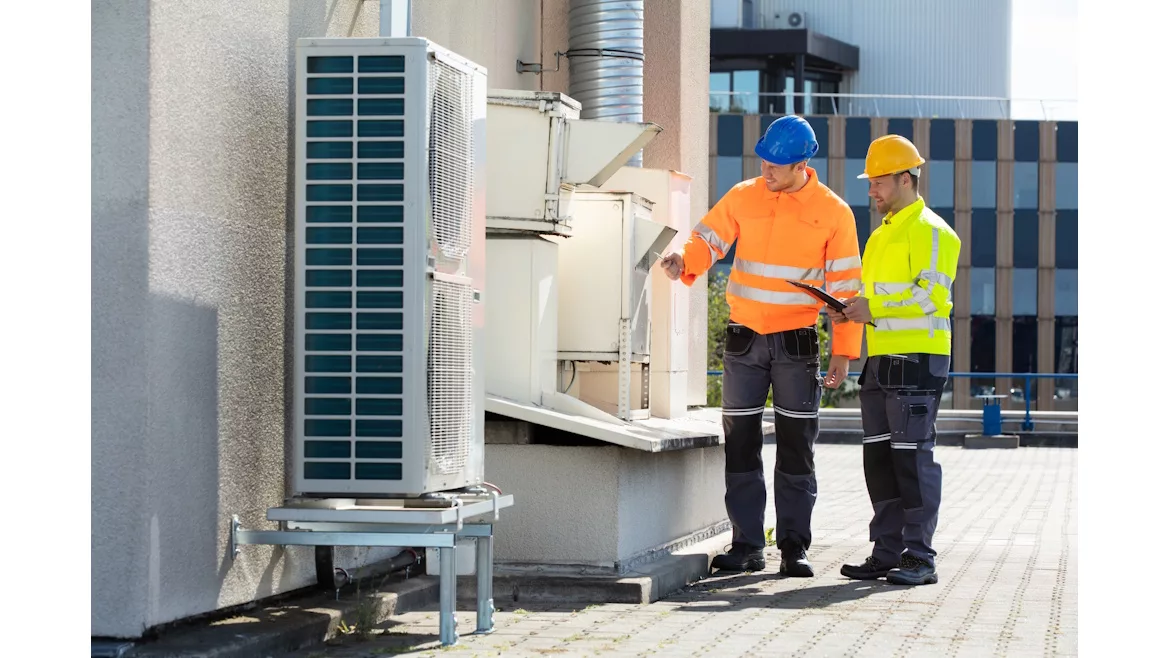
BEST PRACTICES: As commercial HVAC systems grow more complex, treating commissioning as optional is becoming a more expensive mistake.
Every contractor who's been in the commercial mechanical business long enough has seen the same sequence play out: A building opens, the owner starts getting complaints within six months, and the post-mortem reveals a system that was installed correctly but never verified to perform correctly. Commissioning got cut during value engineering. It always does.
That's a problem worth addressing directly, because the industry has a bad habit of treating commissioning as optional insurance rather than what it actually is: the only way to confirm that a complex mechanical system does what it was designed to do.
What Commissioning Actually Is
There's a persistent misconception that commissioning means startup. It doesn't. Startup is the technician turning on the unit and verifying it runs. Commissioning is a systematic process of functional performance testing — verifying that every component, control sequence, and integrated system responds correctly under real operating conditions.
For a commercial project, that means testing economizer sequences at different outdoor air conditions, verifying VAV box control sequences across the full range of zone loads, confirming BAS integration points map correctly to the mechanical equipment, and documenting actual airflow readings against design intent. It means testing what happens when the building is at 30% occupancy, 100% occupancy, and during a fire alarm interlock — not just confirming that the unit turns on.
Cx agents use functional performance test scripts that reflect the original design sequences. The work produces documentation: a commissioning report that becomes part of the building record and a reference point for future service.
That's not startup. It's a fundamentally different scope of work.
Why It Gets Cut
The pressure to value-engineer commissioning out comes from a predictable place: It's a line item with no visible deliverable on the day of substantial completion. The building opens. The systems appear to run. Nobody sees what they didn't pay for until the first shoulder season when the economizer isn't doing what it should, or the first winter when a VAV box hunting issue turns into an emergency service call.
Looking for quick answers on air conditioning, heating and refrigeration topics? Try Ask ACHR NEWS, our new smart AI search tool. Ask ACHR NEWS
GCs under schedule pressure and owners watching hard costs will cut it. The mechanical contractor often doesn't fight back hard enough because commissioning is frequently scoped separately from the installation work, making it easy to separate in the budget conversation.
The other factor is that commissioning's value is asymmetric. When it goes well — when the building performs — nobody attributes that to commissioning. When it goes poorly, the callbacks get attributed to equipment failure or installation defects, not to the absence of verification. The causal link is invisible, which makes the budget argument hard to win.
The Cost of Skipping It
The real cost of skipping commissioning isn't the price of a service call. It's the cumulative drag on building performance over the years.
A commercial HVAC system running on control sequences that were never verified may be technically operational but functionally wrong.
Economizers that don't stage correctly waste energy continuously. VFDs running at fixed speeds because BAS integration was never tested eliminate the efficiency gains that justified the equipment specification. Systems hunting because sensor calibration was never confirmed creates thermal comfort complaints that erode tenant relationships — and in leased commercial space, that translates directly to lease renewal risk.
ASHRAE's post-occupancy studies have consistently found that commissioned buildings perform significantly closer to their energy models than non-commissioned ones. The gap isn't trivial. A 15-20% deviation from energy model projections in a mid-size commercial building represents tens of thousands of dollars annually. Over a 10-year ownership horizon, the commission cost looks very different against that number.
Beyond energy, there's the warranty exposure. When an equipment failure occurs in a non-commissioned building, manufacturers have reasonable grounds to question whether the controls were configured correctly, whether airflow was within design limits, and whether the sequence of operations the unit was running on was ever validated.
Commissioning documentation closes that exposure.
Making the Case to Owners and GCs
The argument that works isn't about best practices. It's about risk transfer.
Commissioning shifts verification responsibility from the owner to a documented process. When a mechanical contractor can hand over a commissioning report showing functional performance test results, they've created a defensible record of system condition at turnover.
When something goes wrong in year two, that record matters.
For owners with portfolio exposure — multiple properties, institutional investors, triple-net lease structures — that documentation has real value. It's not a soft sell about doing things right. It's a hard argument about what happens to the owner's position when a major mechanical failure occurs without a commissioning record.
The approach that tends to move the conversation is to reframe commissioning not as a cost addition but as a cost shift: money spent at commissioning is money not spent on diagnostic callbacks, extended warranty claims, and tenant dispute resolution. The service department data bears this out consistently.
Where the Industry Should Go
The commercial HVAC market has gotten more complex, not less. VRF systems with sophisticated refrigerant circuit integration, building automation platforms with hundreds of integration points, high-performance envelopes that make mechanical balance more sensitive — all of it raises the stakes for what happens when a system isn't commissioned.
The contractors who are building durable service relationships with commercial owners are the ones who make commissioning part of the conversation at bid time, not as a line item to be negotiated out, but as a condition of delivering what the design actually called for.
The building performs or it doesn't. Commissioning is how you know which one you have.
Looking for a reprint of this article?
From high-res PDFs to custom plaques, order your copy today!