FROSTlines
Service Tips for R-290 Refrigeration Equipment
Different techniques are required when repairing these systems
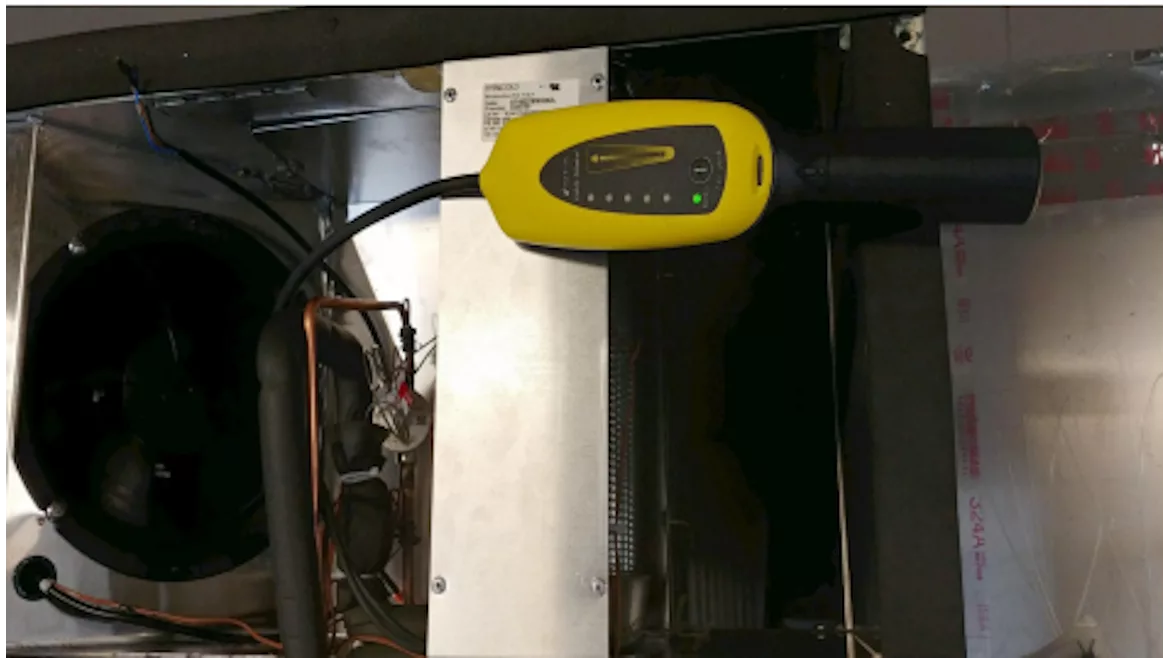
LEAK TESTING: When leak testing an R-290 system, use only non-ignitable type detectors, such as electronic leak detectors rated for flammable gases.
Troubleshooting and repairing R-290 equipment requires different service techniques compared to working on systems using HCFC or HFC refrigerants. The main reason for these differences is safety. R-290 is an A3 refrigerant, meaning it is non-toxic but highly flammable. Fortunately, current systems that use this refrigerant are limited in their charge: up to 300 grams (10.6 oz) for closed cases (those with doors) and up to 500 grams (17.6 oz) for open cases (those without doors).
If there is a potential for a refrigerant release when working on these systems, the area needs to be well ventilated. This will help ensure the refrigerant will disperse enough so its lower explosion limit (LEL) and upper explosion limit (UEL) of combustion are not reached. Also, as part of your standard toolkit, you should have a dry powder or CO2 fire extinguisher handy, in the event of an accidental ignition of the refrigerant.
Again, because of the flammability issue, you need to use tools that would not potentially ignite the refrigerant. For example, when leak testing, you should only use non-ignitable type detectors (such as electronic leak detectors rated for flammable gases) or UV additives (if approved by the compressor manufacturer), or a simple soap bubble solution.
Another concern is when defrosting a frozen evaporator coil. Technicians have traditionally used a heat gun to melt the ice and frost, but this may not be the best practice with a flammable refrigerant. A better solution is using either hot water from a spray bottle or some type of handheld steam cleaner to defrost the coils.
Recovering refrigerant in R-290 systems is also different, as the Environmental Protection Agency (EPA) exempts hydrocarbon (HC) refrigerants from the Clean Air Act venting rules. This means R-290 does not have to be recovered; however, local authorities having jurisdiction (AHJ) may have a different rule. The AHJ may not allow intentional release of HCs on the premises due to their flammability. Many safety standards and best-practice guidelines require recovery when practical, venting only in a well-ventilated outdoor area, eliminating ignition sources, and following all manufacturer procedures.
In R-290 systems, it is also generally required to replace a failed component with an OEM part. Compressors used with flammable refrigerants generally use an enclosed PTC start relay and a sealed thermal protector. This is because the PTC start relay does not spark as some other start-assist devices do. Some compressors may be equipped with current relays, but they have been approved for use with HC refrigerants. This applies not only to the compressor but to all the operational components — they need to be rated for use with flammable refrigerants.
The refrigerant used in an R-290 system must also be refrigerant-grade propane. Propane used for other purposes — such as cooking or heating — will not have the same purity standards as refrigerant-grade propane.
Working safely with HC refrigerants is not tremendously difficult, but it does require a slightly different approach than most technicians are used to. Being educated about these differences is the key to working smartly and safely around this equipment.
Looking for quick answers on air conditioning, heating and refrigeration topics? Try Ask ACHR NEWS, our new smart AI search tool. Ask ACHR NEWS
Looking for a reprint of this article?
From high-res PDFs to custom plaques, order your copy today!