Study: Trust in Smart HVAC Devices Declines Despite Steady Adoption
Homeowners increasingly worried about hacking, privacy, and utility company control over devices

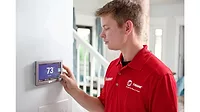
PRIVACY OVER SAVINGS: Even with energy costs soaring, homeowners aren’t necessarily willing to trade their privacy for efficiency.
Even though smart devices are promising energy savings at a time when utility rates are climbing at a historic pace, a growing number of homeowners aren’t convinced the privacy trade-off is worth it.
A new study from Copeland shows that even though interest in energy savings tools is growing, trust in smart home data practices has reached a critical low with homeowners.
In the U.S., energy costs are outpacing inflation, up 5% in the past year and nearly 30% since 2021, according to the Consumer Price Index, pushing homeowners to find more ways to slash costs but, for some, that’s still not worth the thought of sacrificing their data.
“Now in its third iteration, the study shows that while smart home ownership remains steady, trust in manufacturers’ data practices is moving in the opposite direction, creating a widening gap that could slow the broader transition to connected, energy-saving‑technologies,” a press release from Copeland states. “This tension is creating a pivotal moment for the smart home technology industry as consumers weigh efficiency gains against uncertainty over privacy.”
According to Copeland, the 2026 study found that privacy and security continue to dominate consumer concerns:
- Worries about data privacy among smart thermostat owners reflect growing unease about how manufacturers may share or use personal data, with concern increasing from 26% in 2022 to 37% in 2026.
- Data protection remains a top concern, with fears of hacking, unauthorized access, or surveillance increasing across segments. Concern about data protection rose from 26% in 2022 to 29% in 2026, and surveillance concerns climbed from 16% to 19% among all homeowners between 2022 and 2026.
- Most homeowners still do not know how manufacturers use smart thermostat data, with 55% of respondents in 2026 reporting they have little to no understanding of how their data is used, underscoring a persistent transparency gap.
What Exactly They’re Worried About
Copeland told ACHR NEWS that while privacy concerns span all age groups, younger homeowners are particularly wary — Gen Z (27%) and millennials (25%) are significantly more likely than any other generations to cite “surveillance concerns” with their smart home devices.
Specifically, they were most concerned about someone hacking their device or having their data being shared with the manufacturer (this even goes outside of home data, because internet browsing data can be tracked for the purpose of targeted ads).
Looking for quick answers on air conditioning, heating and refrigeration topics? Try Ask ACHR NEWS, our new smart AI search tool. Ask ACHR NEWS
“Even as homeowners continue to adopt smart technology and, in fact, feel comfortable with smart tech overall, their expectations around privacy continue to rise,” said Brendan O'Toole, vice president, smart home and energy management for Copeland. “This year’s findings underscore a clear reality: people are no longer willing to trade personal data for convenience. Privacy is now a deciding factor in adoption, and companies must treat trust as a core feature, not an afterthought.”
Copeland also noted that overall, 34% of smart thermostat owners are concerned about data protection, and 26% of those who don’t own a smart thermostat cite that it’s because of concerns over data privacy.
Joanna Buglewicz, president and owner of Green Valley Cooling & Heating, said in the field, for her staff at least, data privacy isn’t a topic that comes up very often during conversations about smart thermostats or connected controls — what they’re seeing is homeowners more worried about remote access.
“More commonly, homeowners express concern about their utility company gaining the ability to access their thermostat during peak demand hours,” Buglewicz said. “The hesitation tends to center less around data privacy itself and more around control, specifically, whether the utility ultimately has authority over temperature settings during high-usage periods.”
But Buglewicz said there have also been instances when privacy concerns have led to a homeowner opting out of smart controls.
“When that happens, we respect their decision,” Buglewicz said. “Our role is to educate them on the available options, explain how the technology works, and outline any potential benefits or trade-offs. Ultimately, it’s about giving homeowners the information they need to make an informed choice. If they prefer a non-connected thermostat, we fully support that and provide solutions that align with their comfort level.”
The study also reports some interesting statistics on exactly how homeowners are feeling about smart home purchases:
- Homeowners who avoid purchasing smart thermostats cite lack of trust in data practices as a leading reason. Among non-owners, only 58% are confident manufacturers use customer data responsibly, versus 73% of smart thermostat owners (2024). That trust gap suggests a key barrier to adoption among prospective buyers.
- Among homeowners, research into privacy policies remains low, suggesting many consumers feel they lack clear or accessible information. Just 13% of owners in 2022 reported researching a manufacturer’s data privacy policy before buying a smart thermostat; that fell to 8% in 2026, indicating consumers still lack clear, accessible privacy information at the point of purchase.
- A growing share of homeowners say they would replace their existing device if a more secure, privacy-first option became available. In fact, 7 in 10 homeowners (70%) say they would replace their thermostat for a more privacy-focused option, signaling strong demand for devices that pair energy savings with stronger data protections.
Explaining the Safeguards
The tech side of smart controls can be just as complex to a homeowner as a modern HVAC system, so Buglewicz said they keep that part of the conversation simple.
“We explain that smart thermostats are widely used, built by reputable manufacturers, and designed with security protocols in place to protect user data,” Buglewicz said. “From there, we focus more on the practical benefits, like energy savings, remote access, performance monitoring, and overall convenience.”
Most importantly, Buglewicz said their role is to educate, not to pressure.
“If a homeowner wants to go deeper into the technical safeguards, we’re happy to point them toward the manufacturer’s resources,” she said. “But in most cases, what resonates most is understanding how the product improves comfort and efficiency while coming from a trusted brand with established security standards.”
Copeland suggests that before these conversations even happen, contractors should really be educated on what information their smart thermostat brand collects and how it’s used.
“Data privacy policies are still among the least researched details before purchasing a smart thermostat. So it’s important for contractors to direct homeowners to research products they’re interested in bringing into their homes,” O’Toole said. “It’s important to know who the company is and what their focus is. For instance, Copeland’s primary mission with their Sensi smart thermostats is to provide homeowners with control over their comfort, not data collection.”
O’Toole added that protecting homeowner data isn’t just a matter of trust — it’s a matter of sustainability.
“As more households adopt smart technology to cut energy use and shrink their environmental footprint, manufacturers must ensure that these solutions are built on responsible, transparent, and ethical data practices,” O’Toole said.
Whether homeowners ultimately gravitate back to non-connected devices remains to be seen, but what’s clear is that privacy is no longer a side conversation. For contractors selling connected devices, understanding how data is collected, stored, and safeguarded may soon become as important as being able to explain SEER ratings or rebate eligibility.
“As products become more connected, homeowners will increasingly demand data privacy protection from their smart devices,” O’Toole said. “With homeowners being inundated with ads, pop-ups, and spam, we’re starting to see them move to less-connected alternatives, i.e., traditional wired, landline phones in the home vs. smartphones for kids.”
Looking for a reprint of this article?
From high-res PDFs to custom plaques, order your copy today!