Airborne Act Reintroduced
The proposal offers incentives for building IAQ improvements
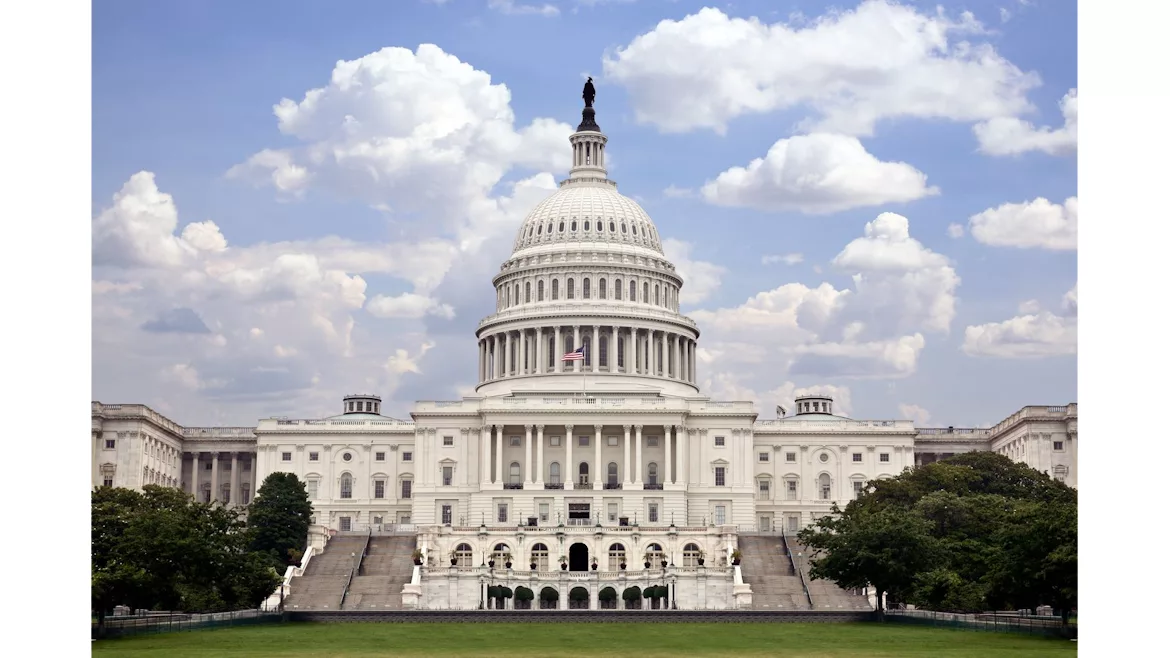
AIRBORNE ACT: A bill reintroduced by U.S. Reps. Don Beyer, D-Va., and Brian Fitzpatrick, R-Pa., would provide incentives for IAQ assessments and ventilation and air-filtration upgrades in non-residential buildings.
A bipartisan bill in the U.S. House of Representatives would provide incentives for IAQ assessments and ventilation and air-filtration upgrades in non-residential buildings.
The Airborne Act, which had been introduced in previous House sessions but never became law, was reintroduced in February by Reps. Don Beyer, D-Va., and Brian Fitzpatrick, R-Pa.
“Improving the air quality of our nation’s workplaces will make workers healthier and our society as a whole more resilient in the face of public health challenges,” said Beyer, whose district is made up of parts of suburban Washington, D.C., in a press release. “This will also benefit employers and workers by reducing sick days, creating a cleaner and more comfortable work environment, and lessening the risk of long-term health conditions.”
“The Airborne Act delivers a win-win: healthier indoor environments and stronger American jobs,” said Fitzpatrick, who represents suburban communities north of Philadelphia. “By pairing targeted tax incentives with prevailing wage and apprenticeship standards, this legislation drives real investment in modern air quality and HVAC infrastructure while supporting skilled workers and the next generation of the trades.”
The coronavirus pandemic, Beyer said, showed the dangers of airborne diseases and the importance of ventilation and proper IAQ.
The Airborne Act has been endorsed by both ASHRAE and the International Association of Sheet Metal, Air, Rail and Transportation Workers (SMART).
“The Airborne Act reinforces the important connection between buildings and occupant health and well-being,” said ASHRAE president Bill McQuade. “This legislation aligns with ASHRAE’s focus on healthy buildings and indoor environmental quality by providing important incentives for building owners and operators to assess and invest in system improvements that advance public health and improve productivity.”
Looking for quick answers on air conditioning, heating and refrigeration topics? Try Ask ACHR NEWS, our new smart AI search tool. Ask ACHR NEWS
The Airborne Act would:
- Offer building owners a tax credit of a dollar per square foot for an IAQ assessment. The credit could not exceed the cost of the assessment.
- Provide tax credits for air filtration and HVAC system upgrades that bring buildings to ASHRAE Standard 62.1-2022 (ventilation and acceptable IAQ) or Standard 241-2023 (control of infectious aerosols). The credit would be $5 a square foot for a filtration upgrade and $50 a square foot for an HVAC system upgrade, with a cap of 50% of the total cost of the project. The amounts would increase to $25 a square foot for a filtration upgrade and $250 a square foot for an HVAC upgrade if the work complies with prevailing wage and apprenticeship requirements outlined in the Inflation Reduction Act.
- Create a U.S. Department of Energy (DOE) and Environmental Protection Agency (EPA) program able to certify that buildings are in compliance with the ASHRAE standards.
Both commercial and nonprofit building owners would be eligible for the incentives, and the incentives would apply to some government-owned public properties. In the latter case, the tax credit would go to the company performing the IAQ assessment, filtration upgrade, or HVAC system upgrade, and the company would be required to lower the cost of the work by the amount of the credit.
The Airborne Act, H.R. 7460, was referred to the House Ways and Means Committee.
Looking for a reprint of this article?
From high-res PDFs to custom plaques, order your copy today!