Innovation Award Winners To Be Featured at AHR Expo
Award-winning products in 10 categories will be displayed on show floor
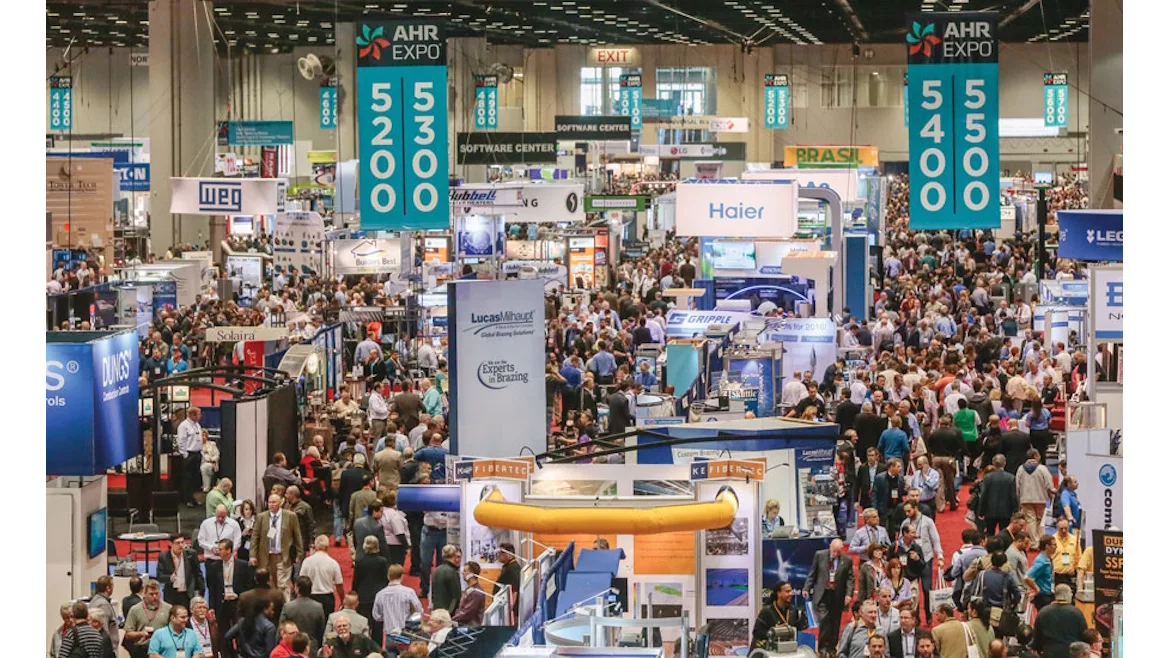
BENCHMARK FOR EXCELLENCE: This year's winning products were chosen by a panel of ASHRAE members, serving as third-party judges.
The International Air-Conditioning, Heating, Refrigerating Exposition recently announced the winners of the 2026 AHR Expo Innovation Awards, and they include 10 of the most innovative products and technologies in the market.
A panel of distinguished ASHRAE members serving as third-party judges selected the winners based on criteria that included overall innovative design, creativity of the product or service offered, product or technology real-world application, as well as overall potential market impact.
“The achievement of an Innovation Award winner is a meaningful distinction in HVACR,” said Mark Stevens, show manager of AHR Expo. “We’re proud to showcase the commitment and recognize the hard work of these manufacturers and their collective teams who are putting in the work to bring new and inventive solutions to market.
“The Innovation Awards not only highlight these accomplishments, but also act as a benchmark for excellence, honoring the creativity and dedication shaping our industry's future.”
In addition to category winners, one overall 2026 Product of the Year winner will be announced and awarded at the AHR Expo, which takes place in Las Vegas, Nevada, from Feb. 2-4, 2026.
Courtesy of Honeywell
Building Automation
Winner: Honeywell
Innovation: Honeywell Connected Solutions
AHR Booth: C1840
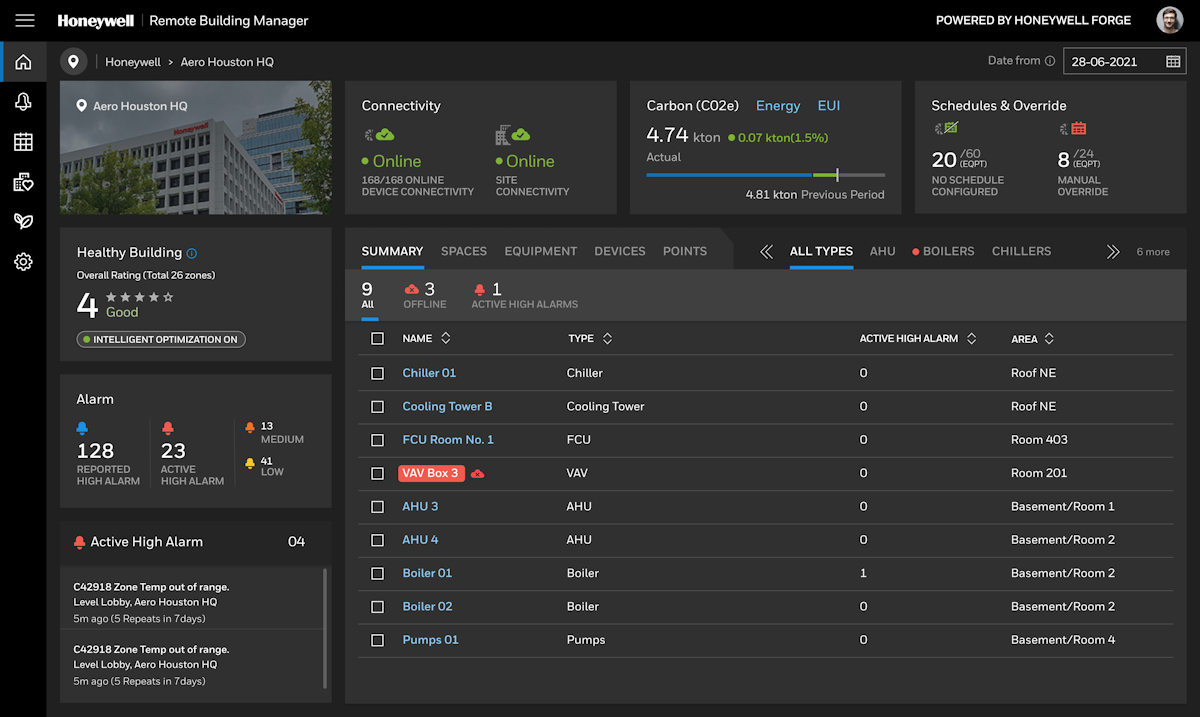
Honeywell Connected Solutions is an artificial intelligence-enabled, cloud-based building management platform that brings critical building software and technologies into one interface. By unifying data from disparate systems, it enables advanced capabilities like predictive maintenance, remote diagnostics, and energy management. Advanced encryption helps safeguard against cyberthreats, and the platform gives facility operators greater visibility and control, both on-site and when they’re remote.
Looking for quick answers on air conditioning, heating and refrigeration topics? Try Ask ACHR NEWS, our new smart AI search tool. Ask ACHR NEWS
“Managing multiple systems across a building — or a portfolio of buildings — can be complex and costly. Manager and operators often deal with fragmented systems and data across sites, which makes it hard to see issues early, optimize setpoints, or measure energy use,” said Dave Molin, global president of building management systems at Honeywell. “Honeywell Connected Solutions breaks down those silos and integrates disparate systems, so operators can resolve problems faster, realize operational efficiencies, and protect uptime. It’s about turning insight into action.”
Honeywell Connected Solutions embeds connectivity as a default feature across its ecosystem. Unlike traditional systems that require custom integration, the platform offers zero-engineering onboarding, AI-assisted asset modeling, and seamless cloud connectivity. Molin noted that the innovation lies in its unified data fabric and ontology model, which normalizes data across disparate systems for real-time analysis and automation. He said users can connect to the platform quickly with an AI-enabled installation process that is completed in hours, helping reduce labor time, costs, and disruption when compared to traditional building management systems.
“It accelerates the shift from equipment-by-equipment service to portfolio-level, outcomes-based operations,” said Molin. “Technicians and service partners can diagnose and act remotely, owners can verify related energy usage and costs, and the industry can redeploy skilled labor to higher-value tasks, all while improving uptime and comfort.”
.png "Daikin Applied WME-C_Quad_Hero_Rendering")
Courtesy of Daikin Applied
Cooling
Winner: Daikin Applied
Innovation: Magnitude WME-C Quad chiller
AHR Booth: C4916
The Magnitude WME-C Quad is Daikin Applied’s largest-capacity water-cooled centrifugal chiller. It was created to address the growing need for high-capacity, highly reliable cooling in mission-critical environments such as hyperscale data centers and large-scale comfort cooling applications.
“Traditional chillers often struggle with efficiency at part-load conditions, require frequent maintenance due to oil-lubricated designs, and lack redundancy for continuous uptime,” said Art Rizoli, senior director of global strategy for chillers at Daikin Applied. “The WME-C Quad chiller solves these challenges by scaling Daikin’s proven oil-free magnetic bearing technology to deliver up to 3,000 tons of cooling capacity with four compressors in a dual-circuit series counterflow configuration.”
The chiller delivers strong part-load efficiency and includes built-in redundancy and resiliency features such as RideThrough and RapidRestore, which help maintain operation during short power outages and enable restart within about 20 seconds after a power loss, reducing the size of chilled-water storage tanks. Its ability to support inverted operation and higher leaving-water temperatures can also simplify system design by eliminating the need for water-side economizers and operating with dry coolers.
Together, said Rizoli, these capabilities support reliability, efficiency, and long-term performance in critical facilities.
“The Magnitude WME-C Quad chiller is the first dual-circuit series counterflow chiller to deliver up to 3,000 tons of cooling capacity using Daikin’s advanced magnetic bearing compressor technology,” said Trevor Ramsey, marketing engineer at Daikin Applied. “With four compressors and Daikin’s proven oil-free magnetic bearing design and the option of ultra-low GWP refrigerants R-513A or R-515B, this innovative platform sets a new standard for reliability and performance in large-tonnage cooling applications.”
Rizoli added: “The WME-C Quad delivers industry-leading capacity and efficiency in a compact footprint, with unit-mounted variable frequency drives for easier installation and service. Built on Daikin’s proven oil-free magnetic bearing technology, it maximizes uptime and lowers costs by eliminating the need for costly compressor maintenance and overhauls.”
Courtesy of Copeland
Heating
Winner: Copeland
Innovation: Heating-optimized modulating vapor injection portfolio
AHR Booth: C3607
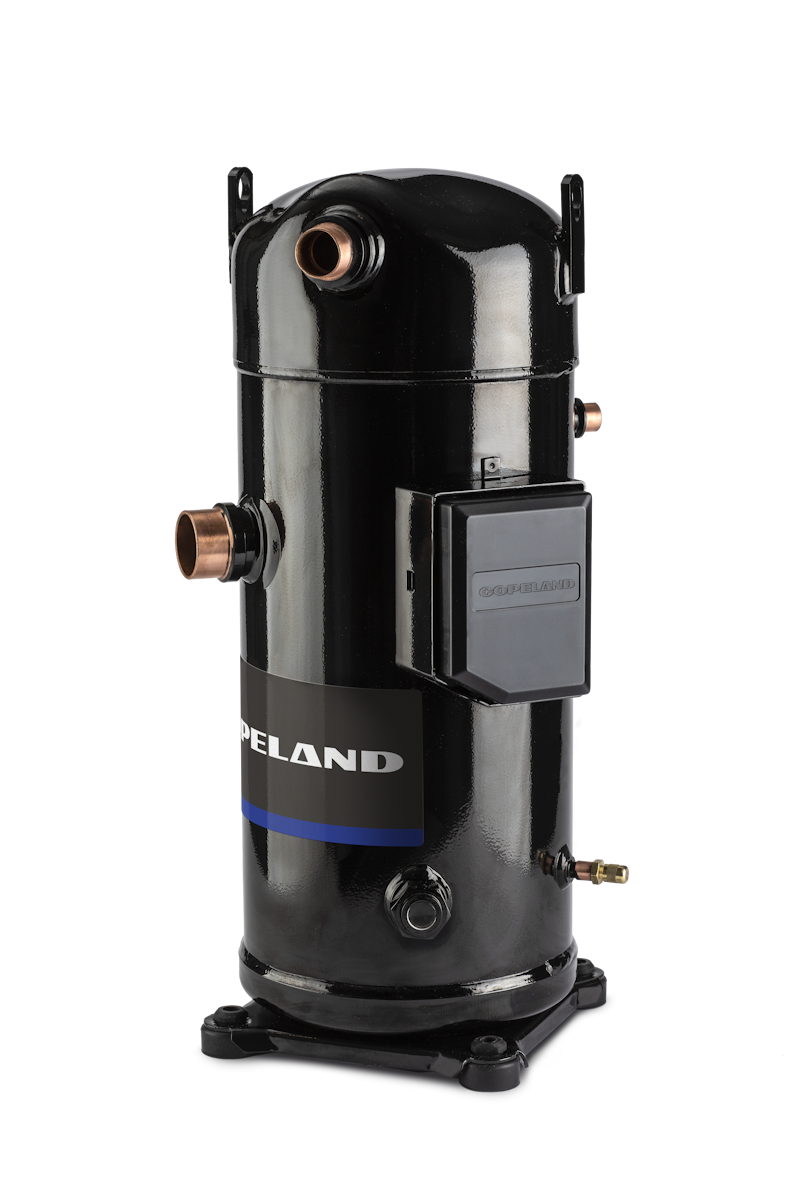
Copeland’s heating-optimized modulating vapor injection portfolio is designed to support the HVAC industry’s push toward decarbonizing space and water heating with high-efficiency, low-GWP heat pump technology. Meeting that goal requires emerging cold climate heat pumps to deliver reliable heating capacity without relying heavily on costly, complex backup systems.
“The Copeland heating-optimized modulating vapor injection portfolio answers the call,” said Chris Rannells, product manager at Copeland. “By maximizing two-stage, variable-speed, and tandem compressor configurations for use with enhanced vapor injection technology, Copeland offers significant leaps forward in heating capacity and efficiency in commercial and residential heat pumps for hot air and water applications.
“These advancements enable commercial and residential heat pumps to be applied in colder climates as true retrofits and/or replacements to gas-fired systems.”
He added that enhanced vapor injection technology helps maintain a strong heating output, even in subfreezing temperatures, which eliminates the need for backup heat sources.
“The broad range of modulating compressors and tandem configurations, all for lower-GWP A2L refrigerants, unlocks a new era of application flexibility and scalability,” he said.
Key features of the portfolio include enhanced vapor injection design, which allows OEMs to inject vapor during the compression cycle while subcooling the refrigerant — boosting heating capacity by up to 25% and heating efficiency by up to 10%.
The portfolio also offers flexible configurations for modular compressors; is scalable for both air and water heating applications; and supports the decarbonization and retrofit needs of today’s heat pump market. It is also compatible with lower-GWP refrigerants and engineered to operate with emerging A2L options.
Contractors will appreciate the comprehensive portfolio, which simplifies installation and service and system configurations for commercial and residential heat pumps, said Tyler Daniels, market manager at Copeland.
“Streamlining deployment and servicing helps accelerate the adoption of energy-efficient, low-GWP heat pump solutions across commercial and residential HVACR projects,” Daniels said.
Courtesy of Sharp Corp.
Indoor Air Quality
Winner: Sharp Corporation
Innovation: Airest mini-split heat pump
AHR Booth: SL1919
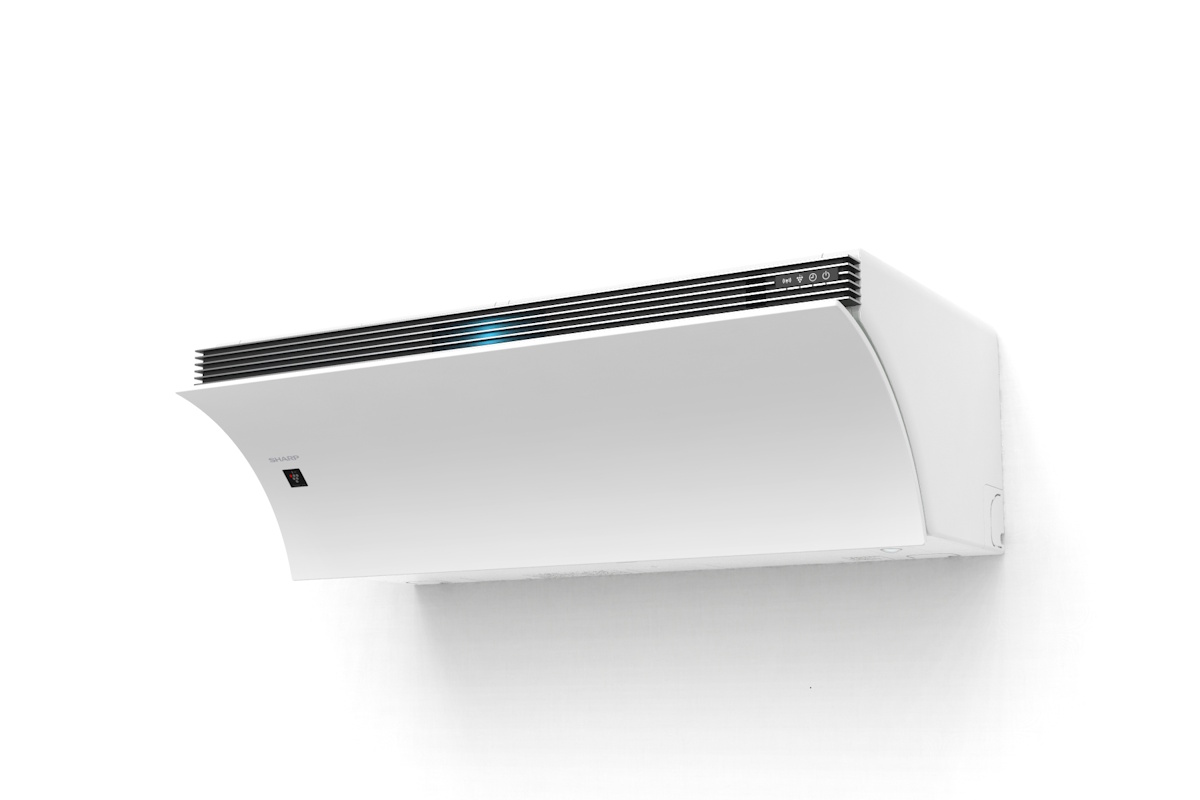
The Airest is the first mini-split heat pump to feature built-in MERV 14 filters, which capture more than 99% of particles in the 3-10 micron range. It not only removes airborne pollutants like dust and pollen but also manages humidity within the system to help prevent mold growth. The result is a system designed to provide efficient cooling, heating, and air purification all in one system.
“The integration of an air purifier into a heat pump has long been a dream among Sharp HVAC engineers,” said Akio Iijima, senior manager at Sharp Corporation. “At the beginning, this project aimed to save floor space for air purifiers in homes while maintaining or enhancing IAQ. As we developed and promoted the product, we discovered a significantly increasing demand for improved IAQ.”
To achieve this integrated approach to IAQ and comfort, Sharp utilized centrifugal fan technology, which maintains a throw distance of 43 feet using Coanda airflow to ensure delivery of cool and warm air throughout large spaces, said Iijima.
“Unlike conventional mini splits, the new structural design of Airest, with heat exchanger near the air outlet, maintains humidity inside the system nearly the same as the room air level,” he said. “By combining these technologies, the unit minimizes moisture and dust buildup, and as a result, mold growth inside the unit to ensure the unit’s cleanliness and hygiene.”
The Airest can be used in both residential and commercial applications and offers a certified Clean Air Delivery Rate of 471 square feet. It features a SEER2 rating of 21, an HSPF2 rating of 10.5, maximum cooling capacities of 13,600 Btuh, and maximum heating capacities of 17,000 Btuh.
Contractors also benefit from offering the Airest, as its design creates ongoing opportunities for filter replacement, said Iijima.
“With a standard filter life of one-and-a-half years, we ensure an exclusive supply of replacement filters through distributors and contractors,” he said. “This creates valuable touchpoints with consumers and offers an additional recurring revenue stream for contractors.”
Courtesy of IDC Fluid Control
Plumbing
Winner: IDC Fluid Control
Innovation: Leakstop III
AHR Booth: SL1225
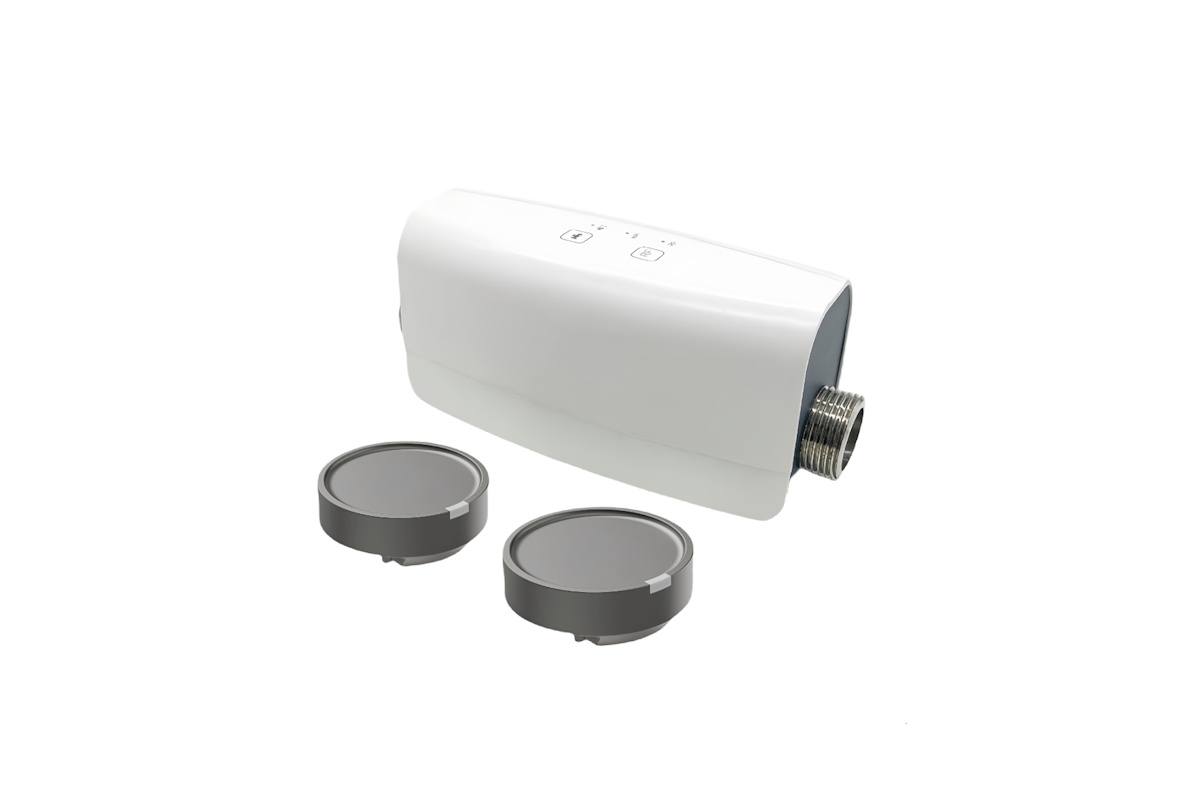
LeakStop III is a fully automated water leak detection system for homes and small commercial buildings. It uses real-time ultrasonic flow and pressure monitoring to detect abnormal water use, automatically sending an alarm and shutting off the water supply within seconds when preset flow or time limits are exceeded.
“Detection down to very low flows make LeakStop III an effective solution for monitoring very slow leaks, which cause just as much damage if left undetected, or incur increased water supply costs for leaking toilets,” said Zac Li, sales manager at IDC Fluid Control.
In addition to monitoring water flow, the LeakStop III connects to wireless leak sensors that can be placed throughout the home in high-risk areas such as under flexible pipes, bathrooms, and kitchens. Up to eight sensors can be paired with the system, providing comprehensive, whole-home protection against leaks.
According to Li, LeakStop III features three breakthrough technologies:
- Dual-sensing precision: Combines contactless ultrasonic and pressure monitoring for 2 liters per hour sensitivity without mechanical wear found in impeller systems
- Instant burst protection: Instantly shuts valves using configurable flow thresholds to stop leaks fast
- Smart, durable design: Featuring a Red Dot–nominated exterior, 868-megahertz local protocol, and 10-year wireless sensor battery life, it delivers cloud-free flood detection and <15 millisecond response even during outages. A lead-free brass valve body and battery backup eliminate corrosion risks and maintenance needs.
The LeakStop III’s C69300 lead-free valve ensures the highest level of water-contact safety, while a 72-hour battery backup provides uninterrupted protection during power outages. Built-in health scans enable predictive maintenance, allowing proactive prevention rather than reactive repair. With open API compatibility, the system integrates seamlessly across platforms.
“LeakStop III transforms water safety by setting new standards for performance and reliability,” said Li. “These innovations have driven its adoption into European Union plumbing codes and partnerships with insurers now covering more than 500,000 homes.”
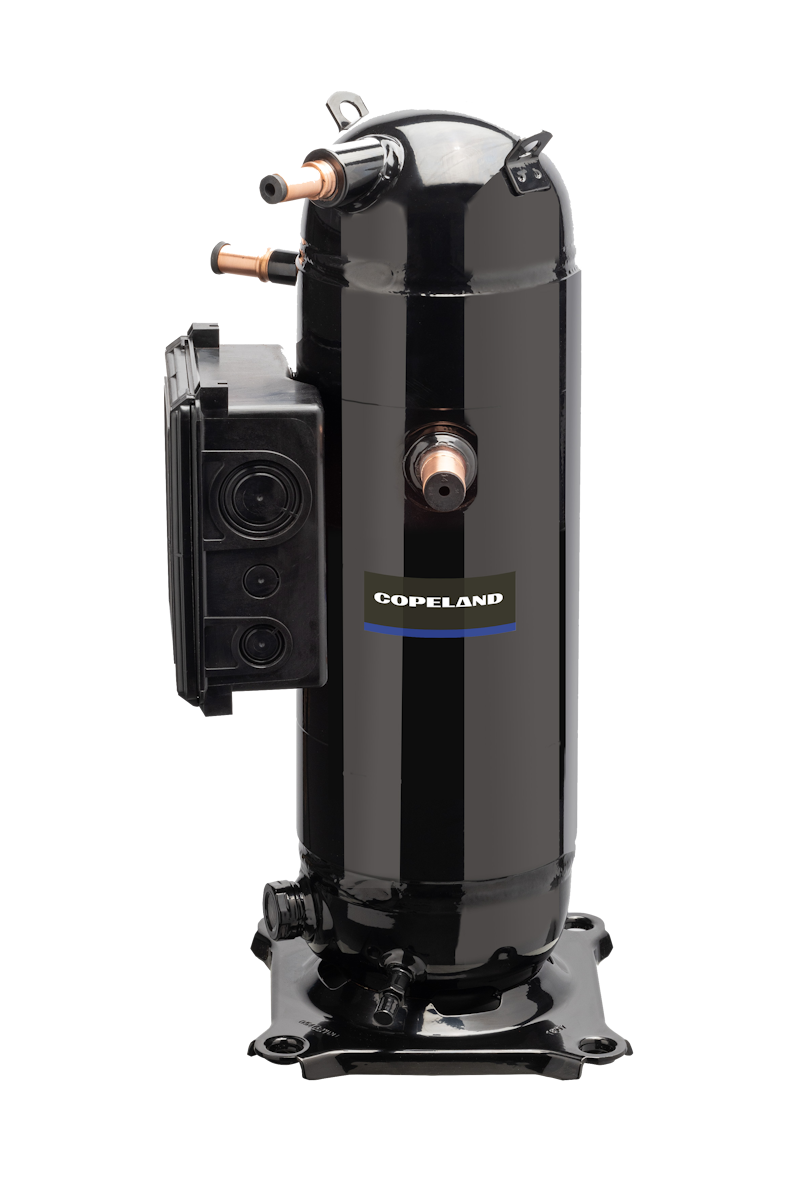
Courtesy of Copeland
Refrigeration
Winner: Copeland
Innovation: Transcritical CO2 scroll compressor with dynamic vapor injection technology
AHR Booth: C3607
The transcritical CO₂ scroll compressor combines Copeland’s technological innovations in transcritical CO₂ applications with the reliability of its scroll platform. This product expands the application flexibility for CO₂ refrigeration solutions, scalable from small- to large-format stores in new construction, remodels, and retrofits designed for use in distributed rack architectures or single-compressor condensing units.
The compressor also features Copeland’s DVI technology, which revolutionizes the process of managing CO₂ vapor in the compression cycle, said Andre Patenaude, director of solutions strategy at Copeland.
“This breakthrough delivers significant enhancements in system efficiency, performance, and design. DVI eliminates the need for parallel compression to digest flash tank vapor, resulting in improved efficiencies, design simplicity, and applied cost reduction. The innovative DVI concept delivers efficient, reliable CO₂ booster refrigeration in any climate, overcoming design challenges inherent in larger CO₂ systems.”
The ultra-low GWP-optimized platform is available in both fixed- and variable-speed configurations. Variable-speed features a brushless permanent magnet motor and optimized drive pairing, which Patenaude noted enables precise capacity matching and superior efficiency in low-load conditions, while over-speeding to meet refrigeration demands in high-load conditions.
The Copeland transcritical CO₂ scroll compressor marks a new era of flexibility, simplicity, scalability, and sustainability for CO₂ refrigeration, said Justin Miles, senior market manager – food retail at Copeland.
“It significantly expands opportunities for CO₂ refrigeration into smaller-footprint, distributed systems, such as those used in convenience stores, supermarkets, and hypermarkets,” Miles said.
Compared to more complex centralized CO₂ refrigeration systems, distributed CO₂ booster systems have fewer components, less piping, and seamless component integration. To date, most distributed refrigeration architectures have relied on higher-GWP HFC refrigerants, but the transcritical CO₂ scroll compressor enables equipment manufacturers to develop the next generation of efficient and reliable distributed CO₂ units in North America.
“By significantly reducing system complexity, Copeland transcritical CO₂ scroll compression technology offers favorable total cost of ownership advantages, including easier installation and maintenance, and a smaller rack in both size and weight,” said Patenaude.
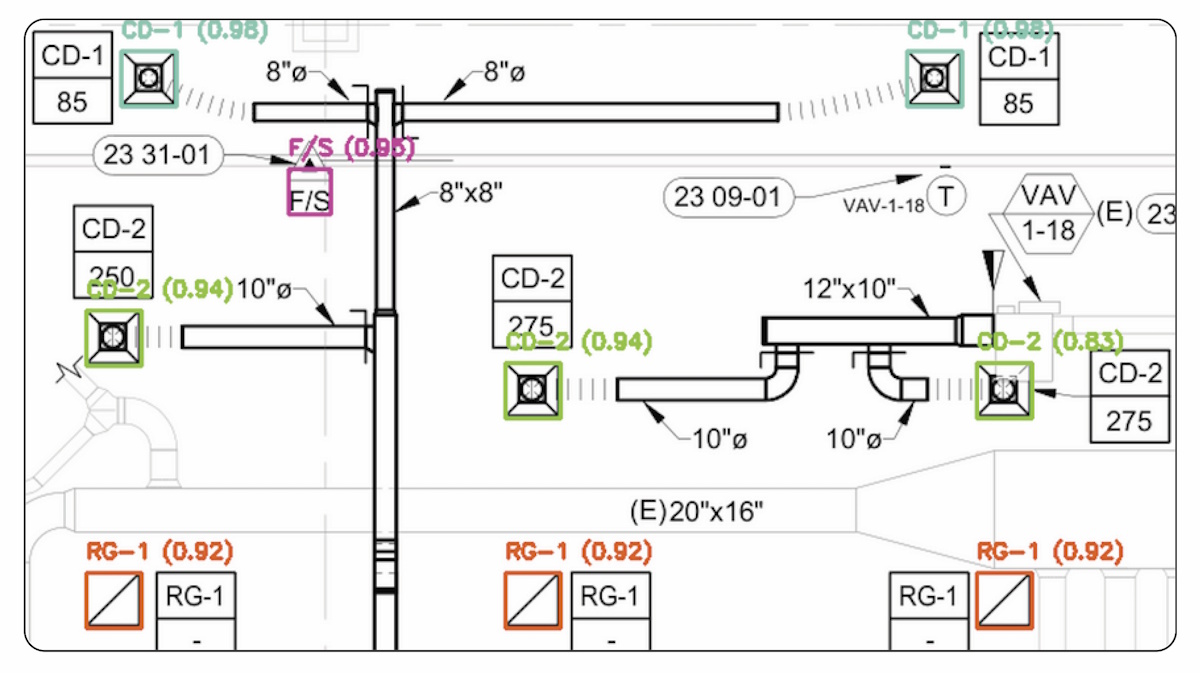
Courtesy of Rebar
Software
Winner: Rebar
Innovation: Rebar
AHR Booth: SL2331
Rebar is an AI platform designed specifically for HVAC manufacturer representatives and subcontractors. Unlike generic construction-tech or takeoff tools, Rebar understands HVAC equipment at a deep level — from fans to dampers to air handling units to VRF systems to everything in between.
Instead of simply detecting symbols, Rebar reads blueprints like an estimator, capturing dimensions, specifications, mounting types, counts, and all associated metadata — transforming manual takeoff work into an automated, highly accurate process.
“Before Rebar, takeoffs were done manually: estimators had to search through hundreds of pages of blueprints, identify equipment visually, interpret symbols that varied by region, and then translate all of that into pricing and quoting systems,” said Evan Brown, CEO at Rebar. “This process was slow, error-prone, and expensive — often costing companies hundreds of thousands of dollars a year in labor and missed opportunities.”
Rebar uses AI to automatically identify, quantify, and extract all HVAC equipment directly from blueprints and then outputs clean, structured data that flows instantly into a company’s pricing and quoting workflows. According to Brown, it reduces a multi-day manual takeoff to minutes, increases accuracy, and enables teams to quote more projects faster, leading to higher revenue and better margins.
“Rebar helps HVAC suppliers and contractors work faster, reduce mistakes, win more jobs, and eliminate the burden of manual blueprint interpretation — all through a simple, user-friendly platform that requires virtually no setup,” said Brown.
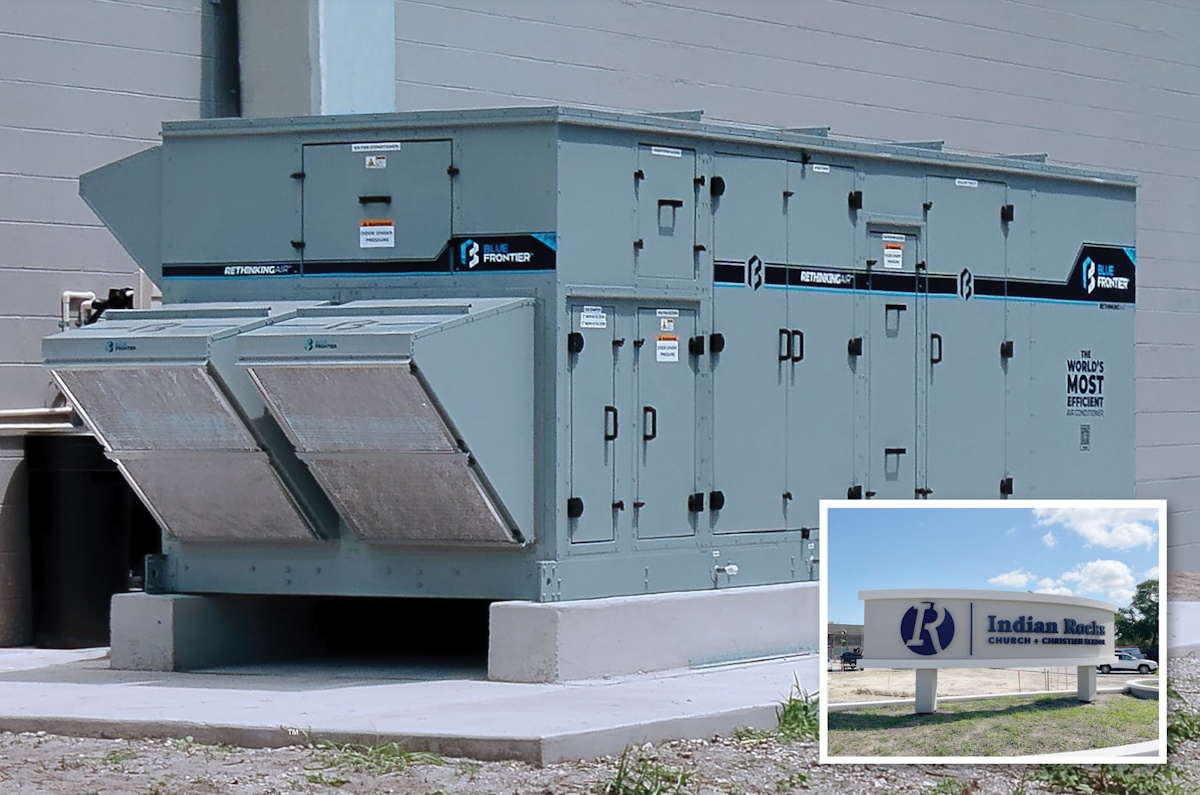
Courtesy of Blue Frontier
Sustainable Solutions
Winner: Blue Frontier
Innovation: BF-DOAS
AHR Booth: SL3720
Blue Frontier’s BF-DOAS is a packaged dedicated outdoor air system designed to support higher ventilation rates and precise dehumidification without increasing energy use. The system is engineered to improve IAQ by delivering conditioned outdoor air while reducing the energy typically associated with moisture removal.
According to the company, the BF-DOAS achieves moisture removal efficiency levels more than double the values proposed in the ASHRAE standard. The unit uses a noncorrosive liquid desiccant to dehumidify and deliver 100% outdoor air at a 55°F dew point and room-neutral temperature without reheat.
The system also eliminates the use of high-GWP refrigerants and incorporates integrated energy storage for load-shaping. It is designed to supply pre-conditioned ventilation air directly to packaged rooftop units, allowing operators to close ventilation dampers, which reduces latent load, improves efficiency, and increases return air cooling capacity.
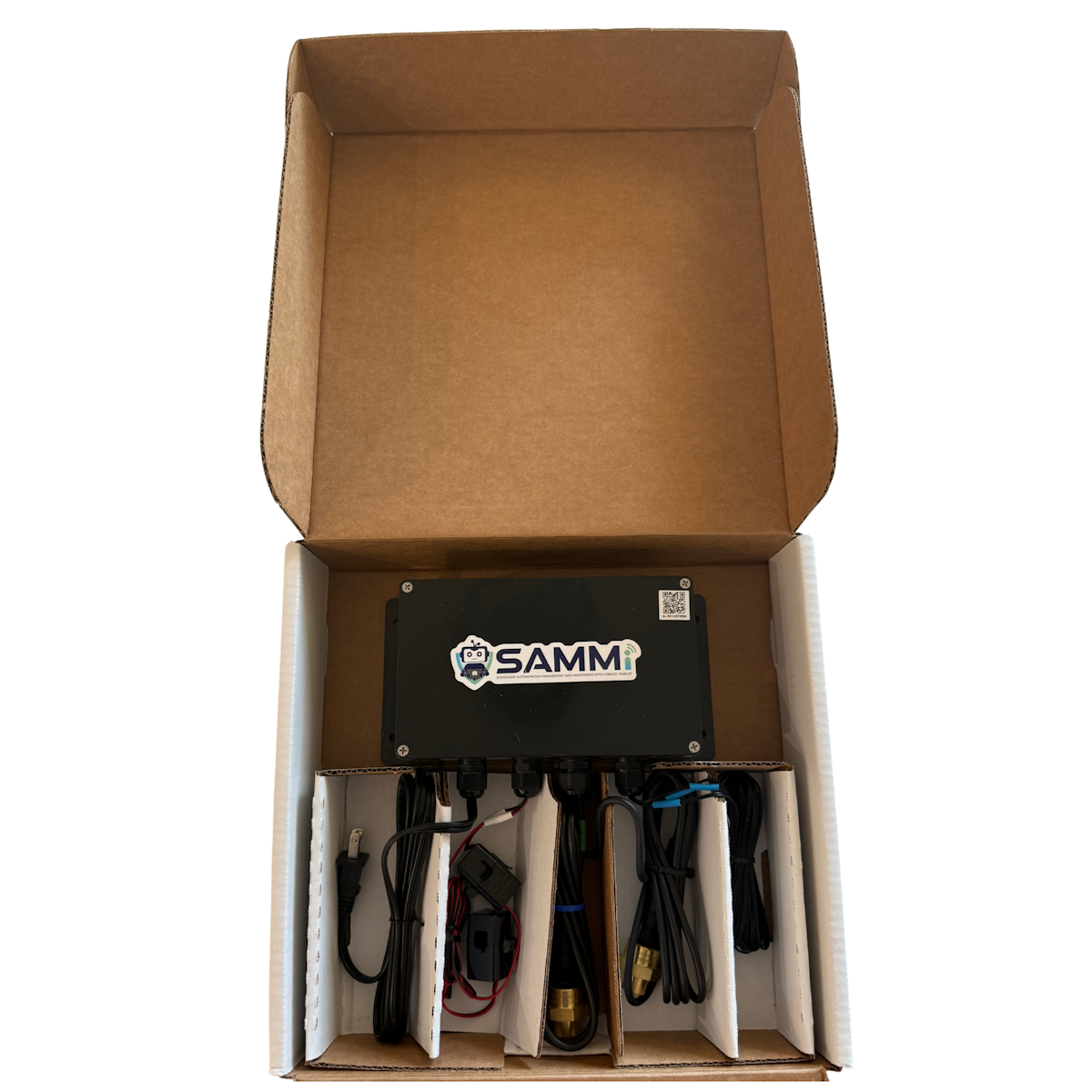
Courtesy of CSG Compressors
Tools and Instruments
Winner: CSG Compressors
Innovation: SAMMi (Systematic Autonomous Management & Monitoring Intelligence)
AHR Booth: SL3122
For decades, HVACR monitoring systems have operated reactively — alerting users only after a problem occurs, often resulting in costly downtime, spoilage, and service delays. SAMMi was developed to change that paradigm, going beyond traditional monitoring to think, predict, and autonomously dispatch service the moment performance issues are detected.
“The system was born from CSG’s deep understanding of compressor behavior and system failure patterns,” said Justin Morisak, president of CSG Compressors. “After years of remanufacturing, testing, and analyzing thousands of compressors, the CSG team recognized an opportunity to integrate predictive intelligence with mechanical reliability — essentially preventing failures before they happen and removing the human lag between alert and action.”
SAMMi uses predictive analytics to continuously evaluate system performance and detect early signs of mechanical or electrical failure. If a potential issue is detected, SAMMi can automatically notify and deploy pre-approved service providers — without human intervention. Data is encrypted and transmitted via cellular to maintain data and transmission integrity.
For contractors and technicians, SAMMi is designed to simplify — not complicate — the service process. Installation is virtually plug-and-play, taking less than 30 minutes and requiring no specialized programming or training. Once activated, SAMMi continuously monitors compressor health and automatically routes actionable service tickets only when real intervention is needed.
According to Morisak, it is ideal for supermarkets, cold-storage facilities, and multi-site operations, where it can help reduce emergency calls, equipment failures, and energy waste.
“Most HVACR monitoring systems stop at sending alerts and alarms with no intelligent information as to why or what the cause could be,” said Morisak. “SAMMi is the first platform to pair smart monitoring, predictive intelligence with autonomous dispatch. It doesn’t just think; it acts. This innovation represents a true leap forward for the industry — bringing AI-driven, proactive management into an environment that has historically been reactive.”
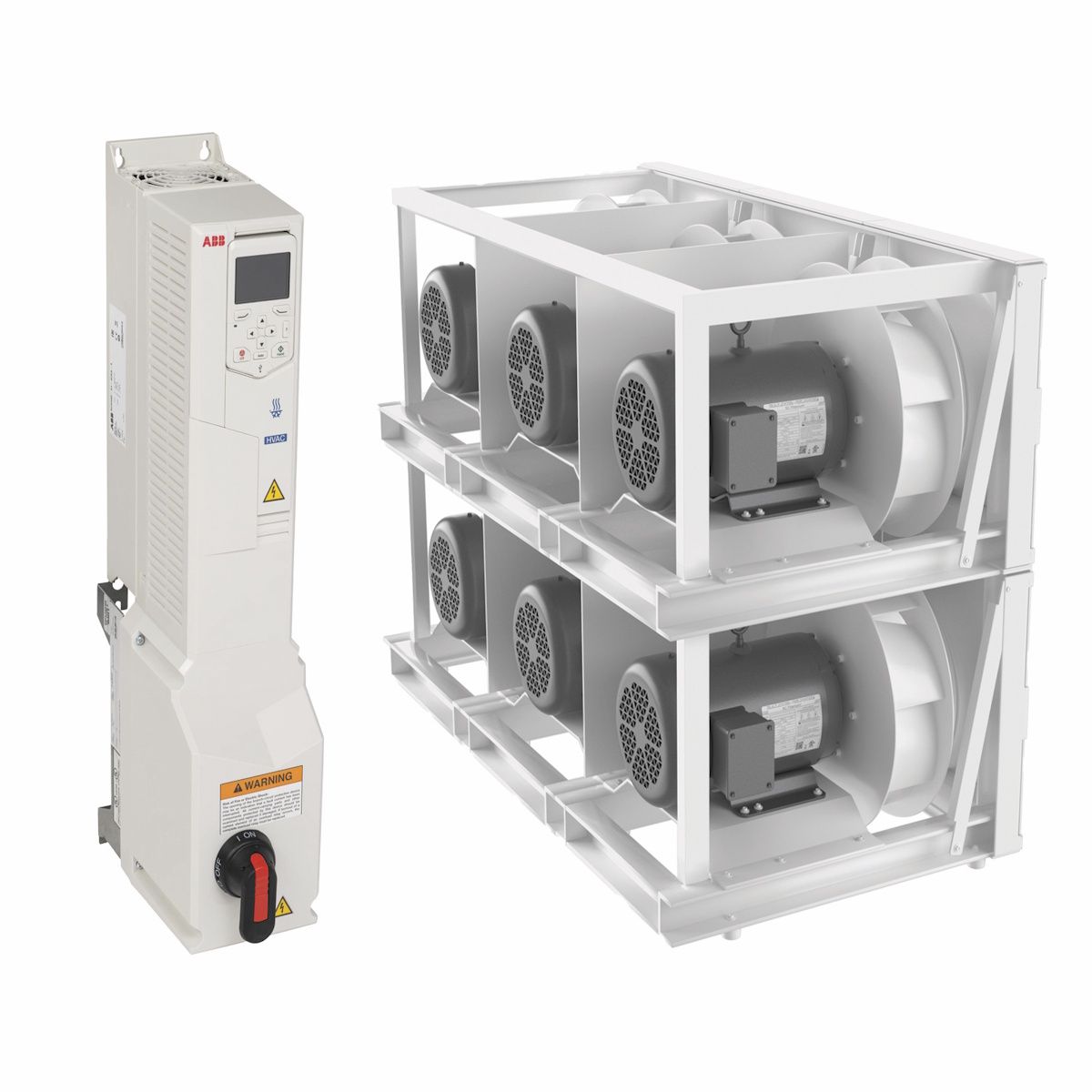
Courtesy of ABB Motors and Drives
Ventilation
Winner: ABB Motors and Drives
Innovation: ACH580 variable-frequency drive
AHR Booth: C1707
The ACH580 is an HVACR-specific variable-frequency drive that can control up to six EC Titanium motors simultaneously, eliminating the need for multiple single drives and reducing installation complexity and costs.
“At the core of this VFD is ABB’s patented firmware, which enables synchronized multi-motor control while delivering advanced motor protection — critical for ensuring the longevity of permanent magnet motors,” said Louis Hill, product manager at ABB. “This is something no other drive manufacturer currently claims: a fully integrated, scalable, and protected solution for EC Titanium motors in fan array applications. It establishes a new benchmark for efficiency, reliability, and total cost of ownership in HVACR system design.”
The ACH580 provides a high-efficiency motor and drive solution that meets or exceeds IE5 (NEMA Premium 5) efficiency standards. When an EC Titanium motor is paired with the ultra-low harmonic ACH580 drive variant, harmonic distortion is reduced, and the power quality on its electrical network is greatly improved.
Suitable for both new construction and retrofit applications, Hill noted that the VFD is particularly useful in the retrofit market, where energy savings are needed to reduce costs.
“One example of where it would be utilized would be replacing a blower system with an intelligent fan array solution, enabling simplified permanent magnet motor management for advanced HVAC applications,” he said.
“The ACH580 drive sets a new standard for integration, efficiency, and protection,” said Hill. “Since only one drive is needed to control up to 6 EC Titanium motors, drive commissioning time will be greatly reduced, as will the total cost of ownership and capital need for purchase.
“Additionally, it improves efficiency by ensuring fan arrays operate in sync. With one drive, maintenance and remote review of performance is streamlined. And, less space is needed for drives, freeing up critical space.”
Looking for a reprint of this article?
From high-res PDFs to custom plaques, order your copy today!