FROSTlines
Proactive Refrigerant Leak Detection Helps Protect Profits
Leaks are expensive and can reduce the energy efficiency of refrigeration systems
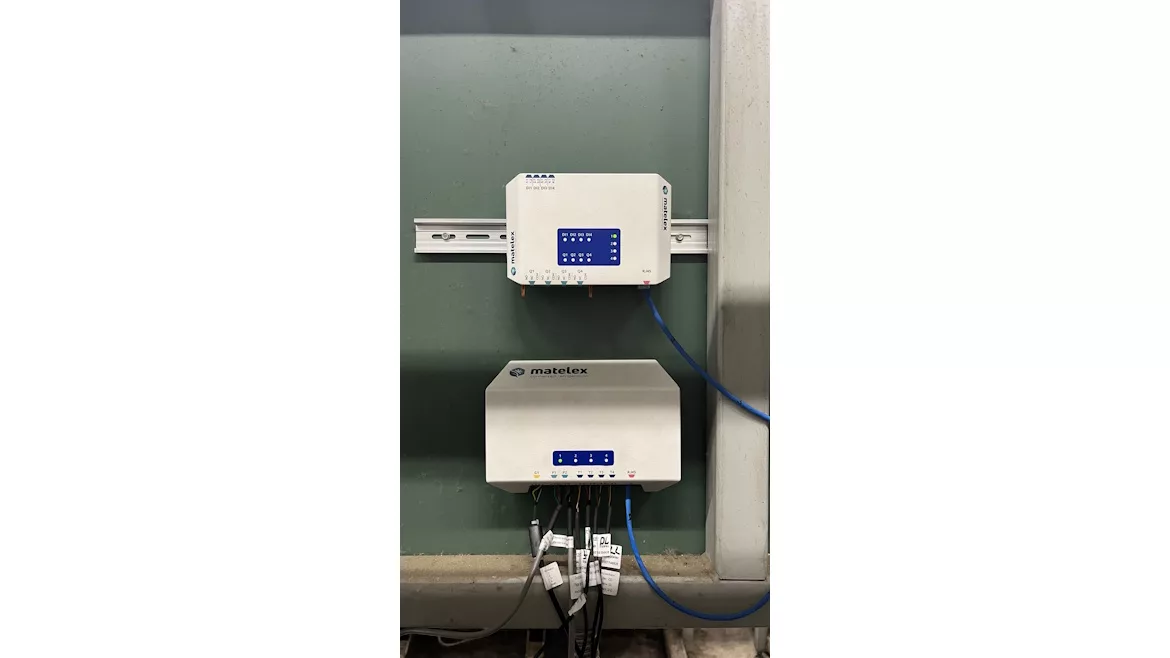
INDIRECT ALD: Matelex’s indirect automatic leak detection system installed at a Tops Markets location.
Refrigerant leaks are one of the most persistent — and costly — issues facing grocery store operators. Every pound of refrigerant that escapes quietly erodes profit margins. By proactively detecting and repairing leaks, operators can reduce operating costs and extend equipment lifespan, while also staying ahead of maintenance and compliance requirements. An added bonus is being environmentally responsible.
Even slow leaks reduce system efficiency, forcing compressors to work harder, raising energy bills, and affecting the coefficient of performance (COP) of the refrigeration unit. Across multiple sites, those inefficiencies can add up to tens or even hundreds of thousands of dollars annually. Without contamination, refrigerant has an endless lifespan, making it a valuable asset to safeguard.
According to the US Environmental Protection Agency’s (EPA) GreenChill Partnership, a typical supermarket system with 4,000 pounds of refrigerant, a 25% annual leak equates to 1,000 pounds lost per year, or $12,000 to $80,000 just to replace the gas — without factoring in higher energy use or accelerated equipment wear. (To determine your financial and environmental costs, check out the online Impact Simulator.)
Different Approaches
Automatic leak detection (ALD) systems fall into two broad categories: direct and indirect. Both methods may have roughly the same goal — to spot refrigerant when it escapes from a system — but they operate differently and help in different ways.
Direct detection uses portable or “sniffer” sensors to check an area around potential leak points (e.g., compressor racks, display cases) in order to measure the concentration of refrigerant in the surrounding air. These systems can narrow the location of a leak, making them particularly effective in confined or high-risk areas, or where human health is a concern.
Indirect detection, by contrast, infers leaks by continuously analyzing system performance — tracking parameters such as refrigerant level, pressure, temperature, and compressor consumption. Continuous monitoring of these parameters results in algorithmic learning that sets a reference level based on normal operation of the system. Changes in these indicators can signal refrigerant loss well before it’s visible or measurable by direct sensors.
Indirect detection systems represent the next evolution in refrigerant management. Rather than waiting for a sensor to detect gas in the air, these systems monitor performance data and system tightness in real time — often across multiple facilities through cloud-based dashboards. It is especially advantageous in refrigeration systems with exterior installation components such as outdoor receiver tanks. When deviations occur, alerts are sent automatically, including estimated leak rates and guidance for intervention.
Looking for quick answers on air conditioning, heating and refrigeration topics? Try Ask ACHR NEWS, our new smart AI search tool. Ask ACHR NEWS
This data-driven approach provides several key advantages:
- Early warning: leaks can be identified up to two months before they reach detectable thresholds in ambient air;
- Operational efficiency: continuous monitoring helps maintain optimal charge and efficiency, reducing energy waste;
- Scalability: centralized oversight supports multi-site management without additional hardware at every leak point; and
- Prioritized maintenance: dashboards help facilities target the most urgent issues first, minimizing downtime and loss.
Unlike periodic manual inspections, which offer only snapshots in time, continuous indirect monitoring ensures systems are never left unchecked. This shift from reactive to predictive maintenance supports cost control, compliance, and sustainability objectives simultaneously.
Many operators find that combining the two approaches delivers the most robust results. Indirect systems provide constant visibility and trend analysis, offering a layered defense in cases where direct detection has already been contracted or installed.
It is important to note that not all ALD technologies offer the same level of sensitivity or data quality, so when evaluating systems, consider the following:
- Detection sensitivity: how small a leak can the system reliably identify?
- Refrigerant compatibility: does it work with the full range of refrigerants used across your fleet?
- Scalability and integration: can it support multiple facilities and connect to existing building management or energy monitoring modules?
- Analytics and reporting: does it provide remote visibility, centralized monitoring, and actionable insights (not just alarms)?
By shifting to continuous, automated oversight, the industry can take a major step toward cooling smarter -- and leaking less. Every pound of refrigerant that stays in the system protects the bottom line. Integrating automatic indirect detection — with or without existing direct methods — transforms maintenance from reactive to preventive, extending refrigerant life, while reducing losses, energy waste, and emergency calls. The investment pays for itself through improved efficiency, greater reliability, and long-term system health.
Looking for a reprint of this article?
From high-res PDFs to custom plaques, order your copy today!


