ACCA, AHRI, HARDI, PHCC Outline HVAC Legislative To-Do List
Trade groups push workforce, refrigerant, energy issues, and more in Washington
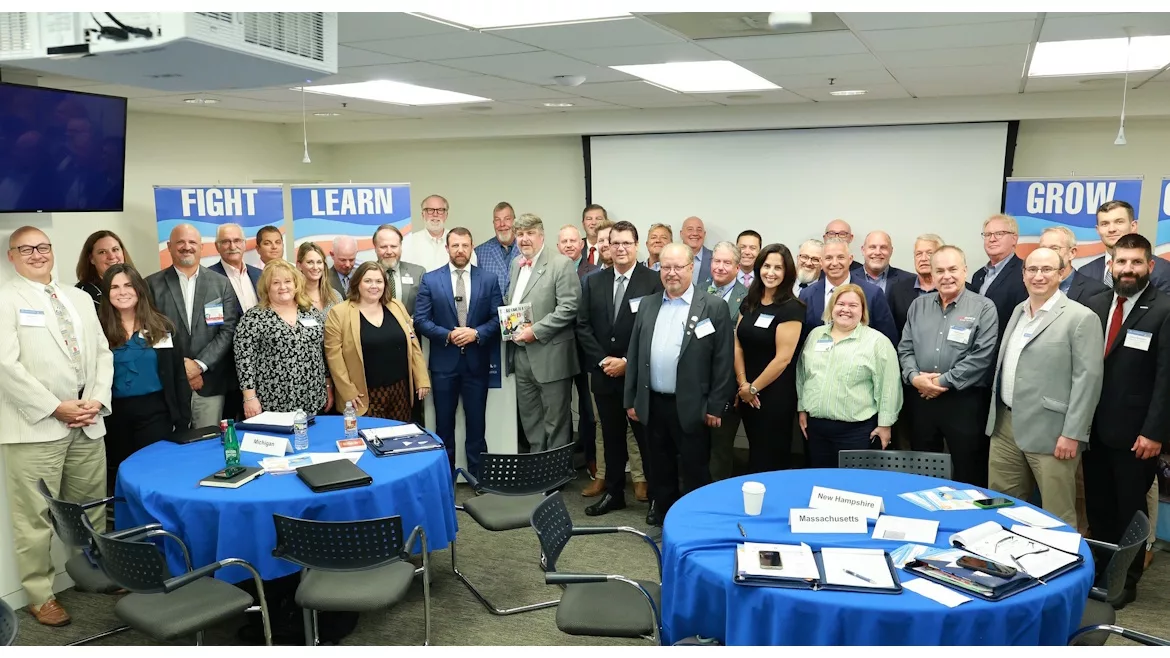
ADVOCACY DAY: Sen. Markwayne Mullin, R-Oklahoma, (center, in blue suit) joined ACCA CEO Barton James (to the right of Mullin) and other members of ACCA during the group’s lobbying trip to Washington, D.C., in September.
Workforce development, tariffs, refrigerant regulations, and technology and energy choice are among the issues on the agenda for the HVACR industry as Congress digs in for its fall session in Washington, D.C., and tackles the political calendar over the next few months.
Lobbyists at ACCA and the Plumbing-Heating-Cooling Contractors—National Association (PHCC) are pushing for more opportunities and funding for HVACR training, and for federal legislation to prevent state and local governments from limiting new natural gas infrastructure. Heating, Air-Conditioning, and Refrigeration Distributors International (HARDI) is looking for legislation that would set deadlines for meeting new energy-efficiency requirements based on the date equipment is manufactured or imported rather than the date it’s installed. PHCC and the Air-Conditioning, Heating, and Refrigeration Institute (AHRI) are keeping an eye on tariffs on imported products that have added to the costs of doing business.
Improving the HVACR workforce and boosting its numbers is at the top of the list at ACCA, said Sean Robertson, vice president of membership, advocacy, and events.
ACCA aims to “level the playing field for career and technical education generally and contractors’ in-house training programs in particular,” Robertson said. The One Big, Beautiful Bill Act (OBBBA), which became law in July, made “substantial progress” toward that goal by allowing tax-deferred 529 education savings plans to be used for trades education, and by allowing Pell Grants to be used for short-term career education programs, he added.
“Now we’re asking Congress to build on this progress by reauthorizing and funding the Workforce Innovation and Opportunity Act (WIOA) and Perkins Grants to help train the next generation of HVACR technicians and business owners,” Robertson said. “We’re also exploring new tax credits and improvements to registered apprenticeship programs to better support contractors’ in-house training.”
The PHCC is likewise pushing for WIOA reauthorization, said Mark Valentini, vice president of legislative affairs.
ACCA membership, Robertson said, was energized by a September Advocacy Day in Washington, during which members met with staffers from nearly 90 Congressional offices. “The topics front and center in these meetings were workforce funding, protections for fuel/technology choice, tax incentive extensions ... and sensible refrigerant rules,” Robertson said. The organization also hosted an “HVAC 101 for Congress” breakfast briefing for federal legislators and their staff.
Looking for quick answers on air conditioning, heating and refrigeration topics? Try Ask ACHR NEWS, our new smart AI search tool. Ask ACHR NEWS
ACCA’s visit to the capital city, Robertson added, was a catalyst for member involvement, as contractor engagement with ACCA’s political action committee jumped substantially afterward.
ACCA and PHCC also advocate a federal ban on the ability of state and local governments to restrict the use of specific energy sources, such as natural gas, in homes and buildings. Valentini said such language could be added to the Energy Policy and Conservation Act (EPCA); Robertson urged passage of the Energy Choice Act, which would forbid state and local energy bans.
AHRI is also lobbying for EPCA reform.
“Now is the time for all stakeholders to explore updating and revising EPCA’s regulatory framework to better reflect a twenty-first-century marketplace,” said Samantha Slater, AHRI’s senior vice president of government relations.
ACCA and HARDI are also pushing back against the U.S. Department of Energy (DOE) rule that requires new gas furnaces to be at least 95% efficient starting in late 2028.
Alex Ayers, vice president of government relations at HARDI, said the group is awaiting a decision in the American Gas Association’s suit against DOE. The suit, which is currently before the Court of Appeals for the District of Columbia Circuit, challenges the DOE’s planned phaseout of non-condensing furnaces.
“Mandates that force costly structural changes, or that eliminate options without sufficient infrastructure or homeowner readiness, impose real burdens,” Robertson said. “We advocate preserving fuel and equipment choice so that transitions are orderly and equitable.”
ACCA also favors measures to increase equipment installation standards, as greater energy efficiency, Robertson said, can be achieved through quality installations. Installation quality, he said, can be promoted through tax breaks, similar to the way high-efficiency equipment is incentivized.
“ACCA’s Quality Installation certifications offer a third-party efficiency verification that helps allow policymakers to incentivize realized efficiency like never before,” Robertson said. “We encourage Congress to help consumers afford smart, fuel-neutral efficiency upgrades by restoring efficiency tax incentives. Adding Quality Installation requirements to tax credits like 25C could make restoring them more affordable and dependable for taxpayers.”
The 25C tax credit is to expire at the end of the year under the OBBBA, though some Democratic legislators are trying to use a technicality to preserve it. AHRI’s Slater said the group is working toward clarity on that issue.
Robertson added that ACCA also wants Congress to smooth refrigerant transitions by taking away the ability of states to set refrigerant standards different from those prescribed by the American Innovation and Manufacturing (AIM) Act.
“Congress should avert a dangerous rush to highly flammable A3 refrigerants and uphold the original promise of the AIM Act by amending it to preempt state refrigerant regulations,” he said.
Looking for a reprint of this article?
From high-res PDFs to custom plaques, order your copy today!