I Wasn’t Taught That: Things HVACR Techs Only Learn From the Field
Advice from today’s technicians they wish they’d gotten
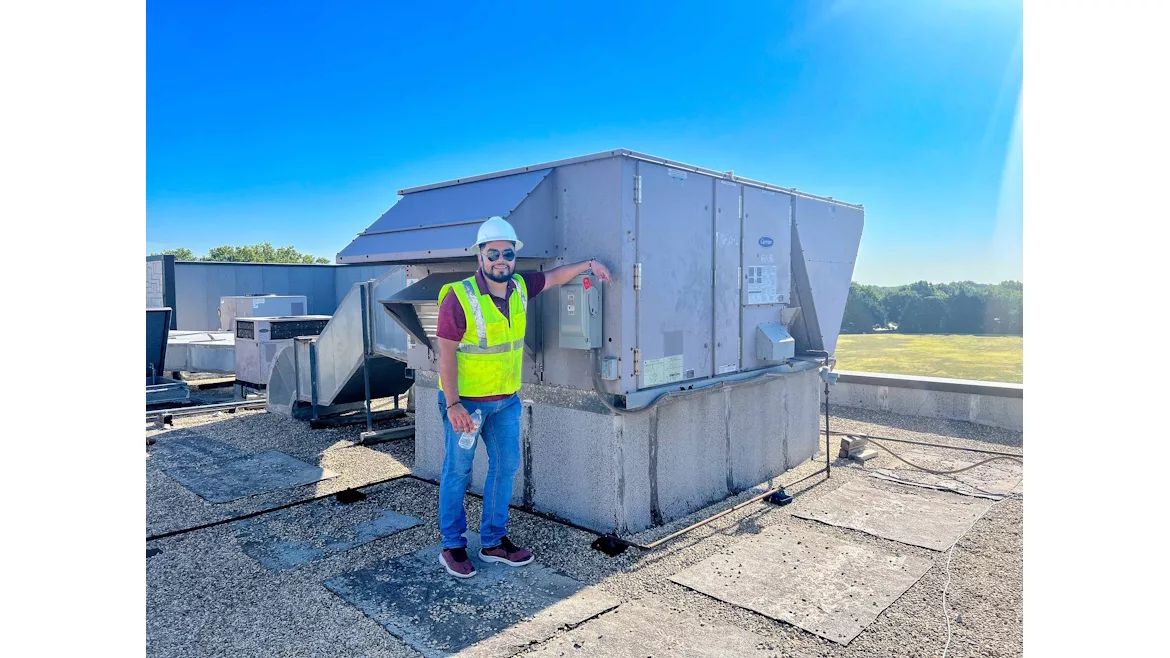
LEARN FROM DOING: A lot of what technicians come to know comes from experience in the field.
Even the best training programs in the biz can’t prepare HVACR technicians for everything they’ll face once they are out in the field. The real lessons are learned from experience – from long days on jobsites, unexpected challenges and curveballs, and wisdom from those who’ve walked the path before.
In the following Q&A, three technicians shared the things they wish they’d known starting out, the mistakes that taught them the most, and the “unwritten rules” a tech can only learn on the job.
ACHR NEWS: What’s one thing you wish someone had told you before you started working in the field?
Maddy Fauth, co-owner, Great Guys Colorado: That you have to be creative in your problem-solving. Sometimes, the answer to a problem isn't always going to be right in front of you. I think having creative problem-solving skills is just as important as the tools in my pack. Be patient as well with the equipment, with the client, and mostly yourself. The reason seasoned techs make it look easy is because they have seen it a million times and use pattern recognition. The only thing that builds that skill is time and experience.
Zachary Zentz, technician productivity project manager, Trane: You will be hotter and colder than you have ever been. Take your time and focus, because doing the job right is always better than doing it twice.
Matt Neceda, field supervisor, Atlantic Westchester: I wish someone would have told me to invest in good-quality, waterproof boots and socks before I started working in the field. I used to cheap out on boots and would run through pairs every 6 months or so. Once I bought a good pair of boots, I never went back.
ACHR NEWS: Can you describe a situation where you had to learn something the hard way?
Looking for quick answers on air conditioning, heating and refrigeration topics? Try Ask ACHR NEWS, our new smart AI search tool. Ask ACHR NEWS
MF: … I would say the lesson theme that came up a lot for me on the installation side was preplanning/preparation — gathering as much information beforehand to go into a situation as prepared as possible. It saves you a lot of time and headache on the back end.
The service side is also understanding that a big part of the job is discovery. We aren't always going to have all the key details of every situation. You have to investigate the unknowns, ask the right questions to yourself and to clients to get to the root of what's going on. Sometimes, there isn't anything wrong with the system, and it’s our responsibility to educate clients on the way their system is designed to be used and operated.
ZZ: My first years in the field, I tended to overexert myself physically. It took a while to realize what the older techs meant when they said, “One day that will catch up to you.”
MN: I've learned the hard way that you should always verify the motor/compressor specifications on a replacement before removing the existing one — and don't rip up the box that it's in in the process.
ACHR NEWS: What’s a skill or piece of knowledge that’s critical in the field but rarely covered in training or school?
MF: I would say confidence. It can be intimidating being a newer tech in the field, especially when you become a lead. You're responsible for setting the pace of the job and ensuring that it goes well, as well as clear communication with clients and team members. Documenting work, too. With my previous experience in healthcare, we were taught to document in a certain way to ensure the details are gathered for future reference. That was a skill I wasn't anticipating would be transferable, but has been key in some cases.
ZZ: Writing a good service ticket or field report. The key is to write a report so that no one needs to ask what you did that day – not the customer, not the office, not a coworker. Be detailed, thorough, and don’t gloss over anything because you think it is implied or understood. It very rarely is. Details matter, and when you paint a picture for the customer and the office of what work you did, everyone appreciates and values it more.
MN: Searching the internet for information is an important skill to have — whether it's finding a service manual, a manufacturer's tech support number, or a training article — finding information online while you're out in the field is an important skill to have as a technician, and is overlooked.
ACHR NEWS: How did you figure out things like how to deal with customers, co-workers, or jobsite curveballs?
MF: Dealing with customers really started from the beginning of my working life. My first job was at a movie theatre, and my first boss, Ryan, was always very clear: we were not selling a product, we were selling an experience. The experience we provided would dictate whether that client would come back to see another movie with us. I have used that same idea in my business. Not many folks (if any) will show off their new a/c or furnace like a new car or kitchen remodel. Putting experience of the client at the forefront of everything we do has made a huge difference in our customer retention and relationship building. That also tends to make the other unknowns of what we do easier because that is the foundation to build off of. It’s construction, things are going to come up, but how you handle it and communicate it makes all the difference.
ZZ: Working through unexpected issues with customers, co-workers, and on jobsites is a skill you learn on the job from every other tech you work with. You see senior techs having many conversations with customers or other contractors when you are a helper or apprentice. Each conversation and customer is different. You learn good ways to break bad news, and bad ways to give good news. You really need to develop customer service skills to be able to interpret what each situation calls for.
MN: Jobsite curveballs happen often and shouldn't be a surprise to anyone. Keeping your van stocked reduces the chance of a curveball negatively affecting the job. As far as dealing with customers, I learned from George Costanza that if you look annoyed all the time, people think you're busy and leave you alone.
ACHR NEWS: Are there any “unwritten rules” about doing the job well that new techs usually have to pick up over time?
MF: Don't get defeated or give up. What doesn't challenge you, doesn't change you for the better. Being a business owner, I have seen techs start and end their career because they don't believe in themselves … Sometimes the only difference between the folks that stay in this trade and the ones that don't are the ones that didn't give it that one last shot. The mountain is hardest when you can see the peak, and pushing through to the end — being determined to find the solution — can be the key to elevating yourself as a technician and your team to the next level.
ZZ: It takes a full 10 years until you are comfortable with any service call or job you are given. It will take that long to feel like you really know how to do the job.
MN: When you think you should check that one last thing before you leave, just do it. Cutting corners always comes back to bite you at some point.
ACHR NEWS: What advice would you give a new tech that you didn’t get when you started?
MF: Immerse yourself and take every opportunity you can to learn. There are so many additional resources these days to learn and understand what we do. Facebook groups, TikTok, YouTube, Google. We have a world of answers that walks around in our pockets with us daily. Use it.
Find a mentor and/or lean on your team, someone that you can lean on to talk through scenarios when you get stuck. A couple of weeks ago working on a low-voltage issue, and I had thought so hard that I confused myself. I called my mentor and said, "I know this, but I am stuck," and we talked through it, and I worked it out. Also, know when to ask for help. We can get into our ego and assume that we know everything we need to, but that is the beauty of what we do. There will always be something to learn.
ZZ: I’ll give some advice that I was lucky enough to get: no matter what you are doing or the pressure you are under, it's okay to stop. At Trane, we practice “stop work authority.” There is always another way to do a job that may have less risk.
MN: Bathrooms, especially clean ones, aren't always available.
Looking for a reprint of this article?
From high-res PDFs to custom plaques, order your copy today!