5 Ways HVACR Contractors Can Maximize Efficiency During the Summer Rush
Tips from preseason prep to smarter scheduling
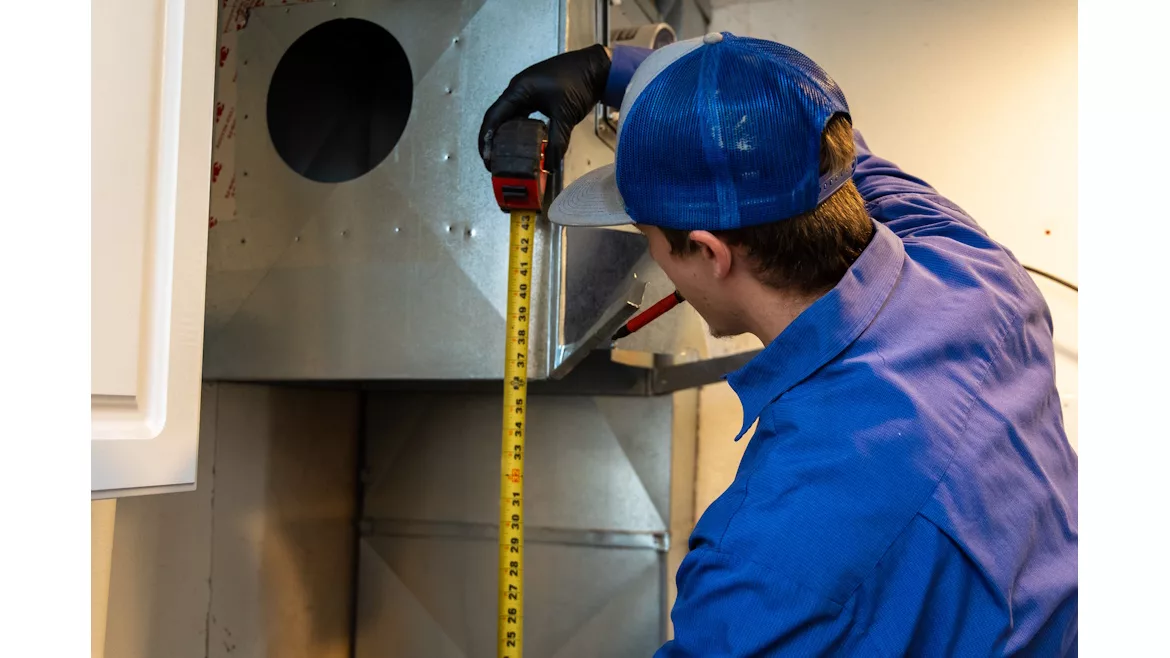
PLAN AHEAD: Performing routine maintenance ahead of the summer rush helps HVACR teams avoid emergency calls and keep systems running smoothly when temperatures spike. (Courtesy of Kliemann Brothers Heating & Air Conditioning)
When temperatures rise, so does the pressure on HVACR contractors. Summer brings more strained systems, record demand, and stretched teams. Everyone’s hot, everyone’s tired, and there’s seemingly always still another month of heat to go.
But with smart preparation, clearer communication, and a focus on supporting field staff, contractors can keep jobs on track and burnout at bay.
Here are five proven strategies that can help HVACR teams stay efficient all summer long.
1) Prepare Like It’s Game Day
Athletes don’t wait until game day to start practicing — and neither should HVACR contractors. The most efficient teams treat spring like preseason: a time to train, stock up, and strengthen systems before the real pressure hits.
“Training, inventory, and tool checks are all part of our preseason checklist,” said Josh Brooker, owner of TE Certified Electrical, Plumbing, Heating & Cooling in Roswell, Georgia. “Basically, anything that can be done to clear the decks and prepare the team for the busy season.”
At Kalos Services in Clermont, Florida, prep work includes addressing common summer failures ahead of time. Two big troublemakers in their region? Clogged drain lines and failing capacitors.
To reduce no-cool calls, Kalos performs thorough maintenance visits in the spring, clearing drain lines and testing or replacing weak capacitors.
Looking for quick answers on air conditioning, heating and refrigeration topics? Try Ask ACHR NEWS, our new smart AI search tool. Ask ACHR NEWS

MANAGE TEAMS: From scheduling to diagnostics, HVACR contractors are using field service software to boost efficiency, reduce callbacks, and keep teams focused during peak season. (Courtesy of Kliemann Brothers Heating & Air Conditioning)
“It’s like doing a mini ‘tune-up bootcamp’ before things get crazy,” said Bryan Orr, co-founder and president at Kalos Services, and founder of HVAC School. “This way, when the heat is on, we can focus on true emergencies and high-priority calls, not preventable failures. That preparation has been a game-changer for our efficiency during the busy season.”
Kliemann Brothers Heating & Air Conditioning in Clover Creek, Washington, takes a similar approach. President Jeremy Kliemann said their management team does spring ride-alongs and job reviews with field staff ahead to ensure processes are followed and any weak points are identified/addressed.
“We want to ‘plug the holes’ before we get busy,” Kliemann said. “We also make sure we have apprentices in the pipeline who are trained and ready to lead their own projects by the time the peak season arrives. Additionally, we plan ahead to make sure our service and install vehicles are already in place so we’re not scrambling to acquire them once the weather hits.”
2) Smart Scheduling To Avoid Burnout
Overbooking doesn’t lead to more productivity — it leads to bottlenecks, mistakes, and exhausted techs. That’s why contractors should work to build summer schedules around urgency, not volume.
During peak times, Kliemann Brothers used ServiceTitan to triage calls based on urgency.
“Our preventive maintenance customers get priority scheduling as part of their membership with us,” Kliemann said. “After that, we prioritize no-cool calls, especially for homeowners with medical conditions who need their systems to work properly.”
Kalos takes a similar “emergency room triage” approach. Urgent no-cool calls get top priority, while routine job maintenance or comfort jobs may be delayed by a day or two. For mid-priority issues, they try to buy time by finding temporary fixes or workarounds — like settings adjustments or portable a/c units — until they can make the full, proper repair.
“This kind of triage prevents bottlenecks because we’re not trying to do everything all at once on the busiest days — we’re strategically spreading the workload based on urgency,” Orr said.
At TE Certified, maintenance calls are blacked out during peak periods so technicians can focus on demand calls. Brooker reminds his team that speed isn’t the goal: clarity and consistency are. At the core of their approach is a guiding principle: “Slow is smooth and smooth is fast.”
“When we try to go too fast, we end up being less efficient,” Brooker said. “We remind techs often that the most important home is the one we are at right now.”
Contractors should also take additional steps to reduce tech burnout. They could take a page from Kliemann Brothers’ book — the company rotates install crews for tougher and hotter jobs that are in, say, an attic; offer voluntary Saturday shifts; and ensure techs have time off to rest and recuperate. Or from Kalos Services, which staggers after-hours call duties, encourages vacations and days off, and promotes a steady, manageable pace in the field.
“HVAC folks are often people-pleasers by nature — we hate to tell anyone no,” Orr said. “But I remind my team (and myself) that if we try to run 10-12 calls every single day, quality will suffer and so will we. … I’ve learned that learning to say no (or ‘not today’) for non-urgent requests is crucial in the busy season.”
3) Empower Techs With The Right Support
Even the most skilled technicians can’t work efficiently if they’re plagued with missing tools, inconsistent procedures, or guesswork in the field. Giving teams the right support through the right tools, software, and processes leads to faster, more accurate work and fewer callbacks.
Kliemann Brothers uses Trane Diagnostics on most installs and arms their techs with the Bluon Tech app for quicker system info and troubleshooting.
“We also use ServiceTitan Forms with job-specific checklists to ensure nothing gets missed, and we capture good documentation, including photos,” Kliemann said.
Kalos relies on field management software for real-time updates and to input results in the field, eliminating a lot of phone tag and confusion. They also use the MeasureQuick app to simplify diagnostics. The app analyzes live system data, eliminating the need for manual calculations. Orr compared it to having a second expert set of eyes on-site.
“This means faster, more precise diagnosis — no guesstimating if the charge or airflow is right, because the app clearly shows whether you’re in range or not,” Orr said. “By removing a lot of the guesswork, it prevents mistakes and repeat visits.”
Checklists also help techs avoid time-wasting mistakes. Something simple — like walking the job before leaving — can prevent return trips for forgotten tools or open panels.
“That way, we don’t drive off and realize 30 minutes later that we left a disconnect pulled or a screwdriver on a customer’s roof,” Orr said. “Developing such habits and standard processes greatly reduces those little errors that slow things down.”
4) Overcommunicate With Customers
Clear communication can also save time and prevent callbacks in the summer season — and that means clear communications before, during, and after the job.
One part of that is managing expectations from the get-go.
“During peak summer, we make sure our dispatchers or office staff confirm appointments with customers and give them realistic time windows — if it’s going to be a busy day and there’s a chance the tech might arrive late, we tell them honestly,” Orr said. “Customers generally appreciate the transparency.”
At TE Certified, Josh Brooker said his team confirms every demand call the day before, knowing that many customers — eager to get their system fixed — will schedule multiple appointments and forget to cancel.
“We text and email every demand call to make sure the customer still needs us before dispatching the technician,” Brooker said.
Kliemann Brothers uses automated appointment reminders and technician tracking links through ServiceTitan.
“Texting through the same thread as their appointment reminders has drastically improved customer engagement and reduced missed appointments,” Kliemann said.
But communication doesn’t stop there. Contractors have to ensure their technicians are trained to actively listen during service visits, picking up on side comments that might indicate deeper issues.
“When arriving at a call, the tech’s first task is to talk with the homeowner and listen to all their concerns — not just ‘the a/c isn’t cooling,’ but any weird noises, hot spots in the house, high bills, etc.,” Orr said. “We don’t dismiss those side comments. We investigate them so the customer feels heard, and we catch issues that might be brewing.”
If something is discovered, Kalos technicians will take photos to show the customer, or even bring them out to the unit (if safe) to show them the findings.
“We avoid technical gobbledygook, but we do explain in clear terms what’s going on and what we’re doing to fix it,” Orr said.
Before leaving the job, the communication should continue — reviewing the outcome with the customer: what work was done, anything that wasn’t addressed and why, and what the customer can expect next.
5) Rethink Staffing Without Over-Hiring
Rather than flooding the schedule with temporary workers each summer, contractors should work to find ways to scale strategically. That likely means adjusting roles, expanding capacity with software, and reinforcing existing teams.
At TE Certified, for example, they don’t expand technician headcount, but instead they hire runners. These support team members handle material deliveries, freeing up techs to stay on-site and finish jobs faster, Brooker said. They also adjust weekend coverage and incentivize attendance with extra PTO for techs who show up consistently during the summer rush.
At Kalos, summer is an all-hands-on-deck situation. Team members are cross-trained and flexible, capable of handling multiple types of tasks.
“We might pull technicians who usually focus on installations or new construction jobs and have them run service calls if needed,” Orr said. “Likewise, our managers and senior techs will be out in the field more, taking on some calls or riding along with junior techs to increase our capacity. Everyone from our install helpers to our maintenance techs might get redeployed a bit based on where the demand is highest.”
Contractors can also utilize their apprentices and junior techs as part of their summer game plan.
At Kalos, apprentices are paired with senior techs to speed up calls while gaining experience — not only speeding up each call but also building skills within the team.
“That approach means by the time summer hits, we often have some well-trained newer techs ready to contribute meaningfully,” Orr said. “Rather than hiring strangers in July, we’ve been preparing our own people all year long to step up.”
When using software, Kliemann Brothers also utilize it for expanding team capacity in the busy months, rather than over-hiring and risking layoffs.
Kliemann Brothers takes advantage of automation to handle higher volume without adding staff. Tools like EDEN, Contractor In Charge, and Volca integrate with their ServiceTitan platform, streamlining scheduling, call handling, and referral tracking.
“These tools ease the load on our office staff and help our core team handle more volume without burnout,” Kliemann said.
It Doesn’t Have To Be Chaos!
Efficiency isn’t about doing more or moving faster — it’s about doing the right things, with the right people, at the right time. That takes planning, tools, and commitment to consistency.
“Don’t sacrifice quality for speed,” Orr said. “Use your spring to get ready, stick to your proven processes when the heat is on, and look after your people. The contractors who do that find that summer doesn’t have to be chaos; it can actually be when you shine the most.”
Looking for a reprint of this article?
From high-res PDFs to custom plaques, order your copy today!