ACHR News
search
Ask ACHR NEWS AI
cart
facebook twitter instagram linkedin youtube
  • Sign In
  • Subscribe
  • Sign Out
  • My Account
ACHR News
  • NEWS
    • Breaking News
    • New HVAC Products
    • Featured Products
    • Manufacturer Reports
    • HVAC Data
    • Legislation
    • ACHR NEWS Centennial
  • RESIDENTIAL
    • Air Conditioners
    • Furnaces
    • Residential Heat Pumps
    • Ductless
    • Residential IAQ
    • Testing, Monitoring, Tools
    • Components & Accessories
  • COMMERCIAL
    • Air Handlers
    • Rooftop Units
    • Chillers and Cooling Towers
    • Commercial Heat Pumps
    • Boilers and Hydronics
    • VRF/Ductless
    • Commercial IAQ
  • REFRIGERATION
    • Refrigerants
    • Refrigerant Regulations
    • Leak Management
  • CONTRACTOR PRO
    • Geothermal
    • Homeowner Study
    • VRF and VRV Ductless
    • Unitary Trends
  • EDUCATION
    • Training and Education
    • Business Management
    • Service and Maintenance
    • Continuing Education
    • Market Research >
      • HVAC Brand Awareness Report
      • VRV, VRF, VRVZ Report
      • Unitary Trends Report
      • Water Heat Professionals Report
    • Webinars
    • Sponsor Insights
    • eProducts Info
    • White Papers
  • EVENTS
    • HVAC Contractor Forum
    • Industry Events and Webinars
  • MEDIA
    • Videos
    • AHR Expo 2025 Videos
    • Podcasts >
      • ACHR News Podcast
      • HARDI Podcasts
      • AHR Expo Podcasts
      • ACCA Podcasts
    • Interactive Spotlights
    • Quizzes
    • eBooks
    • HVAC Talkback
  • HVAC GROUP
    • ACHR NEWS >
      • Current Issue
      • Digital Edition
      • Subscribe
    • Distribution Trends
    • SNIPS NEWS >
      • Join SNIPS NEWS
    • Engineered Systems News >
      • Join ES News
    • HVACR Directory
    • Contests
    • Newsletters
    • Contact
    • Advertise
    • My Account
NewsRefrigerationRefrigerants

How Smarter CO₂ Refrigeration Suction Superheat Could Cut Energy Costs in Supermarkets
By Herb Woerpel
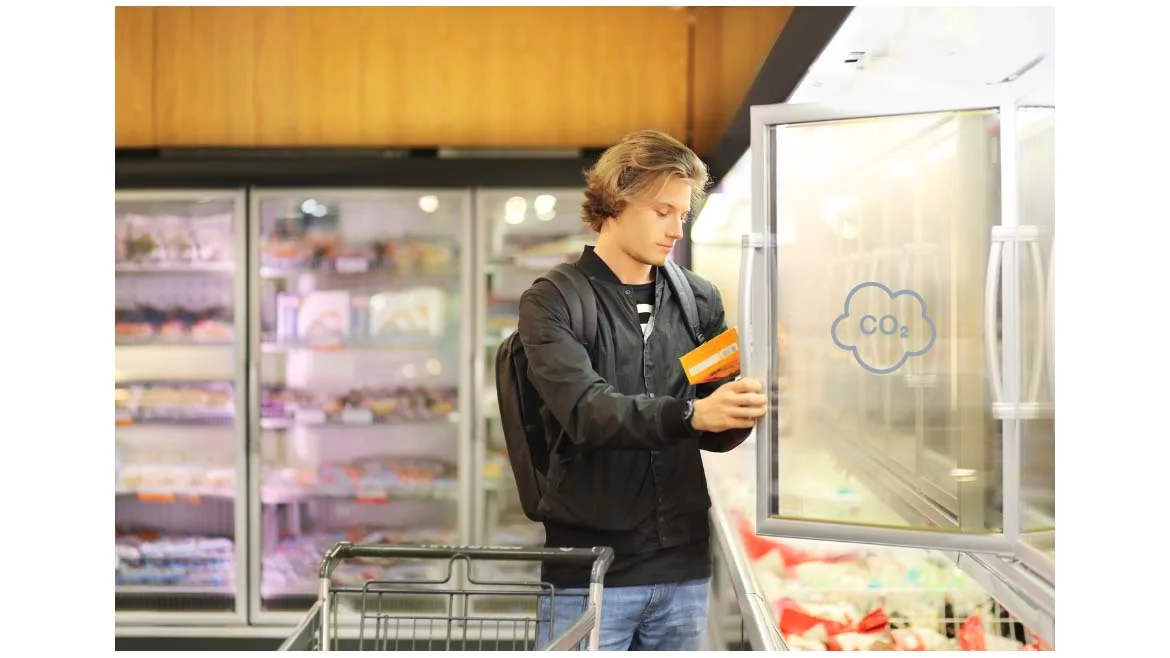
CO2 Refrigeration Supermarket Cooler
>LOW-SIDE SAVINGS: If you're already using CO2 systems to shrink your carbon footprint, it might be time to look deeper — into the low side — for even bigger savings. (Courtesy of Canva)
April 14, 2025

Now that CO2 refrigeration systems are becoming commonplace in supermarkets across North America, the question remains: What steps can be taken to make these systems more efficient?

A new study, backed by Copeland and Future Green Now (FGN), aimed to tackle that question head-on. The mission: Determine how tweaking the low side of a CO2 booster refrigeration system – specifically the suction superheat – could unlock annualized energy savings as high as 7.9%.


Establishing a Baseline

Since the efficiency of a refrigeration system is primarily influenced by the pressure differential that compressors must overcome, increasing the suction pressure should reduce the pressure differential and, consequently, lower the energy required to achieve the same cooling capacity.

To determine this, Copeland and FGN utilized modeling data from display cases using the highest, lowest, and average temperature differentials (TDs) across 214 display cases and 50-unit coolers representing five major original equipment manufacturers. Each case met current, applicable U.S. Department of Energy (DOE) and Air-Conditioning, Heating, and Refrigeration Institute (AHRI) 1200v specifications.

To establish the impact of the evaporator coil TD on the lowest temperature load, a baseline system was established. The system assumptions and baseline performance data are shown in Sidebar 1 and Table 1. This information notes the highest TDs for the tested display cases and unit coolers. Also noted are the discharge air temperatures for each product, suction line losses, and the compressor saturated suction temperature (SST) based on various coil TDs for the lowest temperature loads.

SIDEBAR 1: Baseline System Assumptions

The baseline system was a typical CO2 booster system with no high-side ambient system optimizations. Here is its measured performance data:

  • Medium temperature (MT) load: 400MBH
  • Low temperature (LT) load: 100MBH
  • Suction line losses: 2°F for both MT and LT
  • Software: Engineering Equation Solver (EES)
  • Gas cooler standard operating conditions: 59°F minimum saturated condensing temperature (SCT); 14°F temperature differential (TD) subcritical (SC); and 6°F TD transcritical (TC)
  • Weather data: National Renewable Energy Laboratory’s typical model year (TMY3)
  • Sample cities: Jacksonville, Florida; Chicago; and San Jose, California


TABLE 1: Performance data for the baseline CO2 refrigeration booster system.

Product Type Type of Coil Air-Off Temperature Range (F) Suction Line Losses (F) Highest Coil TD Compressor SST (F) Lowest Coil TD (F) Compressor SST (F) Average Coil TD (F) Compressor SST (F)
Meat/Deli Display Cabinets 30 2 10 18 4 24 6 22
Cold Room Unit Coolers 34 2 10 22 10 22 10 22
Beverage/Produce Display Cabinets 38 2 8 28 4 32 6 30
Frozen Food Display Cabinets -6 2 10 -18 4 -12 7 -15
Frozen Holding Room Unit Coolers -4 2 10 -16 10 -16 10 -16
Ice Cream Display Cabinets -13 2 10 -25 4 -19 7 -22


The Correlation Between Suction Pressure and Pressure Differential

Once the baselines were established, the team began experimenting with different parameters to test their hypotheses.

“We wanted to get as close as possible to the optimal superheat these coils were designed to operate at,” said Andre Patenaude, CET, director, solution strategy, Copeland. “The industry standard in North America is 10°F for all low and medium temperature evaporators.

Looking for quick answers on air conditioning, heating and refrigeration topics? Try Ask ACHR NEWS, our new smart AI search tool. Ask ACHR NEWS →

In our optimal system, we used 5°F superheat, as we wanted to design a test system that performed more efficiently.”

Though the study, the testers utilized the lowest coil TD possible, a 4°F instead of a 10°F, to see what would happen.

“When you go from the highest coil TD to the lowest, there’s a big jump in the suction pressure, and that’s where your true efficiency gain is,” said Patenaude.

For example, a meat/deli case with a discharge temperature requirement of 30°F and a maximum TD of 10°F necessitates the entire suction group operates at a compressor SST of 18°F at 394 psig. If the meat/deli cases had a TD of 6°F instead of 10°F, the SST would increase to 22°F (420 psig). This change would result in a 26 psig increase in pressure, leading to a 1.5% reduction in compressor power and an 8% increase in compressor capacity.

“By changing the evaporator design, the system is increased to 22°F on the lowest temperature load,” said Patenaude. “That increases the psig to 420, which reduces the compression ratio, the total heat rejection, and the stress on the condenser. Additionally, the compressor uses less energy because the compression ratios have been decreased. The same thing happens on the low-temperature side, resulting in a 23-psig increase.”

Generally speaking, the TD determines the SST required to maintain the specific air temperature.

“If the evaporator is designed for 10°F TD, it’s going to give you the actual discharge air required with that 10°F TD,” said Patenaude. “If it has a 4°F TD, it will require a different design to provide that same discharge air temperature. Thus, a lower TD results in a higher SST.”


Significant Energy Savings

When comparing the baseline system to one using the TD of around 6°F, the results were astonishing.

The lowest SST on the medium temperature side of the baseline system is 22°F common suction. On the low side, that number is minus 22°F.

Reducing the ice cream configuration from a 10°F TD to a 7°F TD and the meat cooler from 10°F to 6°F results in a 6.8% annualized savings. On the low-temperature side, with a 4°F TD, the common suction SST is decreased from minus 22°F to minus 19°F, resulting in an additional 1.1% savings — a total annualized savings of 7.9%.

“On the medium temperature side, that’s a 26 psig increase in suction pressure, and, on the low-temperature side, that’s a 23 psig increase,” said Patenaude. “Now, even the low-temperature compressor’s total heat rejection is decreased, and the power used is less because the compression rations have been reduced. This results in a lesser load on the medium temperature compressors, resulting in an additional 1.1% annual savings.”

This study opens a critical conversation for grocery retailers, refrigeration engineers, and sustainability teams alike. If you're already using CO₂ systems to shrink your carbon footprint, it might be time to look deeper — into the low side — for even bigger savings.

KEYWORDS: CO2 refrigeration decarbonization energy efficiency superheat and subcooling supermarket refrigeration

Share This Story

Looking for a reprint of this article?
From high-res PDFs to custom plaques, order your copy today!


Dc herb author headshot
Herb Woerpel was a senior editor with The ACHR NEWS. He is committed to delivering practical, insightful information in an accessible, engaging way. Herb joined BNP Media in 2011. He most recently served as editor-in-chief of Engineered Systems and was previously employed as managing editor of The ACHR NEWS. Before joining BNP Media, he worked as a reporter with the Advance Newspapers, a subsidiary of MLive/The Grand Rapids Press. He holds a bachelor’s degree in news editorial journalism from Central Michigan University and boasts 16-plus years of professional journalism experience.

Recommended Content

JOIN TODAY
To unlock your recommendations.

Already have an account? Sign In

  • HVAC-enrollment

    The Trades Are Back: HVACR Programs See Nearly 30% Enrollment Spike

    A new wave of future technicians is entering the pipeline.  
    Training and Education
    By: Matt Jachman
  • 2025 Top 40 Under 40

    2025 Top 40 Under 40 HVACR Professionals List

    The 11th annual Top 40 Under 40 list highlights those...
    HVAC Commercial Market
    By: Hannah Belloli-Oster
  • LG Ductless Mini-Split Systems

    The 9 Types of Heat Pumps

    As the U.S. moves toward electrification, heat pumps are...
    Heat Pumps
    By: Joanna R. Turpin
Subscription Center
  • Create an Account
  • Start a Subscription
  • Manage My Account
  • Sign Up for Newsletters
  • Visit Customer Service
  • Update Preferences

More Videos

Sponsored Content

Sponsored Content is a special paid section where industry companies provide high quality, objective, non-commercial content around topics of interest to The News audience. All Sponsored Content is supplied by the advertising company and any opinions expressed in this article are those of the author and not necessarily reflect the views of The News or its parent company, BNP Media. Interested in participating in our Sponsored Content section? Contact your local rep!

close
  • Piggy Bank
    Sponsored byWatercress Financial

    Energy Prices, Inflation, and HVAC: What Today’s Homeowners Care About

  • Refrigerated Food
    Sponsored bySolstice Advanced Materials

    R-455A Refrigeration: A Cold Storage Solution for the Future

  • Airex Rooftop Units
    Sponsored byAirex Manufacturing Inc

    Consolidating Roof Penetrations: A Growing Trend in Multifamily HVAC Design

Popular Stories

Lennox equipment

Platinum Equity to Sell Heat Controller to Lennox

HVAC-tech-van.jpg

Report: Only 65% of HVAC Technician Time is Billable Hours

HVAC Minute retail refrigeration system

EPA Final Rule’s Impact on R-410A Deadlines

Trade groups challenge EPA refrigerant rule

HVACR Trade Groups Challenge EPA Refrigerant Rule in Federal Court

heat-pump-tech-customer.jpg

DOE Updates $8.8B Home Energy Rebate Program Guidance

View The ACHR NEWS
Centennial Anniversary Timeline

The ACHR News Timeline Chart
Submit a Letter
Submit a letter to our editors.

Events

November 6, 2025

Next-Gen Data Center Cooling: HVAC Innovation and Real-World Solutions

On Demand As AI workloads and high-density computing push traditional cooling methods to their limits, the data center industry is accelerating the adoption of next-generation HVAC technologies.

July 28, 2026

How Top Home Services Companies Turn Every Conversation Into Predictable Revenue

In this webinar, we'll outline how top contractors are turning every conversation into predictable revenue by coaching every comfort advisor visit, not just the ones a manager rides along on.

View All Submit An Event

Poll

Summer Staff

Are you fully staffed for the summer season?
View Results Poll Archive

Products

BNI Mechanical/Electrical Square Foot Costbook, 2026 Edition

BNI Mechanical/Electrical Square Foot Costbook, 2026 Edition

See More Products
Designing Systems Using A2L Refrigerant - Free Webinar - 7/22/2026

Related Articles

  • HilphoenixAdvansorFLEX_v2.png

    How CO2 Refrigeration Helps Grocers Cut Energy Costs

    See More
  • Home Automation, IoT Could Cut Energy Consumption 10 Percent, Says Study

    See More
  • New Solar Air Conditioning System Could Cut Energy Use by 50 Percent

    See More

Related Products

See More Products
  • Understanding TXV Refrigeration Systems: Superheat and Subcooling DVD

  • The ACHR News - February 16, 2026

    ACHR NEWS February 16, 2026, Issue

See More Products

Related Directories

  • Energy Recovery

    Energy Recovery's PX G1300 pressure exchanger for CO2 refrigeration systems lowers operating costs and energy consumption, increases efficiency, and reduces emissions.
  • Howe Corp.

    Howe manufactures flake ice making equipment for use with virtually any refrigerant including natural such as R-744, and R-717, Ice storage bins, Condensing units for our ice flakers.
×

Sign Up. Stay Informed.

The #1 trusted source for the HVACR industry since 1926

SUBSCRIBE
  • RESOURCES
    • Advertise
    • Contact Us
    • Advisory Board
    • Classifieds
    • Submit a Letter
    • Directories
    • Store
  • ACCOUNT CENTER
    • Create an Account
    • Start a Subscription
    • Manage My Account
    • Sign Up for Newsletters
    • Visit Customer Service
    • Update Preferences
  • SERVICES
    • Marketing Services
    • Reprints
    • Market Research
    • List Rental
    • Survey/Respondent Access
  • STAY CONNECTED
    • LinkedIn
    • Facebook
    • Instagram
    • YouTube
    • X (Twitter)
  • PRIVACY
    • PRIVACY POLICY
    • TERMS & CONDITIONS
    • DO NOT SELL MY PERSONAL INFORMATION
    • PRIVACY REQUEST
    • ACCESSIBILITY

Copyright ©2026. All Rights Reserved BNP Media, Inc. and BNP Media II, LLC.

Design, CMS, Hosting & Web Development :: ePublishing