The Ripple Effects of Steel and Aluminum Tariffs on HVAC
Announcement of tariffs increases steel prices, while any potential tax benefits remain months or years away
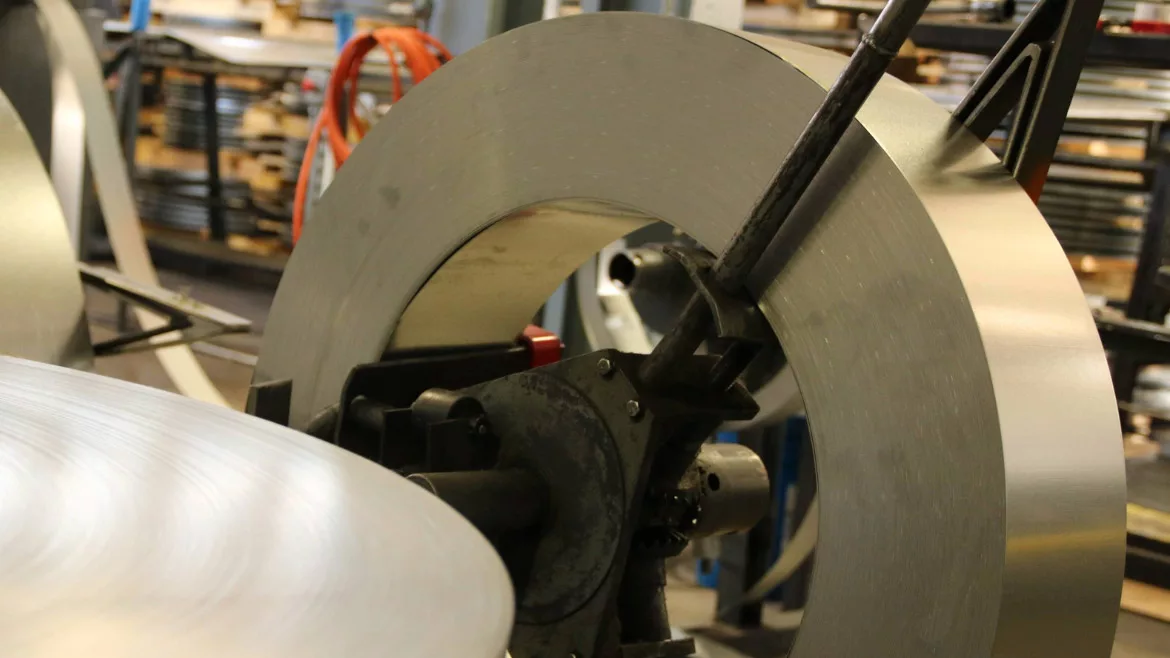
PRICE HIKE: Section 232 tariffs have driven up steel and aluminum prices, even for manufacturers sourcing domestically. (Staff photo)
In an extensive interview, Stan Kolbe, Sheet Metal and Air Conditioning Contractors' National Association's Executive Director of Government and Political Affairs, reveals how the current tariff situation connects to broader economic challenges facing the industry.
The Coalition of American Metal Manufacturers and Users (CAMMU) has warned that "Re-Imposing 25 percent tariffs on steel and aluminum imports from our allies and without a workable exclusion process puts U.S. manufacturers directly in harm's way." Their concerns are proving prescient, as Kolbe's insights reveal the complex economic ripple effects of President Donald Trump's announcement of the resumption of Section 232 tariffs beginning March 12.
"Congress has made it clear," Kolbe explained, "they did not want to be in a situation where we are raising tariffs." The timing is particularly problematic, with tariffs hitting before planned tax relief can take effect. This means contractors feel the price increases immediately, while any potential tax benefits remain months or years away.
The administration initially projected massive revenue from these tariffs — $1.2 trillion over 10 years from Canada and Mexico, plus $200 billion from China. However, as CAMMU points out, "For the past six years, Section 232 tariffs have driven up steel and aluminum prices, even for manufacturers sourcing domestically. Lead times for these critical materials have also increased."
The political landscape is shifting as well. Kolbe reveals that even traditionally supportive Republicans are expressing serious concerns. Kolbe noted congress people in the Republican party, who serve on budget committees, likely feel like their "hair is on fire" with the tariffs first, tax cuts second approach. Members of Congress had explicitly warned against implementing tariffs before tax cuts, recognizing that voters would feel the immediate impact of price increases without offsetting relief.
The international fallout is particularly concerning. Canada and Mexico, who are supposed to be part of a unified trading block under the Trump-negotiated The North American Free Trade Agreement (NAFTA) agreement, are now facing unexpected tariffs — nominally in the name of border security, but Kolbe said the ultimate goal of tariffs are to raise revenue for tax cuts. Kolbe noted that companies like Honda, which had planned investments in North America based on the unified trading block concept, are now reconsidering their strategies. "They're saying, 'Hey, you just told us last time you were in town, that was your number one priority. Now you're saying we're going to get whacked on our projects up there.'"
The World Trade Organization courts are likely to become the referees in these disputes, Kolbe suggested, as the policy implementation has been more severe and costly in terms of political capital than anticipated. With cabinet battles ongoing and uncertainty in multiple policy areas, he describes a "terrible factor" of "trade uncertainty, tariff uncertainty, tax uncertainty, procurement uncertainty, and obviously payment uncertainty."
Looking for quick answers on air conditioning, heating and refrigeration topics? Try Ask ACHR NEWS, our new smart AI search tool. Ask ACHR NEWS
Impacts of Tariffs
While the 25% tariffs on steel and aluminum do not take effect until March, the impact is already visible in the prices HVAC distributors pay, due to increased demand before the tariffs hit. Australia's Bluescope CEO Mark Vassella has already observed prices increase 20% on steel since tariffs were first announced on Mexico and Canada (large steel exporters to the U.S.), with market observers anticipating steel prices will remain elevated due to tariffs.
“The math is pretty simple, the more contractors have to pay for the materials they need, the more it will cost to build new infrastructure, housing and economic development projects,” said Jeffrey Shoaf, the chief executive officer of the Associated General Contractors of America. “As much as want to see new domestic manufacturing capacity, stifling economic activity is clearly not the best way to help.”
The international implications are significant. The U.S. maintains a trade surplus in services with many countries, Kolbe points out, but these tariffs could disrupt that balance. He recently observed HVAC systems with components made in China being exported to Europe from America, illustrating the complex web of international trade these tariffs affect.
Drawing from historical perspective, Kolbe points to a cautionary tale: "Herbert Hoover ... was the only president in history in the last century to lose jobs when he came in from when he started." The culprit? The Smoot-Hawley tariffs and resulting trade war.
CAMMU warns that "Foreign customers are shifting their supply chains away from U.S. producers. Once removed, especially for smaller, family-owned businesses, it is difficult to regain that lost business." Kolbe's insights support this concern, as he describes how market reactions swing wildly with each new trade announcement — giving short traders opportunities while creating instability for contractors who need to make long-term planning decisions.
For contractors caught in this economic crossfire, the challenge extends beyond just higher material costs. The broader implications for project financing, infrastructure spending, and international trade relationships create what Kolbe calls "a terrible factor" of uncertainty in the construction market.
As CAMMU concluded, "This trade war threatens manufacturing jobs that have benefited from other pro-manufacturing policies ... Expansion plans will stall, and companies will face tough decisions regarding technology investments, workforce retention, and long-term growth."
The ripple effects of these tariff policies are already threatening major U.S. manufacturing initiatives. A stark example is Intel's $28 billion semiconductor plant under construction in Ohio. With promised tariffs of 25%-100% on foreign semiconductors, the project faces unexpected challenges. As Kolbe noted, these policies create a complex web of unintended consequences.
The semiconductor situation illustrates the broader tariff dilemma. While intended to protect American manufacturing, Stephen Ezell of the Information Technology and Innovation Foundation warns the tariffs could backfire. Rather than driving companies to relocate to the U.S., they might simply shift operations to other countries not targeted by tariffs.
This mirrors Kolbe's concerns about the current steel and aluminum tariffs. Just as Intel relies on international markets — with China and Taiwan accounting for nearly 50% of their 2024 revenue — many U.S. manufacturers depend on global supply chains. The threat of retaliatory tariffs, which the Tax Foundation warns are likely, could further complicate the situation for American manufacturers and contractors.
Looking for a reprint of this article?
From high-res PDFs to custom plaques, order your copy today!