ACHR News
search
Ask ACHR NEWS AI
cart
facebook twitter instagram linkedin youtube
  • Sign In
  • Subscribe
  • Sign Out
  • My Account
ACHR News
  • NEWS
    • Breaking News
    • New HVAC Products
    • Featured Products
    • Manufacturer Reports
    • HVAC Data
    • Legislation
    • ACHR NEWS Centennial
  • RESIDENTIAL
    • Air Conditioners
    • Furnaces
    • Residential Heat Pumps
    • Ductless
    • Residential IAQ
    • Testing, Monitoring, Tools
    • Components & Accessories
  • COMMERCIAL
    • Air Handlers
    • Rooftop Units
    • Chillers and Cooling Towers
    • Commercial Heat Pumps
    • Boilers and Hydronics
    • VRF/Ductless
    • Commercial IAQ
  • REFRIGERATION
    • Refrigerants
    • Refrigerant Regulations
    • Leak Management
  • CONTRACTOR PRO
    • Geothermal
    • Homeowner Study
    • VRF and VRV Ductless
    • Unitary Trends
  • EDUCATION
    • Training and Education
    • Business Management
    • Service and Maintenance
    • Continuing Education
    • Market Research >
      • HVAC Brand Awareness Report
      • VRV, VRF, VRVZ Report
      • Unitary Trends Report
      • Water Heat Professionals Report
    • Webinars
    • Sponsor Insights
    • eProducts Info
    • White Papers
  • EVENTS
    • HVAC Contractor Forum
    • Industry Events and Webinars
  • MEDIA
    • Videos
    • AHR Expo 2025 Videos
    • Podcasts >
      • ACHR News Podcast
      • HARDI Podcasts
      • AHR Expo Podcasts
      • ACCA Podcasts
    • Interactive Spotlights
    • Quizzes
    • eBooks
    • HVAC Talkback
  • HVAC GROUP
    • ACHR NEWS >
      • Current Issue
      • Digital Edition
      • Subscribe
    • Distribution Trends
    • SNIPS NEWS >
      • Join SNIPS NEWS
    • Engineered Systems News >
      • Join ES News
    • HVACR Directory
    • Contests
    • Newsletters
    • Contact
    • Advertise
    • My Account
NewsHVAC Commercial MarketGuest Column

Rethinking Cooling Solutions in Data Centers
By Larry Yang
Data Center
Getty Images

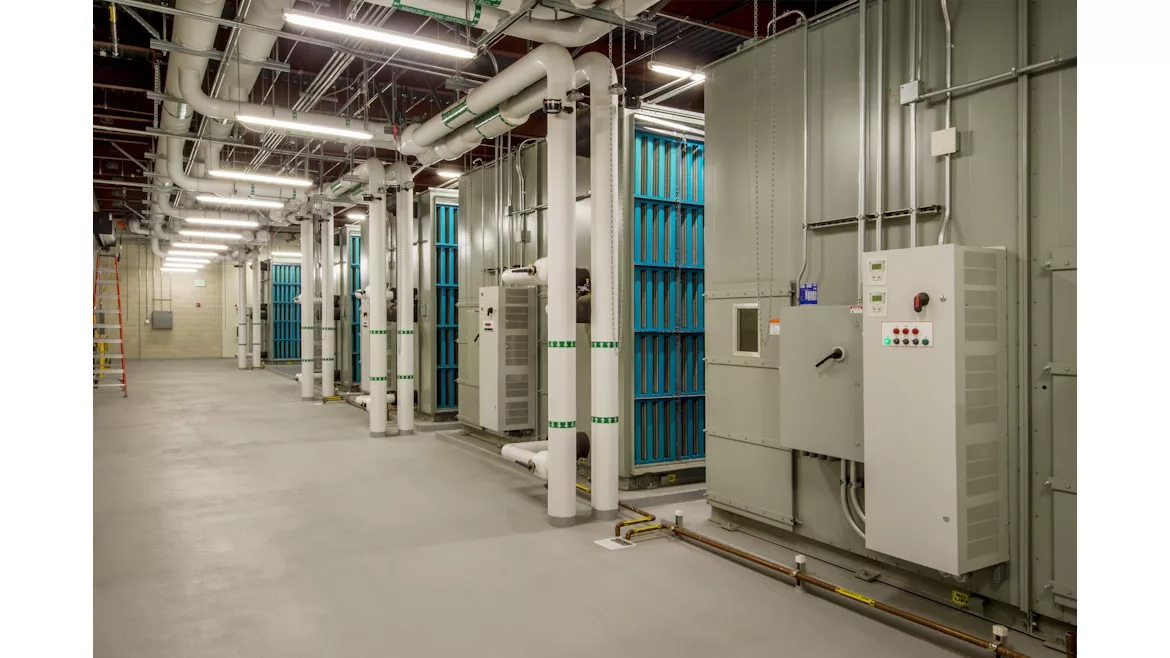
ENERGY SAVER: Solid-state cooling solutions require less power than traditional cooling systems, which not only lowers operational costs, but also aligns with the industry's increasing commitment to reducing carbon footprints. (Courtesy of Getty Images / alacatr)

November 24, 2024

As the data center industry continues to advance, effectively managing heat has become even more crucial for achieving ideal performance, extending equipment longevity, and reducing operational costs. The relentless growth of high-performance computing is creating unprecedented levels of heat output which demands innovative cooling solutions that can address these challenges while aligning with broader sustainability goals. 

Data centers are the backbone of our digital infrastructure, powering everything from cloud computing to artificial intelligence. They facilitate the storage, processing, and transmission of vast amounts of data, making them essential for modern life. However, traditional cooling methods often struggle to meet the exploding cooling demands required to meet current compute performance, cost-effectiveness, and environmental impact. It’s imperative to explore and adopt alternatives that can meet these escalating cooling demands without compromising compute performance. 


The Challenges of Unlocking Demanded Incremental Compute Power via Traditional Cooling Methods 

For many applications, traditional air-cooling methods have not only met the current package cooling requirements but have been the nearly gold standard of longevity and durability in the industry using a heat sink and a fan to transfer and circulate air. When those methods didn’t quite fit the bill, some have transitioned to what is often held as a more advanced liquid cooling approach that has yielded a slight advantage when it comes to performance but often comes with an incremental cost. Regardless of the incumbent cooling solution – air or liquid – both are facing the daunting challenge of dispelling skyrocketing package heat output, and both could realize a much-needed efficiency and performance boost on the back of solid-state cooling.  


The Case for Solid-State Cooling 

Solid-state cooling, or thermoelectric cooling, has been a viable alternative for years but the recent explosion in cooling demand has finally presented solid-state cooling with its moment to shine in data center applications. How? By leveraging thermoelectric principles, solid-state cooling efficiently transfers heat without the need for moving parts or fluids. Further, with the ability to dynamically toggle between passive and active cooling approaches, solid-state cooling technology enables maintenance of precise package temperatures, unlocking compute performance beyond the throttling limit, and fundamentally allowing data centers to complete complex computations more quickly, more reliably, and therefore more efficiently. This innovation brings several compelling advantages to the table. 


Energy Efficiency and Sustainability 

In an era where energy consumption and sustainability are of the uppermost concerns, solid-state cooling solutions excel in their efficiency. They require less power than traditional cooling systems, which not only helps lower operational costs but also aligns with the industry's increasing commitment to reducing carbon footprints. 

By minimizing energy usage, solid-state cooling not only supports a data center's bottom line but also contributes to a broader movement toward greener operations. As organizations face mounting pressure from consumers and regulators alike to adopt more sustainable practices, embracing energy-efficient technologies becomes not just a competitive advantage, but a necessity. 


Compute Power and Speed to Complete Analysis 

Precise temperature maintenance and incremental infrastructure reliability enable packages cooled by solid-state technology to more predictably, and more quickly, complete required analysis. This is always valuable, but particularly so in environments where machine learning and AI training are being completed. Incomplete analysis and/or performance slowed by throttling limits are financially costly and impede data centers from reaching their ultimate goal.

Looking for quick answers on air conditioning, heating and refrigeration topics? Try Ask ACHR NEWS, our new smart AI search tool. Ask ACHR NEWS →


Compact and Quiet 

One of the standout benefits of solid-state cooling is its compact design. These systems can be integrated into data centers with minimal disruption, making them particularly suited for today’s high-density environments where every square foot counts. Their small footprint allows for more efficient use of space, enabling the deployment of additional computing resources. 

Moreover, the absence of moving parts significantly reduces noise levels, creating a quieter and more pleasant working atmosphere. This is especially beneficial in environments where personnel need to be present for monitoring and maintenance, as excessive noise can lead to distractions and discomfort. 


Looking to the Future 

As we look ahead, it is evident that the shift toward solid-state technology will continue to accelerate. The focus on developing effective cooling solutions that align with sustainability and operational excellence is more critical than ever. The future of data center cooling lies not just in adopting new technologies but in reshaping the very way we think about thermal management. 

Industry leaders, operators, and stakeholders are encouraged to engage in discussions about the future of data center cooling. The benefits of solid-state cooling extend far beyond mere performance metrics; they encompass a complete approach to efficiency, reliability, and environmental responsibility. 

Let us collaborate to advance cooling technology and reshape the future of data centers. Embracing innovative solutions will not only support our digital infrastructure but also pave the way for sustainable practices that benefit both businesses and the environment. 

KEYWORDS: cooling systems Data Centers and HVACR solid-state cooling and heating technology

Share This Story

Looking for a reprint of this article?
From high-res PDFs to custom plaques, order your copy today!


Larry yang headshot

Larry Yang is a seasoned product executive with over 30 years of experience developing groundbreaking products and platforms that connect people and businesses to new applications, services, and content. He currently serves as the Chief Product Officer at Phononic, a leader in sustainable semiconductor cooling technology.

Recommended Content

JOIN TODAY
To unlock your recommendations.

Already have an account? Sign In

  • HVAC-enrollment

    The Trades Are Back: HVACR Programs See Nearly 30% Enrollment Spike

    A new wave of future technicians is entering the pipeline.  
    News
    By: Matt Jachman
  • 2025 Top 40 Under 40

    2025 Top 40 Under 40 HVACR Professionals List

    The 11th annual Top 40 Under 40 list highlights those...
    HVAC Commercial Market
    By: Hannah Belloli-Oster
  • LG Ductless Mini-Split Systems

    The 9 Types of Heat Pumps

    As the U.S. moves toward electrification, heat pumps are...
    News
    By: Joanna R. Turpin
Subscription Center
  • Create an Account
  • Start a Subscription
  • Manage My Account
  • Sign Up for Newsletters
  • Visit Customer Service
  • Update Preferences

More Videos

Sponsored Content

Sponsored Content is a special paid section where industry companies provide high quality, objective, non-commercial content around topics of interest to The News audience. All Sponsored Content is supplied by the advertising company and any opinions expressed in this article are those of the author and not necessarily reflect the views of The News or its parent company, BNP Media. Interested in participating in our Sponsored Content section? Contact your local rep!

close
  • Piggy Bank
    Sponsored byWatercress Financial

    Energy Prices, Inflation, and HVAC: What Today’s Homeowners Care About

  • Refrigerated Food
    Sponsored bySolstice Advanced Materials

    R-455A Refrigeration: A Cold Storage Solution for the Future

  • Airex Rooftop Units
    Sponsored byAirex Manufacturing Inc

    Consolidating Roof Penetrations: A Growing Trend in Multifamily HVAC Design

Popular Stories

HVAC-Price-Increase-graphic

HVAC Price Increase List: June 2026

Trump-Section-232.jpg

Trump Reduces Section 232 Tariffs on HVAC Equipment to 15%

R410A-Refrigerant-Cylinder.jpg

Refrigerant Recovery is a Revenue Opportunity

Heat-pump-cutaway.jpg

PFAS Rules and A2L Building Codes Continue to Evolve

Midea-training.jpg

HVAC Workforce Crisis Expands Beyond Technicians to Instructor Shortages

View The ACHR NEWS
Centennial Anniversary Timeline

The ACHR News Timeline Chart
Submit a Letter
Submit a letter to our editors.

Events

November 6, 2025

Next-Gen Data Center Cooling: HVAC Innovation and Real-World Solutions

On Demand As AI workloads and high-density computing push traditional cooling methods to their limits, the data center industry is accelerating the adoption of next-generation HVAC technologies.

June 17, 2026

Decarbonization Without Disruption

This webinar will explore practical HVAC decarbonization strategies that minimize disruption while maximizing long-term performance and ROI.

View All Submit An Event

Poll

Summer Staff

Are you fully staffed for the summer season?
View Results Poll Archive

Products

BNI Mechanical/Electrical Square Foot Costbook, 2026 Edition

BNI Mechanical/Electrical Square Foot Costbook, 2026 Edition

See More Products
Decarbonization Without Disruption - Free Webinar - 6/17/2026

Related Articles

  • Fluid Cooling In Data Centers — If Now Now, When?

    Fluid Cooling In Data Centers — If Not Now, When?

    See More
  • Air-cooled chillers

    Air-Cooled Chillers Are Back in Data Centers, and They Mean Business

    See More
  • Liebert DS cooling system

    Minimizing Energy Usage in Data Centers

    See More

Related Products

See More Products
  • The ACHR News - June 02, 2025

    ACHR NEWS June 2, 2025, Issue

See More Products

Events

View AllSubmit An Event
  • January 22, 2026

    Smarter Hydronic Design for Data Centers

    On Demand Instead of relying on large centralized pumps and restrictive balancing/control valves, distributed pumping uses packaged pumping systems and smart circulators located closer to the point of demand.
  • June 24, 2025

    Regional Considerations in Data Center MEP Design: From Desert to Coast

    On Demand Join ES NEWS' Editor Austin Keating and the panel for an expert examination of regional data center design strategies. They will be joined by data center commissioning experts and manufacturer representatives.
View AllSubmit An Event
×

Sign Up. Stay Informed.

The #1 trusted source for the HVACR industry since 1926

SUBSCRIBE
  • RESOURCES
    • Advertise
    • Contact Us
    • Advisory Board
    • Classifieds
    • Submit a Letter
    • Directories
    • Store
  • ACCOUNT CENTER
    • Create an Account
    • Start a Subscription
    • Manage My Account
    • Sign Up for Newsletters
    • Visit Customer Service
    • Update Preferences
  • SERVICES
    • Marketing Services
    • Reprints
    • Market Research
    • List Rental
    • Survey/Respondent Access
  • STAY CONNECTED
    • LinkedIn
    • Facebook
    • Instagram
    • YouTube
    • X (Twitter)
  • PRIVACY
    • PRIVACY POLICY
    • TERMS & CONDITIONS
    • DO NOT SELL MY PERSONAL INFORMATION
    • PRIVACY REQUEST
    • ACCESSIBILITY

Copyright ©2026. All Rights Reserved BNP Media, Inc. and BNP Media II, LLC.

Design, CMS, Hosting & Web Development :: ePublishing