Air-Cooled Chillers Are Back in Data Centers, and They Mean Business
After years of chasing the attractive efficiency numbers offered by water-based evaporative systems, many data center providers are giving air-cooled chillers a second look.
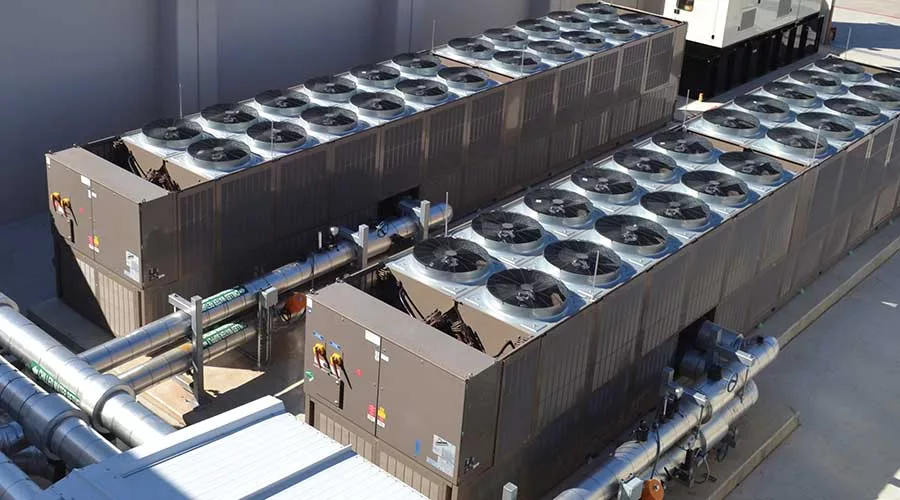

FIGURE 1. A typical economizing air-cooled chiller flow diagram, courtesy of Johnson Controls.
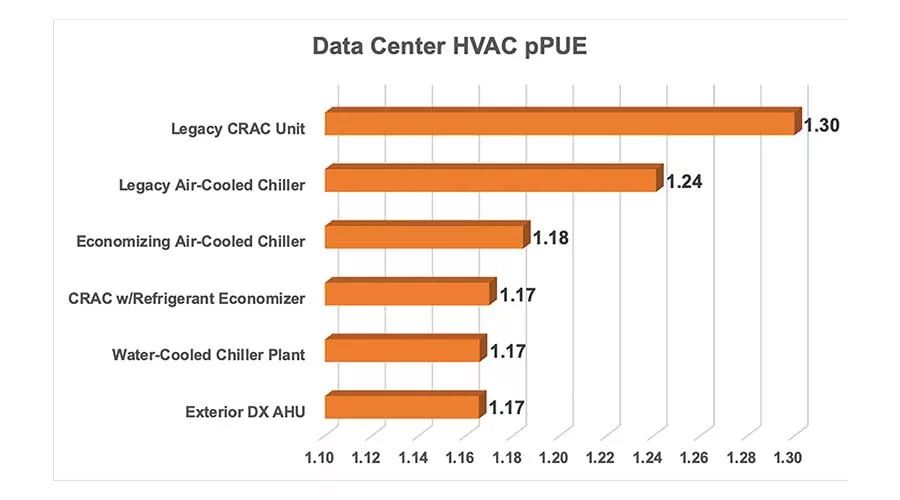
FIGURE 2. A data center HVAC pPUE analysis.
It’s no secret that data centers require a lot of energy. The main driver of data center design engineers’ work is to provide energy-efficient, reliable, and cost-competitive HVAC systems. Retail data centers challenge the design community to minimize capital and operational costs while optimizing efficiency. If too much money is spent to achieve efficiency, then lease rates will not be competitive. If not enough energy efficiency is provided, then tenants will look elsewhere. Striking a balance between efficiency and cost is a challenge the data center industry faces daily.
After years of chasing the attractive efficiency numbers offered by water-based evaporative systems, many data center providers are giving air-cooled chillers a second look. The latest commercial chiller equipment offers competitive energy performance, proven reliability, and integral controls in a modular package without the need for water.
WATER IS A RESOURCE
The U.S. Environmental Protection Agency (EPA) estimates at least 40 states will have water shortages by 2024. Water-based data center cooling technologies, such as direct evaporation and water-cooled chillers, consume enormous amounts of water at the site and place large demands on municipal water and sanitary systems. Many municipalities indicate they will not guarantee future water availability for cooling systems, and others are likely to follow suit.
Gray water systems are available in some municipalities, but water quality can be a concern. Some gray water systems are aggressive and increase the maintenance requirements of the system due to high corrosion rates. Cooling tower discharge water can also have high amounts of contaminants that require additional water treatment before it can be discharged to a local sanitary system.
The cost of water, treatment, and sanitary disposal are all rising and need to be considered in any total cost analysis (TCA). At a minimum, metering needs to be provided to identify the amount of discharge water to reduce the sanitary costs, if allowed by the local utility.
Recent developments to air-cooled chiller economizer technology have allowed data center companies to provide efficient performance without relying on municipal water sources. Lowered HVAC system water demand greatly reduces the facility water distribution size and associated city meter tap fees.
The Uptime Institute requires a minimum of 12 hours of runtime without reliance on municipal water and power systems to achieve a concurrently maintainable rating; however, client requirements may call for considerably more. This water storage requirement applies to HVAC systems reliant on water for cooling the critical load. Depending on the facility location, the cost of the tanks, piping, and additional land required to accommodate water storage can be costly. For example, the largest data center market in America is in Loudoun County, Virginia, where land values can reach $2 million per acre. Waterless systems eliminate the need for large quantities of on-site water storage. Water usage effectiveness (WUE), an industry metric that is a top concern for many sustainability programs, is substantially reduced or eliminated with the use of air-cooled chillers.
Based on a 2016 study performed by the Lawrence Berkeley National Laboratory, water consumption of hyperscale data centers is trending upward. As hyperscale data centers continue their rapid growth, demands on the water system will increase proportionally.
REVITALIZING OLD TECHNOLOGY
Chilled water is valuable to data centers for a variety of reasons. It allows flexible distribution options for long-distance or high-rise applications; can accommodate chip, rack, or row-based cooling solutions as needed; and is a proven technology with numerous installations worldwide. Air-cooled chillers have long been the workhorses of the HVAC industry; however, as new technologies have emerged, air-cooled chillers lost ground to more efficient data center cooling technologies. This was caused, in part, by changes in the energy codes that have added requirements for water-side economization on all chilled water systems. Traditional air-cooled chiller technologies require separate heat rejection equipment and controls to provide economization. Additional equipment requires more space for heat rejection and more complex controls. The 2018 International Energy Code requires air-cooled data center HVAC systems provide 100% cooling capacity without compressors at 35°F ambient and below. The approach to add water-side economization on an air-cooled chiller plant has traditionally been to include a fluid cooler or dry coolers to provide precooling and economization. In addition to the added space required for heat rejection, additional equipment increases system cost, complexity, and potential for failure.
Over time, manufacturers have responded with more efficient and innovative designs that address many of the challenges of older-generation equipment. Economizing air-cooled chillers incorporate an additional coil upstream of the chiller condenser coils to provide economization as ambient and facility operating conditions allow. Water is pumped through the economizer coil in series with the evaporator bundle and trimmed to the required water supply set point by the traditional chiller. This reduces compressor energy consumption throughout the year by reducing or eliminating the chiller load. The additional coil adds pressure drop to the system pumps and condenser fans; however, this energy penalty is largely offset by the savings in compressor energy. See Figure 1 for a diagram of an economizing air-cooled chiller.
Modern data centers are often designed to cool the IT equipment with elevated air and water temperatures. Systems now operate with chilled water temperatures in the 55°-65° range. The warmer water temperature allows an increase in chiller economization hours compared to traditional chilled water set points in the low 40° range. This reduces the annualized facility power usage effectiveness (PUE) while maintaining full mechanical backup to provide the redundancy many owners require.
One of the most complex elements of water-cooled chiller plants has always been the controls. To optimize, the plant chillers, pumps, towers, and valves must be sequenced correctly on-site and tested. The factory controller on the economizing air-cooled chiller optimizes the operating mode based on the air and water temperature it measures locally, eliminating the need for a complex BAS control sequence. Vendor programming allows equipment to operate at peak efficiency without the need for hours of on-site BAS programming.
Economizing air-cooled chiller technology is especially valuable for legacy data center retrofits. Legacy enterprise and colocation facilities require a refresh of the mechanical system approximately every five to 10 years to remain competitive with current builds. Many of these legacy systems were originally based on chilled water systems and cannot easily accommodate new HVAC technologies due to operational, physical space, or structural constraints. A replacement for end-of-life air-cooled equipment with 2018 energy code-compliant equipment that also boosts efficiency is a very attractive option for data center operators.
ENERGY EFFICIENCY
The primary metric used in recent years to compare data center energy efficiency is PUE. This metric, developed by The Green Grid, is the ratio of total energy required to support the data center over the IT equipment energy.
PUE = total energy of the data center / IT energy consumption
Each data center has unique characteristics that affect its power performance. These differences can make direct comparison of PUE difficult between facilities and provide misleading information without additional interpretation of the resulting values. The analysis provided here compares what is known as the data center partial PUE (pPUE). The pPUE is a similar calculation to the data center PUE; however, it only compares energy consumed by the HVAC equipment against the cooling capacity provided. With this measurement, one can eliminate unique facility characteristics and focus only on the HVAC components. All components required for the HVAC system operation are included in this calculation. For example, a chiller alone cannot provide the required cooling to the IT equipment without circulation pumps and air handlers. Other loads associated with the facility, electrical equipment, etc. are omitted from the pPUE calculation.
The pPUE chart in Figure 2 compares traditional computer room air conditioning (CRAC) units and air-cooled chillers that may be found in legacy data centers with current data center offerings, including a water-cooled chiller plant, CRAC units with refrigerant economizers, exterior-mounted air-handling units (AHUs), and economizing air-cooled chillers. Each system type was analyzed based on maintaining ASHRAE-recommended data hall conditions in the northern Virginia area. Where applicable, chilled water is provided at 60° supply and 74° return. Direct evaporation units are generally applied when the data center temperature and humidity range can be significantly expanded beyond the ASHRAE-recommended conditions and are, therefore, not included in this analysis.
Economizing air-cooled chillers can achieve annualized pPUE values in the 1.18-1.2 range, depending on ambient and facility operating conditions. With the integration of the economizer into the chiller package, and higher data center air-side operating temperatures, air-cooled chiller energy use can become comparable to water-cooled machines at reduced capital and operating cost. The economizing air-cooled chiller performs significantly better than the legacy equipment and is competitive with other current data center technologies.
In addition to the water-side economization, many air-cooled chiller manufacturers offer an option to add an adiabatic pre-cooler to depress the local ambient air temperature, which serves to increase the mechanical operating efficiency, increase the equipment cooling capacity, or peak shave electrical loads. The adiabatic pre-cooler option has not been included in the energy performance numbers shown in Figure 2 but can be an attractive option to consider under the right design conditions.
The latest air-cooled chiller offerings give data center designers the option to provide a proven, modular, and water-free cooling solution at a competitive price with less dependency on sources outside of the control of the facility. With attractive energy performance and the flexibility to adapt to the latest chip, row, and rack cooling systems, economizing air-cooled chillers merit strong consideration in data center designs.
Looking for a reprint of this article?
From high-res PDFs to custom plaques, order your copy today!