ACHR News
search
Ask ACHR NEWS AI
cart
facebook twitter instagram linkedin youtube
  • Sign In
  • Subscribe
  • Sign Out
  • My Account
ACHR News
  • NEWS
    • Breaking News
    • New HVAC Products
    • Featured Products
    • Manufacturer Reports
    • HVAC Data
    • Legislation
    • ACHR NEWS Centennial
  • RESIDENTIAL
    • Air Conditioners
    • Furnaces
    • Residential Heat Pumps
    • Ductless
    • Residential IAQ
    • Testing, Monitoring, Tools
    • Components & Accessories
  • COMMERCIAL
    • Air Handlers
    • Rooftop Units
    • Chillers and Cooling Towers
    • Commercial Heat Pumps
    • Boilers and Hydronics
    • VRF/Ductless
    • Commercial IAQ
  • REFRIGERATION
    • Refrigerants
    • Refrigerant Regulations
    • Leak Management
  • CONTRACTOR PRO
    • Geothermal
    • Homeowner Study
    • VRF and VRV Ductless
    • Unitary Trends
  • EDUCATION
    • Training and Education
    • Business Management
    • Service and Maintenance
    • Continuing Education
    • Market Research >
      • HVAC Brand Awareness Report
      • VRV, VRF, VRVZ Report
      • Unitary Trends Report
      • Water Heat Professionals Report
    • Webinars
    • Sponsor Insights
    • eProducts Info
    • White Papers
  • EVENTS
    • HVAC Contractor Forum
    • Industry Events and Webinars
  • MEDIA
    • Videos
    • AHR Expo 2025 Videos
    • Podcasts >
      • ACHR News Podcast
      • HARDI Podcasts
      • AHR Expo Podcasts
      • ACCA Podcasts
    • Interactive Spotlights
    • Quizzes
    • eBooks
    • HVAC Talkback
  • HVAC GROUP
    • ACHR NEWS >
      • Current Issue
      • Digital Edition
      • Subscribe
    • Distribution Trends
    • SNIPS NEWS >
      • Join SNIPS NEWS
    • Engineered Systems News >
      • Join ES News
    • HVACR Directory
    • Contests
    • Newsletters
    • Contact
    • Advertise
    • My Account
NewsHVAC Commercial Market

Is It Time To Turn Up The Thermostat in the U.S.?

European countries are mandating higher t-stat settings to save energy
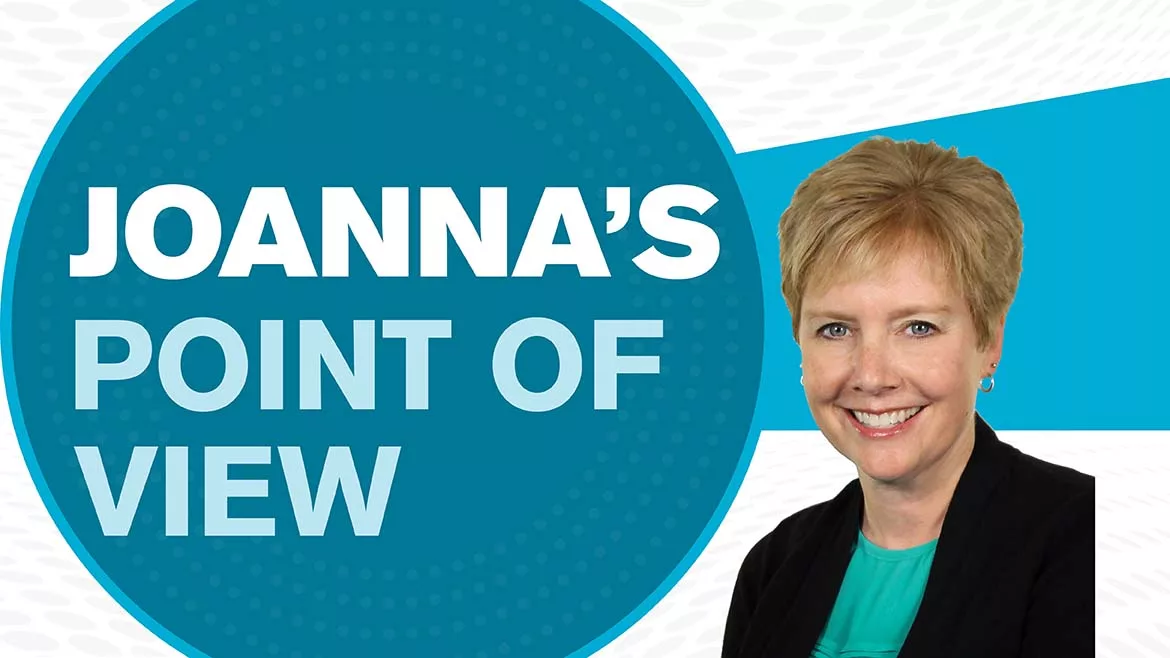
By Joanna R. Turpin
Joannas-POV.jpg
July 8, 2022

We Americans like things cold. We like ice in our drinks, we like to crank up the air conditioning in our cars, and we like to turn down the thermostat to Arctic temperatures when we sleep. Where we don’t like to be cold is at work. In fact, as more employees are returning to office buildings, being cold is one of their biggest complaints.

As a recent Wall Street Journal article noted, for the last two years, “people who worked from home could fine-tune thermostats to their liking. As they head back to offices, many are lamenting the loss of control over their workday environment.” The article cited examples of workers who bring blankets and sweaters to work because of frigid office temperatures, which are controlled by a thermostat that is usually under lock and key.

Offices are often kept cool, because studies have shown that employees may perform better at lower temperatures. Indeed, according to the WSJ article, “a review of scientific literature about temperature and work performance published in February 2021 by the International Journal of Hygiene and Environmental Health determined that cognitive and work performance is optimal between 71.6° and 75.2°F.”

That’s a pretty wide range, and as we all know, a thermostat setting does not account for other factors, such as sitting near a window or underneath a vent. But this does raise the question of whether office buildings and other spaces in the U.S. are overcooled, which could further tax an already strained electrical grid.

Several European countries are already mandating higher temperatures in public buildings, primarily in response to the war in Ukraine, which has caused an energy crisis across Europe. Italy, for example, has mandated that schools and other public buildings are not allowed to set their air conditioning any lower than 80.6°F. The measure, dubbed “Operation Thermostat,” started on May 1 and will last until April 2023, and according to Politico, those who do not comply can be hit with fines from €500 to €3,000 ($535 to $3,210).

Spain followed suit, mandating that air conditioning in public buildings be set no lower than 80.6°F in the summer. According to Reuters, the Spanish plan also includes the “mass installation of solar panels on public buildings' roofs and will encourage employees to work more from home.” Public workers will also be encouraged to use public transport or bicycles to go to work, and lights will be turned off earlier in public buildings.

Commercial refrigeration, which consumes a large amount of electricity, is also getting a second look in Europe. The company, Unilever, has launched a pilot project in Germany to see if warming ice cream freezer cabinets from -18°C (0°F) to -12°C (10.4°F) can be done without harming ice cream quality or consumer experience. According to Unilever, making this temperature adjustment could reduce energy use and greenhouse gas emissions by about 20% to 30% per freezer.

Looking for quick answers on air conditioning, heating and refrigeration topics? Try Ask ACHR NEWS, our new smart AI search tool. Ask ACHR NEWS →

So that brings us back to the U.S., where we keep our freezers at or below 0°F and our office spaces — and most other buildings — well below 75°F during the summer. Freezer temperatures are not likely to change, given that the Food and Drug Administration (FDA) advises that they should be at or below 0° F for optimal food safety. However, office temperatures are definitely at the discretion of building management, as the Occupational Safety and Health Administration (OSHA) only recommends that they be kept between 68° and 76°F. ASHRAE Standard 55-2017 recommends that for thermal comfort purposes, temperatures be kept between 67° and 82°F.

Bumping up the thermostat a few degrees in office buildings could result in employees and other occupants not only being more comfortable, but more productive. The same is true for shopping malls and other retail establishments, where some studies have shown that people buy more when the indoor temperature is 78°F.

While warmer spaces will likely improve occupant (and shopper) comfort, the larger issue is energy savings. According to Lawrence Berkeley National Laboratory, “overcooling wastes about 0.5 Quads of primary energy annually in U.S. commercial buildings and may waste a comparable amount of energy in U.S. homes.” That means at a minimum, 146,535,541,666 kWh is wasted each year due to overcooling.

Given the precarious state of our electrical grid, maybe it’s time to talk to building owners about the benefits of turning up the thermostat a few degrees.

KEYWORDS: Commercial refrigeration cooling systems energy efficiency OSHA temperature control

Share This Story

Tn joanna 2017
Joanna Turpin is a Senior Editor at The ACHR NEWS. She can be contacted at 248-786-1707 or joannaturpin@achrnews.com. Joanna has been with BNP Media since 1991, first heading up the company’s technical book division before moving over to The ACHR NEWS, where she frequently writes about refrigerants and commercial refrigeration. She obtained her bachelor’s degree in English from the University of Washington and worked on her master’s degree in technical communication at Eastern Michigan University.

Recent Comments

Very good...

Commercial ITC & the Limited-use property Doc allowing 3rd party leasing of commercial geo systems

Energy Star and trust

HVACR TECHNICIAN

Opp

Blog Roll

Editors Blog

Guest Blog

Opinions

Subscription Center
  • Create an Account
  • Start a Subscription
  • Manage My Account
  • Sign Up for Newsletters
  • Visit Customer Service
  • Update Preferences

More Videos

Sponsored Content

Sponsored Content is a special paid section where industry companies provide high quality, objective, non-commercial content around topics of interest to The News audience. All Sponsored Content is supplied by the advertising company and any opinions expressed in this article are those of the author and not necessarily reflect the views of The News or its parent company, BNP Media. Interested in participating in our Sponsored Content section? Contact your local rep!

close
  • Piggy Bank
    Sponsored byWatercress Financial

    Energy Prices, Inflation, and HVAC: What Today’s Homeowners Care About

  • Refrigerated Food
    Sponsored bySolstice Advanced Materials

    R-455A Refrigeration: A Cold Storage Solution for the Future

  • Airex Rooftop Units
    Sponsored byAirex Manufacturing Inc

    Consolidating Roof Penetrations: A Growing Trend in Multifamily HVAC Design

Popular Stories

HVAC-Price-Increase-graphic

HVAC Price Increase List: June 2026

Trump-Section-232.jpg

Trump Reduces Section 232 Tariffs on HVAC Equipment to 15%

R410A-Refrigerant-Cylinder.jpg

Refrigerant Recovery is a Revenue Opportunity

Heat-pump-cutaway.jpg

PFAS Rules and A2L Building Codes Continue to Evolve

Kroger.jpg

Kroger to Spend $100 Million to Reduce Refrigerant Leaks

View The ACHR NEWS
Centennial Anniversary Timeline

The ACHR News Timeline Chart
Submit a Letter
Submit a letter to our editors.

Events

November 6, 2025

Next-Gen Data Center Cooling: HVAC Innovation and Real-World Solutions

On Demand As AI workloads and high-density computing push traditional cooling methods to their limits, the data center industry is accelerating the adoption of next-generation HVAC technologies.

June 17, 2026

Decarbonization Without Disruption

This webinar will explore practical HVAC decarbonization strategies that minimize disruption while maximizing long-term performance and ROI.

View All Submit An Event

Poll

Summer Staff

Are you fully staffed for the summer season?
View Results Poll Archive

Products

BNI Mechanical/Electrical Square Foot Costbook, 2026 Edition

BNI Mechanical/Electrical Square Foot Costbook, 2026 Edition

See More Products
Decarbonization Without Disruption - Free Webinar - 6/17/2026
×

Sign Up. Stay Informed.

The #1 trusted source for the HVACR industry since 1926

SUBSCRIBE
  • RESOURCES
    • Advertise
    • Contact Us
    • Advisory Board
    • Classifieds
    • Submit a Letter
    • Directories
    • Store
  • ACCOUNT CENTER
    • Create an Account
    • Start a Subscription
    • Manage My Account
    • Sign Up for Newsletters
    • Visit Customer Service
    • Update Preferences
  • SERVICES
    • Marketing Services
    • Reprints
    • Market Research
    • List Rental
    • Survey/Respondent Access
  • STAY CONNECTED
    • LinkedIn
    • Facebook
    • Instagram
    • YouTube
    • X (Twitter)
  • PRIVACY
    • PRIVACY POLICY
    • TERMS & CONDITIONS
    • DO NOT SELL MY PERSONAL INFORMATION
    • PRIVACY REQUEST
    • ACCESSIBILITY

Copyright ©2026. All Rights Reserved BNP Media, Inc. and BNP Media II, LLC.

Design, CMS, Hosting & Web Development :: ePublishing