ACHR News
search
Ask ACHR NEWS AI
cart
facebook twitter instagram linkedin youtube
  • Sign In
  • Subscribe
  • Sign Out
  • My Account
ACHR News
  • NEWS
    • Breaking News
    • New HVAC Products
    • Featured Products
    • Manufacturer Reports
    • HVAC Data
    • Legislation
    • ACHR NEWS Centennial
  • RESIDENTIAL
    • Air Conditioners
    • Furnaces
    • Residential Heat Pumps
    • Ductless
    • Residential IAQ
    • Testing, Monitoring, Tools
    • Components & Accessories
  • COMMERCIAL
    • Air Handlers
    • Rooftop Units
    • Chillers and Cooling Towers
    • Commercial Heat Pumps
    • Boilers and Hydronics
    • VRF/Ductless
    • Commercial IAQ
  • REFRIGERATION
    • Refrigerants
    • Refrigerant Regulations
    • Leak Management
  • CONTRACTOR PRO
    • Geothermal
    • Homeowner Study
    • VRF and VRV Ductless
    • Unitary Trends
  • EDUCATION
    • Training and Education
    • Business Management
    • Service and Maintenance
    • Continuing Education
    • Market Research >
      • HVAC Brand Awareness Report
      • VRV, VRF, VRVZ Report
      • Unitary Trends Report
      • Water Heat Professionals Report
    • Webinars
    • Sponsor Insights
    • eProducts Info
    • White Papers
  • EVENTS
    • HVAC Contractor Forum
    • Industry Events and Webinars
  • MEDIA
    • Videos
    • AHR Expo 2025 Videos
    • Podcasts >
      • ACHR News Podcast
      • HARDI Podcasts
      • AHR Expo Podcasts
      • ACCA Podcasts
    • Interactive Spotlights
    • Quizzes
    • eBooks
    • HVAC Talkback
  • HVAC GROUP
    • ACHR NEWS >
      • Current Issue
      • Digital Edition
      • Subscribe
    • Distribution Trends
    • SNIPS NEWS >
      • Join SNIPS NEWS
    • Engineered Systems News >
      • Join ES News
    • HVACR Directory
    • Contests
    • Newsletters
    • Contact
    • Advertise
    • My Account
NewsTechnicalComponents & AccessoriesMotors & DrivesValves & Pumps

The Secret to Energy and Cost Savings: Pump System Evaluation

Three steps to determining the right pump

By Peter Gaydon
Peter Gaydon
October 8, 2020
✕
Image in modal.

What if commercial builders, utilities, and other fluids engineers could unlock 162.9 terawatt-hours of energy savings and subsequent cost savings of $14.6 billion? According to the EPA’s greenhouse gas equivalency calculator, that greenhouse savings would represent carbon sequestered by more than 1.9 billion tree seedlings grown for 10 years. It’s equivalent to the CO2 emissions from more than 12.9 billion gallons of gas consumed and a year’s worth of electricity for more than 13 million homes. That potential lives in the pump systems that heat and cool buildings, generate power, run industrial plants, and irrigate farms. By re-evaluating current pump systems and implementing more energy-efficient solutions, companies can generate long-term savings without sacrificing reliability.

READ MORE ABOUT

• Valves & Pumps

• Energy Efficiency

• Energy Savings

Energy and cost savings will vary depending on a variety of factors for different settings, but properly selecting pumps and ensuring they have an HI Energy Rating Label will increase the savings. For example, utilizing water pumps with an HI Energy Rating of 50, in a typical mid-sized commercial building using 20 pumps with an average 15-hp rating, you could expect to see a savings of 411,000 kWh per year, or $37,000 per year. In an industrial building using 40 pumps with an average 15-hp rating, you could see a savings of over 1.3 million kWh per year, equating to an approximate savings of $117,000 per year.

These savings can be even more significant when calculated alongside other pump systems within the same building or application, leading to significant cost and energy savings to help meet business and sustainability goals. Don’t assume that the process is daunting, however. Determining the right pump to save energy in a given application can be broken down into three general steps.


Step 1: Analyze the Requirements of a System – Not just a Single Pump

First, it is important to understand that all pumps are selected to meet system requirements —never the other way around. Once the application is determined, engineers can assess criteria, which varies greatly between different uses. For example, a hydraulic heating pump intended to circulate water will require different flow rates and attributes than water distribution pumps in residences or businesses. The energy consumption required for any system depends on the flow rate of the entire system including the pressure (head) and how often the pump(s) are operating.

By reviewing the entire system and not just the individual pump, engineers and specifiers lay the foundation to select the right pump or system for the application and the proper control methodologies to manage the flow of energy and ensure reliability. The most important question to ask at this juncture is, “How much flow/pressure does the system need and how often does it need it?”


Step 2: Identify Optimization Opportunities and Plot the Curve

To be accurate in the determination of energy consumption, the next step is to evaluate opportunities for efficiency gains in system flow, pressure/head, and pump, motor or drive efficiency, and operating time. In existing systems, the energy requirements can be measured over time as a benchmark to aid in identifying where energy consumption can be optimized.

The time period for this process may need to account for seasonal variations, so an entire year may be needed. In contrast, a batch process for a system’s specific task (e.g. provide 100 gallons per minute (gpm) of water around a reactor to maintain 200 degrees Fahrenheit for one hour), will be a much shorter benchmark because the periodic operation is known and consistent.

Looking for quick answers on air conditioning, heating and refrigeration topics? Try Ask ACHR NEWS, our new smart AI search tool. Ask ACHR NEWS →

In another example, a building may need more heat or cooling when it is occupied during business hours and less when business is closed. Multiple thermostats in that building may require different flows at different times, meaning the needs can vary on certain days and during different times of day.

To plot the system head curve (how system pressure varies with flow rate) in the system, map how system flow rate and head changes within the system over periods of time. During this process, it is important to understand if and how controls are maintaining the flow and pressure in the system because the control method is typically key to optimizing the system. This will enable decision makers to select the pump based on system requirements.

Then, overlay the pump curve and the system curve to determine if multiple pumps vs. a single pump, variable speed, or a booster pump, for example, is needed. For example, a water distribution operation has a different system curve than pumps used for building heating and cooling. Or, if the need is to pump a large volume of water to primarily overcome an elevation difference, variable speed pumping may not be cost effective, but instead a larger low-speed pumping option may be best. There are different strategies to most efficiently and reliably handle varying loads, such as adding a lower flow pump to meet part load operations, with one or more larger pumps with control logic to stage the pumps to meet the full load operations.


Step 3: Energy Saving Pump Selection

Pump system energy consumption is dependent on the system flow rate, head, component efficiencies, and operating hours at these conditions. In the example, the output power (Pu) is what the system requires and the input power (P) is what the pump requires. There could be opportunities to reduce the head or flow rate through better control that could reduce the output power and the input power. Understanding the variance in the system curve and resulting operating points allows us to calculate potential savings of new pumps and/or system controls. It’s important to select the best control that meets the varying system demand without artificially increasing the head/pressure or flow rate to do so, and to maintain the operation of the pump(s) at or near highest efficiency point to maximum reliability and system efficiency.

Click table to enlarge
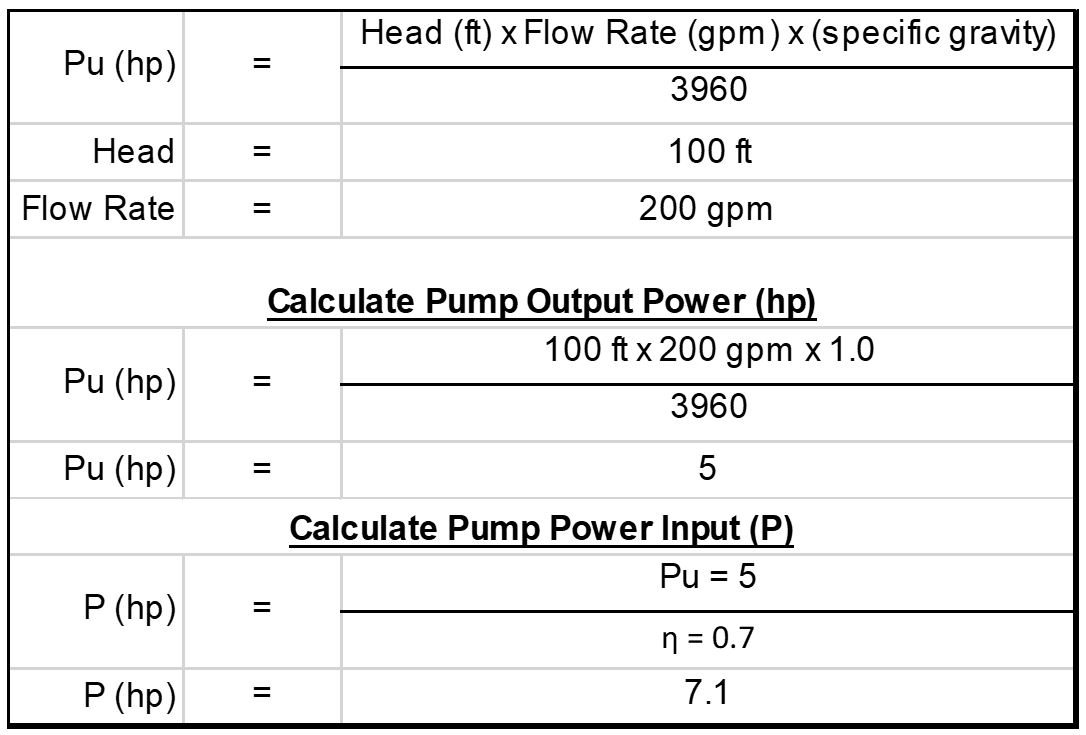
Energy Saving Pump Selection Table.

This three-step process is a framework for any decision maker to help evaluate their current system, identify opportunities for improved efficiency and realize energy and cost savings over time to help meet broader sustainability and energy management goals.

KEYWORDS: energy efficiency pumps

Share This Story

Looking for a reprint of this article?
From high-res PDFs to custom plaques, order your copy today!


Petergayden headshot

Peter Gaydon is the director of technical affairs for the Hydraulic Institute.

Recommended Content

JOIN TODAY
To unlock your recommendations.

Already have an account? Sign In

  • HVAC-enrollment

    The Trades Are Back: HVACR Programs See Nearly 30% Enrollment Spike

    A new wave of future technicians is entering the pipeline.  
    Training and Education
    By: Matt Jachman
  • 2025 Top 40 Under 40

    2025 Top 40 Under 40 HVACR Professionals List

    The 11th annual Top 40 Under 40 list highlights those...
    HVAC Contracting
    By: Hannah Belloli-Oster
  • LG Ductless Mini-Split Systems

    The 9 Types of Heat Pumps

    As the U.S. moves toward electrification, heat pumps are...
    Air Source Heat Pumps
    By: Joanna R. Turpin
Subscription Center
  • Create an Account
  • Start a Subscription
  • Manage My Account
  • Sign Up for Newsletters
  • Visit Customer Service
  • Update Preferences

More Videos

Sponsored Content

Sponsored Content is a special paid section where industry companies provide high quality, objective, non-commercial content around topics of interest to The News audience. All Sponsored Content is supplied by the advertising company and any opinions expressed in this article are those of the author and not necessarily reflect the views of The News or its parent company, BNP Media. Interested in participating in our Sponsored Content section? Contact your local rep!

close
  • Piggy Bank
    Sponsored byWatercress Financial

    Energy Prices, Inflation, and HVAC: What Today’s Homeowners Care About

  • Refrigerated Food
    Sponsored bySolstice Advanced Materials

    R-455A Refrigeration: A Cold Storage Solution for the Future

  • Airex Rooftop Units
    Sponsored byAirex Manufacturing Inc

    Consolidating Roof Penetrations: A Growing Trend in Multifamily HVAC Design

Popular Stories

Refrigerants-and-gauge.jpg

HVAC Industry Warns of Counterfeit Refrigerants Entering U.S. Supply Chain

U.S. Supreme Court building

95% Furnace Efficiency Rule to Get New Hearing

Midea-training.jpg

HVAC Workforce Crisis Expands Beyond Technicians to Instructor Shortages

Data_Center_facility.jpg

HVAC Manufacturers Respond to Growing Data Center Backlash

HVAC Minute retail refrigeration system

EPA Final Rule’s Impact on R-410A Deadlines

View The ACHR NEWS
Centennial Anniversary Timeline

The ACHR News Timeline Chart
Submit a Letter
Submit a letter to our editors.

Events

November 6, 2025

Next-Gen Data Center Cooling: HVAC Innovation and Real-World Solutions

On Demand As AI workloads and high-density computing push traditional cooling methods to their limits, the data center industry is accelerating the adoption of next-generation HVAC technologies.

June 23, 2026

HVAC Duct Sealing Mastics: Why Selection Matters

In this webinar we will detail what HVAC material buyers and technicians need to know when selecting duct mastics, including matching mastic to substrate, alternatives to liquid mastic, and where UL 181 Listings fit into real world installations.

View All Submit An Event

Poll

Summer Staff

Are you fully staffed for the summer season?
View Results Poll Archive

Products

BNI Mechanical/Electrical Square Foot Costbook, 2026 Edition

BNI Mechanical/Electrical Square Foot Costbook, 2026 Edition

See More Products
HVAC Duct Sealing Mastics: Why Selection Matters - Free Webinar - 6/23/2026

Related Articles

  • Online Feature

    Top 4 Ways To Capture The Energy And Cost Savings Of Thermal Storage

    See More
  • New Energy Certification Program Accelerates Learning and Energy-cost Savings

    See More
  • SMART ENERGY SAVINGS:

    Institutional HVAC Projects Provide Energy, Cost Savings

    See More

Related Products

See More Products
  • Uncomplicating The Heat Pump: Electrical System Troubleshooting DVD

  • Uncomplicating The Heat Pump: Refrigeration & Air Flow Systems DVD

  • new cover.jpg

    Profit is An Attitude: The Strategies You Need to Optimize Profits

See More Products

Related Directories

  • Alliance to Save Energy

    Coalition of business, government, environmental, consumer leaders promoting the efficient and clean use of energy worldwide to benefit consumers, the environment, the economy, national security.
×

Sign Up. Stay Informed.

The #1 trusted source for the HVACR industry since 1926

SUBSCRIBE
  • RESOURCES
    • Advertise
    • Contact Us
    • Advisory Board
    • Classifieds
    • Submit a Letter
    • Directories
    • Store
  • ACCOUNT CENTER
    • Create an Account
    • Start a Subscription
    • Manage My Account
    • Sign Up for Newsletters
    • Visit Customer Service
    • Update Preferences
  • SERVICES
    • Marketing Services
    • Reprints
    • Market Research
    • List Rental
    • Survey/Respondent Access
  • STAY CONNECTED
    • LinkedIn
    • Facebook
    • Instagram
    • YouTube
    • X (Twitter)
  • PRIVACY
    • PRIVACY POLICY
    • TERMS & CONDITIONS
    • DO NOT SELL MY PERSONAL INFORMATION
    • PRIVACY REQUEST
    • ACCESSIBILITY

Copyright ©2026. All Rights Reserved BNP Media, Inc. and BNP Media II, LLC.

Design, CMS, Hosting & Web Development :: ePublishing