ACHR News
search
Ask ACHR NEWS AI
cart
facebook twitter instagram linkedin youtube
  • Sign In
  • Subscribe
  • Sign Out
  • My Account
ACHR News
  • NEWS
    • Breaking News
    • New HVAC Products
    • Featured Products
    • Manufacturer Reports
    • HVAC Data
    • Legislation
    • ACHR NEWS Centennial
  • RESIDENTIAL
    • Air Conditioners
    • Furnaces
    • Residential Heat Pumps
    • Ductless
    • Residential IAQ
    • Testing, Monitoring, Tools
    • Components & Accessories
  • COMMERCIAL
    • Air Handlers
    • Rooftop Units
    • Chillers and Cooling Towers
    • Commercial Heat Pumps
    • Boilers and Hydronics
    • VRF/Ductless
    • Commercial IAQ
  • REFRIGERATION
    • Refrigerants
    • Refrigerant Regulations
    • Leak Management
  • CONTRACTOR PRO
    • Geothermal
    • Homeowner Study
    • VRF and VRV Ductless
    • Unitary Trends
  • EDUCATION
    • Training and Education
    • Business Management
    • Service and Maintenance
    • Continuing Education
    • Market Research >
      • HVAC Brand Awareness Report
      • VRV, VRF, VRVZ Report
      • Unitary Trends Report
      • Water Heat Professionals Report
    • Webinars
    • Sponsor Insights
    • eProducts Info
    • White Papers
  • EVENTS
    • HVAC Contractor Forum
    • Industry Events and Webinars
  • MEDIA
    • Videos
    • AHR Expo 2025 Videos
    • Podcasts >
      • ACHR News Podcast
      • HARDI Podcasts
      • AHR Expo Podcasts
      • ACCA Podcasts
    • Interactive Spotlights
    • Quizzes
    • eBooks
    • HVAC Talkback
  • HVAC GROUP
    • ACHR NEWS >
      • Current Issue
      • Digital Edition
      • Subscribe
    • Distribution Trends
    • SNIPS NEWS >
      • Join SNIPS NEWS
    • Engineered Systems News >
      • Join ES News
    • HVACR Directory
    • Contests
    • Newsletters
    • Contact
    • Advertise
    • My Account
TopicsHVAC Residential MarketHVAC Light Commercial Market

The Ultimate Boiler System Layout Tips
By Brian Gomski
boiler
Tip 1.
boiler2
Tip 2.
boiler3
Tip 3.
boiler4
Tip 4
boiler5
Tip 5.
boiler6
Tip 6.
boiler7
Tip 7.
boiler8
Tip 8.
boiler9
Tip 9.
boiler10
Tip 10.
boiler11
Tip 11.
boiler12
Tip 12.
boiler13
Tip 13.
boiler14
Tip 14.
boiler15
Tip 15.
boiler16
Tip 16.
boiler17
Tip 17.
boiler
boiler2
boiler3
boiler4
boiler5
boiler6
boiler7
boiler8
boiler9
boiler10
boiler11
boiler12
boiler13
boiler14
boiler15
boiler16
boiler17
May 16, 2018

Midwest Machinery has sold and started up a ton of boilers to date.

In the last 10 years, high-efficiency, high turn-down boilers have become the gold standard. Just like a Ferrari, which needs the right fuel, brakes, tires, and equipment precisely tuned to run like a champ - so does your new boiler. 

Conditions not met could result in tens of thousands of dollars lost (we've seen it) on installation changes or repairs on the job site.

We've compiled the most useful tips to greatly reduce the amount of on-site changes you could incur when installing boilers:

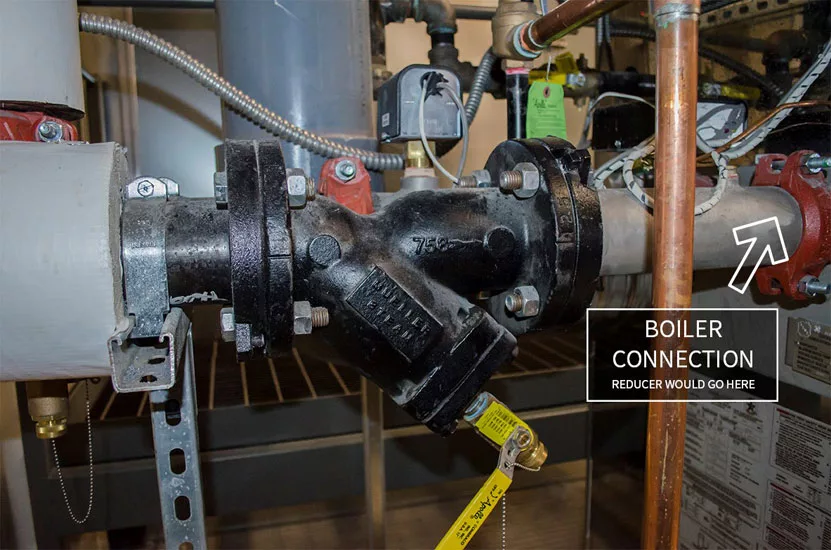
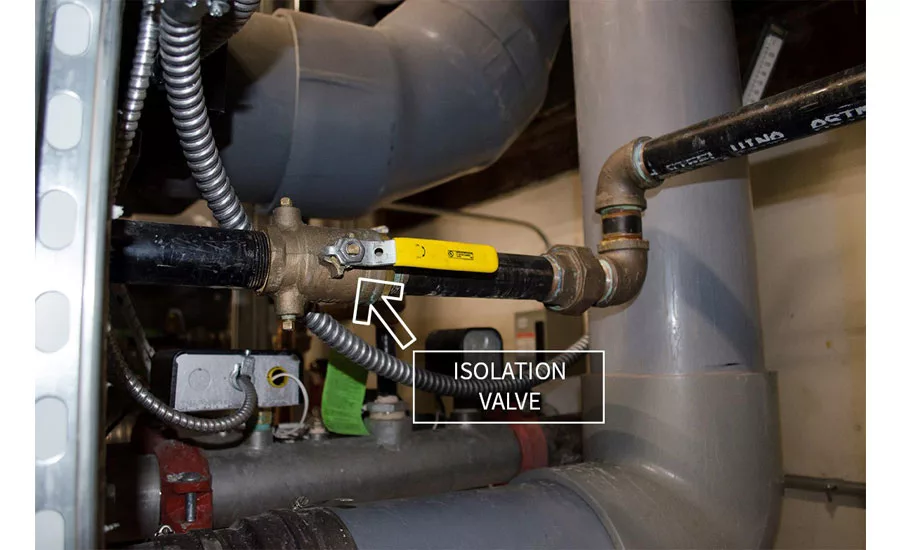
  1. If the water piping is larger than the boiler connection then a reducer can be used.Add union and isolation valves on ALL pipe connections - water and gas.
  2. On gas isolation valves, make sure they have test ports. This allows for much easier maintenance in the future.
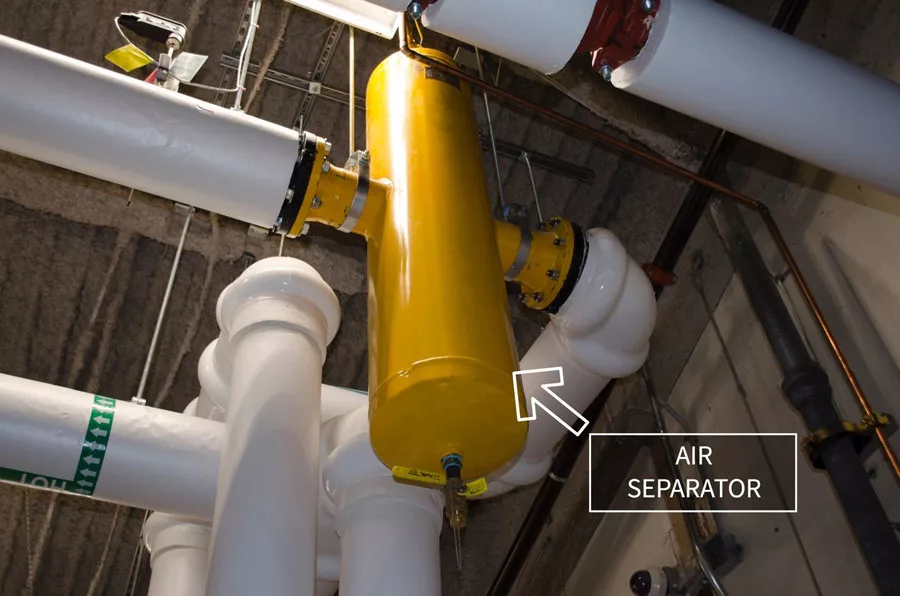
  3.  All waterways must be filled, pressurized and completely purged of air before use. Consider adding an air separator to make this task easier.
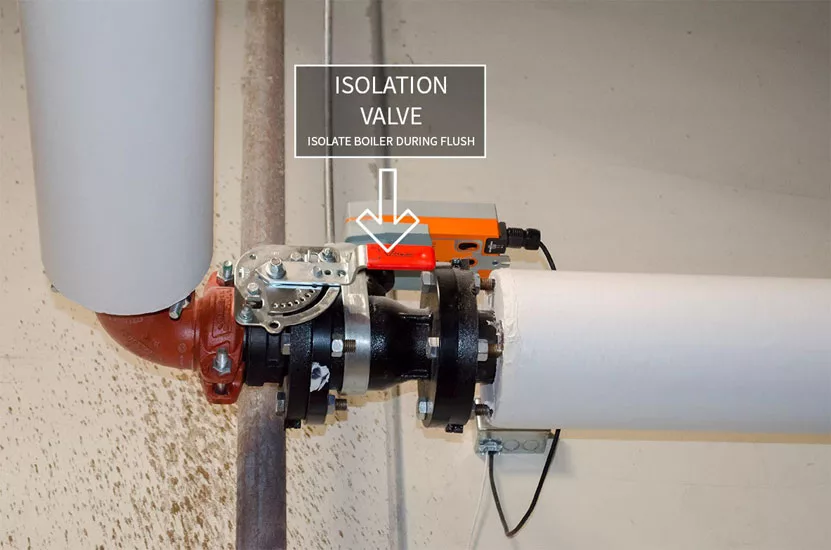
  4. When flushing the system, the boilers must be isolated. Flushing through a boiler can cause debris to clog the heat exchanger, resulting in boiler failure.
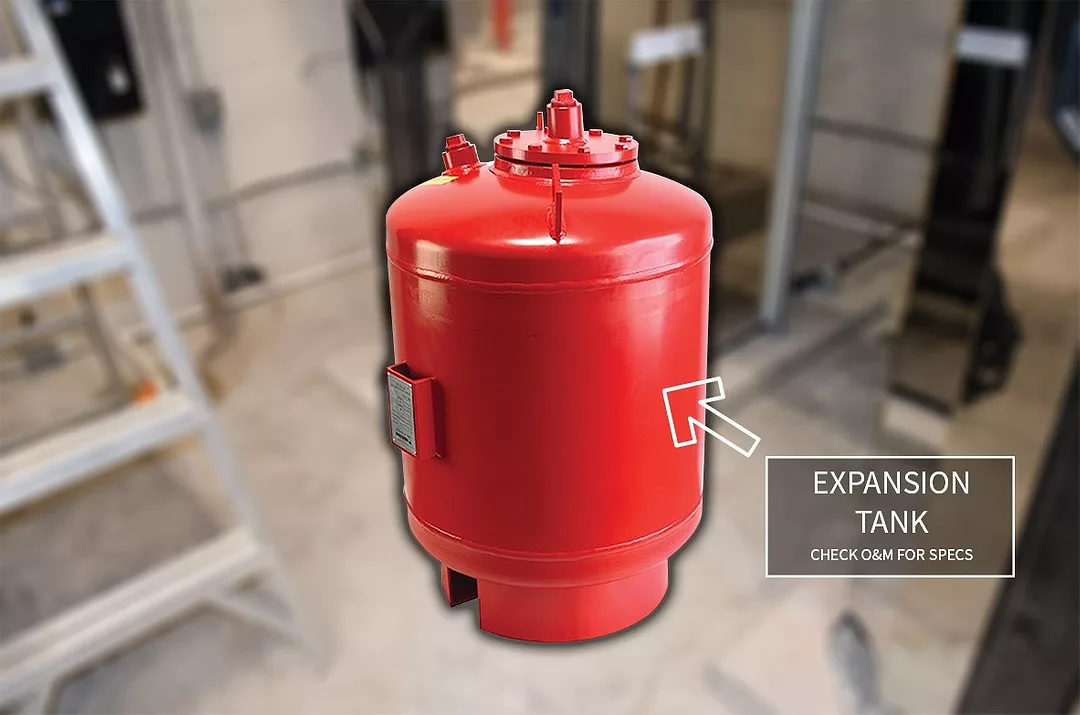
  5. The system expansion tank must be charged and connected to the point of lowest pressure in the system - before the system supply pumps. Boilers require adequate pressure for proper operation. Refer to the O&M for your specific boiler specs. Expansion tanks need to be air charged to the static pressure of the system on the water side. Shipping presets these days are insufficient for high efficiency boilers. Shipping pre-charge is normally 12 pounds. Most medium-mass boilers require 35 pounds.
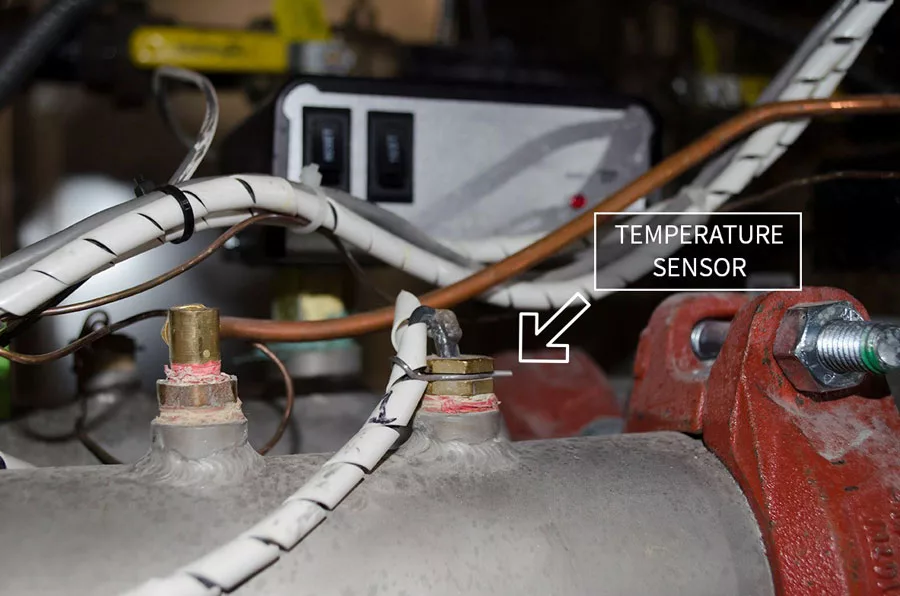
  6. Install a temperature sensor on the water line to monitor temperatures. The boiler system cannot not violate the “cold start” requirement or go below 130 degrees inlet temperature or the boiler will condense. Inlet temperatures must be kept above minimum required in manufacturer’s literature. This is very important on non-condensing boilers and is important not to freeze on condensing boilers.
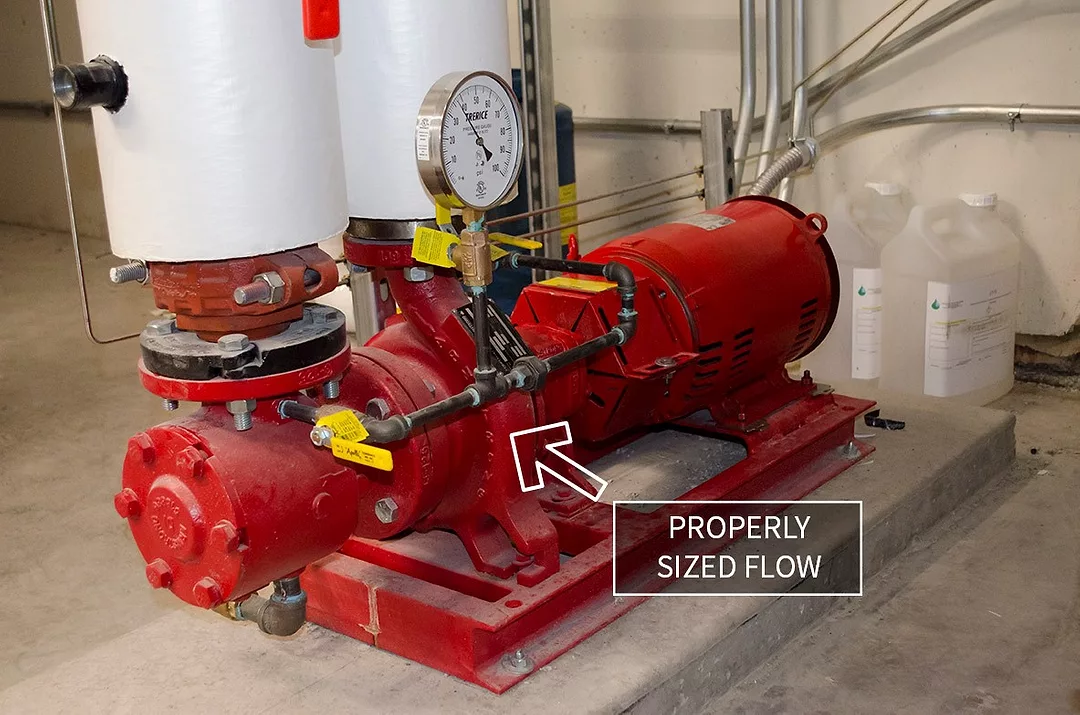
  7. Verify there is sufficient load available for high fire of the Boiler. During startup we have to operate the boiler at high fire to set the combustion rate. If the existing water is too hot, startup cannot be properly completed. On variable primary systems, minimum flow should be sized for the minimum flow that a boiler requires for full fire. This is important for installations such as schools that have a night setback and a warm up period before school starts in the morning. This is a time where the boiler is called to fire, but there is low load thus low flow available in the system.
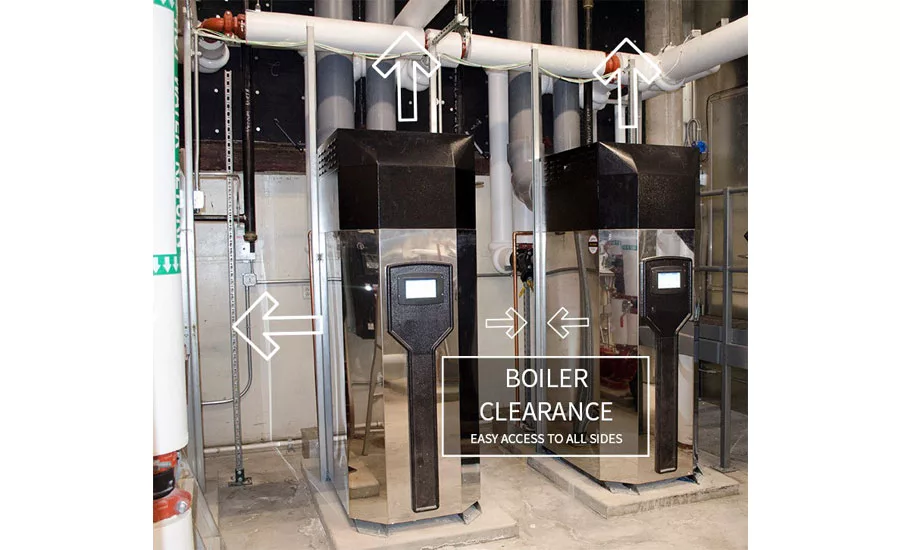
  8. Allow sufficient height above the boiler for burner tube maintenance and annual cleaning on some boilers. Allow full unrestricted clearance to the back and all parts of the boiler. Without proper clearance around the boilers, maintenance becomes difficult which will affect the life of the boiler. The easier a product is to maintain, the higher likelihood that it will be maintained.
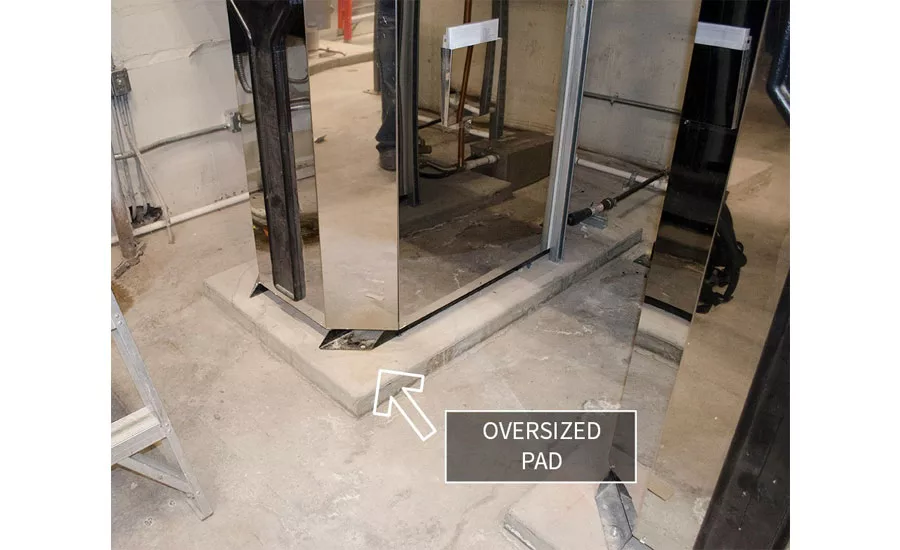
  9. The boiler must be installed on a housekeeping pad equal to or larger than the footprint of the unit, made from non-combustible material. Height of the pad is very important on condensing boilers.
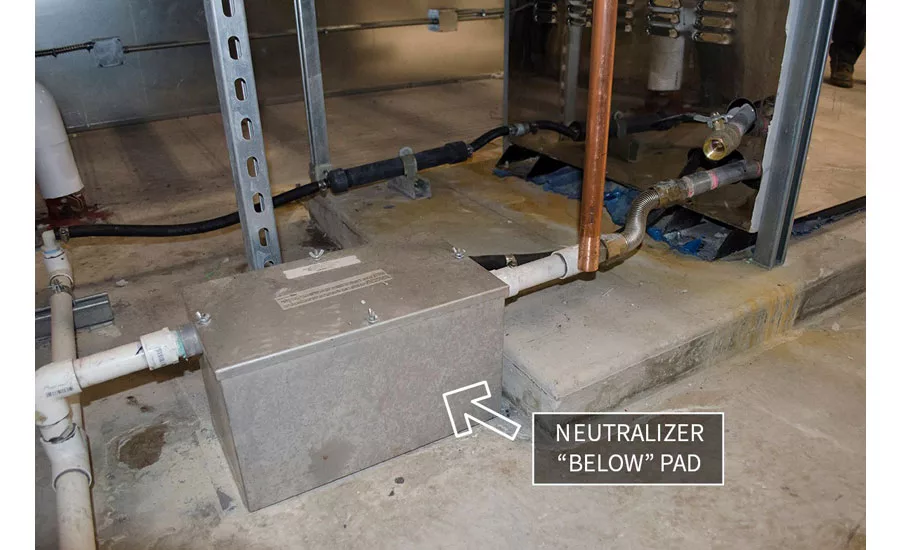
  10. The outlet for the condensate drain must be above the neutralizer connection so that there is sufficient fall from the boiler to the neutralizer. Likely, the neutralizer kit will be on the floor and not on the boiler housekeeping pad. If the neutralizer is too high, condensation will back up and cause and increased pressure within the heat exchanger.

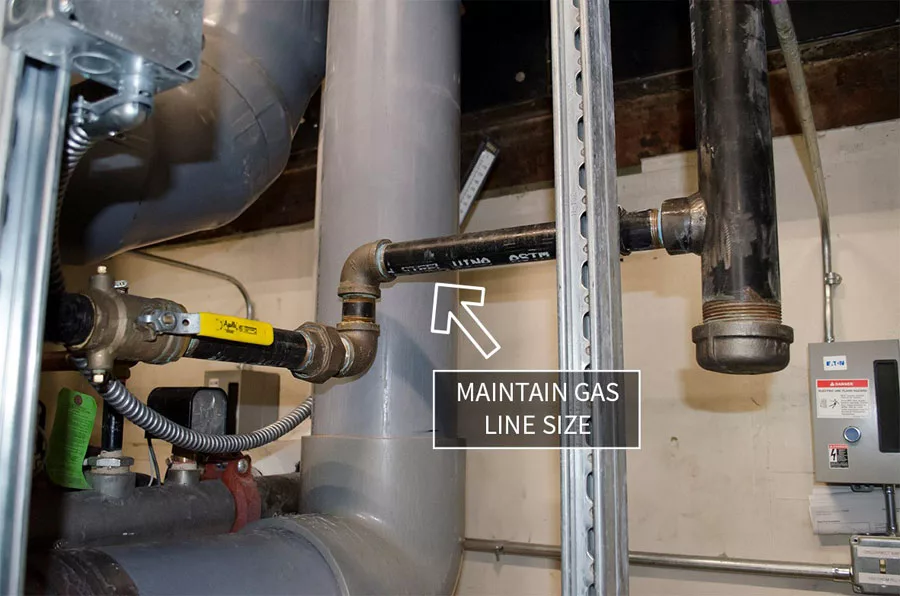
  11. Maintain gas line size per the manufactures specs. Gas lines may need to be larger than gas connection at the boiler
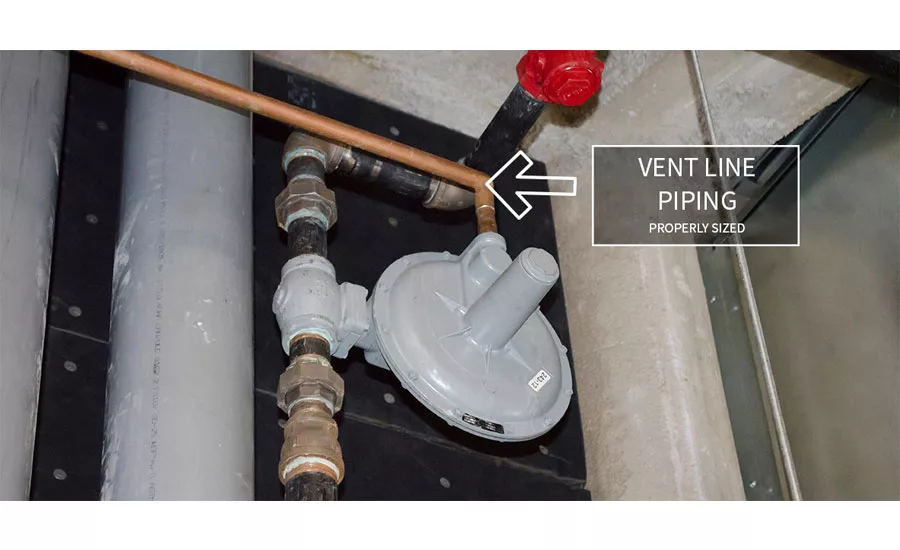
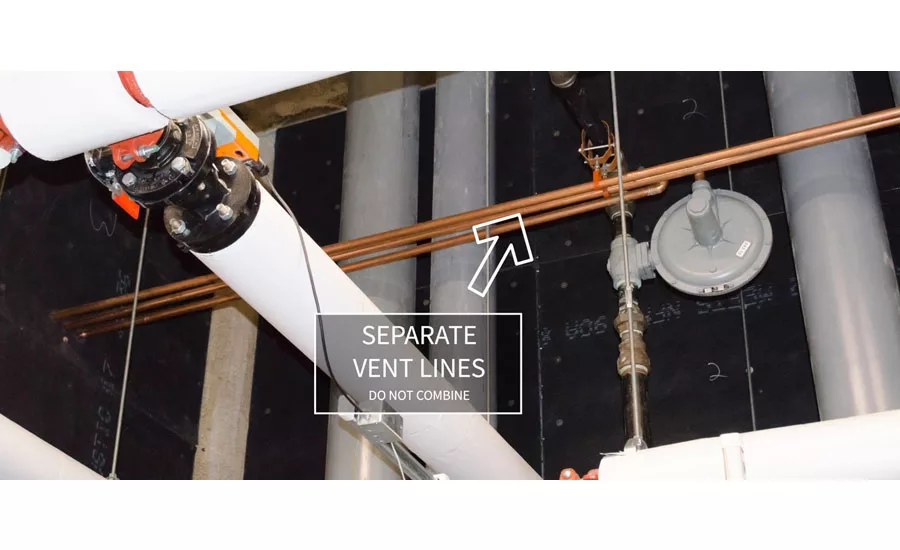
  12. The vent for the gas regulator must be per the manufacturers guidelines. With today’s very high efficient and low turn down boilers, stable gas pressure is crucial to the operation and boiler life. Regulators require properly sized vent lines to operate correctly. If the vent lines are too small, the diaphragm will not operate properly and gas pressure will become unstable. Each regulator must have its own vent line. Do not combine multiple regulator vents into 1 exhaust port.
  13. Gas pressure reducing valve bleed and vent lines need to run from equipment jacket to outside of the equipment room as required by codes or manufacturers’ requirements. 
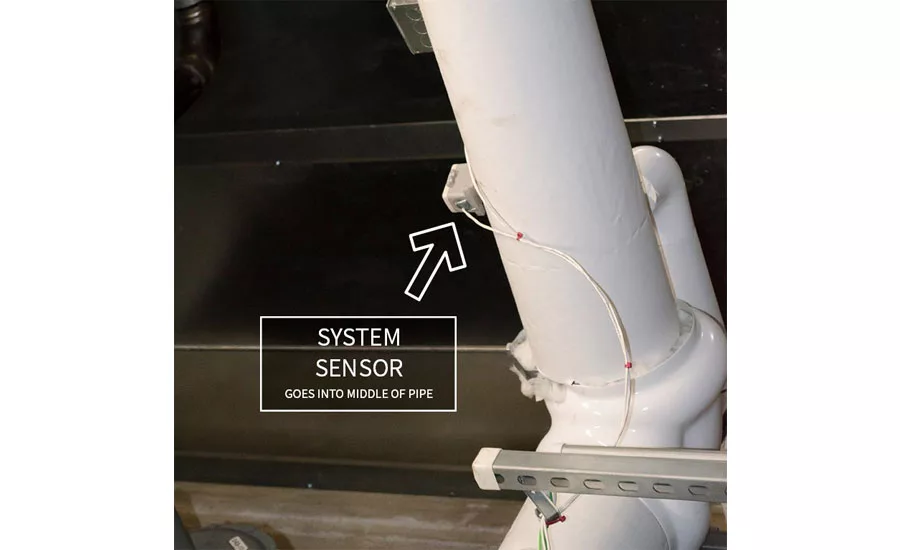
  14. Controls - System sensor well must be installed so that the entire sensor is seeing flow. If the sensor does not see flow, it will detect temperature change slowly. This will result in the boiler overshooting set point and also taking longer to come on when heat is required, i.e. boiler short cycling and inconsistent water temp. It’s better to put sensor on the side vs. top of the pipe to avoid any air pockets.
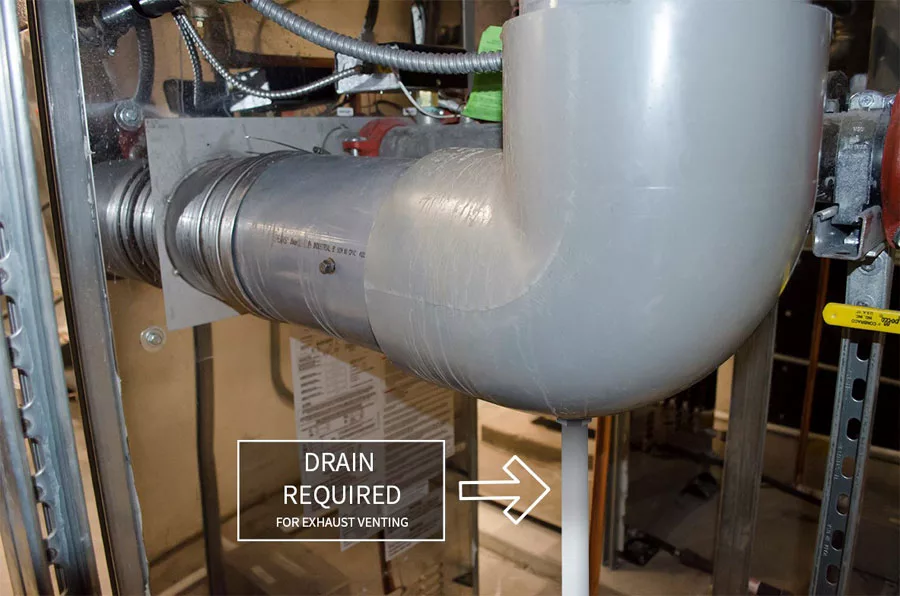
  15. Exhaust venting and air intake must be installed including any required drains and drain loops. 
    1. NOTE: The size and type of the venting material must meet manufacturer & code requirements for the specific venting category of the unit installed. Check the manual or consult with the factory for suggested vent terminations. Most of today’s high efficient boilers can utilize PVC, CPVC or Polypropylene. Flue temperatures are what determine the material that should be used. Traditionally, the flue temperature is related to the temperature of the water that enters the boiler. Max flue temperatures for these materials are as follows: PVC = 149°F, CPVC = 194°F, Polypropylene = 230°F Stainless Steel = 300°F. Improper air intake and flue sizes cause incorrect back pressure within the boiler. This leads to shortened life and sporadic firing. Think of trying to blow air through a 30’ long drinking straw!
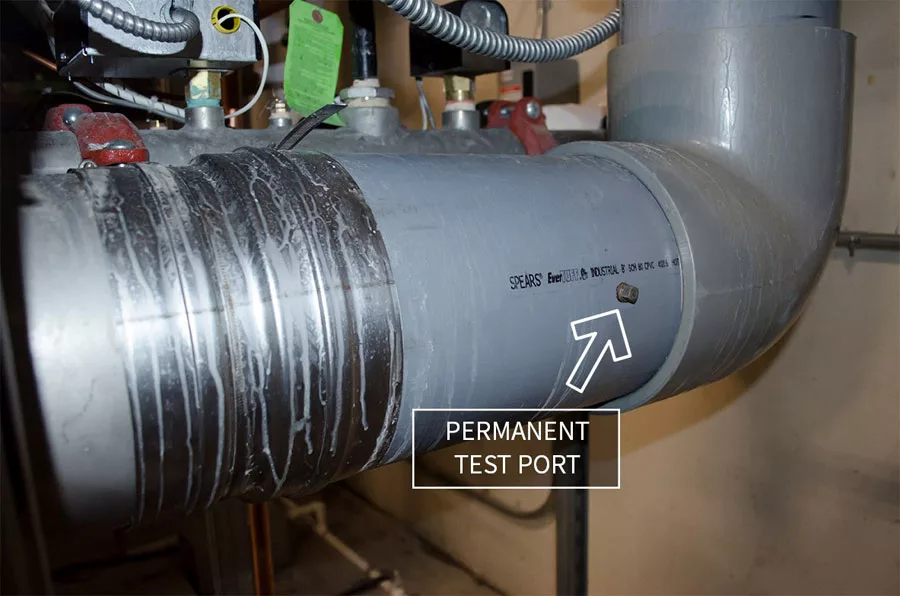
  16. Permanent test ports need to be installed in venting. Test ports are a commonly overlooked maintenance accessory. They are required for combustion analyzation. Any time a boiler is started up or serviced, a combustion analyzation is required to set the air/gas ratio proper combustion levels per manufacturer.
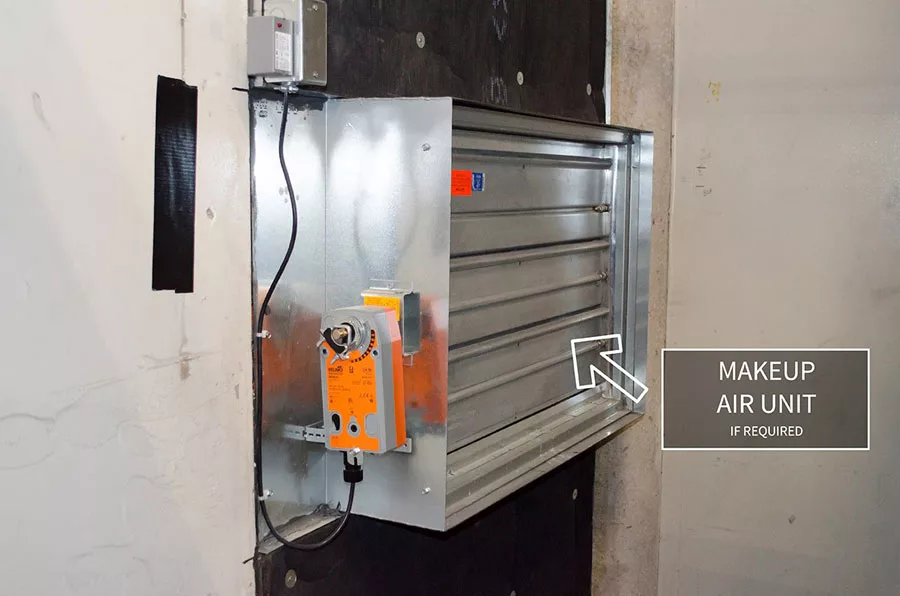
  17. Building Pressure - Most boilers operate optimally in a pressure neutral room.

There you have it. Our most common tips to make your boiler install go as smooth as possible. Is this every last possible tip and requirement? No, but it's the most common we've seen day in and day out. When these requirements aren't met it costs everyone involved more time and money.

Publication date: 5/20/2018

Want more HVAC industry news and information? Join The NEWS on Facebook, Twitter, and LinkedIn today!

Looking for quick answers on air conditioning, heating and refrigeration topics? Try Ask ACHR NEWS, our new smart AI search tool. Ask ACHR NEWS →

KEYWORDS: boiler maintenance boilers

Share This Story

Looking for a reprint of this article?
From high-res PDFs to custom plaques, order your copy today!


Gomski

Brian Gomski is Director of Marketing and Business Development at Midwest Machinery (http://www.midwestmachinery.net) and co-founder of Spark (http://thespark.agency/). Midwest Machinery has been in business since 1923 and is well known for their innovative commercial + industrial HVAC and water treatment. Office locations are Saint Louis, Kansas City, Tulsa, Oklahoma City and Denver.

Recommended Content

JOIN TODAY
To unlock your recommendations.

Already have an account? Sign In

  • HVAC-enrollment

    The Trades Are Back: HVACR Programs See Nearly 30% Enrollment Spike

    A new wave of future technicians is entering the pipeline.  
    Training and Education
    By: Matt Jachman
  • 2025 Top 40 Under 40

    2025 Top 40 Under 40 HVACR Professionals List

    The 11th annual Top 40 Under 40 list highlights those...
    News
    By: Hannah Belloli-Oster
  • LG Ductless Mini-Split Systems

    The 9 Types of Heat Pumps

    As the U.S. moves toward electrification, heat pumps are...
    Ground Source Heat Pumps
    By: Joanna R. Turpin
Subscription Center
  • Create an Account
  • Start a Subscription
  • Manage My Account
  • Sign Up for Newsletters
  • Visit Customer Service
  • Update Preferences

More Videos

Sponsored Content

Sponsored Content is a special paid section where industry companies provide high quality, objective, non-commercial content around topics of interest to The News audience. All Sponsored Content is supplied by the advertising company and any opinions expressed in this article are those of the author and not necessarily reflect the views of The News or its parent company, BNP Media. Interested in participating in our Sponsored Content section? Contact your local rep!

close
  • An illustration shows a house with a geothermal heating system. Pipes are depicted running underground.
    Sponsored byClimateMaster

    Residential Tax Credits Are Ending, But Demand Continues

  • Piggy Bank
    Sponsored byWatercress Financial

    Energy Prices, Inflation, and HVAC: What Today’s Homeowners Care About

  • Refrigerated Food
    Sponsored bySolstice Advanced Materials

    R-455A Refrigeration: A Cold Storage Solution for the Future

Popular Stories

price-raising-practices.jpg

Rising Costs Force Contractors to Take a Harder Look at Pricing

DOE-sign.jpg

HVAC Groups Support DOE’s Rulemaking to Cut Energy Efficiency Mandates

HARDI lolgo navy

HARDI Distributors' Sales Down Nearly 5% in May

Data-Center-Inspection.jpg

Can HVAC Train Enough Technicians for the Data Center Boom?

Industry-Ethics_-Service-Calls.jpg

HVAC Contractor Agrees to $300K Settlement Over Alleged Deceptive Sales Practices

View The ACHR NEWS
Centennial Anniversary Timeline

The ACHR News Timeline Chart
Submit a Letter
Submit a letter to our editors.

Events

November 6, 2025

Next-Gen Data Center Cooling: HVAC Innovation and Real-World Solutions

On Demand As AI workloads and high-density computing push traditional cooling methods to their limits, the data center industry is accelerating the adoption of next-generation HVAC technologies.

July 22, 2026

Designing VRF Systems Using A2L Refrigerant

In this session, we will cover how to design VRF systems for the U.S. market using new A2L refrigerants. These systems provide an advanced zoning solution by using inverter technology to deliver precise heating and cooling control across multiple zones and spaces.

View All Submit An Event

Poll

Summer Staff

Are you fully staffed for the summer season?
View Results Poll Archive

Products

BNI Mechanical/Electrical Square Foot Costbook, 2026 Edition

BNI Mechanical/Electrical Square Foot Costbook, 2026 Edition

See More Products
Designing Systems Using A2L Refrigerant - Free Webinar - 7/22/2026

Related Articles

  • Searching for the Ultimate Compliment

    See More
  • Branding and Marketing

    HVAC Marketing: The Ultimate List of Do’s and Do Not’s

    See More
  • Refrigeration Troubleshooting

    Creating the Ultimate Refrigeration Troubleshooting Checklist

    See More

Related Products

See More Products
  • 978-0-88069-028-7-228x228.jpg

    Layout for Duct Fittings

  • Troubleshooting Tips for Servicing Refrigeration Systems

  • Top 100 HVAC/R Tips

See More Products

Related Directories

  • Rite Boiler

    Rite manufactures and provides Low- and High-Pressure Steam Boilers, Hot Water Boilers, Blowdown Tanks, Boiler Feed System, Water Softeners, Chemical Feed Systems, and more.
  • Central Boiler

    Central Boiler, the leading manufacturer of outdoor furnaces. Among its many industry-leading accomplishments was the production of the first EPA-qualified outdoor wood furnace. Visit CentralBoiler.com
×

Sign Up. Stay Informed.

The #1 trusted source for the HVACR industry since 1926

SUBSCRIBE
  • RESOURCES
    • Advertise
    • Contact Us
    • Advisory Board
    • Classifieds
    • Submit a Letter
    • Directories
    • Store
  • ACCOUNT CENTER
    • Create an Account
    • Start a Subscription
    • Manage My Account
    • Sign Up for Newsletters
    • Visit Customer Service
    • Update Preferences
  • SERVICES
    • Marketing Services
    • Reprints
    • Market Research
    • List Rental
    • Survey/Respondent Access
  • STAY CONNECTED
    • LinkedIn
    • Facebook
    • Instagram
    • YouTube
    • X (Twitter)
  • PRIVACY
    • PRIVACY POLICY
    • TERMS & CONDITIONS
    • DO NOT SELL MY PERSONAL INFORMATION
    • PRIVACY REQUEST
    • ACCESSIBILITY

Copyright ©2026. All Rights Reserved BNP Media, Inc. and BNP Media II, LLC.

Design, CMS, Hosting & Web Development :: ePublishing