ACHR News
search
Ask ACHR NEWS AI
cart
facebook twitter instagram linkedin youtube
  • Sign In
  • Subscribe
  • Sign Out
  • My Account
ACHR News
  • NEWS
    • Breaking News
    • New HVAC Products
    • Featured Products
    • Manufacturer Reports
    • HVAC Data
    • Legislation
    • ACHR NEWS Centennial
  • RESIDENTIAL
    • Air Conditioners
    • Furnaces
    • Residential Heat Pumps
    • Ductless
    • Residential IAQ
    • Testing, Monitoring, Tools
    • Components & Accessories
  • COMMERCIAL
    • Air Handlers
    • Rooftop Units
    • Chillers and Cooling Towers
    • Commercial Heat Pumps
    • Boilers and Hydronics
    • VRF/Ductless
    • Commercial IAQ
  • REFRIGERATION
    • Refrigerants
    • Refrigerant Regulations
    • Leak Management
  • CONTRACTOR PRO
    • Geothermal
    • Homeowner Study
    • VRF and VRV Ductless
    • Unitary Trends
  • EDUCATION
    • Training and Education
    • Business Management
    • Service and Maintenance
    • Continuing Education
    • Market Research >
      • HVAC Brand Awareness Report
      • VRV, VRF, VRVZ Report
      • Unitary Trends Report
      • Water Heat Professionals Report
    • Webinars
    • Sponsor Insights
    • eProducts Info
    • White Papers
  • EVENTS
    • HVAC Contractor Forum
    • Industry Events and Webinars
  • MEDIA
    • Videos
    • AHR Expo 2025 Videos
    • Podcasts >
      • ACHR News Podcast
      • HARDI Podcasts
      • AHR Expo Podcasts
      • ACCA Podcasts
    • Interactive Spotlights
    • Quizzes
    • eBooks
    • HVAC Talkback
  • HVAC GROUP
    • ACHR NEWS >
      • Current Issue
      • Digital Edition
      • Subscribe
    • Distribution Trends
    • SNIPS NEWS >
      • Join SNIPS NEWS
    • Engineered Systems News >
      • Join ES News
    • HVACR Directory
    • Contests
    • Newsletters
    • Contact
    • Advertise
    • My Account
HVAC ContractingTechnical

Understanding Arc Flash Hazards
By Brian McFadden
Arc
Photo courtesy of brionv: http://bit.ly/2s3Jqq7
February 5, 2018

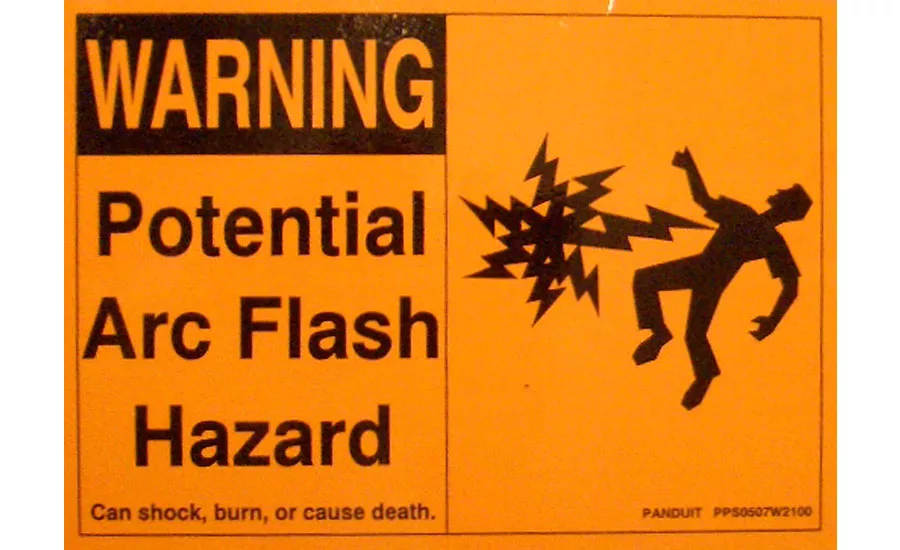
When electrical equipment must be maintained or repaired while energized, an arc flash hazard may be present. Affected workers need to know what steps should be taken to stay safe. Arc flash warning labels can provide this information, right where and when it’s needed. As a result, experts in electrical safety recommend using standardized and helpful arc flash labels.

The most referenced standard for creating arc flash labels is NFPA 70E: Electrical Safety in the Workplace. While OSHA does not explicitly require employers to follow it, OSHA has used NFPA 70E as an example of recognized industry practices when evaluating a facility’s electrical training, procedures, and signage, especially when it comes to arc flash.

New in 2018: The Hierarchy of Controls

In addition to arc flash labels, the NFPA 70E standard covers recommendations for electrical risk assessments, safe work practices, and protective equipment, making it a reliable starting point for any facility’s electrical safety program. The most significant change in the 2018 edition of the NFPA 70E is the inclusion of the Hierarchy of Controls. This hierarchy offers a clear way to think about protective measures, and is already in use as part of a Job Hazard Analysis in many workplaces.

The hierarchy gives more context to arc flash labels, showing where they fit into a facility’s overall plan. Under this approach, protective measures are applied in order from most effective to least effective:

  1. Elimination - removing the hazard at its source
  2. Substitution - replacing a severe hazard with a less severe one
  3. Engineering Controls - blocking the hazard from affecting employees
  4. Awareness - providing information to allow employees to make safe decisions
  5. Administrative Controls - using safe work procedures to limit employee exposure to a hazard
  6. Personal Protective Equipment - using protective clothing and equipment to limit employee injuries from a harmful event

Under the new edition of NFPA 70E, arc flash warning labels are a critical part of step 4: Awareness. With that context, it’s easy to see why arc flash warning labels are important for worker safety.

Arc Flash Label Details

Arc flash labels of some kind have been required by NFPA 70E for many years. In the new edition of NFPA 70E, the labeling requirements have been moved slightly; they now appear in Article 130.5(H). However, the essential information requirements have been kept unchanged from the 2015 edition. Each arc flash warning label needs to include:

  1. Nominal system voltage
  2. Arc flash boundary
  3. At least one of the following:
    1. Incident energy and working distance, or arc flash PPE category, but not both
    2. Minimum arc rating of clothing
    3. Site-specific description of PPE required

First, the system voltage is a quick indicator of the equipment’s power level. Then, the arc flash boundary provides a “stay-back” distance, where a worker without protection would receive second-degree burns in the event of an arc flash; getting closer requires appropriate PPE. The third item is a way to indicate what PPE is required, with some options for how to present that information.

Looking for quick answers on air conditioning, heating and refrigeration topics? Try Ask ACHR NEWS, our new smart AI search tool. Ask ACHR NEWS →

Note that a given piece of equipment should never be marked with both a calculated incident energy and an arc flash PPE category. This is because those two details reflect two different ways of assessing an arc flash hazard, and may give confusing or even conflicting recommendations.

Incident energy must be calculated for the exact equipment and installation in question, requiring detailed knowledge of the system and some careful math, often performed with specialized analysis software. The arc flash PPE categories are generalized recommendations for some common circumstances, and the appropriate category for a situation is found by reading tables in NFPA 70E. Where the PPE tables do not apply to a situation, the incident energy approach is needed.

Additional Label Content

Effective arc flash labels often include other elements, beyond that short list of required details. For example, labels may include shock protection information, such as the Limited and Restricted Approach Boundaries. It’s also common practice to include the date of the last arc flash risk assessment, making it easy to check if a label is up-to-date; this is required by CSA Z462, the Canadian “sister standard” to NFPA 70E.

In addition to the information of the label, good arc flash labels often use a standardized format, described in the ANSI Z535 standard. This system uses a set of boldly colored headers and signal words to get attention and communicate quickly and clearly; the ANSI Z535 approach is often used to meet OSHA’s requirements for accident prevention signs. Under this system, “Warning” signs (with an orange header and the word “Warning” at the top) indicate hazards that could cause serious injury or death, while “Danger” signs (with a red header and the word “Danger”) mark the most extreme hazards.

Old Labels and the New Standard

Previous versions of NFPA 70E had different requirements for arc flash labels. For example, the 2009 edition only required either the incident energy or the required level of PPE. The 2004 edition didn’t even go that far, only requiring a general warning that an arc flash hazard was present.

Under the 2018 edition of NFPA 70E, an older arc flash label may be kept in place as long as:

  • the label complied with the requirements in effect at the time it was applied, and
  • the label's information remains accurate

If your facility labeled its equipment under the 2015 edition of the standard, and the equipment and electrical distribution system have not been changed since then, your current labels may still be acceptable. However, your facility’s arc flash risk assessments need to be reviewed each time the facility’s electrical system is changed, and at least once every five years. Whenever a label is no longer accurate or legible, it should be replaced.

For customized warning labels or signs in your facility, consider a DuraLabel industrial label printer to let you create new labels when you need them, on-site and on demand. These printers include software for easy label design, and can even print labels directly from popular electrical analysis software.

Publication date: 2/5/2018

Want more HVAC industry news and information? Join The NEWS on Facebook, Twitter, and LinkedIn today!

Share This Story

Looking for a reprint of this article?
From high-res PDFs to custom plaques, order your copy today!


Brian is a Technical Writer/Compliance Specialist at Graphic Products. Graphic Products has been an innovative global leader in compliance and educational solutions that help protect businesses, assets and workers. Products include high-performance labels and signs, safety devices, printing systems and software, and precision die-cut materials.

Recommended Content

JOIN TODAY
To unlock your recommendations.

Already have an account? Sign In

  • HVAC-enrollment

    The Trades Are Back: HVACR Programs See Nearly 30% Enrollment Spike

    A new wave of future technicians is entering the pipeline.  
    News
    By: Matt Jachman
  • 2025 Top 40 Under 40

    2025 Top 40 Under 40 HVACR Professionals List

    The 11th annual Top 40 Under 40 list highlights those...
    HVAC Contracting
    By: Hannah Belloli-Oster
  • LG Ductless Mini-Split Systems

    The 9 Types of Heat Pumps

    As the U.S. moves toward electrification, heat pumps are...
    Air Source Heat Pumps
    By: Joanna R. Turpin
Subscription Center
  • Create an Account
  • Start a Subscription
  • Manage My Account
  • Sign Up for Newsletters
  • Visit Customer Service
  • Update Preferences

More Videos

Sponsored Content

Sponsored Content is a special paid section where industry companies provide high quality, objective, non-commercial content around topics of interest to The News audience. All Sponsored Content is supplied by the advertising company and any opinions expressed in this article are those of the author and not necessarily reflect the views of The News or its parent company, BNP Media. Interested in participating in our Sponsored Content section? Contact your local rep!

close
  • Piggy Bank
    Sponsored byWatercress Financial

    Energy Prices, Inflation, and HVAC: What Today’s Homeowners Care About

  • Refrigerated Food
    Sponsored bySolstice Advanced Materials

    R-455A Refrigeration: A Cold Storage Solution for the Future

  • Airex Rooftop Units
    Sponsored byAirex Manufacturing Inc

    Consolidating Roof Penetrations: A Growing Trend in Multifamily HVAC Design

Popular Stories

Refrigerants-and-gauge.jpg

HVAC Industry Warns of Counterfeit Refrigerants Entering U.S. Supply Chain

U.S. Supreme Court building

95% Furnace Efficiency Rule to Get New Hearing

Midea-training.jpg

HVAC Workforce Crisis Expands Beyond Technicians to Instructor Shortages

Data_Center_facility.jpg

HVAC Manufacturers Respond to Growing Data Center Backlash

HVAC Minute retail refrigeration system

EPA Final Rule’s Impact on R-410A Deadlines

View The ACHR NEWS
Centennial Anniversary Timeline

The ACHR News Timeline Chart
Submit a Letter
Submit a letter to our editors.

Events

November 6, 2025

Next-Gen Data Center Cooling: HVAC Innovation and Real-World Solutions

On Demand As AI workloads and high-density computing push traditional cooling methods to their limits, the data center industry is accelerating the adoption of next-generation HVAC technologies.

June 23, 2026

HVAC Duct Sealing Mastics: Why Selection Matters

In this webinar we will detail what HVAC material buyers and technicians need to know when selecting duct mastics, including matching mastic to substrate, alternatives to liquid mastic, and where UL 181 Listings fit into real world installations.

View All Submit An Event

Poll

Summer Staff

Are you fully staffed for the summer season?
View Results Poll Archive

Products

BNI Mechanical/Electrical Square Foot Costbook, 2026 Edition

BNI Mechanical/Electrical Square Foot Costbook, 2026 Edition

See More Products
HVAC Duct Sealing Mastics: Why Selection Matters - Free Webinar - 6/23/2026

Related Articles

  • Meyers Engineering PPE Data Centers

    Arc Flash Studies: Not Just About Safety

    See More
  • Universal Air Filter Co.: Air Filters

    See More
  • Electric Arc Welding Safety

    See More

Related Products

See More Products
  • basicelectricty_cover.jpg.jpg

    Understanding Basic Electricity - A Companion Guide

  • Understanding TXV Refrigeration Systems: Superheat and Subcooling DVD

  • compressormotorwindingsdvd.jpg

    UNDERSTANDING COMPRESSOR MOTOR WINDINGS

See More Products
×

Sign Up. Stay Informed.

The #1 trusted source for the HVACR industry since 1926

SUBSCRIBE
  • RESOURCES
    • Advertise
    • Contact Us
    • Advisory Board
    • Classifieds
    • Submit a Letter
    • Directories
    • Store
  • ACCOUNT CENTER
    • Create an Account
    • Start a Subscription
    • Manage My Account
    • Sign Up for Newsletters
    • Visit Customer Service
    • Update Preferences
  • SERVICES
    • Marketing Services
    • Reprints
    • Market Research
    • List Rental
    • Survey/Respondent Access
  • STAY CONNECTED
    • LinkedIn
    • Facebook
    • Instagram
    • YouTube
    • X (Twitter)
  • PRIVACY
    • PRIVACY POLICY
    • TERMS & CONDITIONS
    • DO NOT SELL MY PERSONAL INFORMATION
    • PRIVACY REQUEST
    • ACCESSIBILITY

Copyright ©2026. All Rights Reserved BNP Media, Inc. and BNP Media II, LLC.

Design, CMS, Hosting & Web Development :: ePublishing