ACHR News
search
Ask ACHR NEWS AI
cart
facebook twitter instagram linkedin youtube
  • Sign In
  • Subscribe
  • Sign Out
  • My Account
ACHR News
  • NEWS
    • Breaking News
    • New HVAC Products
    • Featured Products
    • Manufacturer Reports
    • HVAC Data
    • Legislation
    • ACHR NEWS Centennial
  • RESIDENTIAL
    • Air Conditioners
    • Furnaces
    • Residential Heat Pumps
    • Ductless
    • Residential IAQ
    • Testing, Monitoring, Tools
    • Components & Accessories
  • COMMERCIAL
    • Air Handlers
    • Rooftop Units
    • Chillers and Cooling Towers
    • Commercial Heat Pumps
    • Boilers and Hydronics
    • VRF/Ductless
    • Commercial IAQ
  • REFRIGERATION
    • Refrigerants
    • Refrigerant Regulations
    • Leak Management
  • CONTRACTOR PRO
    • Geothermal
    • Homeowner Study
    • VRF and VRV Ductless
    • Unitary Trends
  • EDUCATION
    • Training and Education
    • Business Management
    • Service and Maintenance
    • Continuing Education
    • Market Research >
      • HVAC Brand Awareness Report
      • VRV, VRF, VRVZ Report
      • Unitary Trends Report
      • Water Heat Professionals Report
    • Webinars
    • Sponsor Insights
    • eProducts Info
    • White Papers
  • EVENTS
    • HVAC Contractor Forum
    • Industry Events and Webinars
  • MEDIA
    • Videos
    • AHR Expo 2025 Videos
    • Podcasts >
      • ACHR News Podcast
      • HARDI Podcasts
      • AHR Expo Podcasts
      • ACCA Podcasts
    • Interactive Spotlights
    • Quizzes
    • eBooks
    • HVAC Talkback
  • HVAC GROUP
    • ACHR NEWS >
      • Current Issue
      • Digital Edition
      • Subscribe
    • Distribution Trends
    • SNIPS NEWS >
      • Join SNIPS NEWS
    • Engineered Systems News >
      • Join ES News
    • HVACR Directory
    • Contests
    • Newsletters
    • Contact
    • Advertise
    • My Account
HVAC Residential MarketHVAC Light Commercial MarketRefrigerationAir Conditioners

The Professor: Why Is Condenser Subcooling Needed?

By John Tomczyk
March 5, 2012
[Editor’s Note: This is the second in a three-part series on the importance of liquid subcooling in a refrigeration or air conditioning system.]

Condenser subcooling ensures that there is a liquid seal at the condenser’s bottom so the liquid line or receiver will not be fed with vapors. This condition prevents any noncondensables, like refrigerant vapor or air, from leaving the condenser’s bottom and entering the receiver or liquid line. On systems without receivers, condenser subcooling can be an indicator of how much refrigerant charge is in a system. See the manufacturer’s specifications for condenser subcooling amounts when charging a system using these criteria.

Another important reason why condenser subcooling must be present is to prevent liquid line flash gas (vapor bubbles) from forming in the liquid line. Liquid line flash gas is primarily caused from pressure drop in the liquid line. Pressure drop in the liquid line can be caused from any restrictive device, including filter dryers, sight glasses, solenoid valves, shutoff valves, kinked or undersized liquid lines, large liquid line runs, and large vertical lift in the liquid line.

There is pressure drop associated with the length of run and the vertical lift of liquid in refrigerant lines. The longer the run and the more turns and bends associated with the liquid line, the larger the associated pressure drop.

Also, the farther you try to vertically lift liquid, the more pressure drop will be associated with the lift. If there wasn’t any condenser subcooling, saturated liquid from the condenser, while experiencing these pressure drops, would continuously be trying to reach a new, lower saturated temperature because of the pressure/temperature relationship associated with saturation.

The saturated liquid would be trying to cool itself down to a new lower saturation temperature to match the progressively lower pressure in the liquid line. The only way the saturated liquid could cool itself down is for some of its own liquid to flash into vapor.

Whenever a liquid flashes into vapor, heat energy is needed for the vaporization process. Almost all of the heat supplied to the flashing process comes from the heat in the saturated liquid itself. This cools the remaining liquid down to the new saturation temperature associated with the new, lower pressure caused from the pressure drops in the liquid line on the way to the metering device.

This type of cooling is referred to as adiabatic cooling because there is no net loss or gain of energy in the subcooled liquid itself. The heat needed for the flashing of the liquid came from the liquid itself. So, whenever saturated liquid experiences liquid line pressure drops, liquid line flash gas will result and is detrimental to system performance. Metering devices will now experience a mixture of liquid/vapor instead of a solid column of liquid at their entrances. The liquid/vapor mixture will decrease the capacity of the thermal expansion valve (TXV) because TXV capacity tables are based on vapor‑free liquid at their inlets.

Looking for quick answers on air conditioning, heating and refrigeration topics? Try Ask ACHR NEWS, our new smart AI search tool. Ask ACHR NEWS →

Also, when liquid flashes in the liquid line, it leaves less liquid to flash in the evaporator and thus takes away from the refrigeration effect and adversely affects system capacity.

The balanced port TXV is designed to handle a certain amount of flash gas due to its oversized port. It is designed to maintain better control under such conditions and at light loads. The balanced port TXV can operate with its valve pin very close to the seat. This allows a large port to handle small loads.

Pressure Drop

Total pressure losses that take place in the liquid line are the result of two types: friction pressure losses and static pressure losses.

Friction pressure losses were mentioned earlier. They are caused from refrigerant flowing either through tubing, driers, elbows, or even a sight glass on its way to the metering device. Some of the fluid’s energy is being used to overcome friction from the side walls of the pipe or from an obstruction such as the filter drier.

A velocity profile is actually set up in the pipe with the slowest-moving fluid at the sidewalls, and the fastest-moving fluid in the center of the pipe. This lost energy in the fluid causes a loss in pressure, and is why liquids must be subcooled before experiencing these pressure drops to prevent liquid flashing. Proper line sizing, short runs, and unobstructed accessories like clean filter driers can prevent excessive friction pressure drops.

Static pressure losses occur in the liquid line whenever liquid has to flow uphill through vertical lifts. A vertical column of liquid naturally has more pressure at its bottom than its top, due to the weight of the entire column of liquid at the bottom. So, anytime liquid from a condenser or receiver has to be piped uphill, there will be static pressure drops as the liquid climbs higher in the piping. This is in addition to the friction pressure losses from the pipe’s sidewalls as the liquid climbs.

Publication date: 03/05/2012

KEYWORDS: air conditioning systems superheat and subcooling

Share This Story

Looking for a reprint of this article?
From high-res PDFs to custom plaques, order your copy today!


John Tomczyk is HVACR professor emeritus, Ferris State University, Big Rapids, Michigan, and coauthor of Refrigeration & Air Conditioning Technology, published by Cengage Learning. Contact him at tomczykjohn@gmail.com.

Recommended Content

JOIN TODAY
To unlock your recommendations.

Already have an account? Sign In

  • HVAC-enrollment

    The Trades Are Back: HVACR Programs See Nearly 30% Enrollment Spike

    A new wave of future technicians is entering the pipeline.  
    News
    By: Matt Jachman
  • 2025 Top 40 Under 40

    2025 Top 40 Under 40 HVACR Professionals List

    The 11th annual Top 40 Under 40 list highlights those...
    HVAC Commercial Market
    By: Hannah Belloli-Oster
  • LG Ductless Mini-Split Systems

    The 9 Types of Heat Pumps

    As the U.S. moves toward electrification, heat pumps are...
    HVAC Commercial Market
    By: Joanna R. Turpin
Subscription Center
  • Create an Account
  • Start a Subscription
  • Manage My Account
  • Sign Up for Newsletters
  • Visit Customer Service
  • Update Preferences

More Videos

Sponsored Content

Sponsored Content is a special paid section where industry companies provide high quality, objective, non-commercial content around topics of interest to The News audience. All Sponsored Content is supplied by the advertising company and any opinions expressed in this article are those of the author and not necessarily reflect the views of The News or its parent company, BNP Media. Interested in participating in our Sponsored Content section? Contact your local rep!

close
  • An illustration shows a house with a geothermal heating system. Pipes are depicted running underground.
    Sponsored byClimateMaster

    Residential Tax Credits Are Ending, But Demand Continues

  • Piggy Bank
    Sponsored byWatercress Financial

    Energy Prices, Inflation, and HVAC: What Today’s Homeowners Care About

  • Refrigerated Food
    Sponsored bySolstice Advanced Materials

    R-455A Refrigeration: A Cold Storage Solution for the Future

Popular Stories

price-raising-practices.jpg

Rising Costs Force Contractors to Take a Harder Look at Pricing

DOE-sign.jpg

HVAC Groups Support DOE’s Rulemaking to Cut Energy Efficiency Mandates

Data-Center-Inspection.jpg

Can HVAC Train Enough Technicians for the Data Center Boom?

HARDI lolgo navy

HARDI Distributors' Sales Down Nearly 5% in May

Industry-Ethics_-Service-Calls.jpg

HVAC Contractor Agrees to $300K Settlement Over Alleged Deceptive Sales Practices

View The ACHR NEWS
Centennial Anniversary Timeline

The ACHR News Timeline Chart
Submit a Letter
Submit a letter to our editors.

Events

November 6, 2025

Next-Gen Data Center Cooling: HVAC Innovation and Real-World Solutions

On Demand As AI workloads and high-density computing push traditional cooling methods to their limits, the data center industry is accelerating the adoption of next-generation HVAC technologies.

July 22, 2026

Designing VRF Systems Using A2L Refrigerant

In this session, we will cover how to design VRF systems for the U.S. market using new A2L refrigerants. These systems provide an advanced zoning solution by using inverter technology to deliver precise heating and cooling control across multiple zones and spaces.

View All Submit An Event

Poll

Summer Staff

Are you fully staffed for the summer season?
View Results Poll Archive

Products

BNI Mechanical/Electrical Square Foot Costbook, 2026 Edition

BNI Mechanical/Electrical Square Foot Costbook, 2026 Edition

See More Products
Designing Systems Using A2L Refrigerant - Free Webinar - 7/22/2026

Related Articles

  • The Professor: The Needed Amount of Condenser Subcooling

    See More
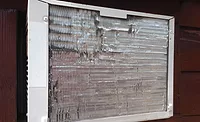
  • These condenser fins have been bent horizontally and are blocking airflow through the condenser. Photos courtesy of John Tomczyk

    The Professor: The Importance of the Condenser

    See More
  • The Professor: The Importance of Liquid Subcooling

    See More

Related Products

See More Products
  • Understanding TXV Refrigeration Systems: Superheat and Subcooling DVD

  • new cover.jpg

    Profit is An Attitude: The Strategies You Need to Optimize Profits

  • Uncomplicating The Heat Pump: Refrigeration & Air Flow Systems DVD

See More Products

Events

View AllSubmit An Event
  • May 21, 2026

    The A2L Genie is Out of the Refrigerant Canister – What Now?

    On Demand Join this webinar to learn about key updates to refrigerant regulations. We will cover practical installation and servicing content gathered from thousands of our interactions with contractors across the US and Canada.
View AllSubmit An Event

Related Directories

  • Condenser and Chiller Services

    Offers in-field eddy current inspection, remote video inspection, protective epoxy coatings and complete retubing service with tubes in stock.
  • The Whalen Co.

    The Whalen Company is the pioneering manufacturer of HVAC vertical stack riser heat-exchanger fan coil units and water-source heat pumps for hotels, apartments and other multi-story buildings.
×

Sign Up. Stay Informed.

The #1 trusted source for the HVACR industry since 1926

SUBSCRIBE
  • RESOURCES
    • Advertise
    • Contact Us
    • Advisory Board
    • Classifieds
    • Submit a Letter
    • Directories
    • Store
  • ACCOUNT CENTER
    • Create an Account
    • Start a Subscription
    • Manage My Account
    • Sign Up for Newsletters
    • Visit Customer Service
    • Update Preferences
  • SERVICES
    • Marketing Services
    • Reprints
    • Market Research
    • List Rental
    • Survey/Respondent Access
  • STAY CONNECTED
    • LinkedIn
    • Facebook
    • Instagram
    • YouTube
    • X (Twitter)
  • PRIVACY
    • PRIVACY POLICY
    • TERMS & CONDITIONS
    • DO NOT SELL MY PERSONAL INFORMATION
    • PRIVACY REQUEST
    • ACCESSIBILITY

Copyright ©2026. All Rights Reserved BNP Media, Inc. and BNP Media II, LLC.

Design, CMS, Hosting & Web Development :: ePublishing