ACHR News
search
Ask ACHR NEWS AI
cart
facebook twitter instagram linkedin youtube
  • Sign In
  • Subscribe
  • Sign Out
  • My Account
ACHR News
  • NEWS
    • Breaking News
    • New HVAC Products
    • Featured Products
    • Manufacturer Reports
    • HVAC Data
    • Legislation
    • ACHR NEWS Centennial
  • RESIDENTIAL
    • Air Conditioners
    • Furnaces
    • Residential Heat Pumps
    • Ductless
    • Residential IAQ
    • Testing, Monitoring, Tools
    • Components & Accessories
  • COMMERCIAL
    • Air Handlers
    • Rooftop Units
    • Chillers and Cooling Towers
    • Commercial Heat Pumps
    • Boilers and Hydronics
    • VRF/Ductless
    • Commercial IAQ
  • REFRIGERATION
    • Refrigerants
    • Refrigerant Regulations
    • Leak Management
  • CONTRACTOR PRO
    • Geothermal
    • Homeowner Study
    • VRF and VRV Ductless
    • Unitary Trends
  • EDUCATION
    • Training and Education
    • Business Management
    • Service and Maintenance
    • Continuing Education
    • Market Research >
      • HVAC Brand Awareness Report
      • VRV, VRF, VRVZ Report
      • Unitary Trends Report
      • Water Heat Professionals Report
    • Webinars
    • Sponsor Insights
    • eProducts Info
    • White Papers
  • EVENTS
    • HVAC Contractor Forum
    • Industry Events and Webinars
  • MEDIA
    • Videos
    • AHR Expo 2025 Videos
    • Podcasts >
      • ACHR News Podcast
      • HARDI Podcasts
      • AHR Expo Podcasts
      • ACCA Podcasts
    • Interactive Spotlights
    • Quizzes
    • eBooks
    • HVAC Talkback
  • HVAC GROUP
    • ACHR NEWS >
      • Current Issue
      • Digital Edition
      • Subscribe
    • Distribution Trends
    • SNIPS NEWS >
      • Join SNIPS NEWS
    • Engineered Systems News >
      • Join ES News
    • HVACR Directory
    • Contests
    • Newsletters
    • Contact
    • Advertise
    • My Account
HVAC Residential MarketHeat PumpsAir ConditionersSplit SystemsAir Source Heat Pumps

Copper Group Explores Formicary Corrosion and Odor

By Barbara A. Checket-Hanks
May 9, 2011
A technician solders copper tubing in the HVAC unit at the military barracks at Fort Jackson in South Carolina in 2009. The resulting study showed improved IAQ and an unexpected benefit: a huge efficiency gain, plus odor control. Copper HVAC components are now EPA registered for use in protecting heating and air conditioning surfaces from bacteria, mold, and mildew.


It is the time of year when, in many parts of the country, cooling system problems involving coils tend to become more pronounced. Foul odors are especially problematic, but still more insidious are coil failures caused by formicary corrosion.

The NEWS has interviewed members of the Copper Development Association (CDA) for their takes on how these problems are being addressed.


THE OTHER F WORD

Jim Michel, manager of technical services for the Copper Development Association (CDA), informed us that formicary corrosion (aka “ant’s nest” corrosion due to its pattern seen under magnification) mainly occurs in tubes made from copper alloy 122 C1220. “It happens to be the material of choice for heat exchangers because of its good thermal conductivity,” he said. The industry is looking at both the alloys and the organic materials they come into contact with for solutions.

The corrosion itself looks bluish-black in the affected area. “Until you brush away the surface corrosion, you don’t know about the pitting,” Michel said.

A lot of recent research has been looking at reactions between those alloys and organic materials left on the surface during manufacturing, installation, or service - lubricating materials and fluxes - that are not completely cleaned off, or neutralized. “Petroleum or water-based materials, water, and solvents, end up creating formic acid, or carboxylic acid,” Michel explained.

Copper tubing was tested in the HVAC units at Fort Jackson, S.C., military barracks.

“Fluxes and lubricants are supposed to be cleaned off with a solvent, like trichloroethylene; that also needs to be cleaned off,” he said. “The development of corrosion is aided by not fully cleaning the parts with water- and nonwater-based fluids,” both in the plant and in the field. Alternative fluids are being tried, Michel said, in an effort on the part of the industry to work through this problem.

The problem with looking for a different copper alloy to use, he said, rests in their varying heat transfer characteristics. “This alloy (122 C1220) has excellent thermal conductivity,” he said. “Other alloys would show a reduction as much as 70 percent. You would need to upsize the equipment and nobody’s gonna do that.”

How many systems does it affect? He called it a “relatively small” number. “We don’t see all of it,” he added. “We’re the trade association for the copper industry. It’s usually a one off.”

Copper HVAC components installed at the Fort Jackson, S.C. military barracks, showed significant efficiency and IAQ benefits.

His advice to contractors: “Make sure copper materials are thoroughly rinsed of any materials left on or in there. This includes all kinds of regular and/or water-based fluids that are supposed to be rinsed off.” Moisture, he said, causes these particular organic compounds to change their nature.

“Cleanliness is very important in manufacturing and installation.

“It’s an ongoing education process,” he added. “When you’re putting things in, take a little extra care. But you need the knowledge before you go there.” The elimination of lubricating fluids is most important, he said, but so is cleaning off all the flux from soldering and joining.

ODOR CONTROL

Earlier this year, the CDA announced that copper HVAC components are now EPA registered for use in protecting heating and air conditioning surfaces from bacteria, mold, and mildew. “HVAC components made from copper and copper alloys suppress the growth of organisms that can cause odors and reduce system efficiency,” stated a press release from the association.

Research conducted in the military barracks at Fort Jackson in Columbia, S.C., showed that copper coil fins and drip pans suppressed the growth of bacteria, mold, and mildew, keeping the units free from buildup. “Cleaner units allow for increased heat transfer, decreased airflow resistance, and overall increased system efficiency, as well as a diminished potential for odor,” the association said.

“The biggest surprise was that the efficiency was so much better,” said Michel. “It was substantial, and affected it much faster than we anticipated.” The minimization of mold on surfaces doesn’t allow the biofilm to grow, and biofilm is insulative. Moreover, “The odor problem is the biofilm that grows on the surface.”

A technician installs copper HVAC components at the military barracks at Fort Jackson, S.C., during the spring of 2009. The results showed improved IAQ and an unexpected benefit: a huge efficiency gain, plus odor control. Copper HVAC components are now EPA registered for use in protecting heating and air conditioning surfaces from bacteria, mold, and mildew.

Harold Michels, Ph.D., CDA’s senior vice president of technology and technical services, said that while it does help prevent odors such as those in the so-called Dirty Sock Syndrome, the EPA registration doesn’t allow the mention of specific microbes. “We’re trying to verify it,” he said. “Odor is hard to quantify.”

The real benefit is in an overall reduction in microbes, he said. “So far the results show that reduction.” It is expected to benefit not only the HVACR industry, but the automotive a/c industry as well, which also has had to deal with consumer complaints of odors related to cooling system operation.

Microbe reductions were apparent in both heating and cooling seasons, said Michels. “The reduction in the heating season is greater than the cooling season,” he said; there was a 65 percent reduction in microbes in the heating season, vs. a 40 percent reduction in the cooling season. Additional components could also be made of copper, such as drain pans and the drain line, for additional microbial growth prevention.

For more information, visit www. copper.org.

Publication date: 05/09/2011

Share This Story

Looking for a reprint of this article?
From high-res PDFs to custom plaques, order your copy today!


Barbara Checket-Hanks is Service & Maintenance Editor. E-mail her at barbarachecket-hanks@achrnews.com.

Recommended Content

JOIN TODAY
To unlock your recommendations.

Already have an account? Sign In

  • HVAC-enrollment

    The Trades Are Back: HVACR Programs See Nearly 30% Enrollment Spike

    A new wave of future technicians is entering the pipeline.  
    News
    By: Matt Jachman
  • 2025 Top 40 Under 40

    2025 Top 40 Under 40 HVACR Professionals List

    The 11th annual Top 40 Under 40 list highlights those...
    HVAC Commercial Market
    By: Hannah Belloli-Oster
  • LG Ductless Mini-Split Systems

    The 9 Types of Heat Pumps

    As the U.S. moves toward electrification, heat pumps are...
    Heat Pumps
    By: Joanna R. Turpin
Subscription Center
  • Create an Account
  • Start a Subscription
  • Manage My Account
  • Sign Up for Newsletters
  • Visit Customer Service
  • Update Preferences

More Videos

Sponsored Content

Sponsored Content is a special paid section where industry companies provide high quality, objective, non-commercial content around topics of interest to The News audience. All Sponsored Content is supplied by the advertising company and any opinions expressed in this article are those of the author and not necessarily reflect the views of The News or its parent company, BNP Media. Interested in participating in our Sponsored Content section? Contact your local rep!

close
  • Piggy Bank
    Sponsored byWatercress Financial

    Energy Prices, Inflation, and HVAC: What Today’s Homeowners Care About

  • Refrigerated Food
    Sponsored bySolstice Advanced Materials

    R-455A Refrigeration: A Cold Storage Solution for the Future

  • Airex Rooftop Units
    Sponsored byAirex Manufacturing Inc

    Consolidating Roof Penetrations: A Growing Trend in Multifamily HVAC Design

Popular Stories

Outdoor-condensing-units.jpg

EPA Removes R-410A Installation Deadline

Trump-Section-232.jpg

Trump Reduces Section 232 Tariffs on HVAC Equipment to 15%

HVAC-Price-Increase-graphic

HVAC Price Increase List: June 2026

cooling-habits.jpg

50 Percent of Americans Have Skipped HVAC Maintenance

ACHR NEWS Editor Chris Gray Presenting HVAC Minute 5-18-2026

HVAC Manufacturers Fight Pricing Lawsuits

View The ACHR NEWS
Centennial Anniversary Timeline

The ACHR News Timeline Chart
Submit a Letter
Submit a letter to our editors.

Events

November 6, 2025

Next-Gen Data Center Cooling: HVAC Innovation and Real-World Solutions

On Demand As AI workloads and high-density computing push traditional cooling methods to their limits, the data center industry is accelerating the adoption of next-generation HVAC technologies.

June 9, 2026

Before You Go All In on AI: Set Up Your Business to Actually Win

In this webinar, we'll walk you through exactly what to get in place before you add AI to your business. You'll leave with a clear picture of where you stand today and a practical action plan to set yourself up for real results.

View All Submit An Event

Poll

EPA Decision

Are you happy the EPA decided contractors can continue to install R-410A equipment?
View Results Poll Archive

Products

BNI Mechanical/Electrical Square Foot Costbook, 2026 Edition

BNI Mechanical/Electrical Square Foot Costbook, 2026 Edition

See More Products
A2L Refrigerants - Free Webinar - May 21, 2026

Related Articles

  • Formicary Corrosion on the Rise

    See More
  • Resolving Formicary Corrosion Concerns

    See More
  • Jan. 3, 2011: ACCA Publishes New ComforTool Flyer on Formicary Corrosion

    See More

Related Products

See More Products
  • bsctppm.png

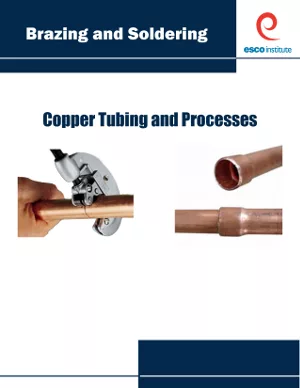
    Brazing & Soldering: Copper Tubing and Processes

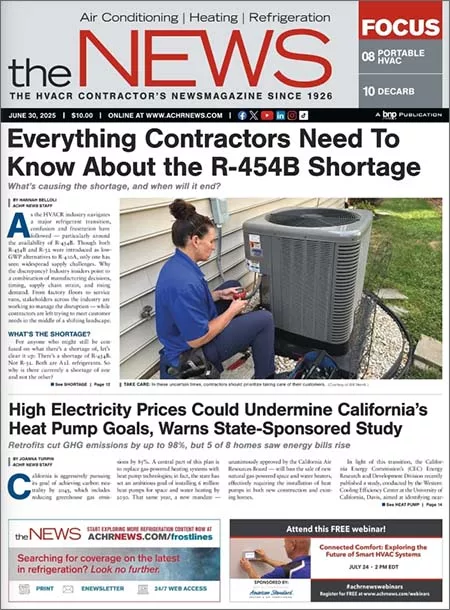
  • The ACHR News - June 30, 2025

    ACHR NEWS June 30, 2025, Issue

See More Products

Related Directories

  • Copper Development Assn.-CDA

    Copper Development Association Inc. (CDA) is a U.S.-based, not-for-profit association of the global copper industry, committed to promoting the proper use of copper materials in sustainable, efficient applications.
×

Sign Up. Stay Informed.

The #1 trusted source for the HVACR industry since 1926

SUBSCRIBE
  • RESOURCES
    • Advertise
    • Contact Us
    • Advisory Board
    • Classifieds
    • Submit a Letter
    • Directories
    • Store
  • ACCOUNT CENTER
    • Create an Account
    • Start a Subscription
    • Manage My Account
    • Sign Up for Newsletters
    • Visit Customer Service
    • Update Preferences
  • SERVICES
    • Marketing Services
    • Reprints
    • Market Research
    • List Rental
    • Survey/Respondent Access
  • STAY CONNECTED
    • LinkedIn
    • Facebook
    • Instagram
    • YouTube
    • X (Twitter)
  • PRIVACY
    • PRIVACY POLICY
    • TERMS & CONDITIONS
    • DO NOT SELL MY PERSONAL INFORMATION
    • PRIVACY REQUEST
    • ACCESSIBILITY

Copyright ©2026. All Rights Reserved BNP Media, Inc. and BNP Media II, LLC.

Design, CMS, Hosting & Web Development :: ePublishing