ACHR News
search
Ask ACHR NEWS AI
cart
facebook twitter instagram linkedin youtube
  • Sign In
  • Subscribe
  • Sign Out
  • My Account
ACHR News
  • NEWS
    • Breaking News
    • New HVAC Products
    • Featured Products
    • Manufacturer Reports
    • HVAC Data
    • Legislation
    • ACHR NEWS Centennial
  • RESIDENTIAL
    • Air Conditioners
    • Furnaces
    • Residential Heat Pumps
    • Ductless
    • Residential IAQ
    • Testing, Monitoring, Tools
    • Components & Accessories
  • COMMERCIAL
    • Air Handlers
    • Rooftop Units
    • Chillers and Cooling Towers
    • Commercial Heat Pumps
    • Boilers and Hydronics
    • VRF/Ductless
    • Commercial IAQ
  • REFRIGERATION
    • Refrigerants
    • Refrigerant Regulations
    • Leak Management
  • CONTRACTOR PRO
    • Geothermal
    • Homeowner Study
    • VRF and VRV Ductless
    • Unitary Trends
  • EDUCATION
    • Training and Education
    • Business Management
    • Service and Maintenance
    • Continuing Education
    • Market Research >
      • HVAC Brand Awareness Report
      • VRV, VRF, VRVZ Report
      • Unitary Trends Report
      • Water Heat Professionals Report
    • Webinars
    • Sponsor Insights
    • eProducts Info
    • White Papers
  • EVENTS
    • HVAC Contractor Forum
    • Industry Events and Webinars
  • MEDIA
    • Videos
    • AHR Expo 2025 Videos
    • Podcasts >
      • ACHR News Podcast
      • HARDI Podcasts
      • AHR Expo Podcasts
      • ACCA Podcasts
    • Interactive Spotlights
    • Quizzes
    • eBooks
    • HVAC Talkback
  • HVAC GROUP
    • ACHR NEWS >
      • Current Issue
      • Digital Edition
      • Subscribe
    • Distribution Trends
    • SNIPS NEWS >
      • Join SNIPS NEWS
    • Engineered Systems News >
      • Join ES News
    • HVACR Directory
    • Contests
    • Newsletters
    • Contact
    • Advertise
    • My Account

Twelve Tips for Better Lineset Flushing

By Ross Soyka
May 17, 2010
Using Qwik System Flush by Mainstream Engineering to clean out a system.


“Do a job right the first time or don’t do it at all.” There is no better adage for flushing lineset systems. Flushing linesets is a preventive measure taken against possible contamination after R-22 to R-410A conversions and acid burnouts. Replacing linesets is, of course, the preferred method of preventing side effects of residual contamination, but at times a full replacement may not be practical or affordable, such as when linesets are under concrete or recessed in walls. Therefore, technicians may have no choice but to clean the linesets.

Given the phaseout of R-22, R-22-to-R-410A conversions represent the bulk of flushing projects today. Not every technician may know the proper techniques. Proper flushing techniques are also needed to flush and clean linesets following a system burnout.

12 FLUSHING TIPS

The following 12 tips, if followed properly, create a foolproof lineset flushing sequence:

1. Wear safety gear. All flushing agents have some degree of toxicity. Service technicians must wear gloves, safety glasses, and any other safety gear to minimize exposure.

2. Purge with nitrogen first. Purging loose debris first with nitrogen allows the flushing agent to attack contaminants that adhere to the inner walls of the linesets. A good nitrogen regulator should enable the technician to achieve the recommended 120 psi. Oscillating the purge may also enable more contaminant to be dislodged.

3. Have enough flushing agent available. Starting and stopping the flushing process because of a shortage of flushing agent will probably require more flushing agent in the long run than the amount originally required by the job.

A good rule of thumb is one 2-pound canister of flush for a 7- to 10-ton refrigeration system. Extremely contaminated lines may need more than 2 pounds of flush. Since most flushing agent brands are sold in either 1- or 2-pound canisters (with the latter a better price value), it’s more economical to flush a 5-ton system with one-half of a 2-pound canister.
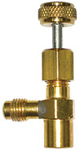
Most flushing agent brands require an access valve, which is an easy item to forget at the wholesaler, especially for first-time users.

4. Remove obstacles. Remove any expansion valves, filter driers and other obstacles.

5. Cut up linesets of 50 feet or longer. A flushing agent works best and has more flushing pressure in shorter runs, or segment lengths. Therefore, lengths of 50, 75, or 100 feet or longer should be cut, flushed in sections, then soldered back together.

6. Restrict the opening. Crimping the opposite end of the lineset will induce more pressure within the lineset and help dislodge additional contaminants.

7. Collect the debris. Use a bucket at the receiving end to catch used flush. All flushing agents have some degree of toxicity, requiring the products to be disposed of according to the Material Safety Data Sheet (MSDS).

Biodegradable flushes require the same disposal methods as used refrigeration oil. However, nonbiodegradable or more-toxic flushing agent brands may require disposal under the same guidance and expense as hazardous waste, which likely requires a hazmat company.

8. Flush in to out, high to low. Always flush from inside of the mechanical room to outdoors to prevent contamination of occupied spaces. However, in cases where the mechanical room is lower than the exterior lineset terminating area, flush from the outside to inside, covering the lineset and bucket area with a towel to minimize splattering. Cover the floor of the mechanical room with a tarp.
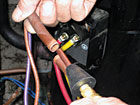
For the best pressure, brazing a flare tool onto the cut lineset is best, but a good substitute is a conical rubber tool that has a flare fitting connected to a small-diameter copper tube inserted into the lineset. Holding the rubber edge against the cut lineset opening gives a tight fit to prevent spillage.

9. Remember the access valve. Many technicians, especially first-time users, might forget that an access valve/charging hose or injection kit (depending upon the brand) is needed to introduce the flush into the lineset. A good wholesale customer service representative should suggest that these necessary items accompany the purchase of any pressurized, sealed flushing agent. Nonpressurized flushing agents should be avoided; their contents can introduce moisture to the linesets.

All flushes are blends of many materials. Oxygen can be introduced into an unpressurized container and break down the effectiveness of these flushes.

10. Solder a flare fitting onto the lineset. Several methods can be used to connect the flushing agent canister access valve/charging hose to the lineset. Some technicians use a conical rubber piece with a connection fitting. However, the best method to get maximum pressure is soldering a 1/4-inch flare fitting onto the end of the lineset.

11. Flush until clear. Don’t stop flushing until the terminating liquid in the bucket becomes clear and particulate-free. Near the end of the flushing procedure, replace your bucket containing the dirty flushing agent with a clean bucket so you can determine when the flushing agent is clear.

12. Conclude with a nitrogen purge. Soon after flushing, finish the cleaning by purging the lineset again with nitrogen before the flushing agent evaporates. Most flushing agents can evaporate in anywhere from 10 to 15 minutes.

Publication date: 05/17/2010

Share This Story

Looking for a reprint of this article?
From high-res PDFs to custom plaques, order your copy today!


Ross Soyka is the director of marketing for the QwikProducts Division of Mainstream Engineering, Rockledge, Fla.; www.qwik.com. Upon request, Soyka presents flushing practices and other refrigeration service procedures at trade association meetings and wholesale-distributor seminars. He can be reached at rsoyka@mainstream-engr.com or 321-631-3550.

Recommended Content

JOIN TODAY
To unlock your recommendations.

Already have an account? Sign In

  • HVAC-enrollment

    The Trades Are Back: HVACR Programs See Nearly 30% Enrollment Spike

    A new wave of future technicians is entering the pipeline.  
    Training and Education
    By: Matt Jachman
  • 2025 Top 40 Under 40

    2025 Top 40 Under 40 HVACR Professionals List

    The 11th annual Top 40 Under 40 list highlights those...
    HVAC Light Commercial Market
    By: Hannah Belloli-Oster
  • LG Ductless Mini-Split Systems

    The 9 Types of Heat Pumps

    As the U.S. moves toward electrification, heat pumps are...
    HVAC Commercial Market
    By: Joanna R. Turpin
Subscription Center
  • Create an Account
  • Start a Subscription
  • Manage My Account
  • Sign Up for Newsletters
  • Visit Customer Service
  • Update Preferences

More Videos

Sponsored Content

Sponsored Content is a special paid section where industry companies provide high quality, objective, non-commercial content around topics of interest to The News audience. All Sponsored Content is supplied by the advertising company and any opinions expressed in this article are those of the author and not necessarily reflect the views of The News or its parent company, BNP Media. Interested in participating in our Sponsored Content section? Contact your local rep!

close
  • Piggy Bank
    Sponsored byWatercress Financial

    Energy Prices, Inflation, and HVAC: What Today’s Homeowners Care About

  • Refrigerated Food
    Sponsored bySolstice Advanced Materials

    R-455A Refrigeration: A Cold Storage Solution for the Future

  • Airex Rooftop Units
    Sponsored byAirex Manufacturing Inc

    Consolidating Roof Penetrations: A Growing Trend in Multifamily HVAC Design

Popular Stories

Refrigerants-and-gauge.jpg

HVAC Industry Warns of Counterfeit Refrigerants Entering U.S. Supply Chain

U.S. Supreme Court building

95% Furnace Efficiency Rule to Get New Hearing

Midea-training.jpg

HVAC Workforce Crisis Expands Beyond Technicians to Instructor Shortages

Data_Center_facility.jpg

HVAC Manufacturers Respond to Growing Data Center Backlash

HVAC Minute retail refrigeration system

EPA Final Rule’s Impact on R-410A Deadlines

View The ACHR NEWS
Centennial Anniversary Timeline

The ACHR News Timeline Chart
Submit a Letter
Submit a letter to our editors.

Events

November 6, 2025

Next-Gen Data Center Cooling: HVAC Innovation and Real-World Solutions

On Demand As AI workloads and high-density computing push traditional cooling methods to their limits, the data center industry is accelerating the adoption of next-generation HVAC technologies.

June 23, 2026

HVAC Duct Sealing Mastics: Why Selection Matters

In this webinar we will detail what HVAC material buyers and technicians need to know when selecting duct mastics, including matching mastic to substrate, alternatives to liquid mastic, and where UL 181 Listings fit into real world installations.

View All Submit An Event

Poll

Summer Staff

Are you fully staffed for the summer season?
View Results Poll Archive

Products

BNI Mechanical/Electrical Square Foot Costbook, 2026 Edition

BNI Mechanical/Electrical Square Foot Costbook, 2026 Edition

See More Products
HVAC Duct Sealing Mastics: Why Selection Matters - Free Webinar - 6/23/2026

Related Articles

  • Combustion Analyzers

    Tips for Residential Heating Combustion Analysis

    See More
  • Hoses for HVAC

    Tips for Taking Care of Your Hoses

    See More
  • Bring Fun Back into Your Call Center for Better Results

    See More

Related Products

See More Products
  • Troubleshooting Tips for Servicing Refrigeration Systems

  • Green Tips for Building Maintenance Engineers

  • Top 100 HVAC/R Tips

See More Products
×

Sign Up. Stay Informed.

The #1 trusted source for the HVACR industry since 1926

SUBSCRIBE
  • RESOURCES
    • Advertise
    • Contact Us
    • Advisory Board
    • Classifieds
    • Submit a Letter
    • Directories
    • Store
  • ACCOUNT CENTER
    • Create an Account
    • Start a Subscription
    • Manage My Account
    • Sign Up for Newsletters
    • Visit Customer Service
    • Update Preferences
  • SERVICES
    • Marketing Services
    • Reprints
    • Market Research
    • List Rental
    • Survey/Respondent Access
  • STAY CONNECTED
    • LinkedIn
    • Facebook
    • Instagram
    • YouTube
    • X (Twitter)
  • PRIVACY
    • PRIVACY POLICY
    • TERMS & CONDITIONS
    • DO NOT SELL MY PERSONAL INFORMATION
    • PRIVACY REQUEST
    • ACCESSIBILITY

Copyright ©2026. All Rights Reserved BNP Media, Inc. and BNP Media II, LLC.

Design, CMS, Hosting & Web Development :: ePublishing