Start-up Inspections Pay Off
After years of being a service technician - slinging ladders, dragging tools across attics and through crawlspaces, standing in all sorts of weather on rooftops - I can now leave the service work to one of the younger techs with better knees, and concentrate on my primary job as company start-up man.
After new equipment is installed, I make sure the system is operating as efficiently as designed. I count the parts and pieces used on the installation in order to accurately track costs, make sure the customer understands the controls and operation, and pick up the final payment.
This has gone a long way in reducing the number of warranty performance complaints, improving our pricing structures, almost eliminating overdue account receivables, and enhancing our reputation.
Additionally, we installed a two-stage condensing unit, evaporator, heat-recovery ventilator, humidifier, and state-of- the-art air purifier.
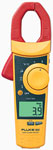
Today, I’m onsite to make sure the systems we installed are performing at peak efficiency - and looking forward to trying out my new HVAC clamp meter (the Fluke 902). I’ve always enjoyed keeping pace with the latest technology in multimeters and currently use this model, with its several temperature accessories and an amp clamp transducer, for times when I want true-rms amp readings.
Features like true-rms ac volts and amps, dc volts, microamps, temperature, capacitance, ohms and continuity beeper, it could become my everyday meter but we’ll see - I’m pretty attached to my current everyday meter.
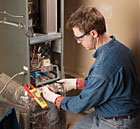
I measure and record externals first: gas pipe sizing, vent size and equivalent length, electrical wiring (including good quality ground from the furnace to the service panel).
I’m anxious to put my new clamp meter through its paces, so I start by checking the capacitor on the combustion air blower: 7.2 microfarads (MFD). It’s within 10 percent of its 7.5-MFD rating, so it’s fine. I measure and record 123 V to the furnace and 28 V on the transformer secondary. I connect my manometers to the inlet and manifold side of the gas valve. I check the static gas inlet pressure and record 6.5 in water column (wc). I’ll watch for a pressure drop when the gas valve opens.
Electronics can perform erratically, or not at all, if there isn’t a good ground path back to the source. To check for adequate ground, I set the clamp meter for volts ac and measure from cabinet ground to the line voltage neutral connection on the ignition control. With nothing on the furnace operating, this value should be less than 2 V; otherwise the ground circuit will need to be improved. I measure 0.4 V, so it’s OK.
Now it’s time to see some operating values. I put the zone panel in central mode and call for maximum system airflow. My incline manometer shows 0.35 in wc external static pressure with a dry evaporator. I attribute the reasonable static pressure to the duct improvements we made. I check the blower motor amp draw. The manufacturer of the electronically commutated motor specifies that amperage must be taken with a true-rms meter. My new clamp meter fits that specification, and measures 5.1 A on a motor rated at 7.7 A full load.
Out of curiosity, I remove the blower door panel and watch my amps drop to 4.8. If this had been a permanent split capacitor motor, I would have seen an increase in amps, but these variable-speed motors only use as much torque and rpm as they need to achieve required airflow, so less duct restriction means lower rpm at less torque, thus less amperage.
I set my clamp meter to volts dc and check the variable voltage demand from the zone panel to the furnace. A reading of 0-22 vdc would operate the blower proportionally between its factory default minimum airflow and the field-selected maximum flow. I read 22 vdc; the motor is being commanded to the maximum airflow selected for this system based on cooling capacity (0 vdc would command the blower to its minimum flow).
I remove the call for full operating airflow, unplug the hot surface igniter, and measure 15 ohms through it. This particular igniter should be between 11 and 20 ohms, so it’s OK. I reconnect the igniter and establish a call for heating. I connect my clamp meter across the hot surface igniter leads to check igniter volts. This ignition control will reduce igniter voltage by 6 percent on each successive ignition trial until it reaches a no light voltage; then it steps voltage back up 6 percent and remains there for the next 255 heat cycles.
The life of the igniter is extended if it uses only the minimum voltage; higher voltage produces greater igniter temperature. The ignition control conditions the line voltage, which requires that it be measured with a true-rms meter. I measure 92 V as the igniter heats. If I had measured this with a standard averaging meter, my reading would have been deceptively low, probably around 50 V.
I record all of these values on my start-up form as I wait for the gas valve to open. When the gas valve opens, the gas inlet pressure barely changes, so the gas piping is sized correctly. I clock the gas meter at low fire and high fire and calculate the Btu input to be within 99 percent of the furnace rating on each stage. This is based on 1,070 Btu per cubic foot of gas.
If this had been in the next county where that utility supplies gas at 1,025 Btu per cubic foot, the input would have been about 95 percent of the furnace rating and I would have increased the manifold pressure from 3.5 to 3.7 in. wc on high fire, and from 1.7 to 1.8 in. wc on low fire. No gas meter calculation factors need to be applied; because the elevation here is about 500 feet, gas delivery pressure through the meter is less than 9 in. wc, and the meter is temperature compensated. I find the sidewall vent termination, check the vent temperature with the Type K bead thermocouple, and record that it is 105°F.
With my combustion analyzer, I find 7.3 percent CO2 and 10-ppm CO. Both of these values are well within the specifications supplied by the furnace manufacturer. Back inside, I record a return air temperature of 67° and a supply air temperature of 137° for a temperature rise of 70°. For temperatures within a duct, I prefer to use my 80PK-24 air temperature probe because it has a rigid wand and I can be certain of its placement within the duct.
In order to use the entire arsenal of Type K thermocouples that I have collected over the years, I purchased an 80AK thermocouple adapter that interfaces the standard Type K thermocouple mini-pin connector to the standard dual banana plug inputs found on digital multimeters and clamp meters, allowing me to use my pipe clamp probes, piercing probes, immersion probes, surface probes, and air probes.
Once these minimum values are reached, the furnace will no longer operate. By benchmarking the operating values, service techs can reference these new installation values and compare them to values read during maintenance checks to see if performance has degraded and whether action needs to be taken. Flame signal drop-out values and pressure differential make/break values are provided by the manufacturer, but without knowing the changes that may have occurred since installation, you can’t be sure what action, if any, needs to be taken.
I connect my clamp meter in series with the flame sensor lead, set the meter on microamps (mA), and record 0.8 mA. This is 0.64 mA above the published drop-out value of 0.16 mA. With direct-vent furnaces like this one, flame signals generally are not as likely to degrade as they do with furnaces that get their combustion air from within the structure. It all depends on contaminants that may or may not be in the combustion air supply.
Pressure differential created by the combustion air blower varies from installation to installation depending on vent diameter and equivalent length. These values need to be benchmarked at the time of installation so service techs on future visits know what is normal for this furnace in this house. The manufacturer just provides pressure switch make/break settings.
I tee into the pressure switch tubing with my incline manometer and measure pressure differentials of 0.9 in. wc on low fire and 1.5 on high fire. On future visits, service techs will know that the low-fire pressure differential should be 0.4 in. wc above the break setting, and the high-fire pressure differential should be 0.65 in. wc above the break setting.
On to the next job.
Publication date: 06/22/2009
After new equipment is installed, I make sure the system is operating as efficiently as designed. I count the parts and pieces used on the installation in order to accurately track costs, make sure the customer understands the controls and operation, and pick up the final payment.
This has gone a long way in reducing the number of warranty performance complaints, improving our pricing structures, almost eliminating overdue account receivables, and enhancing our reputation.
This HVAC clamp meter has several temperature accessories and an amp clamp transducer, for times when contractors and techs want true-rms amp readings.
CUSTOMER PROFILE
Take this job: a furnace replacement in a 25-year-old, two-story, colonial-style home. We replaced the natural-draft gas furnace with a two-stage, energy-efficient, direct-vent condensing natural gas furnace equipped with a variable-speed blower. We also added a zone control panel designed to operate with a variable-speed motor that supplies the correct air volumes to each zone (two zones each for the first and second stories of the house) without the need for a bypass damper.Additionally, we installed a two-stage condensing unit, evaporator, heat-recovery ventilator, humidifier, and state-of- the-art air purifier.
Today, I’m onsite to make sure the systems we installed are performing at peak efficiency - and looking forward to trying out my new HVAC clamp meter (the Fluke 902). I’ve always enjoyed keeping pace with the latest technology in multimeters and currently use this model, with its several temperature accessories and an amp clamp transducer, for times when I want true-rms amp readings.
Features like true-rms ac volts and amps, dc volts, microamps, temperature, capacitance, ohms and continuity beeper, it could become my everyday meter but we’ll see - I’m pretty attached to my current everyday meter.
Making sure the system is operating as efficiently as designed means counting the parts and pieces used on the installation in order to accurately track costs, testing operating parameters, and making sure the customer understands the controls and operation. It goes a long way in reducing the warranty performance complaints, improving pricing structures, and enhancing reputation.
SYSTEMS CHECK
When checking out the system, it makes sense to start in the basement with the furnace, so the house has more load by the time I’m ready for the air conditioner start-up. I’ll record all my readings on a start-up form, and leave a copy in the equipment document bin for the service technician to refer to during annual maintenance calls. The other copy will be filed with the job jacket at the office.I measure and record externals first: gas pipe sizing, vent size and equivalent length, electrical wiring (including good quality ground from the furnace to the service panel).
I’m anxious to put my new clamp meter through its paces, so I start by checking the capacitor on the combustion air blower: 7.2 microfarads (MFD). It’s within 10 percent of its 7.5-MFD rating, so it’s fine. I measure and record 123 V to the furnace and 28 V on the transformer secondary. I connect my manometers to the inlet and manifold side of the gas valve. I check the static gas inlet pressure and record 6.5 in water column (wc). I’ll watch for a pressure drop when the gas valve opens.
Electronics can perform erratically, or not at all, if there isn’t a good ground path back to the source. To check for adequate ground, I set the clamp meter for volts ac and measure from cabinet ground to the line voltage neutral connection on the ignition control. With nothing on the furnace operating, this value should be less than 2 V; otherwise the ground circuit will need to be improved. I measure 0.4 V, so it’s OK.
Now it’s time to see some operating values. I put the zone panel in central mode and call for maximum system airflow. My incline manometer shows 0.35 in wc external static pressure with a dry evaporator. I attribute the reasonable static pressure to the duct improvements we made. I check the blower motor amp draw. The manufacturer of the electronically commutated motor specifies that amperage must be taken with a true-rms meter. My new clamp meter fits that specification, and measures 5.1 A on a motor rated at 7.7 A full load.
Out of curiosity, I remove the blower door panel and watch my amps drop to 4.8. If this had been a permanent split capacitor motor, I would have seen an increase in amps, but these variable-speed motors only use as much torque and rpm as they need to achieve required airflow, so less duct restriction means lower rpm at less torque, thus less amperage.
I set my clamp meter to volts dc and check the variable voltage demand from the zone panel to the furnace. A reading of 0-22 vdc would operate the blower proportionally between its factory default minimum airflow and the field-selected maximum flow. I read 22 vdc; the motor is being commanded to the maximum airflow selected for this system based on cooling capacity (0 vdc would command the blower to its minimum flow).
I remove the call for full operating airflow, unplug the hot surface igniter, and measure 15 ohms through it. This particular igniter should be between 11 and 20 ohms, so it’s OK. I reconnect the igniter and establish a call for heating. I connect my clamp meter across the hot surface igniter leads to check igniter volts. This ignition control will reduce igniter voltage by 6 percent on each successive ignition trial until it reaches a no light voltage; then it steps voltage back up 6 percent and remains there for the next 255 heat cycles.
The life of the igniter is extended if it uses only the minimum voltage; higher voltage produces greater igniter temperature. The ignition control conditions the line voltage, which requires that it be measured with a true-rms meter. I measure 92 V as the igniter heats. If I had measured this with a standard averaging meter, my reading would have been deceptively low, probably around 50 V.
I record all of these values on my start-up form as I wait for the gas valve to open. When the gas valve opens, the gas inlet pressure barely changes, so the gas piping is sized correctly. I clock the gas meter at low fire and high fire and calculate the Btu input to be within 99 percent of the furnace rating on each stage. This is based on 1,070 Btu per cubic foot of gas.
If this had been in the next county where that utility supplies gas at 1,025 Btu per cubic foot, the input would have been about 95 percent of the furnace rating and I would have increased the manifold pressure from 3.5 to 3.7 in. wc on high fire, and from 1.7 to 1.8 in. wc on low fire. No gas meter calculation factors need to be applied; because the elevation here is about 500 feet, gas delivery pressure through the meter is less than 9 in. wc, and the meter is temperature compensated. I find the sidewall vent termination, check the vent temperature with the Type K bead thermocouple, and record that it is 105°F.
With my combustion analyzer, I find 7.3 percent CO2 and 10-ppm CO. Both of these values are well within the specifications supplied by the furnace manufacturer. Back inside, I record a return air temperature of 67° and a supply air temperature of 137° for a temperature rise of 70°. For temperatures within a duct, I prefer to use my 80PK-24 air temperature probe because it has a rigid wand and I can be certain of its placement within the duct.
In order to use the entire arsenal of Type K thermocouples that I have collected over the years, I purchased an 80AK thermocouple adapter that interfaces the standard Type K thermocouple mini-pin connector to the standard dual banana plug inputs found on digital multimeters and clamp meters, allowing me to use my pipe clamp probes, piercing probes, immersion probes, surface probes, and air probes.
BENCHMARKING
The next measurements I take are important benchmark tests because a definitive initial value is not specified: flame signal and combustion air blower/inducer pressure differential. Both of these are safety devices and have specified minimum values.Once these minimum values are reached, the furnace will no longer operate. By benchmarking the operating values, service techs can reference these new installation values and compare them to values read during maintenance checks to see if performance has degraded and whether action needs to be taken. Flame signal drop-out values and pressure differential make/break values are provided by the manufacturer, but without knowing the changes that may have occurred since installation, you can’t be sure what action, if any, needs to be taken.
I connect my clamp meter in series with the flame sensor lead, set the meter on microamps (mA), and record 0.8 mA. This is 0.64 mA above the published drop-out value of 0.16 mA. With direct-vent furnaces like this one, flame signals generally are not as likely to degrade as they do with furnaces that get their combustion air from within the structure. It all depends on contaminants that may or may not be in the combustion air supply.
Pressure differential created by the combustion air blower varies from installation to installation depending on vent diameter and equivalent length. These values need to be benchmarked at the time of installation so service techs on future visits know what is normal for this furnace in this house. The manufacturer just provides pressure switch make/break settings.
I tee into the pressure switch tubing with my incline manometer and measure pressure differentials of 0.9 in. wc on low fire and 1.5 on high fire. On future visits, service techs will know that the low-fire pressure differential should be 0.4 in. wc above the break setting, and the high-fire pressure differential should be 0.65 in. wc above the break setting.
On to the next job.
Publication date: 06/22/2009
Looking for a reprint of this article?
From high-res PDFs to custom plaques, order your copy today!


