All Applications Are Not the Same
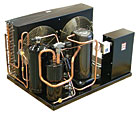
Cost savings can be realized by paying attention to the components that make up a system.
When our industry talks about commercial refrigeration systems, many different pictures come to mind. In some instances, residential air conditioning systems are used for walk-in cooler applications. For others, this may mean a large galvanized unit with a big, cast iron semi-hermetic compressor.
In reality, the visual picture is not as critical as what is inside of the unit and how those components meet the needs of the application. That is what really separates the satisfied return customer from the unhappy one.
The only constant in our business is that units will never be used as they were intended to be when the job was sold. Several factors come into play when we look at the day-to-day life of the commercial refrigeration unit. Cooler and freezer doors are left open for extended periods of time so the stock person does not get too cold. Glass doors wear out and do not get maintained properly. Coils accumulate more frost than intended. And so it goes.
Another key issue is the experience level of the service technician. It is becoming more difficult to find seasoned technicians that understand the system.
For these reasons, we need to look at the individual components that make up the system and some of the options that are available in the market today. These options add value by reducing or eliminating callbacks and provide a lower cost of ownership for the final customer through fewer service incidences and lower energy consumption.
ACCUMULATOR
The first component that tends to be viewed as an option is the accumulator. In reality, this is probably one of the most important options available in the market today. The accumulator is the last bastion of hope for the compressor during coil freeze-ups and over-charge conditions.This simple device gives a dedicated space for the liquid refrigerant that comes back through the suction line, and helps to minimize the liquid refrigerant in the compressor.
Some may argue that, with the right compressor, liquid is not an issue. But the justification for using an accumulator is simple. Liquid refrigerant dilutes the oil and reduces the oil film inside the compressor on key wear surfaces.
Ultimately, this will reduce the longevity of the compressor regardless of who the manufacturer is. All mechanisms are equally affected: be it scroll, semi-hermetic, reciprocating or rotary applications.
OIL SEPARATOR
The oil separator also serves a valuable purpose. It keeps the oil out of the evaporator and allows the evaporator to operate more efficiently. Oil inherently collects in the evaporator. To some extent, this will be inevitable due to the oil miscibility issue discussed above. The key is to keep this to a minimum, thereby making the transfer of heat from the refrigerated space into the refrigerant and, ultimately, to the outside space as efficient as possible. Oil separators can play a larger role than we think for applications such as long line sets, very low evaporator temperatures, and units that operate in low ambient conditions where mass flows can drop off dramatically.Oil separators ensure the system operates efficiently and that the oil required to protect the compressor wear-surfaces is actually in the compressor.
One further point about oil migration: Oil trapped in the evaporator accounts for a high percentage of replacement compressor failures. When the original compressor fails, the oil usually ends up in the evaporator. When the replacement compressor is installed and the system returns to normal operation, this oil returns to the compressor at a very high rate. Oil, being a liquid, is considered non-condensable. Compressors are designed to compress gas. As we introduce the non-condensable into the system, components undergo very high stress levels.
Often valves, cylinder heads, connecting rods, and wrist pins bear the brunt of this oil flood-back and the compressor fails.
HEAD PRESSURE CONTROL
A third component often overlooked is a head pressure control device or a head master. This critical, yet often misunderstood, device is relatively cheap insurance against operation in low ambient conditions. This simple device helps to maintain a reasonable head pressure in the system, which allows the expansion device to operate properly, maintaining system balance and helping to ensure that the liquid refrigerant stays in the proper locations. While this may seem trivial, these are basic elements that help to ensure proper operation throughout the entire operating range, year-round.HEATED RECEIVERS AND ACCUMULATORS
Another key area is heated receivers and accumulators, which serve a critical function in low ambient conditions. Liquid refrigerant will accumulate in the coldest spot in the system.In situations where the system will see low ambient operating conditions, the refrigerant will not always want to leave its nice, cold home and become an active participant in the heat transfer role. By applying a small amount of heat to these devices, we can help convince the liquid refrigerant that it should be out in the system working rather than staying home enjoying the nice, cold weather.
This same condition exists for the compressor during the off-cycle. Unfortunately, liquid refrigerant in the compressor also has the characteristic of diluting the oil and reducing the viscosity in the compressor sump or bottom.
When the system calls for cooling as a natural part of the next cycle, a rapid pressure change happens in the system. The liquid refrigerant begins to boil rapidly and quickly leaves the compressor, taking the oil along with it. In a normal system, it may take several minutes for this oil to return to the compressor.
During this time the compressor is operating with little or no oil. This creates a wear condition and will affect the longevity of the compressor. The more often this condition exists, the more wear the compressor will see. A crankcase heater is a relatively small and inexpensive addition to the system that should not be overlooked. In a commercial application it should be viewed as a necessary piece of standard equipment on any refrigeration unit you purchase.
While initial cost will always be a consideration in the buying process, we owe it to ourselves, as an industry to provide systems that are designed to provide the kind of reliability that all customers value highly. To provide the lowest cost of ownership, a system must have low maintenance costs and operate as efficiently as possible throughout the entire life cycle. By providing well-designed systems with the appropriate components for the application, we are creating satisfied customers who provide the desirable types of return business such as preventative maintenance, extended protection plans, and new equipment.
Publication date: 06/02/2008
Looking for a reprint of this article?
From high-res PDFs to custom plaques, order your copy today!