Why Does Training Fail?
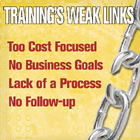
Have you been pleased with the results of the training your company has been paying for? Has it been as successful as you hoped? If not, consider these four reasons HVAC industry training often fails and how you may actually play a role.
Now I don’t want to start out with a whole lot of studies and statistics, but I think it is important to understand what’s at stake when we talk about why training fails. In 2001, Broad and Newstrom did extensive research on training and how well it is applied on the job. Their study showed roughly $50 billion is spent on training by businesses every year. They also found that, at best, 50 percent of the training employees received was still being applied a year later.
That same year Brinkerhoff and Apking concluded “if we define training impact as the transfer of knowledge and skills to on-the-job performance, research indicates that impact is realized only for about 15 percent of all training participants.” Ouch! Training your employees should be an essential component of your business but statistics like that can be a little intimidating. So what are the key contributors to the failure of training?
REASONS FOR FAILURE
Reason No. 1: Looking at training as a cost. Long ago and far away, I remember my first manager in the HVAC training field used a quote from Henry Ford on employee training. Ford was asked, “What if I train my people and they leave?” He matter-of-factly replied, “What if you don’t train them … and they stay?” That quote, delivered by Vickie LaPlant as she spoke about the value of training has stuck with me all these years. Since those early days, I have always advocated looking at training as an investment in a business, rather than simply a cost incurred.
But unfortunately, not every business receives a fair return on investment for the training they pay for. Why? What factors might keep you from maximizing your investment of valuable resources in training your employees? I say investment of resources because it is important to recognize from the outset that training requires more than just the dollars you spend for the training. You should also consider the cost of having your employees out of the field or out of the office for a period of time, the value of lost opportunity, and possibly expenses for travel and lodging. It can certainly add up. So the absolute last thing you want as a business owner or manager is to invest all of that into training your employees, and then not see any lasting positive results or benefits for the company.
Keep in mind the definitions of cost vs. investment. Cost is an amount you pay out, a price, loss, sacrifice, or penalty. Investment is what you spend or use for future advantage or benefit.
That is why the wrong attitude about training in your organization can inadvertently contribute to its failure. If you fail to see the potential for training to help make the company more successful and more profitable, you may create your own self-fulfilling prophecy.
Reason No. 2: Not training for the right reasons. It is also important to think about why you want to send an employee to training. Have you ever sent an employee to training just because your territory manager kept bugging you to send someone?
Too often we send employees to training just because it’s readily available, without regard to content, applicability, or developmental needs of the employee. We don’t always make the connection between our business needs and objectives, and the training we are paying for.
Even worse, we choose training because it is cheap. Admit it - you hate it when your customers make their choice on price alone. After all, you know you have better products, do better quality work, and have great service and therefore you are worth more. Consider the possibility that the same principle applies to the training you select.
The best reason to train is that you have identified a weakness in performance or skills that can be improved through training. Ideally, the end result of training is a change in the employee’s performance that improves productivity, quality, and profitability for the company. Using training for the wrong reasons, or to solve the wrong problem almost always ends in failure.
Reason No. 3: Viewing training as an event, not a process. In my experience, one of the primary reasons training fails is that it is often viewed as a one-time event rather than a process.
Have you ever sent an employee to a training class and when they return you say something like, “How was the training?” To which the employee replies, “Oh, it was pretty good.” So you then say something like, “Great then, now that you’re trained get back out there and start making us some money”. I know I’ve certainly been guilty of that.
Transferring knowledge and skills learned, into on-the-job performance, that’s the very least you should aim for when you do decide to invest in training, right?
Virtually all studies on human behavior tell us that people just don’t accept change easily, or change themselves easily. You can send your employees to the best training available with fantastic content and terrific instructors. Participants may love the program and come away motivated to make the changes they learned. And for a while afterwards, they try hard and do well.
But as the studies cited at the beginning of this article tell us, little of the training sticks long-term and people revert back to the old ways sooner or later. A lot of your money has been spent, but not much has changed. That is why taking a narrow view of training can doom your best intentions.
Reason No. 4: Lack of follow-up or reinforcement of training. There are two critical components to every learning experience. The first part involves mastering new skills and knowledge. The second part (and the one that pays off) involves making new skills and knowledge an integral part of day-to-day job performance.
Many training experts believe that the primary reason training fails isn’t the training itself, but what happens afterward. Closely related to reason No. 3, is this critical issue we need to look at more closely.
Zenger, Folkman, and Sherwin found in their 2005 study that the most commonly cited problem in employee learning and development was lack of serious post-training follow through. The things that contributed to this problem included lack of management understanding of or buy-in to the training, little or no coaching or encouragement of the employee after the training, and almost nonexistent meaningful evaluation of the training. These things combine to form a significant obstacle to training success.
In another lifetime, I was responsible for leading a team charged with developing and implementing a sales training program for a national HVAC sales force.
Our team did due diligence in finding a great strategic partner, developing an effective sales process, creating a dynamic customized training program, and rolling out the shiny new training all over the country. We were rewarded by great reviews from participants, and even better, by significant increases in closing rate, average ticket, and profitability from those we trained.
But as time passed, we began to notice those great numbers slowly decreasing until many (not all) of the sales team members were back to pre-training levels of performance. What happened?
It is so obvious to me today, but then we scratched our heads and wondered what the heck went wrong. After all, this was great training and everybody loved it. And it worked … for a while anyway. Well, long story short - the piece of the puzzle we missed was that we were training the sales force, but not their managers.
So when the employee returned to work they were all pumped up with new skills and enthusiasm, but their managers had no idea what they had learned or how to coach and support the new behaviors. They hadn’t bought into the value of the training. Even the most self-motivated person in the world can only maintain the higher level of performance for so long without reinforcement and follow-up.
Once we trained the managers in the new sales techniques, and showed them how to coach and do follow-up training with their employees, the level of improvement was sustained at a higher level, for a much longer period of time.
As a business owner or manager, or even as an employee, you establish and control the attitude about training in your company. By taking time to understand what training can and should do, and by setting the right tone, you create an atmosphere more conducive to success. You have the power to make sure training doesn’t fail, and that ensure your training investment pays the dividends you deserve.
Next topic: Tips for making sure training succeeds.
Publication Date: 08/20/2007
But unfortunately, not every business receives a fair return on investment for the training they pay for. Why? What factors might keep you from maximizing your investment of valuable resources in training your employees? I say investment of resources because it is important to recognize from the outset that training requires more than just the dollars you spend for the training. You should also consider the cost of having your employees out of the field or out of the office for a period of time, the value of lost opportunity, and possibly expenses for travel and lodging. It can certainly add up. So the absolute last thing you want as a business owner or manager is to invest all of that into training your employees, and then not see any lasting positive results or benefits for the company.
Keep in mind the definitions of cost vs. investment. Cost is an amount you pay out, a price, loss, sacrifice, or penalty. Investment is what you spend or use for future advantage or benefit.
That is why the wrong attitude about training in your organization can inadvertently contribute to its failure. If you fail to see the potential for training to help make the company more successful and more profitable, you may create your own self-fulfilling prophecy.
Reason No. 2: Not training for the right reasons. It is also important to think about why you want to send an employee to training. Have you ever sent an employee to training just because your territory manager kept bugging you to send someone?
Too often we send employees to training just because it’s readily available, without regard to content, applicability, or developmental needs of the employee. We don’t always make the connection between our business needs and objectives, and the training we are paying for.
Even worse, we choose training because it is cheap. Admit it - you hate it when your customers make their choice on price alone. After all, you know you have better products, do better quality work, and have great service and therefore you are worth more. Consider the possibility that the same principle applies to the training you select.
The best reason to train is that you have identified a weakness in performance or skills that can be improved through training. Ideally, the end result of training is a change in the employee’s performance that improves productivity, quality, and profitability for the company. Using training for the wrong reasons, or to solve the wrong problem almost always ends in failure.
Reason No. 3: Viewing training as an event, not a process. In my experience, one of the primary reasons training fails is that it is often viewed as a one-time event rather than a process.
Have you ever sent an employee to a training class and when they return you say something like, “How was the training?” To which the employee replies, “Oh, it was pretty good.” So you then say something like, “Great then, now that you’re trained get back out there and start making us some money”. I know I’ve certainly been guilty of that.
Transferring knowledge and skills learned, into on-the-job performance, that’s the very least you should aim for when you do decide to invest in training, right?
Virtually all studies on human behavior tell us that people just don’t accept change easily, or change themselves easily. You can send your employees to the best training available with fantastic content and terrific instructors. Participants may love the program and come away motivated to make the changes they learned. And for a while afterwards, they try hard and do well.
But as the studies cited at the beginning of this article tell us, little of the training sticks long-term and people revert back to the old ways sooner or later. A lot of your money has been spent, but not much has changed. That is why taking a narrow view of training can doom your best intentions.
Reason No. 4: Lack of follow-up or reinforcement of training. There are two critical components to every learning experience. The first part involves mastering new skills and knowledge. The second part (and the one that pays off) involves making new skills and knowledge an integral part of day-to-day job performance.
Many training experts believe that the primary reason training fails isn’t the training itself, but what happens afterward. Closely related to reason No. 3, is this critical issue we need to look at more closely.
Zenger, Folkman, and Sherwin found in their 2005 study that the most commonly cited problem in employee learning and development was lack of serious post-training follow through. The things that contributed to this problem included lack of management understanding of or buy-in to the training, little or no coaching or encouragement of the employee after the training, and almost nonexistent meaningful evaluation of the training. These things combine to form a significant obstacle to training success.
In another lifetime, I was responsible for leading a team charged with developing and implementing a sales training program for a national HVAC sales force.
Our team did due diligence in finding a great strategic partner, developing an effective sales process, creating a dynamic customized training program, and rolling out the shiny new training all over the country. We were rewarded by great reviews from participants, and even better, by significant increases in closing rate, average ticket, and profitability from those we trained.
But as time passed, we began to notice those great numbers slowly decreasing until many (not all) of the sales team members were back to pre-training levels of performance. What happened?
It is so obvious to me today, but then we scratched our heads and wondered what the heck went wrong. After all, this was great training and everybody loved it. And it worked … for a while anyway. Well, long story short - the piece of the puzzle we missed was that we were training the sales force, but not their managers.
So when the employee returned to work they were all pumped up with new skills and enthusiasm, but their managers had no idea what they had learned or how to coach and support the new behaviors. They hadn’t bought into the value of the training. Even the most self-motivated person in the world can only maintain the higher level of performance for so long without reinforcement and follow-up.
Once we trained the managers in the new sales techniques, and showed them how to coach and do follow-up training with their employees, the level of improvement was sustained at a higher level, for a much longer period of time.
As a business owner or manager, or even as an employee, you establish and control the attitude about training in your company. By taking time to understand what training can and should do, and by setting the right tone, you create an atmosphere more conducive to success. You have the power to make sure training doesn’t fail, and that ensure your training investment pays the dividends you deserve.
Next topic: Tips for making sure training succeeds.
Publication Date: 08/20/2007
Looking for a reprint of this article?
From high-res PDFs to custom plaques, order your copy today!