ACHR News
search
Ask ACHR NEWS AI
cart
facebook twitter instagram linkedin youtube
  • Sign In
  • Subscribe
  • Sign Out
  • My Account
ACHR News
  • NEWS
    • Breaking News
    • New HVAC Products
    • Featured Products
    • Manufacturer Reports
    • HVAC Data
    • Legislation
    • ACHR NEWS Centennial
  • RESIDENTIAL
    • Air Conditioners
    • Furnaces
    • Residential Heat Pumps
    • Ductless
    • Residential IAQ
    • Testing, Monitoring, Tools
    • Components & Accessories
  • COMMERCIAL
    • Air Handlers
    • Rooftop Units
    • Chillers and Cooling Towers
    • Commercial Heat Pumps
    • Boilers and Hydronics
    • VRF/Ductless
    • Commercial IAQ
  • REFRIGERATION
    • Refrigerants
    • Refrigerant Regulations
    • Leak Management
  • CONTRACTOR PRO
    • Geothermal
    • Homeowner Study
    • VRF and VRV Ductless
    • Unitary Trends
  • EDUCATION
    • Training and Education
    • Business Management
    • Service and Maintenance
    • Continuing Education
    • Market Research >
      • HVAC Brand Awareness Report
      • VRV, VRF, VRVZ Report
      • Unitary Trends Report
      • Water Heat Professionals Report
    • Webinars
    • Sponsor Insights
    • eProducts Info
    • White Papers
  • EVENTS
    • HVAC Contractor Forum
    • Industry Events and Webinars
  • MEDIA
    • Videos
    • AHR Expo 2025 Videos
    • Podcasts >
      • ACHR News Podcast
      • HARDI Podcasts
      • AHR Expo Podcasts
      • ACCA Podcasts
    • Interactive Spotlights
    • Quizzes
    • eBooks
    • HVAC Talkback
  • HVAC GROUP
    • ACHR NEWS >
      • Current Issue
      • Digital Edition
      • Subscribe
    • Distribution Trends
    • SNIPS NEWS >
      • Join SNIPS NEWS
    • Engineered Systems News >
      • Join ES News
    • HVACR Directory
    • Contests
    • Newsletters
    • Contact
    • Advertise
    • My Account

Low Ambient Head Pressure Controls
By John Tomczyk
May 7, 2007
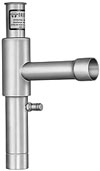
Figure 1: ‘Hold back’ valve at the outlet of the condenser.

This column deals with head pressure control valves that work in conjunction with one another in cold ambient conditions. They keep the proper condensing pressure at the metering device for proper feeding of the evaporator. My column in the June 4 issue of The NEWS will cover two other low ambient head pressure control valves that have charged domes but more or less serve the same purpose.

The solution to the low head pressure problem is to install a pressure actuated “hold back” valve at the outlet of the condenser (Figures 1 and 2). This valve will throttle shut when the condenser pressure reaches a preset minimum for low ambient conditions. This will allow liquid refrigerant in the condenser to be held back and actually flood portions of the condenser.

This partial flooding will cause some of the condenser to become inactive and to have a smaller internal volume.

Now de­superheating and condensation must take place in a smaller volume condenser. Condensing pressures will rise, thus giving sufficient liquid line pressures and pressure differences across the thermostatic expansion valve (TXV) for normal system operation in the colder ambient.

The valve (Figure 3) is referred to as an ORI (Open on Rise of Inlet) valve. It is an inlet pressure-regulating valve and responds to changes to inlet pressure (condensing pressure) only. A decrease in condensing pressure causes less pressure to act on the bottom of the seat disc. This action throttles the valve more in the closed position and starts to back up liquid refrigerant in the bottom of the condenser.

Soon the head pressure will start to rise from the reduced condenser internal volume. Any increase in inlet (condensing pressure) above the valve setting will tend to open the valve. The condensing pressure is opposed by adjustable spring force acting on top of the seat disc.

Figure 2: Schematic showing positions of head pressure control valves.

Either increasing or decreasing the tension of the spring with a screwdriver or Allen wrench can change the valve setting. Increasing the spring pressure by turning the fitting clockwise will increase the minimum opening pressure of the valve. The outlet pressure of the valve is cancelled out and has no bearing on valve movement.

This is because the outlet pressure is exerted on top of the bellows and on top of the seat disc simultaneously. Since the effective area of the bellows is equal to the area of the top of the seat disc, the pressures cancel one another and do not affect the valve movement (Figure 3). Only changes in condensing pressure can throttle the valve either opened or closed.

An ORI valve is usually used in conjunction with the ORD (Open on Rise of Differential) valve (Figures 4 and 5). The ORD valve is located between the discharge line and the receiver inlet (Figure 2). It responds to changes in pressure differences across the valve. The ORD valve is thus dependent on the ORI valve for its operation. The ORD valve will bypass hot compressor discharge gas from the compressor to the receiver inlet when it senses a preset determined pressure difference across the valve.

Figure 3: Cutaway of ORI valve.

As the ORI valve senses a drop in condenser pressure and starts to throttle shut, a pressure difference is created across the ORD valve. The pressure difference is created from the reduced flow to the receiver because of the throttling action of the ORI valve.

Once the ORI valve starts to throttle shut, the receiver is still supplying refrigerant to the TXV and its pressure will eventually drop. If the receiver pressure drops too low, its ability to keep feeding the liquid line and TXV’s liquid will diminish. Something has to keep receiver pressure up while the ORI valve is throttling liquid from the condenser. This is when the function of the ORD valve comes into play.

Figure 4: ORD valve.

When the ORD valve senses a factory preset pressure difference of 20 psid, it will start to open and bypass hot compressor discharge gas to the receiver’s inlet. If the pressure difference across the ORD valve ever reaches 30 psi, the valve will be fully open. The hot gas from the compressor that also flows through the ORD valve serves to heat up any cold liquid being throttled through the ORI valve at the receiver’s inlet. This hot gas entering the receiver will also increase the pressure of the receiver and allow it to deliver liquid to the liquid line and TXV when the ORI valve is throttling shut on the outlet of the condenser.

Figure 5: An ORI valve is usually used in conjunction with the ORD valve.

Both the ORI and ORD valve will automatically work in conjunction with one another to maintain proper receiver pressure, regardless of the outside ambient conditions. The ORD valve also acts as a check valve to prevent reverse flow from the receiver to the compressor’s discharge line during the off cycle.

Publication date: 05/07/2007

Share This Story

Looking for a reprint of this article?
From high-res PDFs to custom plaques, order your copy today!


John Tomczyk is HVACR professor emeritus, Ferris State University, Big Rapids, Michigan, and coauthor of Refrigeration & Air Conditioning Technology, published by Cengage Learning. Contact him at tomczykjohn@gmail.com.

Recommended Content

JOIN TODAY
To unlock your recommendations.

Already have an account? Sign In

  • HVAC-enrollment

    The Trades Are Back: HVACR Programs See Nearly 30% Enrollment Spike

    A new wave of future technicians is entering the pipeline.  
    News
    By: Matt Jachman
  • 2025 Top 40 Under 40

    2025 Top 40 Under 40 HVACR Professionals List

    The 11th annual Top 40 Under 40 list highlights those...
    News
    By: Hannah Belloli-Oster
  • LG Ductless Mini-Split Systems

    The 9 Types of Heat Pumps

    As the U.S. moves toward electrification, heat pumps are...
    Ground Source Heat Pumps
    By: Joanna R. Turpin
Subscription Center
  • Create an Account
  • Start a Subscription
  • Manage My Account
  • Sign Up for Newsletters
  • Visit Customer Service
  • Update Preferences

More Videos

Sponsored Content

Sponsored Content is a special paid section where industry companies provide high quality, objective, non-commercial content around topics of interest to The News audience. All Sponsored Content is supplied by the advertising company and any opinions expressed in this article are those of the author and not necessarily reflect the views of The News or its parent company, BNP Media. Interested in participating in our Sponsored Content section? Contact your local rep!

close
  • Piggy Bank
    Sponsored byWatercress Financial

    Energy Prices, Inflation, and HVAC: What Today’s Homeowners Care About

  • Refrigerated Food
    Sponsored bySolstice Advanced Materials

    R-455A Refrigeration: A Cold Storage Solution for the Future

  • Airex Rooftop Units
    Sponsored byAirex Manufacturing Inc

    Consolidating Roof Penetrations: A Growing Trend in Multifamily HVAC Design

Popular Stories

Outdoor-condensing-units.jpg

EPA Removes R-410A Installation Deadline

Trump-Section-232.jpg

Trump Reduces Section 232 Tariffs on HVAC Equipment to 15%

HVAC-Price-Increase-graphic

HVAC Price Increase List: June 2026

cooling-habits.jpg

50 Percent of Americans Have Skipped HVAC Maintenance

ACHR NEWS Editor Chris Gray Presenting HVAC Minute 5-18-2026

HVAC Manufacturers Fight Pricing Lawsuits

View The ACHR NEWS
Centennial Anniversary Timeline

The ACHR News Timeline Chart
Submit a Letter
Submit a letter to our editors.

Events

November 6, 2025

Next-Gen Data Center Cooling: HVAC Innovation and Real-World Solutions

On Demand As AI workloads and high-density computing push traditional cooling methods to their limits, the data center industry is accelerating the adoption of next-generation HVAC technologies.

June 9, 2026

Before You Go All In on AI: Set Up Your Business to Actually Win

In this webinar, we'll walk you through exactly what to get in place before you add AI to your business. You'll leave with a clear picture of where you stand today and a practical action plan to set yourself up for real results.

View All Submit An Event

Poll

EPA Decision

Are you happy the EPA decided contractors can continue to install R-410A equipment?
View Results Poll Archive

Products

BNI Mechanical/Electrical Square Foot Costbook, 2026 Edition

BNI Mechanical/Electrical Square Foot Costbook, 2026 Edition

See More Products
A2L Refrigerants - Free Webinar - May 21, 2026

Related Articles

  • The Professor: Low Ambient Controls Reduce Head Pressure

    See More
  • Tips On Servicing Head Pressure Controls

    See More
  • A Look At Head Pressure Controls

    See More

Related Products

See More Products
  • Manual Q.jpg

    Manual Q - Low Pressure, Low Velocity Duct System Design

  • low grade.png

    Low GWP Refrigerant Safety: Flammable & Mildly Flammable Refrigerants Manual

  • Manual LLH Cover_Final.jpg

    Manual LLH - 2019 (HVAC System Design for Low Load Homes)

See More Products

Events

View AllSubmit An Event
  • January 16, 2014

    AHRI Low-GWP AREP Conference

    Join AHRI in New York City before the ASHRAE Winter Conference to learn about the results of the AHRI Low-Global Warming Potential Alternative Refrigerants Evaluation Program (Low-GWP AREP).
View AllSubmit An Event

Related Directories

  • ICM Controls

    Solid state controls, time delays, anti-short cycle timers, head pressure controls, motor-speed controls, phase monitors, single and 3-phase voltage monitors, furnace controls and ignition controls, electric heat boards, fan blower controls, lead-lag controls, thermostats.
×

Sign Up. Stay Informed.

The #1 trusted source for the HVACR industry since 1926

SUBSCRIBE
  • RESOURCES
    • Advertise
    • Contact Us
    • Advisory Board
    • Classifieds
    • Submit a Letter
    • Directories
    • Store
  • ACCOUNT CENTER
    • Create an Account
    • Start a Subscription
    • Manage My Account
    • Sign Up for Newsletters
    • Visit Customer Service
    • Update Preferences
  • SERVICES
    • Marketing Services
    • Reprints
    • Market Research
    • List Rental
    • Survey/Respondent Access
  • STAY CONNECTED
    • LinkedIn
    • Facebook
    • Instagram
    • YouTube
    • X (Twitter)
  • PRIVACY
    • PRIVACY POLICY
    • TERMS & CONDITIONS
    • DO NOT SELL MY PERSONAL INFORMATION
    • PRIVACY REQUEST
    • ACCESSIBILITY

Copyright ©2026. All Rights Reserved BNP Media, Inc. and BNP Media II, LLC.

Design, CMS, Hosting & Web Development :: ePublishing