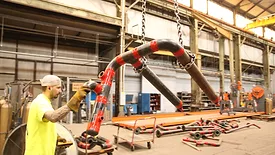
Pipefitters, welders, and electricians face uphill battles and legal hurdles when breaking ties with unions. Recent cases highlight how complex, costly, and drawn-out “leaving the union” can be for sheet metal and HVAC pros.
SMART criticizes the recent dismissals of National Labor Relations Board (NLRB) General Counsel Jennifer Abruzzo and Board Member Gwynne Wilcox by President Donald Trump.
President Donald J. Trump has named board member Marvin E. Kaplan acting chairman of the National Labor Relations Board.
“The President’s announcement is an honor and privilege, and I look forward to serving as acting chairman of the National Labor Relations Board.,” Kaplan said. “I remain committed to working with my colleagues to achieve the important goal of issuing timely decisions that apply the National Labor Relations Act in a way that protects the rights of employees, employers, and labor organizations throughout the country.”
For employers with a union workforce — or a workforce that could unionize — complying with the National Labor Relations Act is an ongoing headache. That headache will only intensify thanks to the National Labor Relations Board (NLRB), the federal agency responsible for regulating labor law.
Election years often bring a flurry of legislative and regulatory activity. This first of a two-part series will describe some key changes in federal regulations that may make it harder, more costly, and less efficient for employers to run their organizations.
The NLRB has regularly ruled that employees have the right to complain and even insult their employers online, as long as doing so constitutes “protected activity.” When developing policies around how workers can talk about their workplaces on social media, companies must be careful that they don’t violate federal laws.
For companies that want to create a safe, harassment-free, professional work environment, the NLRB’s ruling in the Boch case presents challenges to achieving those goals. In order to avoid problems, employers need to understand the issues involved and carefully craft their dress code policies.
On Aug. 27, 2015, the National Labor Relations Board (NLRB), the federal agency responsible for regulating labor law, issued a controversial landmark decision, which overturned 30 years of established precedent and has the potential to upend traditional labor relations.
A few recent decisions by the National Labor Relations Board (NLRB) have sparked significant concern among employers and merit consideration by any company, whether unionized or not.
With the Supreme Court on one side of the issue and the NLRB firmly on the other, it is important for employers to fully understand the pros and cons of arbitration agreements with class action waivers, especially in an era of increased employment-related litigation.