All-Star Awards 2026: Commercial Contractor
From Marine Boilers to Mission-Critical Service
July 27, 2026
All-Star Awards 2026: Commercial Contractor
From Marine Boilers to Mission-Critical Service
July 27, 2026FAMILY RUN FOR A CENTURY: Tate Engineering’s Chairman of the Advisory Board Dan Baker and CEO Alec Baker.

Over the last century, Maryland-based Tate Engineering has evolved from a marine boiler supplier into a service-driven mechanical partner generating revenue from maintenance agreements, controls, rentals, monitoring, and mission-critical support.
Tate currently employs 146 people and has added 15 associates since January across its seven Maryland and Virginia locations.
President and CEO
Tate Engineering
A strong family culture and highly tenured workforce have created a consistency its customers recognize and value, while ongoing recruiting and training efforts are helping prepare the next generation of technicians and industry leaders.
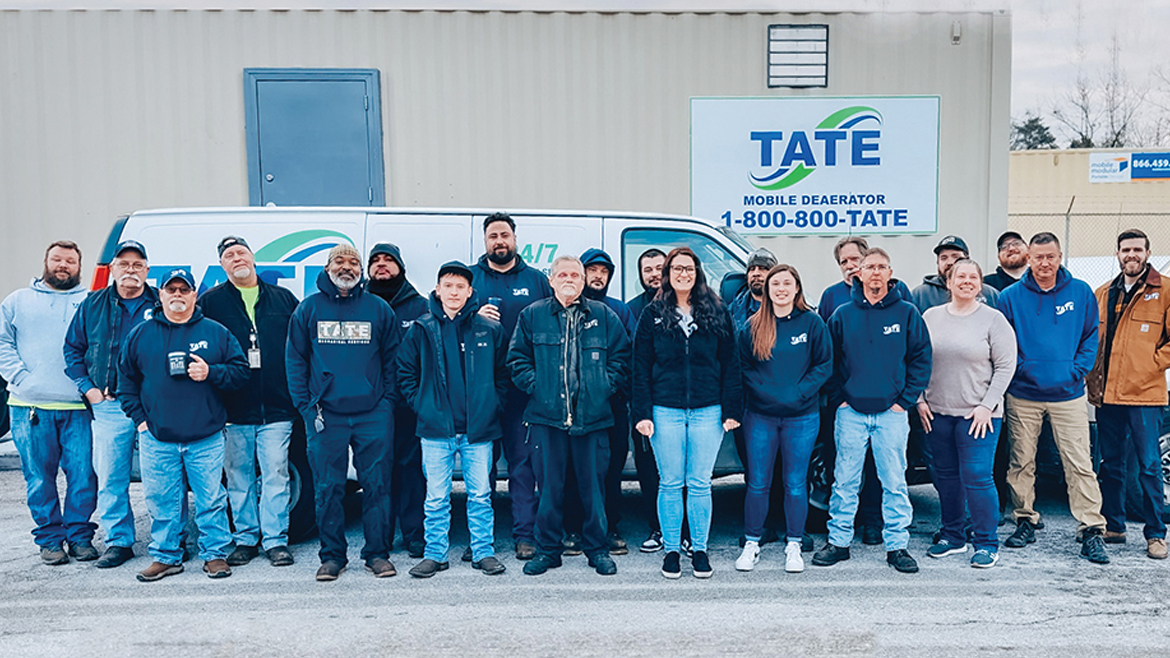
TEAM EFFORT: The team at Tate Engineering, a family-owned industrial service company headquartered in Baltimore, Maryland. Photo courtesy of Tate Engineering
The company’s evolution mirrors broader trends reshaping commercial HVAC, including the industry’s shift toward recurring revenue and expanded service offerings.
Those qualities helped earn Tate Engineering recognition as the ACHR NEWS 2026 Commercial Contractor of the Year.
A Legacy of Family Ownership
Over the last century, the company has transformed from its origins.
Tate Engineering was founded in 1924 by William J. Tate after he came to Baltimore from Belfast, Ireland. The company originally focused on marine boiler replacement parts and service for Baltimore’s marine industry.
Over time, Tate expanded beyond marine work into industrial equipment, boiler service, mechanical systems, and field support. As customer needs changed, Tate continued to evolve by adding new services, technical capabilities, and regional support.
Looking for quick answers on air conditioning, heating and refrigeration topics? Try Ask ACHR NEWS, our new smart AI search tool. Ask ACHR NEWS
Looking for a reprint of this article?
From high-res PDFs to custom plaques, order your copy today!
President and CEO Alec Baker has led the fourth-generation family-owned business since 2018.
Baker said the company stands apart through what he calls a “rare combination” of legacy, technical depth, and a willingness to evolve.
“For more than 100 years, the company has remained family-led, building long-term relationships with customers and a culture rooted in accountability, trust, and doing the job right the first time. That foundation shows up in the work today,” Baker said.
Honoring the company’s history while embracing change has allowed Tate to maintain its identity while continuously reinventing the business.
“For us, our history has always been a foundation, not a limitation,” Baker said. “The equipment has changed. The industries we serve have changed. The technology has changed. What hasn’t changed is our commitment to helping customers keep critical systems operating safely and reliably.”
That mindset is especially important in the environments Tate supports, where a single failure can affect operations, safety, and costs simultaneously, Baker said.
The company today serves health care systems, data centers, industrial facilities, and large commercial properties throughout the Mid-Atlantic, and has seen approximately 16% growth in recent years.
Changing Customer Needs Create Opportunity
Changing customer and market demands have propelled Tate Engineering far beyond its roots.
The company first expanded into commercial and industrial boiler systems before broadening into HVAC, compressed air, controls, rentals, and other mechanical services. A second turning point came when Tate shifted from selling equipment to emphasizing preventive maintenance, emergency response, rentals, and technical expertise, Baker said.
More recently, the company has increased its focus on mission-critical sectors, including healthcare, manufacturing, and data centers, where downtime carries enormous consequences.
“In those settings, the focus shifts from reacting to problems to preventing them altogether, with an emphasis on proactive maintenance, system reliability, and readiness,” Baker said.
Rather than competing on price alone, he said, Tate focuses on long-term performance and consistency.
“Customers aren’t juggling multiple vendors or waiting for something to break,” Baker said. “They are working with a partner who understands the full mechanical room and keeps it running as it should.”
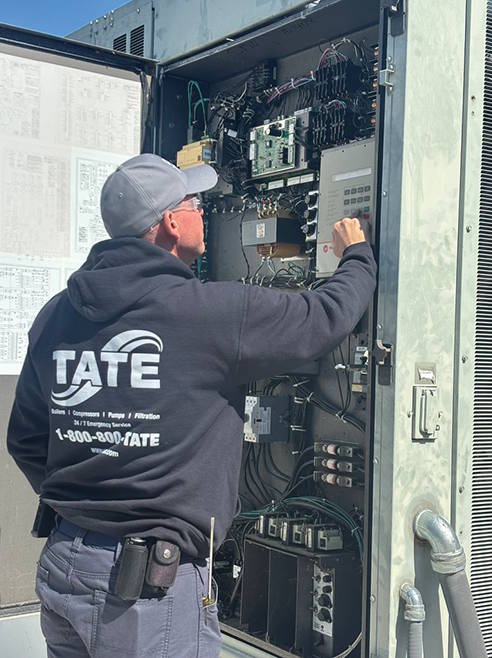
COMMUNITY TIES: For more than 100 years, the company has remained family-led, building long-term relationships with customers. Photo courtesy of Tate Engineering
Despite those changes, Baker said the philosophy behind each expansion remained constant.
“Each step was driven by the same philosophy: understand where our customers are headed and make sure we're ready to support them,” he said.
That adaptability while staying focused on technical expertise and customer relationships has been key to the company’s longevity, he said.
Tate has also expanded alongside changing market demands, offering energy-efficient HVAC equipment — including chillers, rooftop units, cooling towers, and air handlers — to a broadening customer base in power generation, utilities, food and beverage, water and wastewater, agriculture, and military sectors.
“Our ability to embrace change while staying focused on people, customer relationships, and technical excellence has allowed us to evolve for more than 100 years without losing our identity,” Baker said.
It’s About the People
If there is a common thread running through Tate Engineering’s history, Baker said, it is investment in people.
“We’ve never forgotten the values that got us here,” he said. “Accountability, teamwork, integrity, and growth continue to guide how we operate today.”
Baker said investing in people has had the greatest impact on the company’s long-term success and helped build a strong service organization that supports customers today.
“Equipment and technology will continue to evolve, but great people and strong customer relationships are what create lasting value,” Baker said.
“We’ve spent decades building a team of talented associates, developing leaders, and creating a culture where people are empowered to make decisions and take ownership.”
That investment enabled Tate to transition from an equipment-focused company to a service-driven organization while building deeper relationships with customers and adapting to new opportunities.
“When I look at what has made Tate successful, it always comes back to the people,” Baker said. “Our associates, leadership team, and customers have been the foundation of everything we’ve accomplished.”
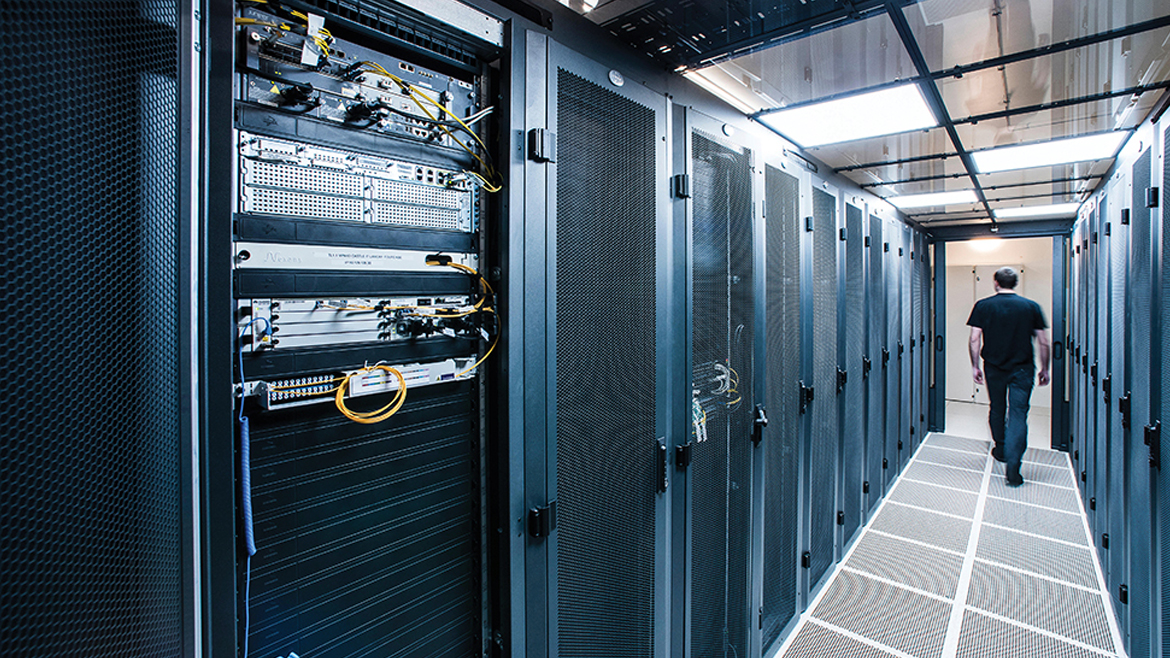
EVER EVOLVING: Tate has evolved into a mission-critical service partner supporting environments including healthcare systems and data centers. Photo courtesy of Tate Engineering
Workforce First for the Second Century
As Tate Engineering enters its second century, Baker sees workforce development as the industry’s most pressing challenge.
“We’ve increased our focus on recruiting, apprenticeship programs, technical training, mentorship, and leadership development,” he said. “We want people to see that this industry offers rewarding long-term careers with opportunities for growth and advancement.”
Baker said attracting the next generation of skilled professionals requires more than competitive pay.
Today’s workforce expects development opportunities, purpose, and a strong culture, prompting Tate to invest heavily in training and employee growth, he said. At the same time, its customers are operating increasingly complex facilities, creating growing demand for service providers with expertise in health care, manufacturing, mission-critical environments, and data centers.
Baker said technologies such as automation, predictive maintenance, artificial intelligence, and data analytics will continue to transform how facilities are maintained, but skilled technicians will remain central to keeping operations running reliably.
Tate uses technology both internally and in the field to improve service delivery, system reliability, and customer visibility.
This includes ServiceMax for dispatching, technician scheduling, work orders, and real-time service coordination, along with Salesforce for CRM, account history, opportunity tracking, and sales/service communication.
“In the field, our teams work with building automation systems, boiler and burner controls, linkageless controls, oxygen trim systems, VFDs, remote monitoring where applicable, and digital service documentation,” Baker said.
Toward that end, training and safety remain priorities.
“Our EMR for 2026 dropped again to a new company low of 0.65, reflecting Tate’s continued focus on safety, training, accountability, and continuous improvement,” Baker said.
The company’s safety program includes OSHA-aligned training, Stop Work Authority, Job Hazard Analysis, LOTO, HAZCOM, fall protection, confined space entry, electrical safety, arc flash, driver safety, CPR, First Aid, and heat-and-cold stress awareness.
“Our strategy is simple,” Baker said. “Invest in great people, give them the tools and training they need to succeed, and they'll help solve the complex challenges our customers face.”
The formula that sustained Tate Engineering for its first century — creating a skilled and valued workforce, embracing change, and focusing on customer relationships — is the same one Baker believes will guide the company through its second.
“As we begin our second century, our focus remains the same,” Baker said. “Invest in our people, take care of our customers, and continue evolving to meet the needs of the industries we serve.”
Watch the interview with the winners.
The All-Star Awards




.webp?height=300&t=1783699250&width=300 "LA Heating_Craning moving new hvac condensing unit onto roof (2).jpg")