Contractor Pro Geothermal Series
Digging into Geothermal: The New Underground Frontier
April 21, 2025
Contractor Pro Geothermal Series
Digging into Geothermal: The New Underground Frontier
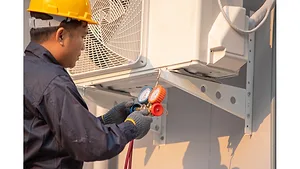
April 21, 2025SOLID FOOTING: Geothermal can provide the sustainability and energy efficiency the market is hungry for, and there are plenty of options out there to help offset any cost barriers. (Courtesy of Getty Images / KangeStudio)


Geothermal checks almost all of the boxes — it’s sustainable, utilizes American soil, and there are plenty of tax incentives and rebates to support it. But despite all of its promises, it’s not enjoying the widespread adoption that it should.
Surveying 129 residential contractors, 128 commercial contractors, 124 homeowners, and 122 facility managers, a groundbreaking new study produced by The ACHR NEWS in partnership with myCLEARopinion Insights Hub explores the HVAC geothermal landscape from both the contractor and user perspective.
While groups like Geothermal Rising argue it’s not a technology problem but a policy and education gap, the data reveals a complex picture: Drilling conditions and installation complexity top the list of cost concerns, yet innovative solutions, tax incentives, and financing options are paving the way for broader appeal.
Factors Affecting Costs
Survey respondents pinpointed ground conditions for drilling and installation complexity as the top two factors driving geothermal system costs. Other notable influences include equipment and material expenses, geographical location, system size and capacity, and labor charges. A deeper breakdown reveals that in both residential and commercial projects, drilling, installation, and labor each constitute roughly 60% of total costs, while materials — including the heat pump — account for approximately 30% on average.

Click graphic to enlarge
BIGGEST COSTS: Ground conditions for drilling topped the list of costs impacting geothermal. (Courtesy of myCLEARopinion Insights Hub)
Jeff Hammond, executive director at the International Ground Source Heat Pump Association (IGSHPA), said fortunately, the geo industry has great resources for those concerned about ground conditions and installation complexity, with associations like IGSHPA also being there to provide contractors with the knowledge and networking to fill in the gaps.
“For example, working with a local excavator and/or driller is an excellent way to address the ground conditions,” Hammond said. “The ground heat exchanger can be installed almost anywhere, including under buildings for new construction applications. Drillers and excavators will be aware of the ground conditions, permitting/licensing requirements, and equipment needed. Most HVAC contractors that install ground-source heat pumps work closely with a local driller or excavator for that portion of the installation. Then, the complexity is even less than a split system air-source heat pump.”

Click graphic to enlarge
PROJECT COSTS: A deeper-dive into what’s driving the total cost of geo. (Courtesy of myCLEARopinion Insights Hub)
Joe Parsons, senior marketing sustainability manager at The Climate Control Group, suggests contractors invest in adequate test bores based on the proposed location and configuration for the ground heat exchanger (GHX).
“Work with an IGSHPA-credentialed design firm to ensure the GHX is appropriately sized based on the thermal conductivity of the soils, anticipated ambient temperatures, and internal building loads,” Parsons said. “Collaborating with specialized drilling firms with a proven track record of being on time and budget is also essential.”
Looking for quick answers on air conditioning, heating and refrigeration topics? Try Ask ACHR NEWS, our new smart AI search tool. Ask ACHR NEWS
Looking for a reprint of this article?
From high-res PDFs to custom plaques, order your copy today!
Parsons also suggested considering hybrid options when the building loads are imbalanced and relying upon performance modeling software to arrive at the optimal design solution.
Budgeting For Geo and the Heat Pump Factor
Nearly half of the contractors surveyed indicated that the heat pump unit typically accounts for somewhere between 20% to 40% of the total project budget. Meanwhile, 26% reported the heat pump was more than 40% of the budget, while 26% said it was less than 20%.

Click graphic to enlarge
ALLOCATION: About half of respondents said the heat pump unit is 20% to 40% of the total cost. (Courtesy of myCLEARopinion Insights Hub)
Given its cost impact, industry experts are exploring strategies to boost market adoption without compromising quality.
Parsons said one of the best ways to address this critical challenge is to leverage innovative drilling technologies and consider alternative loop types, including horizontal pit, horizontal trench, directional drilling, and pond or lake loops.
“Advertise the multi-faceted approach and become the go-to geothermal contractor in your service area,” Parsons said.
Geothermal Rising said in this arena, improved customer education is critical.
“It is a misconception that geothermal heating and cooling systems are more expensive than other technologies,” representatives from Geothermal Rising said. “It is also important to know that geothermal can create cold air as well as heat. The savings to homeowners and commercial building owners will span all year long. And the equipment lasts for decades.”
Additionally, geothermal heating and cooling systems are becoming more affordable thanks to innovations in drilling, system design, materials, and financing options.
"This creates an opportunity for broader adoption and makes geothermal heating and cooling systems a more viable solution for residential and commercial customers,” Geothermal Rising said.
Hammond said ground-source heat pumps (GSHPs) have always been affordable, and equipment cost (heat pump) is very similar to that of high-efficiency (variable speed or two-stage) conventional equipment with the ground heat exchanger being the added cost for GSHPs.
Once that ground heat exchanger becomes a part of the property, it will likely last longer than the building in many cases. With that kind of longevity, the tax incentives and rebates are just “icing on the cake.”
“Recently, we have seen in some areas that a home sells faster and potentially at a higher price because it has GSHP technology installed,” Hammond said. “The heat pump is only part of the system. It’s really no different than opting for better-quality flooring, appliances, or higher-efficiency windows. GSHPs are HVAC upgrades with benefits like lower operating costs, longer lifespan, and less maintenance. ASHRAE studies show the average life expectancy of a GSHP to be over 24 years, and the pipe in the ground will last at least 50 years based upon research studies conducted.”
Finagling Finance
Roughly two-thirds of contractors who are currently specifying, selling, or installing geo offer financing for installation to ease the burden of upfront costs. The most popular option is a 24-month no-interest loan (38%), followed by a low fixed APR loan (28%), a 12-month no-interest loan (26%), and a 36-month no-interest loan. Inversely, 32% of contractors offer no financing, and that was the most likely response among businesses with 1-20 employees.

Click graphic to enlarge
FINANCING OPTIONS: The 24-month, no-interest loan was the most popular offering for contractors. (Courtesy of myCLEARopinion Insights Hub)
Industry leaders should focus on strategic partnerships, incentive education, and streamlined financial tools, Parsons said, in order to help HVAC contractors enhance financing options and maximize tax incentives for customers.
“For example, ClimateMaster incorporates EcoRebates into its website, providing ready and current access to the Federal, State, and Local incentives available for all its geothermal heat pumps,” Parsons said. “Contractor and end-user education is also vital via free webinars and Geo-Economics tools that factor incentives and provide estimates of simple payback and the improved life cycle costs attributed to energy efficiency, lower maintenance costs, and system longevity.”
Factoring in Tax Incentives and Rebates
When it comes to familiarity amongst contractors of tax incentives and rebates, it is apparent the message has gotten out there — about half of those survey reported they are highly familiar with the eligibility criteria at both the federal and local level for residential, and the numbers are pretty much the same for commercial applications.

Click graphic to enlarge
FAMILIARITY: Tax credits are very widely known amongst both residential and commercial contractors. (Courtesy of myCLEARopinion Insights Hub)
Overall, 84% of contractors believe that tax incentives/rebates play a significant role in encouraging the adoption of geothermal.
To help geothermal contractors adapt to regional cost variations and financing landscapes while remaining competitive, Parsons said strategic adjustments should focus on localized value propositions, flexible financial models, and technology-driven scalability.
“Often the better financing solution can be found by leveraging local lenders,” Parsons said. “Regardless, contractors must invest in financing-related sales training and ensure one or more options are always on the table, including same-as-cash purchases and meaningful discounts for cash purchases. Many successful companies utilize off-season discounts to keep their workforce busy and don’t forget the importance of customer loyalty discounts.”
Nearly all contractors provide some type of assistance to their geo customers in claiming the available tax incentives/rebates, the survey found. 75% provide documentation or proof of system installation, 63% provide info on available tax incentives or rebates, 58% assist in completing the necessary paperwork, 52% provide paperwork for claiming the tax incentives or rebates, and just 4% said they don’t offer any assistance at all.

Click graphic to enlarge
ASSISTANCE: Contractors offer assistance to help claim tax incentives/rebates in various degrees. (Courtesy of myCLEARopinion Insights Hub)
Hammond said heat pump manufacturers are an excellent source for finding materials on tax incentives, and the IGSHPA also has a “helpful links” section on its website.
“Finally, local utilities are excellent resources. Some areas of the U.S. even have renewable energy credits in addition to incentives,” Hammond said. “The most powerful and best way to provide contractors with a competitive advantage is to do a little homework in advance and work closely with their heat pump manufacturer, IGSHPA, and local associations.”
Market Adoption
Hammond noted that networking and training opportunities available are very helpful in making contractors more competitive.
“The technology is not new, and it’s not complex,” Hammond said. “A GSHP simply transfers heat to and from the ground instead of to and from the air like an air-source heat pump. For comparison, if you replace the outdoor coil with a water-to-refrigerant heat exchanger, and replace the outdoor fan with a pump, you have a GSHP. Since most contractors will sub out the ground heat exchanger (GHX), a relationship with a GHX installer provides a great competitive advantage. As far as I know, all GSHPs are made in the U.S., which is another advantage.”
Simply ensuring geothermal sales and installation teams are up on the latest products and installation techniques can also go a long way in helping to push the technology to the forefront.
“A well-trained and incentive workforce will over time, lower over time the business overhead burden and drive higher margins,” Parsons said. “Finally, leverage all incentives that are available, but do not depend on incentives as your only business driver.”