EnVisioneering Connect! Highlighted HVACR Trends, Technologies
Danfoss’ virtual conference addressed IAQ, chillers, rooftop units, heat pumps, refrigerants, and more

BUILDING IAQ: One of the challenges that came about as a result of the pandemic was how to address IAQ in buildings. (Courtesy of Pixabay)
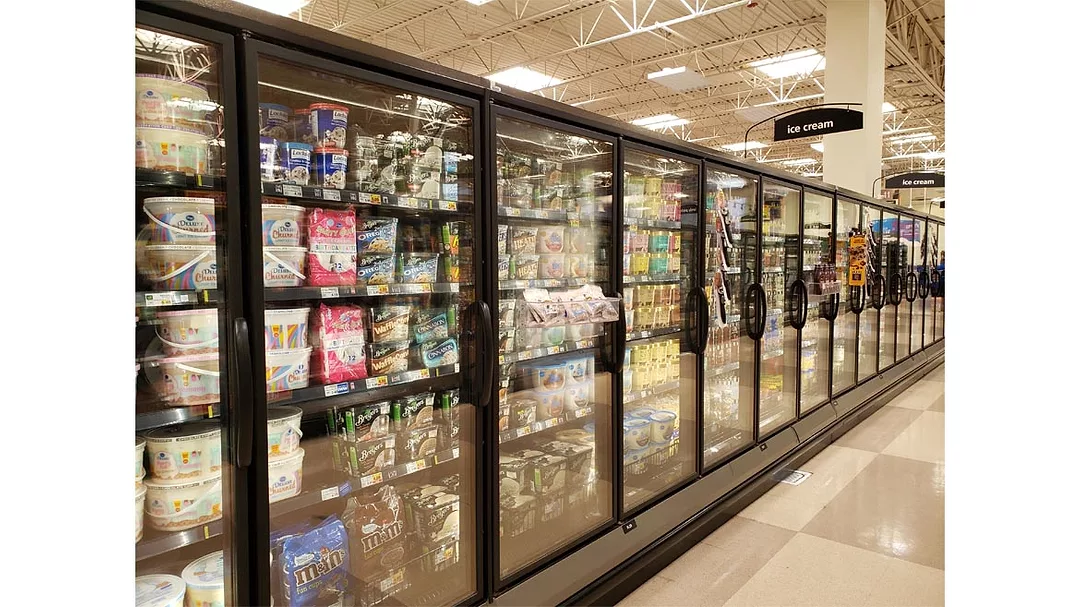
MAIN BARRIER: Cost is one of the main barriers to replacing commercial refrigeration systems with equipment that utilizes natural refrigerants such as CO2. (Staff photo)
Danfoss’ first-ever virtual conference, EnVisioneering Connect!, covered a wide range of topics that looked at today’s trends, as well as technologies that can be used in commercial buildings, data centers, and food retail applications. These technologies included the new VTCA Danfoss Turbocor® compressor, as well as heat pump solutions and dedicated outdoor air systems (DOAS) for rooftop units.
In-depth sessions on topics such as carbon neutral data centers and CO2 systems for supermarkets were designed to educate North American HVACR contractors, OEMs, end users, and consulting engineers about current trends in the industry. Two other prominent trends, indoor air quality and refrigerants, were also featured prominently throughout the online event.
INDOOR AIR QUALITY
In a keynote speech, Bill Bahnfleth, professor of architectural engineering at Penn State University, talked about how ventilation and filtration play an important role in improving building IAQ. He noted that ventilation rates have varied from 5 to 30 cfm/person over the past 200 years of ventilation standards, depending on concerns of the day, be it infection control, smoking, or energy use. The current minimum standard for ventilation is 15 cfm/person, which he said is significantly lower than the recommended rates for infection control.
“Are we leaving anything on the table with our current ventilation rates, and the answer to that — which we've known for decades — is yes, there are significant unmonetized health and productivity costs that we're neglecting,” said Bahnfleth. “And if we would raise ventilation rates to lower indoor exposures, we could expect to see benefits in a number of ways.”
To illustrate this point, Bahnfleth cited a summary of studies that looked at incidents of sick building syndrome symptom reporting as a function of ventilation rate. The summary showed that if the current ventilation rates were doubled, there would be a significant reduction in sick building syndrome symptoms, which often lead to absenteeism and degraded work performance. Another study showed that for lower-level task work, there would be an expected increase in performance of 2% to 4% by increasing ventilation rates from where they are now.
“So if you calculate the monetary value of those sorts of improvements, they far outweigh the cost of doing it,” he said. “Although they potentially increase energy use.”
Concerning filtration, ASHRAE Standard 62.2 for residential buildings currently only requires a MERV 6 filter, while Standard 62.1 for commercial buildings only requires MERV 8. Neither of those filters are very effective at stopping smaller particles, including airborne infectious diseases such as COVID or influenza.
Looking for quick answers on air conditioning, heating and refrigeration topics? Try Ask ACHR NEWS, our new smart AI search tool. Ask ACHR NEWS
“We need to improve filter efficiency if we're going to reduce health impacts,” said Bahnfleth. “We've got to do better if we want to protect ourselves from infectious aerosols, and that's why during the pandemic, a MERV 13 filter has been recommended as the minimum that should be used.”
Air cleaners may also play an important role in building IAQ, such as ultraviolet germicidal irradiation, sorbents, particulate filters, bipolar ionization, and photocatalytic oxidation. However, Bahnfleth noted that while some technologies are promising, others require scrutiny, as they may produce harmful byproducts.
In an interesting conclusion, Bahnfleth said that if there was any lesson learned from the pandemic, it is that buildings, for the most part, are unable to protect occupants from a very infectious airborne disease.
“We don't have standards for the design and construction of buildings that address that right now,” he said. “We need to think about resilience and having different operating modes for a building. For example, we could go from normal operation — when everything's good and there is no widespread epidemic disease in a community or the outdoor air is good — to being able to keep buildings operating and protecting the occupants when those things do happen.”
He added that the pandemic was a great wakeup call, making people more aware of indoor air quality and concerned about it in a way that hasn't happened in his professional lifetime.
“We shouldn't waste that moment of clarity, and we shouldn't focus exclusively on infection control, because we've got big problems all around with indoor air quality.”
REFRIGERANTS
In a session about refrigerants, Danielle Wright, executive director of the North American Sustainable Refrigeration Council (NASRC), talked about some of the trends in the commercial refrigeration market. She noted that the federal AIM Act will require an 85% reduction in the consumption and production of HFC refrigerants by 2036 and that some states are well into their own HFC phasedowns.
“California has really been leading the way in terms of HFC regulations,” she said. “Starting this year, new commercial refrigeration systems in California with over 50 pounds of refrigerant must use a GWP refrigerant less than 150. There's also a regulation for existing facilities to meet a GWP reduction target across their entire fleet by 2030. So either a weighted average of 1,400 GWP or less or achieving a 55% reduction in the greenhouse gas potential. There’s also a new bill that's just been recently introduced that would ban the sale and distribution of virgin refrigerant above 1,400 GWP by 2025 and above 750 GWP by 2030. So we're tracking this very closely.”
As a result of these regulations, more food retailers will transition to natural refrigerants, such as CO2 and R-290, said Wright.
“Many grocers today are jumping straight ahead to what we call the future-proof solution, or natural refrigerants,” she said. “Natural refrigerants are becoming the standard in new systems in the supermarket sector. A number of large national accounts have committed to making CO2 transcritical, for instance, the standard in new systems, and we're seeing a lot of other system types become adopted. This is first and foremost because of the regulatory environment. It also has to do with company climate targets.”
There will be challenges to transitioning away from HFCs such as R-404A and R-507, the main one being the cost of new equipment that utilizes natural refrigerants.
“I'm not referring to the incremental cost for a new system relative to an HFC system, I'm referring to the exponentially higher cost of replacing the existing equipment in an existing store,” said Wright. “Some of the solutions could include leveraging utility incentives. We're starting to see a shift to look at GWP as an incentive metric, not just the energy efficiency — also helping to align the system to optimize the design and performance. We're also seeing examples of state funding and other financial mechanisms like carbon offset credits for refrigerants and potentially federal tax credits.”
Another challenge is the availability of natural refrigerant technologies in the U.S. market, said Wright. Particularly technologies that would allow the modular transition away from an existing HFC system. One of the promising solutions is the use of R-290 in self-contained refrigerated cases or microdistributed systems, but the barrier is the current charge limit in the U.S. The applicable safety standard, UL Standard 60335-2-89, has been updated to allow a higher charge limit of R-290, but the remaining codes and standards need to approve that charge limit to ensure technology readiness.
Condensing units that use either CO2 or propane are another promising technology. Wright said that the NASRC conducted a survey of national retailers to help characterize the demand for this type of solution.
“What we saw first and foremost was that retailers were really interested in using these condensing units in a modular way to migrate away from an existing rack,” she said. “The last piece of technology needed is the ability to understand the energy performance. And here, we really do need more robust measurement and validation and performance data to help build a better picture of the total cost of ownership.”
The final challenge concerns service readiness — there simply isn't enough workforce available and trained to do all the work that's necessary to support the phase down of HFCs, said Wright. To address that issue, NASRC is launching a workforce development program that is aimed at promoting the trades and helping to bridge the gaps in HVACR school programs, especially within the commercial refrigeration sector.
“We are also developing natural refrigerant training resources for our existing workforce and working with partners — like Danfoss — to make different trainings available,” she said. “The NASRC is really centered around accelerating the adoption of natural refrigerants, reducing first costs, increasing technology solutions, and driving that workforce development, all with the aim of increasing the volume of demand and achieving the economies of scale needed in order to make this a smooth transition away from HFC refrigerants.”
Looking for a reprint of this article?
From high-res PDFs to custom plaques, order your copy today!