Keeping Cooling Towers Clear of Legionella
US CDC report shows an increase in Legionnaires’ disease

TRUTH BE TOLD: While cooling towers tend to shoulder a lot of the blame regarding Legionnaires’ disease outbreaks, they only comprise about 1-2 percent of all incidents, according to the Alliance to Prevent Legionnaires’ Disease.
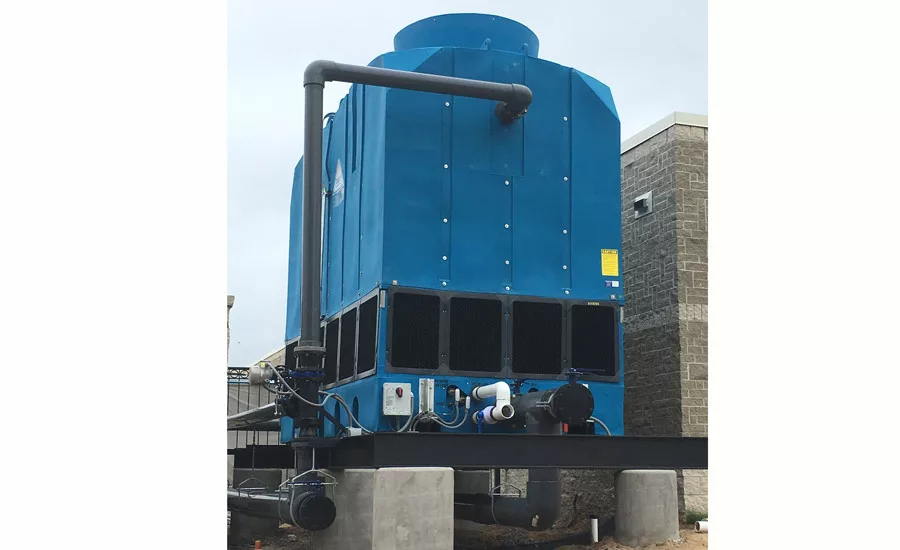
PREVENTING GROWTH: A new line of towers from Delta Cooling Towers Inc. is constructed of antimicrobial resin, which prevents uncontrolled growth of microorganisms and biofilm within the cooling tower.
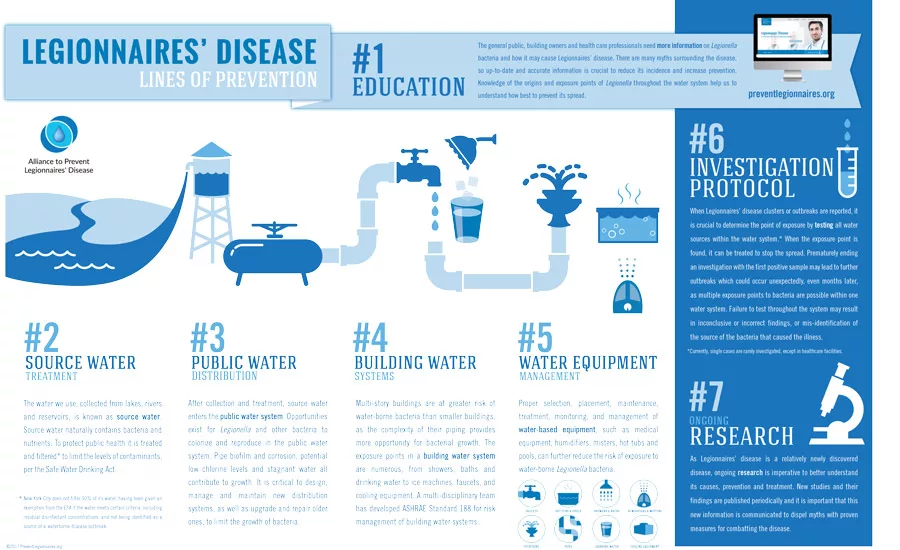
MULTI-STEP PROCESS: According to the Alliance to Prevent Legionnaires’ Disease, the risk of the disease can be minimized by following this multi-step process.
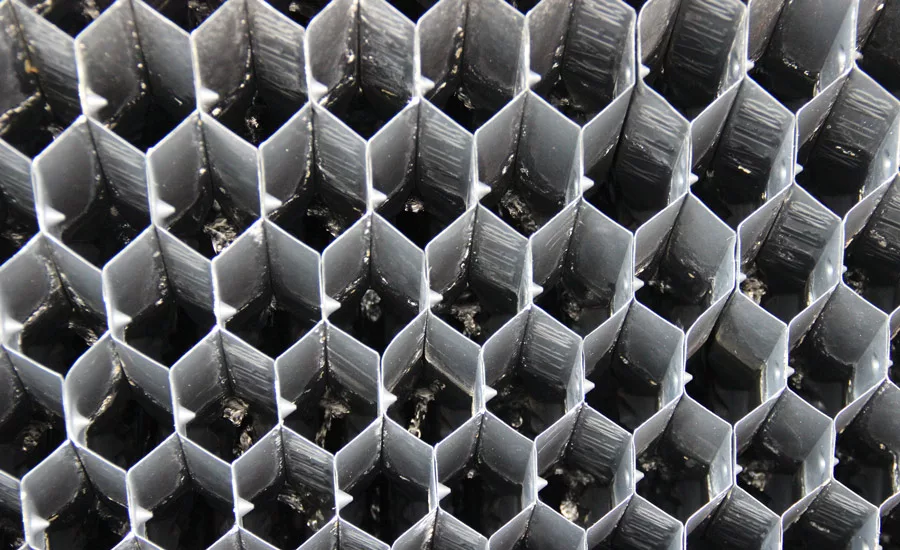
ELIMINATE BUILDUP: Sediment, scale, and slime can lead to buildup in the cooling tower, where Legionella grow and thrive. PHOTO COURTESY OF GOODWAY TECHNOLOGIES
Earlier this year, researchers from the U.S. Centers for Disease Control (CDC) caused quite a stir when they reported that they had found Legionella — the bacteria that cause Legionnaires’ disease (LD) — in many of the cooling towers they tested across the country.
The CDC study screened 196 cooling towers around the U.S. and found Legionella DNA (indicating the bacteria were there, live or dead, at some point) in 164 of the towers sampled and live Legionella bacteria in 79 of them.
These findings may be significant, because reported cases of LD are on the rise, increasing 286 percent from 2000 to 2014, according to the CDC. While water from cooling towers was identified as the potential source of several large LD outbreaks during this time, it may not be the only source.
According to the Alliance to Prevent Legionnaires’ Disease, contact with Legionella bacteria most often occurs when individuals are exposed to contaminated water coming out of faucets, shower heads, and other water-based equipment. That’s why it’s important to investigate all potential sources of Legionella during an outbreak, notes the Alliance, even if small amounts of the bacteria are found in the cooling tower.
INVESTIGATIONS
Legionella bacteria are found naturally in fresh water, but they are usually eradicated from the water supply through the rigorous use of chemicals by public water treatment facilities. However, over time, biofilm can coat the interior walls of the piping that brings treated water to homes and businesses, and Legionella (and other bacteria) can live in this biofilm.
Normally, Legionella remain in the biofilm, but when conditions are upset, such as when a water main breaks, new pipes are installed, heavy rainfall occurs, or during water pressure changes, Legionella can be released into the water supply. Once there, Legionella can contaminate a building’s water system, residing in small colonies in various locations, including the cooling tower. The release of contaminants can overwhelm a building’s water treatment protocol, which allows Legionella to proliferate, and people exposed to the contaminated water — especially those with compromised immune systems — may contract LD.
When an outbreak occurs, the cooling tower is often the first place examined. Even if a small amount of Legionella is found, the investigation usually concludes.
Looking for quick answers on air conditioning, heating and refrigeration topics? Try Ask ACHR NEWS, our new smart AI search tool. Ask ACHR NEWS
That is a problem, said Brad Considine, director of strategic initiatives, Alliance to Prevent Legionnaires’ Disease, because there may still be Legionella present in other water systems, such as showers, faucets, decorative fountains, ice machines, misters, and hot tubs.
“It’s important to keep in mind that out of all cases of LD, 4 percent are outbreaks and 96 percent are individual, sporadic cases. Of the outbreaks, the CDC says about 20 percent are associated with cooling towers and 56 percent are associated with the drinking water supply,” said Considine. “Out of all the cases of LD, that means cooling towers comprise maybe 1-2 percent of all incidents.”
So why do cooling towers usually take the blame for cases of LD?
“Because in a larger outbreak, there’s a lack of attention to what’s going on in the public and building water systems as well as an overemphasis on looking at cooling towers as the source,” said Considine. “What the alliance is promoting is the need for more proper and complete investigations.”
Indeed, the CDC has strict guidelines and procedures for conducting effective investigations, but when an outbreak of LD occurs, those guidelines are not always followed, said Considine.
“During an outbreak, there is a lot of pressure on public health departments to quickly figure out the problem and fix it, and the focus is almost always just on the cooling towers,” he said. “These narrow investigations deprive us of the opportunity to identify root causes and define lasting solutions that protect public health. If there’s an outbreak, the water should be tested in cooling towers as well as all other sources.”
PREVENTION
While the alliance contends that reducing Legionella in the public water supply would go a long way toward addressing the risk of LD, it is likely that some Legionella will continue to get into a building’s plumbing. That is why many buildings would benefit from having a water management program team in place to reduce the risk of Legionella growth and spread. Fortunately, the CDC offers a handy, free toolkit on its website about how to do just that.
The toolkit, titled “Developing a Water Management Program to Reduce Legionella Growth and Spread in Buildings,” offers a step-by-step approach to designing effective water management programs that utilize industry standards. Identifying and monitoring areas where Legionella can grow is one part of the toolkit.
“Generally, water sample testing can provide an indication as to whether levels of Legionella are present in a concentration that would be dangerous,” said Ray Field, director of liquid solutions, Goodway Technologies. “Additionally, spot testing systems, for example within the tower basins and towers fills, by getting under any deposits to break through the biofilm can provide a better understanding of the presence of Legionella and areas where routine cleaning and maintenance is required.”
Conducting visual inspections, testing disinfectant levels, and checking temperatures should also take place regularly, said Doug Gildehaus, director of product development, Nu-Calgon. “More specifically, water quality should be measured so that changes, such as a drop in chlorine levels, are not occurring. Water heaters should be maintained at appropriate temperatures, and cooling towers and hot tubs should be monitored for any changes in disinfectant or chemical levels to make sure to clean out any visible slime.”
If Legionella are detected in a building’s water system, a combination of chemicals and cleaning is usually employed to eliminate the bacteria, but this should only be undertaken by a licensed professional. That’s because there are situations in which chemicals used to control Legionella growth in the water may not be safe to the water system design, said Field.
“In addition, while cleaning and/or biocide treatment will lower the levels of bacteria, there are instances where steps need to be taken to prevent employee exposure, such as the presence of humidifiers or misters that produce aerosol mists, which can increase the risk of inhalation,” he said.
Once Legionella are eliminated from a system, regular cleaning and maintenance of the cooling tower can commence. Fortunately, maintenance has become easier in recent years with the development of clean-in-place solutions that drastically decrease the time and labor needed to clean a cooling tower. These solutions include vacuums that do not require draining the tower, so it can be cleaned while the tower is still online, and cleaners that dissolve scale and grime from cooling tower fill on contact.
“The combination of chemical and mechanical solutions is the most effective approach to preventive maintenance followed by a well-maintained water management and treatment program,” said Field.
By utilizing available resources, such as the CDC toolkit, and following a regular preventive maintenance schedule, building owners can reduce the chances of their facilities being fingered in the next outbreak of LD.
Keeping That Cooling Tower Clean
Cooling towers require regular preventive maintenance, including cleaning and sterilization, which is accomplished through the use of effective chemical treatments and washing equipment. According to Ray Field, director of liquid solutions, Goodway Technologies, here are some of the recommended steps for regular cooling tower maintenance:
• Inspect towers monthly — Look for sediment, scale, and slime, which can lead to buildup and help Legionella grow and thrive;
• Clean tower basin surfaces — Clean the basin when sediment is visible. Cooling tower vacuums make it easier to remove contaminants without shutting down or draining a system;
• Treat circulating water — Use a biodegradable descaler/antiscalant and dose biocides at recommended levels as well as corrosion inhibitors. Using a descaler in conjunction with biocides enhances biological control. A descaler will help remove tough scale and allow biocides to tackle bacterial growth in the tower more effectively;
• Drain and clean — At least once a year, take the time to drain the system and perform a thorough cleaning before turning it back on. If the system has been offline for a long period of time, be sure to disinfect; and
• Inspect and/or clean the fill — The tower fill can offer the perfect environment for bacterial growth, especially Legionella. A cooling tower fill cleaner can help remove lime scale and debris.
These measures will not only help control biological growth, including Legionella, they will also help improve equipment efficiency and overall operation, said Field.
The Cooling Tower Industry Takes a Proactive Approach
Cooling tower manufacturers have been proactive in their response to concerns over Legionella by improving their product designs to reduce stagnant water, prevent scaling, and increase access for cleaning. And perhaps most significantly, they have partnered with ASHRAE, Cooling Technologies Institute, and public health advocacy groups to promote building system practices that reduce the risk of growth of the potentially deadly bacteria.
Delta Cooling Towers Inc., for example, has launched a line of towers constructed of antimicrobial resin, which is fully compounded into the base cooling tower casing material, fill, and drift eliminators.
“The antimicrobial resin contains additives that operate on a cellular level to continuously disrupt and prevent uncontrolled growth of microorganisms and biofilm within the cooling tower,” said John Flaherty, president, Delta Cooling Towers Inc. “Cooling tower design and materials can be very significant in the prevention of pathogen growth.”
Of course, competent maintenance, consistent water treatment, and accurate monitoring are essential to combating Legionella as well, noted Flaherty.
“Without consistent, competent water treatment, the Legionella risk is not completely eliminated, even with the new antimicrobial cooling tower,” he said. “While cooling tower conditions are often managed by water treatment chemicals. Such treatment is sometimes inadequate and poor piping designs lead to dead legs, which creates an environment in which pathogens, including Legionella, can thrive.”
Flaherty adds that the best water treatments for Legionella prevention are oxidizing biocides, which react aggressively toward metal surfaces, effectively attack metal-clad cooling towers, and shorten service life. However, because Delta’s cooling tower fills and shells are constructed of antimicrobial plastic, they are virtually impervious to corrosive water treatments and also minimize the risk of microbial growth.
Publication date: 8/21/2017
Want more HVAC industry news and information? Join The NEWS on Facebook, Twitter, and LinkedIn today!
Looking for a reprint of this article?
From high-res PDFs to custom plaques, order your copy today!