Alternative HVAC Systems Popular in Hospital Applications
Health Care Facilities Embrace Nontraditional Equipment
Designing an HVAC system for a hospital can be complicated. Not only must the equipment run 24/7, but it must also provide precise temperature and humidity control in order to keep critically ill patients comfortable and sensitive medical equipment operating correctly. While traditional hospital HVAC systems often consist of chillers and boilers, other types of equipment are becoming more widely accepted in the health care market, including variable refrigerant flow (VRF) systems, air curtains, and geothermal heat pumps. All are designed to improve comfort and, as an added bonus, save energy.
Individualized Comfort
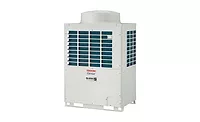
Shortly after Choctaw General Hospital, Butler, Alabama, was completed in 2012, it became apparent that more room was necessary, so a 44,000-square-foot addition was built to house the patient care section. For this new part of the hospital, administrators chose a VRF system from Mitsubishi Electric US Cooling and Heating Division, mainly because they liked its zoning capability. Having used VRF technology in other facilities, administrators knew patients would appreciate the individualized comfort offered by the system while facility engineers would welcome the lower energy bills during the peak summer and winter months.
Indeed, patient wellness and comfort are the primary reasons VRF zoning systems have been chosen for a variety of health care facilities, including patient and office wings of hospitals, urgent care centers, medical offices, hospices, long-term living facilities, and clinics, said Kevin Miskewicz, senior manager, commercial marketing, Mitsubishi Electric US Cooling & Heating Division. “Individual zones are ideal in areas where people can benefit from controlling their climate (e.g., patient rooms, offices, exam rooms). VRF zoning systems allow patients to set their own temperatures and have control over their comfort.”
With the VRF system, medical personnel or patients can choose from four modes: cool, heat, auto, and dry, explained Miskewicz. “Although it’s not a dehumidifier, the dry mode helps improve personal comfort by removing moisture from the air in humid climates. Certain systems can even simultaneously cool some areas while heating others, making individualized control not only possible, but, because of the ability to recover heat normally discarded by the condenser, a part of significant energy savings.”
Saving energy is important, which is another reason why health care facilities have embraced energy-efficient VRF systems, said Miskewicz. “The inverter-driven compressor in the outdoor unit varies the motor rotation speed and capacity; as a result, the system precisely meets each zone’s load requirement. The system operates only at the levels needed to maintain a constant, comfortable indoor environment, which reduces power consumption.”
Other benefits of utilizing a VRF system include quiet operation and ease of maintenance. “Servicing a unit in a traditional ducted system means taking down the entire unit, potentially making patients extremely uncomfortable on very hot or cold days,” said Miskewicz. “VRF zoning units, however, can be serviced while every other unit remains online. This means patients, employees, and visitors remain comfortable, while sensitive instruments and materials stay at the proper temperature.”
While VRF systems have numerous benefits for health care administrators, workers, and patients, there are benefits for contractors, as well, said Miskewicz. “VRF zoning systems offer a small footprint, and they don’t require ductwork, which frees up precious space. In addition, they are lightweight, which makes them easy to handle and transport. Design and installation of VRF systems is straightforward, and they can be installed in new construction or retrofit applications.”
Looking for quick answers on air conditioning, heating and refrigeration topics? Try Ask ACHR NEWS, our new smart AI search tool. Ask ACHR NEWS
As the installing contractor, Stan Williamson, senior project manager, McLain Plumbing and Electrical Services, Philadelphia, Mississippi, noted: “I have been in the HVAC industry all my life, and I’m really impressed with this VRF zoning system. In health care facilities, a patient in one room is going to want it cold while his neighbor wants it hot. This system provides simultaneous cooling and heating, which conventional systems cannot do.”
Reducing Infiltration
The University of Pittsburgh Medical Center (UPMC) set out to make its new $252 million Monroeville, Pennsylvania, facility the most sustainable of its 30-hospital network and its design team came through, delivering a building that’s saving an estimated $350,000-$500,000 in energy use annually. High-efficiency boilers, chillers, and rooftop DX systems are major contributors to overall energy savings, along with 11 air curtains from Berner Intl., which protect all entrances from outdoor air infiltration.
Ten of the air curtains are in-ceiling models that appear as flush ceiling grilles and supplement the aesthetics in the lobbies. The air curtains all draw clean air from the lobby through an integral diffuser and have electric heaters that are critical for indoor air comfort in the lobbies. The heaters are efficiently controlled with a delay that continues spot heating at a lower air velocity until the doorway area’s set point temperatures are reached.
The eleventh air curtain is a conventional model mounted above the emergency room (ER) doorway that saves energy and prevents infiltration of any idling emergency room vehicle fumes, which is a common hospital IAQ problem. All the air curtains use three-speed fans that can be adjusted for proper doorway sealing and minimal operational decibel levels.
Hospitals such as UPMC are finding that air curtains offer numerous benefits, including:
• Environmental separation for energy conservation on front entrance doors;
• Environmental/odor separation on emergency room doors and entrances where an ambulance can sit idle allowing unwanted toxins entering to an area where patients are sitting;
• Comfort heat to doorways opening to areas where the HVAC systems do not effectively treat the area; and
• Insect control on receiving and delivery doors to food preparation or cafeteria locations.
“Air curtains help hospitals dramatically reduce the infiltration of hot or cold air, which saves energy. In fact, air curtains can often pay for themselves within a year,” said Stephen J. Benes, sales manager, Berner Intl. “In addition, they resist flying insects, which helps maintain sanitized conditions, and a heated air curtain will improve the comfort of employees and customers.”
Berner’s most popular air curtains utilize hot water or steam, and they can be designed for use in new construction or retrofitted into an existing hydronic system. Chilled water is not a standard offering, but it is possible to manufacture an air curtain utilizing chilled water, Benes added.
More and more hospital administrators are discovering that incorporating air curtains into their facilities can increase energy savings, eliminate flying insect infiltration for better sanitation, and improve employee air comfort. And, for UPMC, air curtains contributed to the overall sustainable design, resulting in enough credits to become Leadership in Energy and Environmental Design (LEED)-Silver certified.
From the Ground Up
When decision makers at Methodist LeBonhuer Health embarked on the development of a new facility to serve the growing area of Olive Branch, Mississippi, they identified a number of guiding principles to which every element of the project needed to support. These included a focus on the healing environment, patient safety, efficiency in delivering care and operating the facility, flexibility for future growth and changes in modalities, and an overall concentration on patient satisfaction.
In order to meet those goals, a design team consisting of Gresham, Smith, and Partners; Smith Seckman Reid; and Turner Construction, along with Methodist Le Bonheur Healthcare, conducted an in-depth life-cycle cost analysis of several HVAC systems and concluded a geothermal heat pump system from Hydro-Temp would be the most sustainable — as well as the most cost-effective — choice for the 200,000-square-foot Methodist Olive Branch Hospital.
Once the determination was made to go with geothermal, installing a large bore field with existing site restrictions proved to be a challenge. The required bore field size was reduced nearly one-third by going with a hybrid geothermal system, which includes a combination dry/wet fluid cooler, along with a pumping package and predictive bore field temperature controls by Greensleeves Energy Solutions. The fluid cooler operates primarily during off-peak hours, as required, based on bore field temperatures.
Ultimately, 196 geothermal wells were installed in a bore field on the hospital site, supporting 211 geothermal heat pumps throughout the hospital with outside air provided by dedicated outside air system (DOAS) units. The DX DOAS units have energy recovery with sensible/enthalpy wheels or plate exchangers, which provide filtered, dehumidified, and thermally neutral air. Energy efficiency was optimized using variable-speed compressors in the heat pumps. Split DX HVAC systems were provided for critical equipment room environments.
This hybrid arrangement just goes to show that geothermal systems can make sense for just about any health care facility, said Henry Gross, managing partner, Hydro-Temp. “It is very rewarding to be able to work closely with specifying engineers who are open to working through new design possibilities. It’s all mindset — even though ground loops are not complicated, it is important for the engineers to understand the nuances
of a ground loop.”
Geothermal comes with significant benefits, including impressive energy savings and increased levels of comfort, said Gross. “The system does not work against a high temperature, so the compressor runs more efficiently. That usually means the discharge air temperatures can be a lot cooler, and you can get more dehumidification in air conditioning mode. With our variable-speed equipment, we can set the discharge air temperature for about 55?F in the cooling mode, which will really wring out the air and increase comfort in the space. In the heating mode, we set the discharge air temperature for around 100?F, so that it doesn’t feel too cool or too hot.”
For those who think geothermal systems cost significantly more than traditional boiler/chiller systems, think again, said Gross. “The first cost is almost a wash. Obviously, with geothermal, you do need to have space, but, typically, the piping can go under a hospital’s parking lot. And life-cycle cost is much lower with geothermal because the ground-loop temperatures keep the compressor discharge pressures much lower, so the compressor doesn’t have to work as hard as it does on an air-source unit. Maintenance is much
easier, as well.”
Most hospital administrators are always looking for ways to improve energy savings without sacrificing patient comfort, and, as can be seen here, there are many HVAC solutions available that will help them achieve those goals.
Publication date: 11/3/2014
Want more HVAC industry news and information? Join The NEWS on Facebook, Twitter, and LinkedIn today!
Looking for a reprint of this article?
From high-res PDFs to custom plaques, order your copy today!