ACHR News
search
Ask ACHR NEWS AI
cart
facebook twitter instagram linkedin youtube
  • Sign In
  • Subscribe
  • Sign Out
  • My Account
ACHR News
  • NEWS
    • Breaking News
    • New HVAC Products
    • Featured Products
    • Manufacturer Reports
    • HVAC Data
    • Legislation
    • ACHR NEWS Centennial
  • RESIDENTIAL
    • Air Conditioners
    • Furnaces
    • Residential Heat Pumps
    • Ductless
    • Residential IAQ
    • Testing, Monitoring, Tools
    • Components & Accessories
  • COMMERCIAL
    • Air Handlers
    • Rooftop Units
    • Chillers and Cooling Towers
    • Commercial Heat Pumps
    • Boilers and Hydronics
    • VRF/Ductless
    • Commercial IAQ
  • REFRIGERATION
    • Refrigerants
    • Refrigerant Regulations
    • Leak Management
  • CONTRACTOR PRO
    • Geothermal
    • Homeowner Study
    • VRF and VRV Ductless
    • Unitary Trends
  • EDUCATION
    • Training and Education
    • Business Management
    • Service and Maintenance
    • Continuing Education
    • Market Research >
      • HVAC Brand Awareness Report
      • VRV, VRF, VRVZ Report
      • Unitary Trends Report
      • Water Heat Professionals Report
    • Webinars
    • Sponsor Insights
    • eProducts Info
    • White Papers
  • EVENTS
    • HVAC Contractor Forum
    • Industry Events and Webinars
  • MEDIA
    • Videos
    • AHR Expo 2025 Videos
    • Podcasts >
      • ACHR News Podcast
      • HARDI Podcasts
      • AHR Expo Podcasts
      • ACCA Podcasts
    • Interactive Spotlights
    • Quizzes
    • eBooks
    • HVAC Talkback
  • HVAC GROUP
    • ACHR NEWS >
      • Current Issue
      • Digital Edition
      • Subscribe
    • Distribution Trends
    • SNIPS NEWS >
      • Join SNIPS NEWS
    • Engineered Systems News >
      • Join ES News
    • HVACR Directory
    • Contests
    • Newsletters
    • Contact
    • Advertise
    • My Account

Variable-Speed Solutions

May 22, 2003
In the past, forced-air zoning was not readily accepted by the HVAC industry. Numerous concerns and misconceptions prevented the benefits of forced-air zoning from truly being appreciated. As each myth or concern was cleared away and resolved, another would take its place. But thanks to the devotion and dedication of those involved in its conception, refinement, and growth, forced-air zoning has overcome many obstacles proven these misconceptions and to be false. Forced-air zoning has become a widely accepted means of saving energy and increasing consumer comfort.

Zoning And Controls

Forced-air zoning has certainly matured and adapted over the years. Older, relay-based logic control panels were large, reliable, and worked very well, but lacked the versatility and intelligence that is available in today’s microprocessor-based zone control systems. Modern zone control panels are programmed with intuitive firmware. You can select the system type and staging options. Automatic over-current protection is standard, including integrated safety features like built-in time delays and system temperature monitoring. Dampers are now equipped with advanced and reliable optical circuitry. A single forced-air zone control system is now compatible with most residential and commercial HVAC systems. Against heavy odds, forced-air zoning has come a long way. Yet mysteries and myths still abound.

The most recent misconception to be encountered when performing field training or when discussing system specifications includes the use of variable-speed indoor blower motors with a forced-air zoning system. For example, many contractors state, “I can’t install a zoning system with a residential variable-speed air handler or variable-speed furnace.”

The confusion behind this statement is that many do not realize that variable-speed motors are controlled internally via the air handler’s integrally controlled motor (ICM). These integrated logic controls can accept but do not require an external pulse width modulation (PWM) or 4-20 mA input signal to control the motor’s speed and ramp-up rate. The only signal required to operate these variable-speed motors is the standard (G) input from a conventional thermostat. Just as a standard 24 VAC thermostat connects to and operates a variable-speed furnace, so does a zone control panel. Both simply output a demand for the fan to operate. The variable fan speed operation is determined internally by the system mode and stage of operation.

Figure 1. A bypass damper and static pressure control assembly. Note that this drawing is intended to serve only as a general guideline. Actual ductwork and configurations may vary. (Courtesy of EWC Controls Inc.)


The ramp-up rate of these ICMs are usually fixed at 1 percent per second. Variations on this basic control scheme exist, but all of them simply require a (G) signal from the thermostat or zone control panel to operate. Advanced variable-speed ICM’s provide for an “enhanced” setting. These settings provide a gradual (timed) ramp-up rate during cooling mode.

This gradual ramp rate starts at 70 percent of full load and takes five minutes or more to reach 100 percent full load. This slow ramp rate increases the latent cooling effect of removing moisture from the air, and results in lower-than-normal supply air temperatures — just like a conventional zoned air system with a bypass damper has been doing for 40 years. Simply adjust the low temperature limit potentiometer setting on your zone control system to avoid a “nuisance” trip of the freeze protection setting.

Bypass Dampers Are Essential

Another misconception we hear in reference to variable-speed blowers and zone control systems is, “I will no longer need a bypass damper when I install a variable-speed furnace and a conventional zone control system.” This is a false assumption. A bypass damper should never be left out of any zoning system. The latent cooling effect that a bypass damper provides alone is enough to justify the cost of the zone system. The bypass damper will not open or activate unless excessive static pressure makes it open.

The fact is that a variable-speed fan motor operates at full load (FLA) or near full load at different times, depending on the mode or stage of operation. A variable-speed air handler or furnace is not aware of how many zones are demanding conditioned air, or how many dampers are open or closed. In the same way, it has no idea if the connected ductwork has been properly sized and installed. The use of a barometric, or preferably an electronic, static pressure-operated bypass damper prevents overpressurizing of the ductwork, subsequent noise, and the negative effects from excessive static pressure. When installed in a variable-speed system, the bypass damper simply may not open as often as it does in a constant-volume system. However, it still proves to be an indispensable component in any zoned forced-air system. As to the never-ending dilemma of using a dump zone instead of a bypass damper, we respond again with this question: Why spend money to condition the air, and then dump it where nobody benefits from it?

The more advanced and costly zone control systems do provide an external pulse width modulation (PWM) or 4-20 ma output signal to the air handler’s integrated motor control. These zone systems can control and modulate the PWM output, in direct response to the number of zones that are demanding conditioned air, and the preprogrammed cfm requirements of each zone. These systems may not require a bypass damper, but they are very unforgiving with poor duct design and layout. These systems could probably benefit from a bypass damper, just in case.

The diagram in Figure 1 reflects a typical motorized bypass arrangement based on static pressure. The static pressure control is field adjustable from 0.01 inches water column (wc) to 4.0 inches wc.

The control is multipositional. That is, it can be mounted in any position and will still function properly. Note that the supply air sensor is installed upstream of the bypass takeoff and wires back to the zone control panel. This is to ensure that the zone control microprocessor can accurately determine the supply air temperature, regardless of the position of the bypass damper.

Looking for quick answers on air conditioning, heating and refrigeration topics? Try Ask ACHR NEWS, our new smart AI search tool. Ask ACHR NEWS →

The ability of the zone control system to properly monitor the supply air temperature is critical to any successful installation. Some zoning manufacturers provide the supply air sensor as an option only. Other manufacturers include the sensor in every zone control package. The ability to adjust cooling and heating limit setpoints is built right into the zone control panel, which makes it very easy to fine-tune the zoning installation. Older-style zone control systems will not accept a supply air sensor at all. External field-installed temperature limit controls must be used.

The field-installed temperature controls (external or nonintegrated) can be expensive, bulky, and difficult to install and wire. A better solution is to utilize the supply air sensor provided with these state-of-the-art zone control systems. They are accurate, easy to install, and provide superior air temperature monitoring directly to the processor.

A properly designed and installed forced-air zone system will provide exceptional comfort levels as well as energy savings. Specifying variable-speed equipment adds an even higher degree of control and comfort. The two systems complement each other and function very well together. They are definitely not as complicated to install and set up as some would have you believe.

Brown is chief engineer with EWC Controls Inc., Englishtown, N.J. He can be contacted by e-mail at jbrown@ewccontrols.com.

Publication date: 05/26/2003

Share This Story

Looking for a reprint of this article?
From high-res PDFs to custom plaques, order your copy today!


Recommended Content

JOIN TODAY
To unlock your recommendations.

Already have an account? Sign In

  • HVAC-enrollment

    The Trades Are Back: HVACR Programs See Nearly 30% Enrollment Spike

    A new wave of future technicians is entering the pipeline.  
    Training and Education
    By: Matt Jachman
  • 2025 Top 40 Under 40

    2025 Top 40 Under 40 HVACR Professionals List

    The 11th annual Top 40 Under 40 list highlights those...
    HVAC Light Commercial Market
    By: Hannah Belloli-Oster
  • LG Ductless Mini-Split Systems

    The 9 Types of Heat Pumps

    As the U.S. moves toward electrification, heat pumps are...
    HVAC Commercial Market
    By: Joanna R. Turpin
Subscription Center
  • Create an Account
  • Start a Subscription
  • Manage My Account
  • Sign Up for Newsletters
  • Visit Customer Service
  • Update Preferences

More Videos

Sponsored Content

Sponsored Content is a special paid section where industry companies provide high quality, objective, non-commercial content around topics of interest to The News audience. All Sponsored Content is supplied by the advertising company and any opinions expressed in this article are those of the author and not necessarily reflect the views of The News or its parent company, BNP Media. Interested in participating in our Sponsored Content section? Contact your local rep!

close
  • Piggy Bank
    Sponsored byWatercress Financial

    Energy Prices, Inflation, and HVAC: What Today’s Homeowners Care About

  • Refrigerated Food
    Sponsored bySolstice Advanced Materials

    R-455A Refrigeration: A Cold Storage Solution for the Future

  • Airex Rooftop Units
    Sponsored byAirex Manufacturing Inc

    Consolidating Roof Penetrations: A Growing Trend in Multifamily HVAC Design

Popular Stories

HVAC-Price-Increase-graphic

HVAC Price Increase List: June 2026

Trump-Section-232.jpg

Trump Reduces Section 232 Tariffs on HVAC Equipment to 15%

R410A-Refrigerant-Cylinder.jpg

Refrigerant Recovery is a Revenue Opportunity

Heat-pump-cutaway.jpg

PFAS Rules and A2L Building Codes Continue to Evolve

Kroger.jpg

Kroger to Spend $100 Million to Reduce Refrigerant Leaks

View The ACHR NEWS
Centennial Anniversary Timeline

The ACHR News Timeline Chart
Submit a Letter
Submit a letter to our editors.

Events

November 6, 2025

Next-Gen Data Center Cooling: HVAC Innovation and Real-World Solutions

On Demand As AI workloads and high-density computing push traditional cooling methods to their limits, the data center industry is accelerating the adoption of next-generation HVAC technologies.

June 9, 2026

Before You Go All In on AI: Set Up Your Business to Actually Win

In this webinar, we'll walk you through exactly what to get in place before you add AI to your business. You'll leave with a clear picture of where you stand today and a practical action plan to set yourself up for real results.

View All Submit An Event

Poll

Summer Staff

Are you fully staffed for the summer season?
View Results Poll Archive

Products

BNI Mechanical/Electrical Square Foot Costbook, 2026 Edition

BNI Mechanical/Electrical Square Foot Costbook, 2026 Edition

See More Products
A2L Refrigerants - Free Webinar - May 21, 2026

Related Articles

  • Copeland Launches KF Variable-Speed Scroll Compressor with EV4 Variable Frequency Drive Platform

    Copeland Launches KF Variable-Speed Scroll Compressor with Variable Frequency Drive Platform

    See More
  • variable speed perks

    Variable Speed’s Impact on HVAC

    See More

Related Products

See More Products
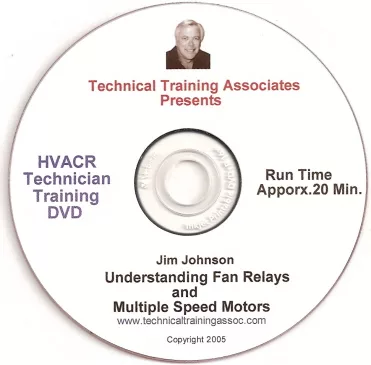
  • fanfelaysdvd.jpg

    Understanding Fan Relays and Multiple Speed Motors

See More Products

Events

View AllSubmit An Event
  • April 24, 2014

    Motors, Variable Speed Drives and Energy Efficiency

    The introductory course on motors and variable-speed drives will give participants a better understanding of motors and the theory behind how they work.
View AllSubmit An Event

Related Directories

  • SpeedClean

    SpeedClean manufactures and markets HVAC maintenance tools like portable coil cleaning systems, biodegradable coil cleaners, tube cleaners, mini-split cleaning systems and much more.
  • Danfoss Drives

    Leading manufacturer of VLT and VACON Variable Frequency Drives, Soft Starters and Panel solutions for HVAC applications.
×

Sign Up. Stay Informed.

The #1 trusted source for the HVACR industry since 1926

SUBSCRIBE
  • RESOURCES
    • Advertise
    • Contact Us
    • Advisory Board
    • Classifieds
    • Submit a Letter
    • Directories
    • Store
  • ACCOUNT CENTER
    • Create an Account
    • Start a Subscription
    • Manage My Account
    • Sign Up for Newsletters
    • Visit Customer Service
    • Update Preferences
  • SERVICES
    • Marketing Services
    • Reprints
    • Market Research
    • List Rental
    • Survey/Respondent Access
  • STAY CONNECTED
    • LinkedIn
    • Facebook
    • Instagram
    • YouTube
    • X (Twitter)
  • PRIVACY
    • PRIVACY POLICY
    • TERMS & CONDITIONS
    • DO NOT SELL MY PERSONAL INFORMATION
    • PRIVACY REQUEST
    • ACCESSIBILITY

Copyright ©2026. All Rights Reserved BNP Media, Inc. and BNP Media II, LLC.

Design, CMS, Hosting & Web Development :: ePublishing