ACHR News
search
Ask ACHR NEWS AI
cart
facebook twitter instagram linkedin youtube
  • Sign In
  • Subscribe
  • Sign Out
  • My Account
ACHR News
  • NEWS
    • Breaking News
    • New HVAC Products
    • Featured Products
    • Manufacturer Reports
    • HVAC Data
    • Legislation
    • ACHR NEWS Centennial
  • RESIDENTIAL
    • Air Conditioners
    • Furnaces
    • Residential Heat Pumps
    • Ductless
    • Residential IAQ
    • Testing, Monitoring, Tools
    • Components & Accessories
  • COMMERCIAL
    • Air Handlers
    • Rooftop Units
    • Chillers and Cooling Towers
    • Commercial Heat Pumps
    • Boilers and Hydronics
    • VRF/Ductless
    • Commercial IAQ
  • REFRIGERATION
    • Refrigerants
    • Refrigerant Regulations
    • Leak Management
  • CONTRACTOR PRO
    • Geothermal
    • Homeowner Study
    • VRF and VRV Ductless
    • Unitary Trends
  • EDUCATION
    • Training and Education
    • Business Management
    • Service and Maintenance
    • Continuing Education
    • Market Research >
      • HVAC Brand Awareness Report
      • VRV, VRF, VRVZ Report
      • Unitary Trends Report
      • Water Heat Professionals Report
    • Webinars
    • Sponsor Insights
    • eProducts Info
    • White Papers
  • EVENTS
    • HVAC Contractor Forum
    • Industry Events and Webinars
  • MEDIA
    • Videos
    • AHR Expo 2025 Videos
    • Podcasts >
      • ACHR News Podcast
      • HARDI Podcasts
      • AHR Expo Podcasts
      • ACCA Podcasts
    • Interactive Spotlights
    • Quizzes
    • eBooks
    • HVAC Talkback
  • HVAC GROUP
    • ACHR NEWS >
      • Current Issue
      • Digital Edition
      • Subscribe
    • Distribution Trends
    • SNIPS NEWS >
      • Join SNIPS NEWS
    • Engineered Systems News >
      • Join ES News
    • HVACR Directory
    • Contests
    • Newsletters
    • Contact
    • Advertise
    • My Account

Maintaining Variable-Frequency Drives

May 31, 2001

Second of two parts

Do you know how to maintain variable frequency drives (vfd’s)? Doing so is easier than you might think.

By integrating some simple, logical steps into your preventative maintenance (PM) program, you can ensure that your drives provide many years of trouble-free service.

Before looking at the steps to take during periodic PM procedures, let’s review what a vfd is and how it works.
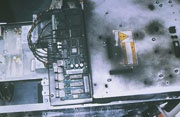


Figure 1. Fan injecting dust particles into vfd.

Quick Overview

A vfd controls the speed, torque, and direction of an ac induction motor. It takes fixed voltage and frequency ac input and converts it to a variable voltage and frequency ac output. In very small vfd’s, a single power pack unit may contain the converter and inverter.

Fairly involved control circuitry coordinates the switching of power devices, typically through a control board that dictates the firing of power components in the proper sequence. A microprocessor or digital signal processor (dsp) meets all the internal logic and decision requirements.

From this description, you can see a vfd is basically a computer and power supply. And the same safety and equipment precautions you’d apply to a computer and to a power supply apply here. Vfd maintenance requirements fall into three basic categories:

1. Keeping it clean;

2. Keeping it dry; and

3. Keeping the connections tight.

Let’s look at each of these.

Looking for quick answers on air conditioning, heating and refrigeration topics? Try Ask ACHR NEWS, our new smart AI search tool. Ask ACHR NEWS →
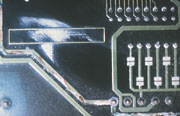


Figure 2. Moisture-caused corrosion.

Keeping it Clean

Most vfd’s fall into the NEMA 1 category (side vents for cooling airflow) or NEMA 12 category (sealed, dust-tight enclosure). Drives that fall in the NEMA 1 category are susceptible to dust contamination. Dust on vfd hardware can cause a lack of airflow, resulting in diminished performance from heat sinks and circulating fans (Figure 1).

Dust on an electronic device can cause malfunction or even failure. Dust absorbs moisture, which also contributes to failure. Periodically spraying air through the heat sink fan is a good PM measure. Discharging compressed air into a vfd is a viable option in some environments, but typical plant air contains oil and water.

To use compressed air for cooling, you must use air that is oil-free and dry or you are likely to do more harm than good. That requires a specialized, dedicated, and expensive air supply. And you still run the risk of generating electrostatic charges (ESD). A nonstatic-generating spray or a reverse-operated ESD vacuum will reduce static buildup.

Common plastics are prime generators of static electricity. The material in ESD vacuum cases and fans is a special, nonstatic-generating plastic. These vacuums and cans of nonstatic-generating compressed air are available through companies that specialize in static-control equipment.
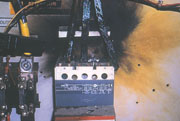


Figure 3. Loose input power connections.

Keeping it Dry

In Figure 2 you can see what happened to a control board periodically subjected to a moist environment.

Initially, this vfd was wall-mounted in a clean, dry area of a mechanical room, and moisture was not a problem. However, as is often the case, a well-meaning modification led to problems. An area of the building required a dehumidifier close to the mechanical room. Since wall space was available above the vfd, this is where the dehumidifier went.

Unfortunately, the vfd was a NEMA 1 enclosure style (side vents and no seal around the cover). The result was water dripping from the dehumidifier into the drive. In six months, the vfd accumulated enough water to produce circuit board corrosion.

What about condensation? Some vfd manufacturers included a type of “condensation protection” on earlier product versions. When the mercury dipped below 32°F, the software logic did not allow the drive to start.

Vfd’s seldom offer this protection today. If you operate the vfd all day every day, the normal radiant heat from the heatsink should prevent condensation.

Unless the unit is in continuous operation, use a NEMA 12 enclosure and thermostatically controlled space heater if you locate it where condensation is likely.


Figure 4. Loose output power connections.

Keeping Connections Tight

While this sounds basic, checking connections is a step many people miss or do incorrectly — and the requirement applies even in cleanrooms.

Heat cycles and mechanical vibration can lead to substandard connections, as can standard maintenance practices: Retorquing screws is not a good idea, and further tightening an already tight connection can ruin the connection (see accompanying article, below).

Bad connections eventually lead to arcing. Arcing at the vfd input could result in nuisance over-voltage faults, clearing of input fuses, or damage to protective components. Arcing at the vfd output could result in over-current faults, or even damage to the power components. The photo-graphs in Figures 3 and 4 show what can happen.

Loose control wiring connections can cause erratic operation. For example, a loose start/stop signal wire can cause uncontrollable vfd stops. A loose speed-reference wire can cause the drive speed to fluctuate, resulting in machine damage, and/or possible injury.
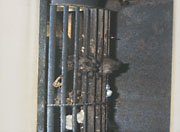


Figure 5. Foreign object in fan.

Additional Steps

  • As part of a mechanical inspection procedure, don’t overlook internal vfd components. Check circulating fans for signs of bearing failure or foreign objects — usually indicated by unusual noise or shafts that appear wobbly. Figure 5 shows a foreign object in a fan.
  • Inspect dc bus capacitors for bulging and leakage. Either could be a sign of component stress or electrical misuse.
  • Take voltage measurements while the vfd is in operation. Fluctuations in dc bus voltage measurements can indicate degradation of dc bus capacitors. One function of the capacitor bank is to act as a filter section (smoothing out any ac ripple voltage on the bus). Abnormal ac voltage on the dc bus indicates the capacitors are headed for trouble.
  • Most vfd manufacturers have a special terminal block for this type of measurement and also for connection of the dynamic braking resistors. Measurements more than 4 vac may indicate a capacitor filtering problem or a possible problem with the diode bridge converter section (ahead of the bus). If you have such voltage levels, consult the vfd manufacturer before taking further action.

    With the vfd in “start” and at zero speed, you should read output voltage of 40-vac phase-to-phase or less. If you read more than this, you may have transistor leakage. At zero speed, the power components should not be operating. If your readings are 60 vac or more, you can expect power component failure.

  • What about spare vfd’s? Store them in a clean, dry environment, with no condensation. Place this unit in your preventive maintenance system so you know to power it up every six months to keep the dc bus capacitors at their peak performance capability. Otherwise, their charging ability will significantly diminish.
  • A capacitor is much like a battery — it needs to go into service soon after purchase or suffer a loss of usable life.

  • Regularly monitor heat sink temperatures. Most vfd manufacturers make this task easy by including a direct temperature readout on the keypad or display. Verify where this readout is, and make checking it part of a weekly or monthly review of vfd operation.
  • You wouldn’t place your laptop computer outside, on the roof of a building, or in direct sunlight, where temperatures could reach 115° or as low as -10°. A vfd, which is basically a computer with a power supply, needs the same consideration.

    Some vfd manufacturers advertise 200,000 hrs — almost 23 years — of mean time between failures (MTBF). Such impressive performance is easy to obtain if you follow these simple procedures.

    Polka is drives training manager, ABB Drvies & Power Products Group, New Berlin, WI; 262-785-3200; 262-785-3290 (fax).

    Sidebar: Retorquing: A Screwy Practice

    Although “retorquing” as a way of checking tightness is common in many preventive maintenance procedures, it violates basic mechanical principles and does more harm than good.

    A screw has maximum clamping power at a torque value specific to its size, shape, and composition. Exceeding that torque value permanently reduces the clamping power of that screw by reducing its elasticity and deforming it. Loosening and then retorquing still reduces elasticity, which still means a loss of clamping power. Doing this to a lock washer results in a permanent 50% loss.

    What should you do?

  • Use an infrared thermometer to note hot connections. Check their torque. If they have merely worked loose, you can try retightening them.
  • Note which screws were loose, and be sure to give them an infrared check at the next preventive maintenance cycle. If they are loose again, replace them.
  • Finally, don’t forget the “tug test.” This checks crimps as well as screw connections. Don’t do this with the drive online with the process, though, or you may cause some very expensive process disturbances.
  • Publication date: 06/04/2001

    Share This Story

    Looking for a reprint of this article?
    From high-res PDFs to custom plaques, order your copy today!


    Recommended Content

    JOIN TODAY
    To unlock your recommendations.

    Already have an account? Sign In

    • HVAC-enrollment

      The Trades Are Back: HVACR Programs See Nearly 30% Enrollment Spike

      A new wave of future technicians is entering the pipeline.  
      News
      By: Matt Jachman
    • 2025 Top 40 Under 40

      2025 Top 40 Under 40 HVACR Professionals List

      The 11th annual Top 40 Under 40 list highlights those...
      HVAC Residential Market
      By: Hannah Belloli-Oster
    • LG Ductless Mini-Split Systems

      The 9 Types of Heat Pumps

      As the U.S. moves toward electrification, heat pumps are...
      News
      By: Joanna R. Turpin
    Subscription Center
    • Create an Account
    • Start a Subscription
    • Manage My Account
    • Sign Up for Newsletters
    • Visit Customer Service
    • Update Preferences

    More Videos

    Sponsored Content

    Sponsored Content is a special paid section where industry companies provide high quality, objective, non-commercial content around topics of interest to The News audience. All Sponsored Content is supplied by the advertising company and any opinions expressed in this article are those of the author and not necessarily reflect the views of The News or its parent company, BNP Media. Interested in participating in our Sponsored Content section? Contact your local rep!

    close
    • Piggy Bank
      Sponsored byWatercress Financial

      Energy Prices, Inflation, and HVAC: What Today’s Homeowners Care About

    • Refrigerated Food
      Sponsored bySolstice Advanced Materials

      R-455A Refrigeration: A Cold Storage Solution for the Future

    • Airex Rooftop Units
      Sponsored byAirex Manufacturing Inc

      Consolidating Roof Penetrations: A Growing Trend in Multifamily HVAC Design

    Popular Stories

    HVAC-Price-Increase-graphic

    HVAC Price Increase List: June 2026

    Trump-Section-232.jpg

    Trump Reduces Section 232 Tariffs on HVAC Equipment to 15%

    ACHR NEWS Editor Chris Gray Presenting HVAC Minute 5-18-2026

    HVAC Manufacturers Fight Pricing Lawsuits

    R410A-Refrigerant-Cylinder.jpg

    Refrigerant Recovery is a Revenue Opportunity

    Heat-pump-cutaway.jpg

    PFAS Rules and A2L Building Codes Continue to Evolve

    View The ACHR NEWS
    Centennial Anniversary Timeline

    The ACHR News Timeline Chart
    Submit a Letter
    Submit a letter to our editors.

    Events

    November 6, 2025

    Next-Gen Data Center Cooling: HVAC Innovation and Real-World Solutions

    On Demand As AI workloads and high-density computing push traditional cooling methods to their limits, the data center industry is accelerating the adoption of next-generation HVAC technologies.

    June 9, 2026

    Before You Go All In on AI: Set Up Your Business to Actually Win

    In this webinar, we'll walk you through exactly what to get in place before you add AI to your business. You'll leave with a clear picture of where you stand today and a practical action plan to set yourself up for real results.

    View All Submit An Event

    Poll

    Summer Staff

    Are you fully staffed for the summer season?
    View Results Poll Archive

    Products

    BNI Mechanical/Electrical Square Foot Costbook, 2026 Edition

    BNI Mechanical/Electrical Square Foot Costbook, 2026 Edition

    See More Products
    A2L Refrigerants - Free Webinar - May 21, 2026

    Related Articles

    • Variable Frequency Drives Market to Grow at 8% CAGR by 2020

      See More
    • Cerus Industrial Inc.: Variable-Frequency Drives

      See More
    • Fuji Electric Now Builds HVAC Combination Variable Frequency Drives in US

      See More

    Related Products

    See More Products
    • 0-88069-026-7-228x228.jpg

      Fans and V-belt Drives

    • Digital Controls for HVAC Technicians

    See More Products

    Events

    View AllSubmit An Event
    • April 24, 2014

      Motors, Variable Speed Drives and Energy Efficiency

      The introductory course on motors and variable-speed drives will give participants a better understanding of motors and the theory behind how they work.
    View AllSubmit An Event

    Related Directories

    • Danfoss Drives

      Leading manufacturer of VLT and VACON Variable Frequency Drives, Soft Starters and Panel solutions for HVAC applications.
    • Yaskawa America Inc.

      Yaskawa America, Inc. has been building packages for the HVAC industry since 1988. We design our variable frequency drives for HVAC applications, by combining reduced size and cost with advances in performance and quality.
    • Danfoss

      A leading manufacturer of high efficiency electronic and mechanical components and controls for air-conditioning, heating, refrigeration and motion systems, including compressors and variable frequency drives.
    ×

    Sign Up. Stay Informed.

    The #1 trusted source for the HVACR industry since 1926

    SUBSCRIBE
    • RESOURCES
      • Advertise
      • Contact Us
      • Advisory Board
      • Classifieds
      • Submit a Letter
      • Directories
      • Store
    • ACCOUNT CENTER
      • Create an Account
      • Start a Subscription
      • Manage My Account
      • Sign Up for Newsletters
      • Visit Customer Service
      • Update Preferences
    • SERVICES
      • Marketing Services
      • Reprints
      • Market Research
      • List Rental
      • Survey/Respondent Access
    • STAY CONNECTED
      • LinkedIn
      • Facebook
      • Instagram
      • YouTube
      • X (Twitter)
    • PRIVACY
      • PRIVACY POLICY
      • TERMS & CONDITIONS
      • DO NOT SELL MY PERSONAL INFORMATION
      • PRIVACY REQUEST
      • ACCESSIBILITY

    Copyright ©2026. All Rights Reserved BNP Media, Inc. and BNP Media II, LLC.

    Design, CMS, Hosting & Web Development :: ePublishing